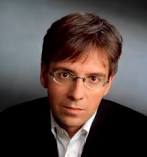
International affairs always matter to U.S. investors, but recent changes in U.S. attitudes toward foreign policy, accompanying events and policy changes abroad are unsettling our assumptions to a greater extent than at any time since the end of the Cold War. It was therefore timely that the Boston Security Analysts Society featured, as the speaker at its annual Market Dinner in March, Ian Bremmer, a Boston native, who has established a reputation and a career as a leading independent foreign policy consultant and is the author of several books, including the recent Superpower: Three Choices for America's Role in the World (2015).
His presentation comprised a short series of “big-picture items” that established his view of the current state of the world.
He began with technological change. The latest Davos meeting was the first in 10 years to have a theme: the “Fourth Technological Revolution.” This revolution is causing such a high degree of change across a range of industries that it is possible that in 10 years, many occupations that currently exist will be no more. Bremmer cited a study by Oxford scholars that showed that 47% of the top 700 jobs in the U.S. had a high probability of disappearing.
Moreover, the role of emerging markets in the world economy has changed. For the last 30 years, he said, we have thought of emerging markets as a single entity participating in the commodities “supercycle,” with relatively low personal incomes and therefore much room for growth, and with relatively quiescent populations. In contrast, today, he’s heard that Goldman Sachs has shuttered its BRICS fund – rather late, he wryly noted, as it was down 88% from its high. We no longer talk about BRICS as a single basket of countries, and we shouldn’t. Russia is clearly not an emerging market, but rather a petro-state, and it’s not a place to believe in for the long term. India is a radically different story. Brazil, which is in trouble, may turn around, he thinks. Some of these countries are well governed, and others are poorly governed.
But, Bremmer said, if those who talk about a “fourth technological revolution” are correct, then in 10 years, we’ll once again be able to talk about emerging markets as a single basket of countries: “But not a good basket; a bad basket.” This is because they are most vulnerable to the consequences of the income and wealth inequality that Thomas Piketty has discussed in his book, Capital in the Twenty-First Century.
Bremmer argued that Piketty wasn’t really addressing issues of the middle class. He pointed out that France is a wealthy country, and indeed, all of Europe is wealthy. Even Greece, which has gone through a depression nearly as great as the U.S. Great Depression of the 1930s, has had virtually no riots, no violence, no revolution during its recent troubles, and, Bremmer argued, that is because Greece is still comparatively wealthy. He said that he is much more worried about what would happen if the same dislocation were to occur among the world’s “real” middle classes, in China, say, or Brazil, where institutions are far more brittle, and the social safety nets are much more modest.
Bremmer moved on to a discussion of energy and the Middle East. As he put it, the fourth industrial revolution is already here, not in a transformation of jobs, but in the production of energy. In China, on the one hand, the government has earned legitimacy and achieved social stability by providing jobs. In the Middle East, on the other hand, governments have earned legitimacy not with jobs, but with cash that “comes out of the ground.” The new technology of energy production has fundamentally changed the global energy markets, leading him to think very differently about the Middle East. He recalled a phrase used by his graduate studies advisor at Stanford, the late Robert Conquest, who referred to the Soviet Union not as stable, but as an area of “frozen instability.” Bremmer said that over the last 20 or 30 years, the Middle East might have been described as either “stable” or an “area of frozen instability.” In either case, what kept it functioning was, first, U.S. and European security and diplomatic support; second, populations that were disinclined to change their lot, even though governance was poor; and third, “money coming out of the ground.” Now, all three of these factors are fundamentally changing. In Bremmer’s view, the Middle East today seems to be reverting to a “pre-Westphalian” state of affairs. He qualified that remark by noting exceptions: Iran and Israel and eventually, an independent Kurdistan. But Libya, Iraq, Syria, Yemen and, farther abroad, Mali, Afghanistan and likely others are falling apart as states. He said that he doesn’t know what will keep Saudi Arabia together over the next five years.
Bremmer posed the question, whether this change would subvert the existing global economic model. His answer was that it probably would not. Among the inhabitants of the Middle East today, the Israeli-Palestinian conflict isn’t the top issue; indeed, it isn’t even among the top five concerns. For that matter, he said, it isn’t even on the agenda of most Israelis, whether they favor the government or the opposition. The Israelis aren’t interested in the “two-state solution,” because they don’t need Palestinian labor; they don’t worry about Hezbollah’s Katyusha rockets, because they’re protected by the Iron Dome missile defense system; and their human intelligence and surveillance capabilities are such that the Palestinians can’t organize.
Bremmer suggested that Israel might therefore provide a model for Europe. In Israel, instead of a two-state solution; there’s a “two-people solution.” It’s not a practical solution from the perspective of human rights,” he said, “but it’s stable.” And so, as Europe can’t keep refugees from coming in, because border security isn’t working, perhaps it, too, will end up with a two-people solution. He suggested that we will see an increased tendency toward this in both the Middle East and Europe.
The world’s three biggest economies, the U.S., China, and Japan, do not consider the refugee crisis to be their problem. Bremmer said that American policy is becoming more Chinese; it’s narrower and much more unilateral. He reported that when he has spoken to the foreign ministers of America’s allies, all of them have said that they no longer know how important the alliance is to the U.S., and how committed we are to them. He said that, from the perspective of those foreign ministers, if Donald Trump were to become president, U.S. foreign policy would remain much as it has been for the last few years, “but more so.” Bremmer commented on President Obama that he may be much narrower in his foreign policy inclinations, and he may not be as committed to America’s allies as earlier presidents, but he certainly says that he’s committed.
In other words, he said, there is a gap between rhetoric and action.
Bremmer called this the “Ban Ky Moonization” of America’s foreign policy. As he put it, many aspects of U.S. foreign policy are now in the passive voice: “Assad must go”; and “ISIS must be destroyed;” and “Russia must leave Ukraine.” (That’s what Bremmer said, but actually, these are not all passive sentences; he meant that these were not assertions of active U.S. responses.) Bremmer described these as aspirations or philosophies, not policies. To have a policy, you must also have “an actual thought process about how one might accomplish it.” He clarified these remarks by saying that he was not criticizing President Obama in particular. Rather, he said, he felt bad for allies who think that America is going to take action and then discover that it will not. With Donald Trump as president, he said, at least they would know that America would not take action. There would be consistency between word and deed.
All the same, Bremmer said, he suspected that there would be some inconsistencies: The U.S. is becoming more unilateralist in its foreign policy and would rather do less for other countries than it now does, but this would not stop it from intervening around the world. It is not becoming isolationist. He gave as an example what the U.S. did to the world soccer organization, FIFA, and its leader, Sepp Blatter. “We turned the lawyers loose on those guys.” Other examples he gave were the U.S. pursuit of Edward Snowden and the prosecution of Banc Paribas. If someone breaks U.S. sanctions, the U.S. will go after him. Bremmer described this as both unilateral and narrow. Bremmer then briefly digressed on Snowden and Russia. He said that he’d just been asked when Snowden would release Donald Trump’s tax returns, and he replied that because Vladimir Putin wants Trump to win the presidential election, Snowden would not do that. He also noted that the Russian embassy in London had just come out in support of Brexit.
Bremmer elaborated on his concerns about Russia. He said that he had been at a security conference two weeks earlier, and Prime Minister Dmitry Medvedev was sitting right in front of him. The organizer of the conference had told Bremmer just three weeks earlier that he had received a note from the Kremlin saying that Medvedev would be attending, “but not as prime minister.” Instead, he’d be coming as President Putin’s personal emissary. Bremmer explained that this meant that Putin couldn’t be bothered to come, and that Medvedev would be giving Putin’s speech. Medvedev said, at the outset of the speech, that we were heading toward a second Cold War. The Ukrainian president, sitting next to Bremmer, “wasn’t happy about that.” From the point of view of the Ukrainians, they’re in a hot war, not a cold war. Bremmer sardonically said that there would be a cold war, but for some qualifications: First, the Americans don’t really care; second, the Europeans aren’t with the Americans; third, the Chinese won’t support the Russians; and fourth, the Russians don’t matter as much as they used to do. “But aside from these four things, it’s a new cold war.” But, he added, even though it’s not a cold war for America, it’s a hot war for the Ukrainians, Poles, Estonians, Latvians, and Lithuanians, because Russia is undermining their borders.
As a result, NATO is becoming more relevant to foreign policy. Bremmer said that he knows Europeans who say that this is good for NATO. In contrast, he thinks it’s horrible because this is directing attention to an organization that is fundamentally divided and doesn’t know what its mission is. Half of its members, he said, are not prepared either to pay or to engage. Furthermore, the perspective of Italy, for example, on Russia is diametrically opposed to that of the Balkan states and Poland, and that of NATO non-member Ukraine. We should expect to see more of this divergence. Russia is a problem, but not for everyone. Consequently, we will see more fragmentation and geopolitical risk and crises, “because the big actors will say, ‘Not my problem.’” He noted that Angela Merkel grew up in East Germany and therefore remembers clearly that when the Berlin Wall came down, the Americans supported the Germans. But now that walls are going up (at least metaphorically), the Americans are not supporting the Europeans; no one is.
Bremmer does not think that Brexit will happen. He also said that he does not believe that we will see authoritarian governments in Europe; he does not believe that populist parties can win in Britain, France, Spain, Italy or Germany. Yet the pressures on Europe will get worse with the refugee crisis, which produced more refugees in the first two months of this year than it did in the last six months of 2015. And now the weather is getting warmer. The Turks will not maintain border security; NATO will carry on surveillance, but it won’t stop anyone from coming. As a result, “the Greeks are going to take it on the chin, as they’ve been doing.” Bremmer said that he fears two things this year: first, another Greek crisis and that Germany will not be able to build support for a response as it did before; and second, the end of the values for which Europe has stood.
Bremmer concluded that today, it is hard to see what Europe stands for. It is hard to see what America stands for. But it is not hard to see what China stands for: It stands for sufficient economic growth, ensuring political stability, and a foreign policy that promotes precisely that. It is also not hard to see what Russia stands for: It stands for a strong Kremlin, institutionalized in a single human being, and strong national security, including a sphere of influence that is larger than most nations would like. This, he said, is the world we’re entering, one in which the American and European values that formerly determined the global geopolitical and geoeconomic order are fragmenting. Because there are no alternatives, we’re moving to “lower common denominators” on governing principles for security, diplomacy, and economics. He described this as “not necessarily a horrible development, but a different one.”
Adam Jared Apt, CFA, is a financial advisor and the owner of Peabody River Asset Management, based in Cambridge, MA.
Read more articles by Adam Jared Apt