 Advisor Perspectives welcomes guest contributions. The views presented here do not necessarily represent those of Advisor Perspectives.
AI adoption is accelerating across wealth management, but many trust companies appear to be on a different trajectory. A recent study indicates that 74% of wealth management firms use artificial intelligence. Of the firms that reported not actively using AI, 90% are bank trusts. The study calls that insight an ”alarm bell” for the industry’s lagging firms.
Trust organizations operate in a complex environment with significant operational, accounting and regulatory requirements layered onto highly personalized client service and intricate planning details. That complexity can make technology decisions harder, particularly when new tools must work within established processes, systems, and controls.
At the same time, the increased pace of technological change is making those operating-model decisions more consequential. With new tools emerging quickly, some firms might feel pressure to adopt new technology before considering how it fits into their organization’s broader operational needs.
Rather than dive straight into a technology investment, a firm should start by clearly defining what it is trying to accomplish, then determine how people, processes, data, and technology can best work together to achieve that outcome.
Start With the Business Goal
A trust company designing its operating model should start with the business objective. Consider two teams that both provide middle- or front-office support to trust officers. One firm might organize that support around individual trust officers to preserve close working relationships. Another might centralize functions such as trading or account opening to create greater consistency and scale.
Neither model is inherently better. The path forward should be tailored to what a firm is trying to accomplish. That requires assessing factors such as whether the priority is a more personalized client experience, greater efficiency, or better risk management.
Depending on a firm’s priorities, this can lead to very different decisions about team structure and, ultimately, where technology can add value.
Build Around the Brand
A trust firm’s operating model should reinforce what makes the company distinctive. That means understanding the firm's value proposition and how it delivers on that promise.
There isn’t a ”one-size-fits-all” solution. A firm that competes through highly personal service may deliberately preserve human involvement in certain processes. A firm competing more aggressively on efficiency and scale might have greater latitude to centralize or automate tasks. Those types of brand considerations should shape technology and organizational decisions.
Before making significant technology investments, firms should reevaluate whether their operating model still reflects the experience they want clients to have. If new technology changes that experience in ways that conflict with the firm’s value proposition, it can erode client trust and weaken the brand.
Put Data at the Center
Data is a core component of every operating model. Firms need a working knowledge of where data resides, which vendors are involved, how information moves through the organization, and how it is governed. Without that foundation, even a well-designed operating model can be difficult to execute.
Fragmented or inaccessible data can diminish the value of technology investments, create overlapping capabilities, and add work rather than eliminate it.
Having a strong command of the data environment helps firms determine where technology can add the most value.
Measure What Matters
Once firm leaders define what they want their operating model to accomplish, they need a way to measure results. Establishing key performance indicators (KPIs) provides a baseline for tracking progress and determining whether a specific tech investment is producing the intended result.
Metrics can also reveal when a firm might be addressing the wrong problem. As an example, what looks like a technology bottleneck may actually be a process or organizational issue. Tracking performance helps leaders identify the root cause of constraints and assess whether a new system or application is helping or hindering productivity.
Over time, monitoring KPIs can also help firms identify redundant tools, poorly integrated applications, or gaps in human capabilities.
Implement Change Management
An operating model only works if the key stakeholders understand how their roles are evolving.
New technology may alter responsibilities, workflows, and team interactions, making clear communication from leadership critical.
Employees need to understand what is changing, why it matters, and how the organization will support them through the transition. That is especially important with AI, where adoption may depend largely on employees’ trust in the firm’s rationale for change.
Business continuity considerations also matter as processes and responsibilities shift. Firms may need additional internal resources or outside expertise during a transition to keep work moving while the new model takes shape.
Design for the Organization You Want to Build
For a trust company, AI’s expanding capabilities create an opportunity to revisit the firm’s operating model and processes with greater urgency. Closing the adoption gap starts with a clear view of the firm’s desired outcomes and what changes are needed to get there.
That means looking at technology decisions in the context of the larger organization: how teams are structured, how work gets done, what data is available, and where technology can genuinely make a difference.
With those foundational elements in place, trust companies can make technology investments that strengthen their organizations and support the experience they want to deliver.
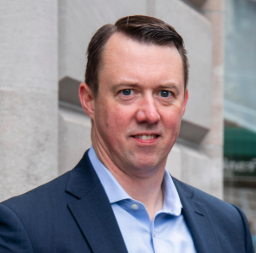
Scott Lamont is a managing director, bank trust division at F2 Strategy, a wealthtech management consulting company serving complex wealth advisory firms.
A message from Advisor Perspectives and VettaFi: Discover something new! Click here to register for our upcoming webcasts.
More Volatility/Downside Protection Topics >
 Advisor Perspectives welcomes guest contributions. The views presented here do not necessarily represent those of Advisor Perspectives.