A continued escalation in the Middle East, where the Iranian-backed Houthis joined the conflict in an attempt to disrupt Saudi Arabian crude shipments that pass through the Red Sea via the Bab-el-Mandeb Strait, drove oil prices higher, while new tariff announcements and Alphabet's earnings release created headwinds for equities. Despite broadly positive earnings releases and initial jobless claims falling to their lowest level since 1969, the S&P 500 declined 0.61 percent and ended slightly lower for the second straight week.
The microeconomic backdrop is increasingly bumping up against a shifting macroeconomic environment. Over the past few years, as we have noted, parts of the U.S. economy and financial markets have been harmed by the impact of higher interest rates implemented to stem the inflation that resulted from the COVID-19-era monetary and fiscal policy largesse. Despite this reality, the U.S. economy has continued to move higher—albeit in a bifurcated manner—rather than cascade into an overall economic contraction. When large parts of the economy wobbled, artificial intelligence (AI) came to the rescue as companies spent at virtually any cost to bring the technology to life, and higher-income consumers benefited from the wealth effect created by stocks tied to the AI theme. Importantly, this capital spending boom was initially financed through free cash flow, making it largely noncyclical because it was not directly impacted by higher interest rates.
Over the past few months, however, this narrative has evolved as the costs required to bring AI to life have continued to skyrocket. Many of the previously free-cash-flow-positive companies are now tapping capital markets—both debt and equity—to fund increased spending. Look no further than Alphabet, which announced strong earnings but increased its capital spending to an astounding $205 billion for 2026 while posting its first negative free-cash-flow quarter since going public in 2004. Not surprisingly, the company has issued roughly $60 billion in debt since late 2025 and, in June 2026, announced an $80 billion equity raise to help fund its AI expenditures. We believe this marks an important shift. These companies, and the AI build-out more broadly, now increasingly rely on external capital to fund ever-growing investments, making them more economically sensitive as higher interest rates increase the cost of capital. The rising expense also raises questions about whether companies deploying AI will realize benefits quickly enough to justify continued spending.
This is where inflation—and the question of what the Federal Reserve may do to subdue it—becomes incredibly important. Rising oil prices are often considered outside the Fed’s purview and are generally viewed as shocks the U.S. central bank is willing to “look through” or characterize as transitory. However, we do not believe this is a normal environment, particularly given that inflation has remained above the Fed’s 2 percent target for 63 consecutive months.
The reality is that throughout much of this period, the Fed has described the causes of elevated inflation as transitory or the result of supply shocks—think COVID, tariffs, the Russia-Ukraine war, and now the conflict in the Middle East. Perhaps these events are transitory in isolation, but the question we have heard many Fed officials pose, including Chair Kevin Warsh, is this: At what point do these recurring transitory shocks accumulate into enough sustained inflation pressure that consumers and businesses begin to price, negotiate, and make decisions with inflation in mind? If that occurs, inflation could become increasingly embedded in the U.S. economy.
See more: Inflation Data, Early Earnings and Geopolitics Shape the Market Outlook
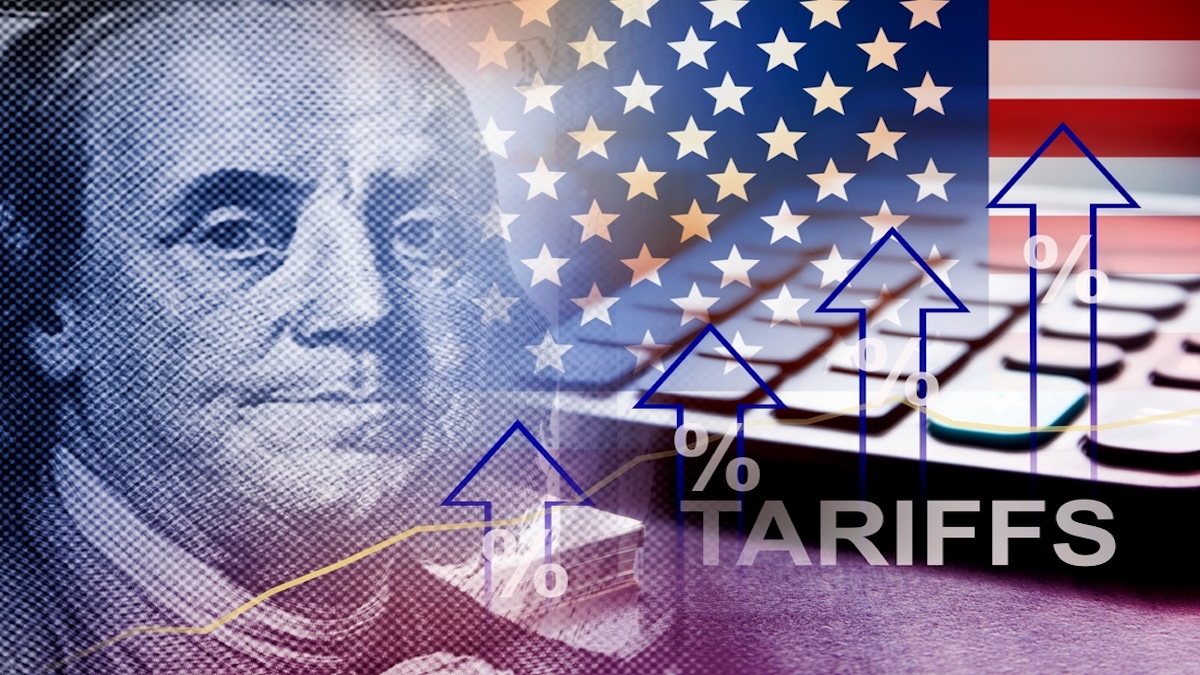
This week saw the question of tariffs resurface after new measures were announced Thursday evening to replace the expiring tariffs that had been set at a 10 percent across-the-board level following the court decision striking down the International Emergency Economic Powers Act tariffs. The Fed’s base case has generally been that tariffs represent a one-time price increase that washes through the economy without creating persistent inflation. While we are still assessing the potential impact of the new tariff measures, recent research is beginning to question whether tariffs are truly a one-time price shock.
At least that is the conclusion reached by the Liberty Street Economics team at the New York Fed, which found that the tariffs implemented last April are likely not yet fully reflected in the U.S. economy. Their latest business survey, released in early July, showed that while firms have already passed along some of their higher costs to customers, nearly half—47 percent of service firms and 44 percent of manufacturing firms that paid tariffs—still plan to raise prices in the months ahead, with some expecting to do so six months or more into the future.
The reality is that many firms were unable to pass along these costs immediately because they were operating under longer-term contracts with fixed selling prices, forcing them to wait until those agreements expire before adjusting prices. Others have adopted a gradual “trickle-up” strategy, increasing prices incrementally to avoid shocking customers while preserving flexibility if input costs continue to rise. Ongoing uncertainty surrounding tariff policy—including potential rate changes, exemptions, and retaliation from other countries—is also encouraging firms to spread price increases over time rather than implement one large adjustment.
At the same time that oil and tariff pressures are building, inflation may also be receiving support from a money supply that has once again begun to expand more rapidly, while government spending continues to increase on the back of rising defense expenditures. Factor in individual and corporate tax cuts that have also bolstered the economy, and one must begin to wonder about the future path of inflation.
All of these potential inflationary pressures were underscored by last week’s release of the S&P Global U.S. Purchasing Managers’ Index (PMI), which rose to an eight-month high and pointed to an economy that continues to move forward. However, price pressures are still building in the background. Input-cost inflation reached a 14-month high, while selling-price inflation accelerated at the fastest pace since September 2022 as firms passed higher costs on to consumers. Not surprisingly, companies cited elevated energy and shipping costs associated with the Middle East conflict, tariffs, and broad-based supplier price increases as key drivers of higher input costs.
The good news is that the economy continues to be supported by a labor market showing remarkable resilience, as evidenced by initial jobless claims falling to their lowest level since 1969. One potential setback, however, is that inflation pressures continue to linger. With the Fed’s employment mandate largely satisfied, does the U.S. central bank now attempt to “unanimously and unambiguously” return inflation to its 2 percent target?
This is the backdrop confronting a divided Fed as it meets this week. Recall that the “dot plot” from the last meeting showed that nine of 18 respondents expected one or more rate hikes this year, while eight expected none, and one expected a cut. Interestingly, as of Friday, markets were assigning roughly a 34 percent probability of a rate hike at this meeting. While still a relatively low probability, it is substantially higher than what markets typically price in ahead of meetings under the previous Fed regime.
This not only reflects growing inflation uncertainty but also, perhaps more importantly, highlights that the Fed is no longer providing meaningful forward guidance. While we do not expect a rate hike this week, there remains an open question as to whether the Fed decides to move earlier than expected to quell inflation concerns before they have an opportunity to become more deeply entrenched and require even more aggressive action later.
We continue to build portfolios for the many questions that remain, most notably on the inflation front. Does the Fed finally address rising inflation, or does it continue to look past mounting price pressures?
We continue to own commodities, which have historically exhibited a high correlation with unexpected inflation and are up 30 percent year to date. We also recently added to Real Estate Investment Trusts, given our belief that an inflationary environment may allow the Fed to raise prices over time. However, for fixed-income investors, we are not hiding solely at the front end of the yield curve. Instead, we remain diversified across maturities because, if the Fed ultimately becomes more aggressive, it could place downward pressure on inflation, economic growth, and intermediate- to longer-term interest rates.
That matters because one of the economy’s primary stabilizers over the past year—AI spending—may no longer be as immune to higher interest rates as it once was. As AI investment increasingly relies on external financing, it too may become more economically sensitive to higher borrowing costs.
Remember to stay invested and, most importantly, stay diversified as we continue to navigate an increasingly complicated economic and market backdrop.
Wall Street wrap
Business activity accelerates, but inflation pressures reemerge
The S&P Global U.S. Flash PMI data for July painted a picture of an economy that continues to expand at a healthy pace, with signs that growth may be broadening beyond a handful of AI-related industries. The Composite PMI rose from 51.9 in June to 53.6 in July, reaching its highest level in eight months. The improvement was driven primarily by the services sector, where the Services PMI climbed to 53.6. Some of the strength may have been aided by temporary factors, including spending tied to the FIFA World Cup and celebrations surrounding the nation’s 250th anniversary over the July 4 holiday period.
Manufacturing activity remained solid but showed signs of losing some momentum. The Manufacturing PMI edged down to 53.8 from 53.9, marking a four-month low. While still consistent with expansion, the report suggests the manufacturing sector continues to face headwinds even as overall economic activity remains on a positive trajectory.
There were several encouraging developments beneath the surface of the report. Business confidence among service-sector firms regarding the year ahead climbed to an eight-month high, while companies added staff for the first time in three months. Both developments suggest that businesses remain optimistic about future demand despite ongoing uncertainty surrounding inflation, interest rates, and geopolitics.
However, the manufacturing sector continued to confront growing supply chain challenges. Growth slowed sharply as supplier delivery delays worsened to the greatest extent since August 2022. According to the report, shipping disruptions related to the conflict in the Middle East were compounded by tariff-related availability issues, creating additional bottlenecks for manufacturers.
Perhaps most important for the Fed, inflation pressures moved meaningfully higher. Input-cost inflation accelerated to a 14-month high, while selling-price inflation—the prices businesses charge customers and a precursor to future Consumer Price Index (CPI) and Personal Consumption Expenditures (PCE) readings—increased at the fastest pace since September 2022. Significantly, both measures have now returned to levels last seen when inflation pressures were being amplified by supply disruptions tied to geopolitical conflict.
These developments suggest that inflation pressures remain embedded within parts of the economy despite broader progress made over the past year.
As Chris Williamson, chief business economist at S&P Global Market Intelligence, noted, “Events over recent days in the Middle East will have only further exacerbated these supply chain and price worries and raise downside risks to the near-term outlook for the economy, hinting that July’s upturn may not be the start of an improving trend.”
Leading economic index signals continued growth but highlights emerging headwinds
The Conference Board's Leading Economic Index (LEI), which is designed to provide an early indication of significant turning points in the business cycle, offered a somewhat mixed signal about the economy’s future direction. Over the past several years, the index has frequently pointed to elevated recession risks because of its heavy weighting toward interest-rate-sensitive areas of the economy. Yet despite those warnings, a recession never materialized—a development we believe has been largely supported by the economic boost stemming from the AI investment boom.
There had been encouraging signs of improvement earlier this year following the Fed’s rate cuts in late 2025. The LEI moved into positive territory for two consecutive months and was positive in three of the previous four months, suggesting some stabilization in forward-looking economic conditions.
That trend paused in June, however, as the index declined 0.2 percent month over month after residing in positive territory during the prior two months. While one month’s decline does not establish a trend, it may be an early indication that some areas of the economy are beginning to feel pressure from rising interest rates, which have moved modestly higher over the past several months.
Importantly, the broader picture remains far more constructive than it has been in recent years. The six-month annualized change in the LEI held steady at -0.6 percent, unchanged from the prior month. While still slightly negative, the reading remains well above the -4.3 percent threshold that has historically been associated with elevated recession risk. In fact, the current reading represents the least negative print since April 2022, the month immediately following the Fed’s first rate hike of the current cycle.
The week ahead
Monday: The Census Bureau will release June Durable Goods Orders at 8:30 a.m. EST. After several months of volatility, this report will offer another look at business investment trends and whether companies remain willing to spend despite elevated interest rates and ongoing economic uncertainty. We will be particularly interested in whether investment tied to technology and AI continues to offset weakness in other areas of the economy.
Tuesday: The Conference Board’s Consumer Confidence Index will be published at 10:00 a.m. EST. Consumer spending has been a key driver of economic growth, and this report will provide insight into whether households remain optimistic about their financial prospects. We will be watching for signs that consumers remain willing to spend despite still elevated borrowing costs and lingering inflation pressures.
Wednesday: The Fed will announce its latest monetary policy decision at 2:00 p.m. EST. While markets generally expect policymakers to leave rates unchanged, futures markets are currently assigning roughly a 34.5 percent probability of a rate hike—a relatively high probability compared to many recent Fed meetings and a reminder that investors can never completely rule out surprises.
Thursday: The Bureau of Economic Analysis will release June Personal Income and Spending data, including the Core PCE Price Index, at 8:30 a.m. EST. Core PCE—the Fed’s preferred measure of inflation—is expected to rise 0.2 percent month over month and 3.3 percent on a year over year basis. While inflation has eased considerably from its peak, the annual rate remains well above the Fed’s 2 percent target, highlighting the challenge policymakers continue to face in balancing price stability and economic growth.
Friday: The University of Michigan will publish its final July Consumer Sentiment Index at 10:00 a.m. EST. In addition to measuring household confidence, the report includes consumers’ inflation expectations, which Fed officials monitor closely for signs that inflation pressures are becoming embedded in consumer behavior. We will be watching to see whether sentiment continues to improve, and whether inflation expectations remain consistent with a gradual return toward the Fed’s long-term target.
Brent Schutte, CFA, is chief investment officer of the Northwestern Mutual Wealth Management Company.
Northwestern Mutual is the marketing name for The Northwestern Mutual Life Insurance Company and its subsidiaries. Life and disability insurance, annuities, and life insurance with longterm care benefits are issued by The Northwestern Mutual Life Insurance Company, Milwaukee, WI (NM). Longterm care insurance is issued by Northwestern Long Term Care Insurance Company, Milwaukee, WI, (NLTC) a subsidiary of NM. Investment brokerage services are offered through Northwestern Mutual Investment Services, LLC (NMIS) a subsidiary of NM, brokerdealer, registered investment advisor, and member FINRA and SIPC. Investment advisory and trust services are offered through Northwestern Mutual Wealth Management Company (NMWMC), Milwaukee, WI, a subsidiary of NM and a federal savings bank. Products and services referenced are offered and sold only by appropriately appointed and licensed entities and financial advisors and professionals. Not all products and services are available in all states. Not all Northwestern Mutual representatives are advisors. Only those representatives with Advisor in their title or who otherwise disclose their status as an advisor of NMWMC are credentialed as NMWMC representatives to provide investment advisory services.
A message from Advisor Perspectives and VettaFi: Discover something new! Click here to register for our upcoming webcasts.
© Northwestern Mutual Wealth Management
Read more commentaries by Northwestern Mutual Wealth Management