This year has offered a vivid reminder of how quickly market conditions can shift—from policy uncertainty, to a sharp geopolitical shock, to a focus on an AI-driven rally. As the themes of the day changed, the case for an overlay persisted. Let’s look at why portfolio overlays can matter across each kind of environment.
At a fundamental level, overlays exist to bridge the gap between long-term objectives and short-term market realities. Strategic asset allocations are designed to meet multidecade goals such as funding liabilities, supporting spending or preserving purchasing power. Markets rarely move in straight lines, however. Market drawdowns, rate shocks, currency fluctuations and liquidity constraints can push a portfolio away from its intended risk profile long before governance processes can reasonably respond. Overlays provide a mechanism to manage these forces without dismantling the underlying portfolio.
See more: Headwinds & Tailwinds: Minding The Market Weather
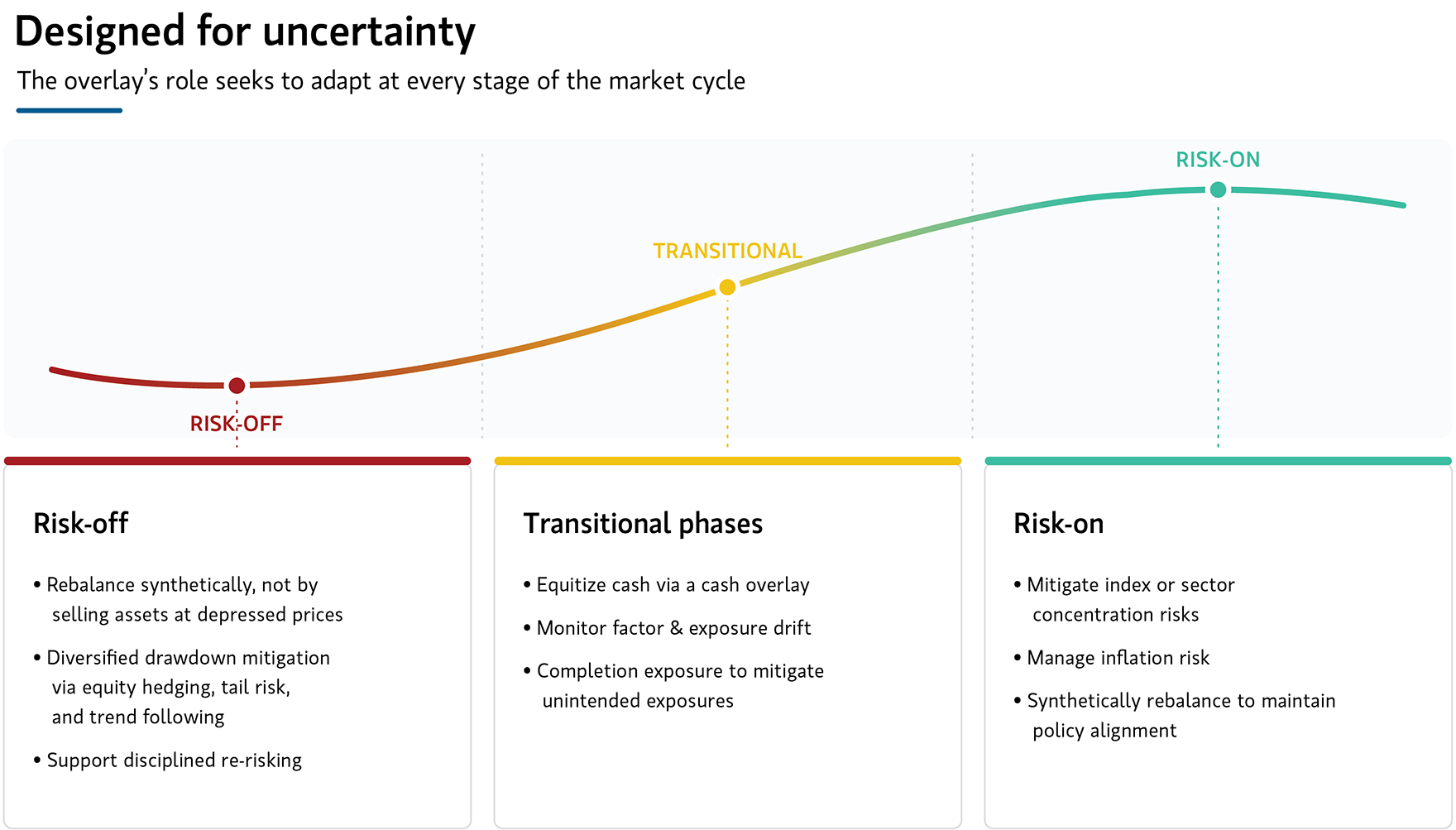
Why are overlays especially useful during transitional market phases?
Transitional phases—rising inflation, accumulating market concentration or shifting monetary regimes—create uncertainty. The early months of 2026 had this character, as trade and geopolitical disruptions unsettled markets. In these times, overlays have become more visibly strategic. Long-term beliefs may remain intact, but governance, liquidity or implementation constraints often limit the ability to make rapid structural changes.
Overlays allow institutional investors to be proactive, planning for contingencies around unknowable events, rather than being purely reactive. Risk can be adjusted at the total portfolio level while committees evaluate whether observed changes warrant permanent allocation decisions. This flexibility may be especially valuable when markets are repricing faster than governance structures can adapt, and when the cost of binary decisions is particularly high.
What problems do overlays solve in risk-off markets?
During risk-off periods, overlays often play their most recognizable role. Market stress can force difficult choices between selling assets at depressed prices or tolerating higher than intended risk. These moments tend to compress decision timelines just as uncertainty peaks. This spring’s geopolitical flashpoint in the Middle East, and the volatility it brought, was a clear example.
Overlays help manage this trade-off. For example, as markets drift away from target, overlays may create more efficient portfolio rebalancing. By rebalancing synthetically, investors may avoid slow, complicated or costly physical rebalancing. Further, investors can use diversified risk-mitigating overlays to potentially help limit drawdowns through trend or tail-risk strategies. Equally important, overlays may support disciplined re-risking as conditions begin to stabilize—potentially reducing the likelihood of missing recoveries if decision making is delayed or re-entry is overly cautious.
How do overlays add value in extended risk-on environments?
In prolonged risk-on markets, the role of an overlay may be easier to overlook but remains consequential. While geopolitical stress is still lingering, we’ve returned to conversations with investors about equity concentration, AI capex and inflation—now further complicated by the introduction of mega IPOs.