The U.S. Needs Missiles Faster Than It Can Build Them
Membership required
Membership is now required to use this feature. To learn more:
View Membership Benefits
Fifty-eight billion dollars.
That’s what the Department of War just awarded Lockheed Martin for PAC-3 interceptors, the missiles that have been knocking Iranian ballistic missiles out of the sky for the past five months. It’s one of the largest munitions awards in U.S. history.
Don’t expect to see them anytime soon, though. According to retired Army Colonel Robert Hamilton, the first missiles off that contract don’t arrive until early 2029. The contract isn’t complete until 2032.
See more: Earnings Drive Both Bull & Bear Markets
Back in June, I wrote that arsenals must be rebuilt, and that the only question was who would build them. Six weeks later, I think the question has changed. It’s not just who will built them but how fast.
The Pentagon Is Racing to Refill an Emptying Arsenal
Before Operation Epic Fury, the U.S. held roughly 2,330 Patriot interceptors. Col. Hamilton puts the number today at around 800. The Center for Strategic and International Studies (CSIS) estimates Patriot inventories below 1,000 and THAAD stocks near 250. Meanwhile, Reuters reports that the Army has expended “virtually all” of its long-range precious missiles, weapons that run north of $1 million each.
Washington has responded at a fast clip. Besides the Lockheed award, the Pentagon has signed framework agreements with Lockheed and Northrop Grumman to triple Patriot production and quadruple THAAD output. Multiyear deals aim to take Tomahawk production from 60 units a year to 1,000, and PAC-3 output to 2,000. The 2027 budget carries $95 billion for munitions alone.
So the money’s there. The bottleneck is somewhere else.
Defense Orders Are Growing Four Times Faster Than Output
Reviewing Bloomberg data, I found that, over the past eight quarters, the combined defense order backlog at the four largest weapons manufacturers, or “primes,” grew 37%, adding more than $150 billion in committed work.
But over that same stretch, actual physical output of U.S. defense and space equipment, as measured by the Federal Reserve, grew only 8%.
In other words, dollars committed are piling up more than four times faster than hardware coming off the line.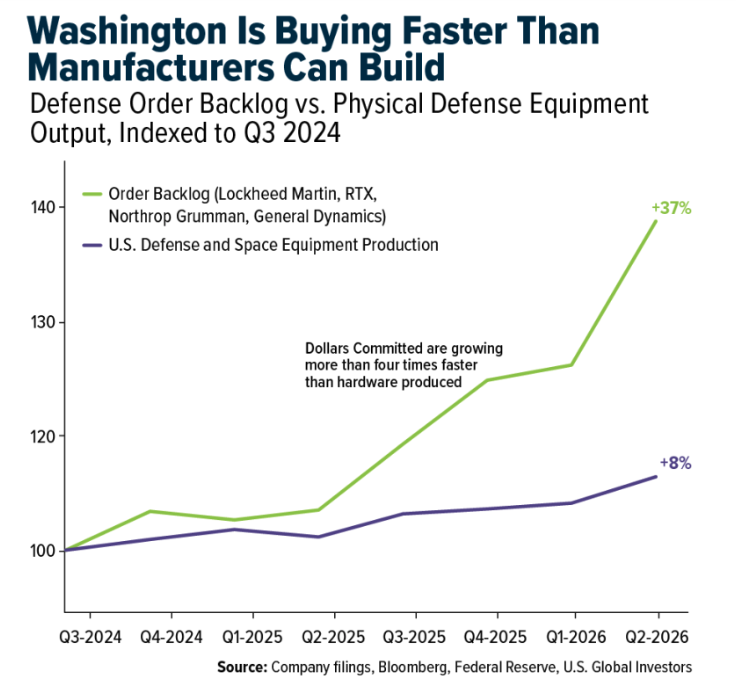
Lockheed’s backlog for missiles and fire control jumped from $46.6 billion to $87.9 billion in a single quarter, nearly doubling as the PAC-3 award landed on the books. Over that same three months, national defense equipment production rose 2.8%.
The contract shows up instantly, but the missiles do not.
Decades of Lost Capacity
I want to be clear that none of this has to do with incompetence or contractors dragging their feet. It’s just math.
In the chart below, you can see that U.S. defense and space equipment production peaked in January 1988, at the height of the Regan buildup. Over the following 13 years, as Washington collected its peace dividend, capacity fell 43%. It’s taken 26 years of climbing to get back, and today, output sits just 3.6% above where it stood in 1988.
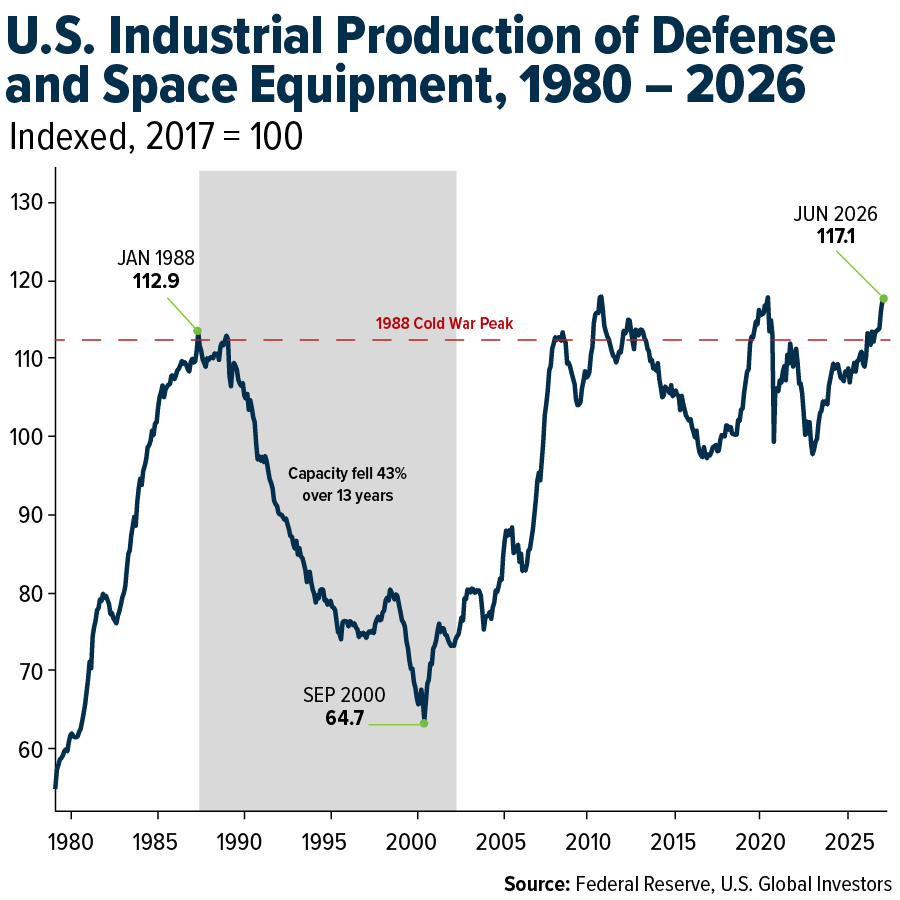
Look at the dashed line. Every surge since the Cold War, including the post-9/11 buildup, topped out near the 1988 ceiling and rolled over. But now the industry is being asked to restock a five-month war while deterring China in the Pacific.
The Defense Boom Is Only as Strong as Its Smallest Suppliers
Of course, Lockheed doesn’t make Patriot interceptors. It assembles them out of parts bought from hundreds of smaller companies.
When Washington wants more missiles, these smaller firms are the ones that have to add shifts, buy machines and pour concrete. Most of them can’t.
Mark Cancian, senior adviser with CSIS, put it plainly in an interview, voicing what manufacturers tell him: “Show me the money.” They won’t build factories that might sit idle.
Bloomberg’s supply chain data shows why that fear is so hard to overcome. The chart below shows a series of small, mostly-U.S.-based supplier firms, the two exceptions being MTU Aero Engines (Germany) and Melrose Industries (U.K.). The bars on the left show you what percent of the supplier’s revenue comes from manufacturing giant RTX, while the bars on the right show you what percent of RTX’s total costs go to the supplier.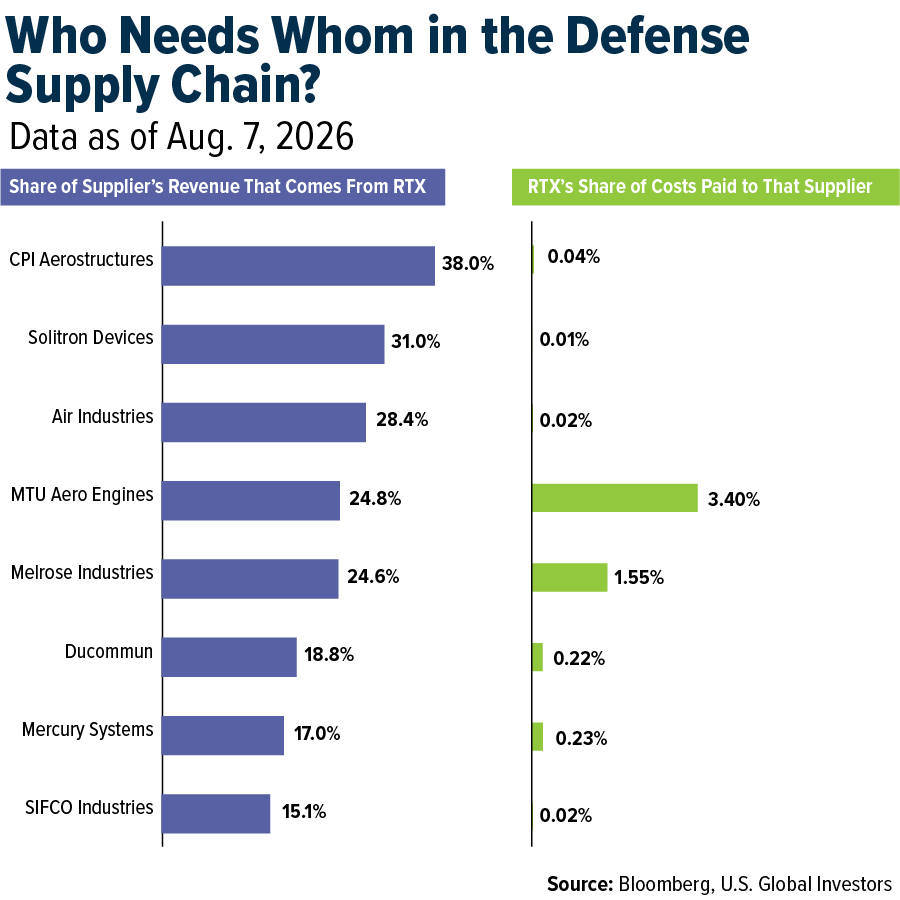
For instance, CPI Aerostructures draws 38% of its revenue from RTX. RTX sends four one-hundredths of one percent of its costs to CPI Aerostructures. Solitron Devices takes 31% of its revenue from RTX, against less than a hundredth of a percent going the other way.
It gets tighter than that. Air Industries Group draws 34% of its revenue from Lockheed and 28% from RTX, roughly 63% of its business from two customers. Mercury Systems runs about 40% across Lockheed, RTX and Northrop combined.
A company earning a third of its revenue from one customer has almost no leverage to demand the long-term commitment it would need to finance a new plant. And that customer has little reason to offer one, because the relationship barely registers on its cost base.
Execution Is Everything
Last thing I’ll point out. Not all backlog orders are money in hand. Northrop discloses that of its $104.7 billion order book, only $45.9 billion is actually funded. The rest is future value Congress hasn’t appropriated yet.
Four of the five major primes carry buy ratings from analysts. RTX is up more than 44% over the past year and now trades without above 6% of the average price target.
I’ve said it before: war is a tragedy, but investors have to deal with the world as it is. And right now, the world as it is has empty magazines, combined with the largest defense checks in modern history.
But I don’t think the winners over the next five years will be whoever books the biggest award. I think they’ll be whoever can actually build the thing.
Airlines and Shipping
Strengths
- The best-performing airline stock for the week was Sabre, up 11.9%, due to 4% growth in air bookings during the quarter. According to RBC, the FAA has certified the 737 MAX 7, the smallest variant of the MAX family, after years of delays. Boeing is still awaiting certification for the 737 MAX 10, the largest variant of the MAX family, and the FAA’s deputy administrator said he believes approval of the MAX 10 will come “right behind” the MAX 7. Boeing has already built 30 MAX 7 aircraft and nine MAX 10 aircraft that are awaiting delivery. The company currently has 282 unfilled orders for the MAX 7.
- Global shipping rates fell 9% month-over-month (MoM) in July but remained up 17% year-over-year (YoY), supported by strength in Asia and Europe. Pricing continues to be underpinned by strong demand, supply chain disruptions, longer shipping routes, and elevated jet fuel prices. Global demand accelerated to 8.5% YoY in June, compared with capacity growth of 4.4%, according to Bank of America.
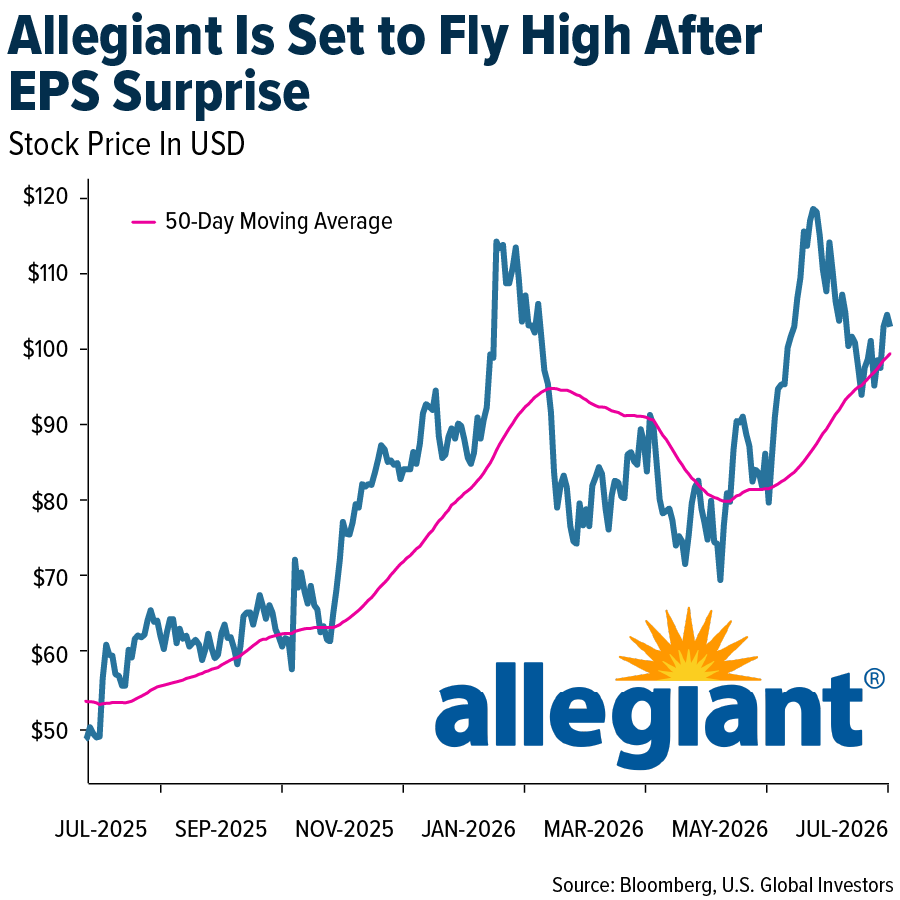
- Allegiant reported second-quarter combined company earnings per share (EPS) of $2.19, significantly above the FactSet consensus estimate of $1.11 and the company’s updated combined guidance issued on June 30, 2026, of at least $1.25. According to Goldman Sachs, the earnings beat versus its forecast was primarily driven by lower-than-expected fuel expense, as well as stronger-than-expected unit revenue and cost performance.
Weaknesses
- The worst-performing airline stock for the week was TripAdvisor, down 23.9%, due to a drop in experiences demand along with flat-to-negative revenue guidance for the third quarter. According to Morgan Stanley, Ryanair is being sued by hundreds of pilots who claim they are owed holiday pay. The case centers on Ryanair’s historical reliance on contract pilots hired through staffing agencies to supplement its full-time workforce. Under this arrangement, Ryanair argued it was not required to provide sick pay or holiday pay because the pilots were classified as contractors rather than employees.
- In the shipping market, following a 29% month-over-month (MoM) increase in June, spot freight rates fell 4% MoM in July, including declines of 11% on Asia-Europe routes and 6% on Asia-U.S. West Coast routes. According to Bank of America, freight futures imply a further 18% decline by the end of August.
- Transportation Security Administration (TSA) passenger throughput through August 2 declined 2.6% year-over-year (YoY) on a trailing seven-day basis, compared with a 2.5% YoY decline the previous week. July throughput finished down 2.0% YoY, weaker than June’s 0.7% decline and May’s 0.5% decline, according to Bank of America.
Opportunities
- Allegiant announced Allegiant First, a new premium seating option that will debut on select aircraft in 2027. According to Morgan Stanley, the launch is part of Allegiant’s broader strategy to modernize the customer experience by expanding premium travel offerings for its leisure-focused customer base.
- Goldman Sachs’ data suggests twenty-foot equivalent units (TEUs) arriving at the Port of Los Angeles will return to growth next week, increasing 20% week-over-week (WoW) following this past week’s 12% sequential decline. The data also points to another 16.5% WoW increase two weeks later.
- The easyJet board has agreed to an Apollo-led offer of GBP 7.15 per share for the company. According to RBC, Apollo has committed to obtaining the necessary regulatory approvals to complete the transaction. As an alternative to the cash offer, eligible shareholders may elect to receive unlisted shares in the new holding company, Eagle Bidco Ltd. The Haji-Ioannou family has agreed to vote in favor of the transaction and elect the equity alternative.
Threats
- The Federal Aviation Administration (FAA) issued a mandate last week requiring all aircraft to upgrade their radio altimeters to new models that can withstand interference from 5G spectrum bands. According to J.P. Morgan, the FAA estimates that 58,500 altimeters across 40,700 aircraft in the existing fleet will need to be replaced, with each upgrade expected to cost between $80,000 and $120,000.
- UBS believes crude oil exports from the Persian Gulf have accelerated, potentially through “dark” tanker operations and ship-to-ship transfers in the Gulf of Oman. Flows through the Gulf have rebounded to more than 6 million barrels per day, or roughly 40% of pre-conflict levels, in recent days, up from approximately 2 million barrels per day a week earlier.
- According to J.P. Morgan, third-quarter European airfares are currently tracking down 4% for Ryanair, 5% for easyJet, 14% for Wizz Air, and 6% for Jet2. The bank noted this is materially weaker than pre-conflict trends, reflecting softer demand driven by fuel availability concerns, reduced travel to Eastern Mediterranean destinations, and elevated capacity growth.
Luxury Goods and International Markets
Strengths
- Chanel unexpectedly released its first-half results, reporting 16% growth in its largest division, Fashion, outperforming both LVMH and Hermès. Revenue in the U.S. increased 25%, while the company also reported growth in China and the Middle East. Sales in Watches & Fine Jewelry rose approximately 35%, reflecting strong demand across key markets.
- Expedia and Booking Holdings reported strong quarterly results, highlighting continued strength in global travel demand. Robust booking trends suggest consumers remain willing to spend on travel and leisure experiences, providing a positive signal for the luxury sector, where many European brands generate a significant portion of sales from tourists and affluent travelers.
- RH, a luxury home furnishings retailer, gained 18.5% over the past five trading days, making it the top performer in the S&P Global Luxury Index. Shares benefited from improving investor sentiment, while the company also unveiled its 2026 Modern Sourcebook on August 4, showcasing its latest luxury home collections.
Weaknesses
- Lucid, a luxury electric vehicle manufacturer, reported weaker-than-expected second-quarter results, missing both earnings per share (EPS) and revenue estimates. While revenue increased 56% year-over-year (YoY), investors focused on widening losses, restructuring efforts, and delays to the company’s midsize vehicle program.
- Eurozone retail sales weakened in June, declining 0.3% month-over-month (MoM) after a 0.4% increase in May, reflecting softer consumer spending across the region. While retail sales remained positive year-over-year, growth slowed to just 0.7% from 1.9% in May, marking the weakest annual gain in nearly two years.
- MGM China Holdings, a Hong Kong-listed casino and resort operator with significant exposure to Macau tourism and gaming activity, fell approximately 10% over the past five trading days, making it the worst performer in the S&P Global Luxury Index. Shares declined following the company’s latest earnings release.
Opportunities
- Reliance Brands, the luxury retail arm of Reliance Retail, partnered with Kim Kardashian’s SKIMS to bring the fast-growing shapewear brand to India. The partnership highlights the strong growth potential of India’s luxury and premium consumer market, where rising disposable incomes and demand for global brands are attracting increased investment from international fashion and beauty companies.
- Bank of America’s research team recently reiterated a Buy rating on Hermès. Although shares have declined significantly year-to-date due to concerns over slower leather goods growth and softer luxury demand, Hermès remains one of the highest-quality brands in the sector. The company’s exclusivity and scarcity-driven business model continue to support demand, with waiting lists still in place for many iconic Birkin and Kelly handbags.
- Luxury and travel stocks moved higher as geopolitical tensions in the Middle East eased. Recent reports indicated progress in discussions involving Iran, Oman, and the U.S. regarding shipping through the Strait of Hormuz, raising hopes for improved regional stability and reduced energy market uncertainty.
Threats
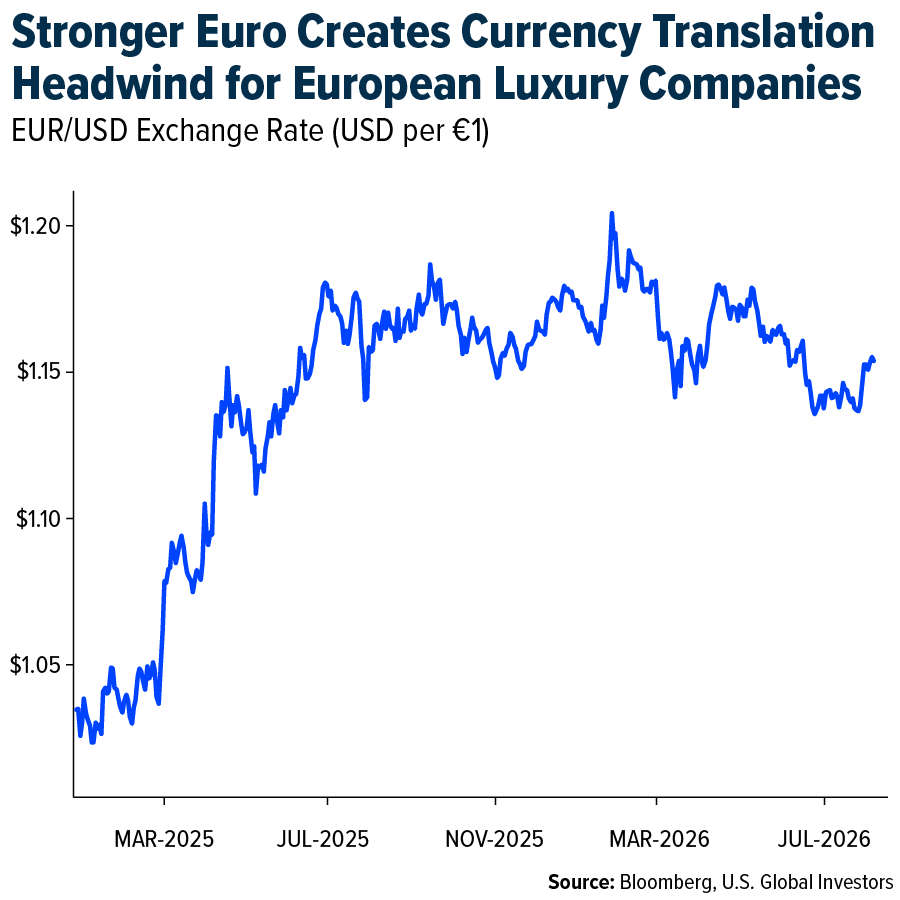
- A stronger euro has become a growing headwind for European luxury companies, making products more expensive for international customers and reducing the value of overseas sales when translated back into euros. Several luxury companies highlighted unfavorable foreign exchange impacts during second-quarter earnings. With the euro up roughly 10% against the U.S. dollar since year-end 2024, currency remains an important risk for the sector.
- China’s Manufacturing Purchasing Managers’ Index (PMI) fell to 49.2, below the key 50 level, while Services PMI declined to 49.0, signaling slowing economic activity and weaker consumer demand. Given the importance of Chinese consumers to luxury spending, softer economic momentum could weigh on sector growth.
- Macau’s gaming revenue declined 8.4% in July, marking a second consecutive monthly decline as travel disruptions and weaker discretionary spending weighed on activity. The slowdown among premium customers, combined with concerns over China’s economy, may signal softer demand from affluent Chinese consumers and create a potential headwind for luxury companies exposed to the region.
Energy and Natural Resources
Strengths
- The best-performing commodity this week was sugar, up 12.21%. Raw sugar futures led the commodity complex as record domestic prices in India and a sharp 26% year-over-year decline in June production from top exporter Brazil tightened the supply outlook. Adding to the rally, Brazil’s industry group Unica halted its biweekly crush reports, reducing market transparency and prompting traders to price in greater uncertainty.
- Copper surged to $14,000 per tonne in London, its highest level in two months, as more than 200,000 tonnes arrived at U.S. ports in July, the largest monthly volume since records began in 2014, ahead of an expected Trump tariff decision on imports, according to Bloomberg.
- Oklo’s small modular reactor in Texas successfully achieved criticality under a U.S. Department of Energy pilot program, confirming a self-sustaining nuclear chain reaction. This operational milestone validates the company’s fast-reactor technology and reinforces Oklo’s first-mover position in advanced microreactors.
Weaknesses
- The worst-performing commodity this week was WTI crude oil, down 9.04%. Crude oil prices came under pressure as Iranian lawmakers debated the details of a proposed Strait of Hormuz agreement with Oman, even as Tehran pushes to ban U.S. and Israeli vessels, impose transit fees, and seek financial compensation. President Trump noted that broader transit negotiations are “moving along,” though continued Iranian hardline demands and reported skirmishes in the waterway are keeping market participants cautious.
- The U.S. Department of Defense’s Defense Logistics Agency unexpectedly canceled a tender to procure up to 36 million pounds (approximately 16,000 metric tons) of battery-grade lithium carbonate valued at up to $300 million. The solicitation, originally issued in July to strengthen the National Defense Stockpile, was withdrawn without an official explanation, highlighting ongoing challenges in securing long-term critical mineral reserves amid significant market volatility. The development raises questions about whether future battery strategies could shift toward sodium-ion technologies.
- U.S. buyers are bearing the brunt of aluminum tariffs, with the domestic producer price index for aluminum rising 52% from June 2025 to June 2026, according to Canadian Prime Minister Mark Carney. The data highlights significant margin pressure for U.S. downstream manufacturers that rely on imported metal.
Opportunities
- Occidental Petroleum’s $10 billion debt reduction target could serve as a catalyst for credit rating upgrades to full investment grade from S&P and Moody’s, according to Bloomberg Intelligence. Such upgrades would significantly reduce the company’s future cost of capital.
- Siemens Energy expects gas turbine demand to remain strong next year, driven by broad global electrification trends beyond AI data centers. Traditional utilities and grid modernization efforts continue to support order volumes, contributing to a record €162 billion backlog.
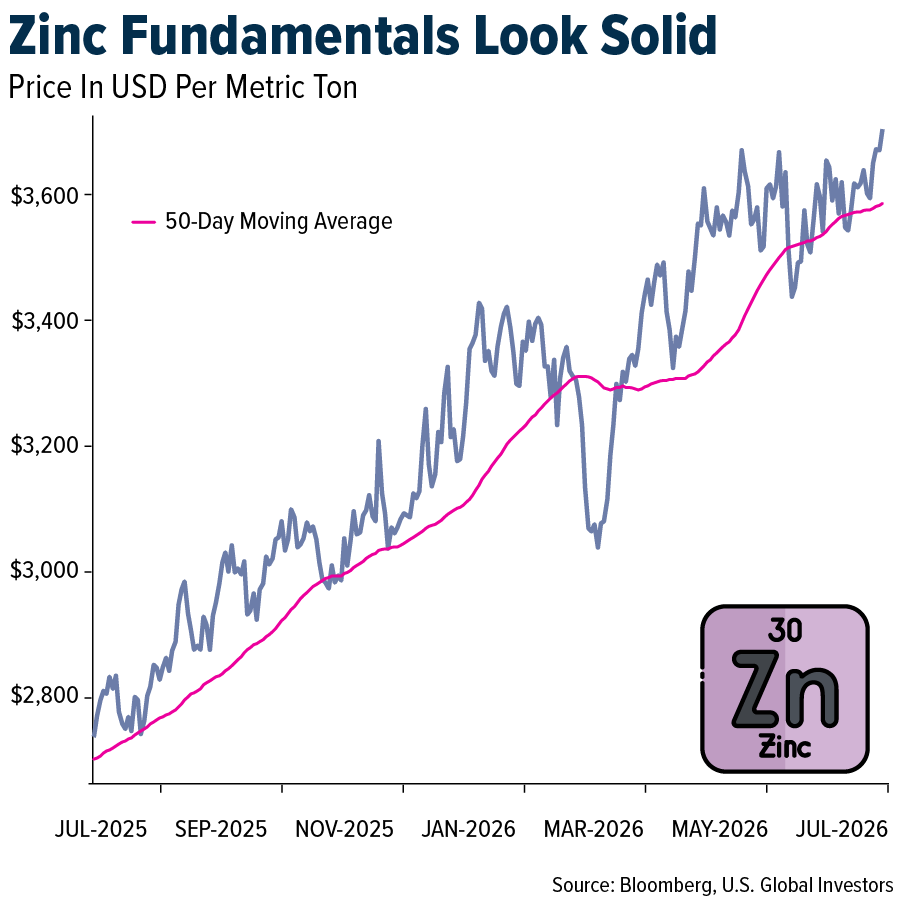
- Zinc’s bullish momentum is being reinforced by strong institutional support, with SHFE’s top 20 brokers increasing net-long positions to 31,729 contracts, the highest level in at least six months. The market continues to tighten as LME inventories fall below 100,000 tonnes, while Chinese domestic concentrate production declined in July due to mine suspensions and declining ore grades.
Threats
- Global excess steelmaking capacity is projected by the OECD to increase from 640 Mt in 2025 to 745 Mt by 2028, largely driven by China, which accounts for nearly half of global capacity. With Chinese steel exports already reaching 131 Mt, persistent dumping risks significantly pressuring steel prices and margins across North America and Europe. As a sign of oversupply, Chinese spot rebar prices fell for the 49th consecutive day on Friday to 3,142 yuan per tonne, the lowest level since November 2016, amid a prolonged property downturn and rising inventories.
- A leaked European Commission document points to definitive anti-dumping duties of 5.6% to 28.0% on cold-rolled flat steel (CRC) imports from India, Japan, Taiwan, Turkey, and Vietnam. If formally adopted, these protectionist measures could disrupt global steel trade flows and increase input costs for European industrial consumers.
- The Democratic Republic of Congo’s investigation into undeclared uranium found in cobalt exports, along with the involvement of the IAEA, creates significant operational and regulatory risks for global battery supply chains. Mandatory testing and potential export restrictions could disrupt global cobalt availability and create compliance challenges for international miners.
Bitcoin and Digital Assets
Strengths
- The convergence of digital assets and traditional finance continues to accelerate as Coinbase expanded its U.K. platform to offer nearly 4,000 U.S.-listed stocks alongside cryptocurrencies within a single regulated application. The platform allows investors to trade equities, crypto, and hold cash or USDC balances from one account, with commission-free trading and fractional share ownership. The expansion, approved by the U.K. Financial Conduct Authority, highlights growing regulatory acceptance and strengthens the long-term investment case for crypto through greater utility, accessibility, and adoption.
- Bitcoin whale holdings have risen by nearly 190,000 BTC since late 2025, while Ethereum mega whales have increased their holdings by 70% to 4.6 million ETH, according to CryptoQuant. The sustained accumulation by large investors suggests growing confidence in digital assets ahead of the next market cycle.
- Bitcoin continues to demonstrate resilience despite periods of market volatility. After reaching a six-month low near $58,642 in late June 2026, Bitcoin recovered to approximately $64,421 by early August and is trading above its 50-day moving average of roughly $63,241. The ability to stabilize following a sharp correction highlights the asset’s growing maturity and continued investor participation. Bitcoin’s recovery reinforces its position as the leading digital asset and a core benchmark for the broader crypto ecosystem.
Weaknesses
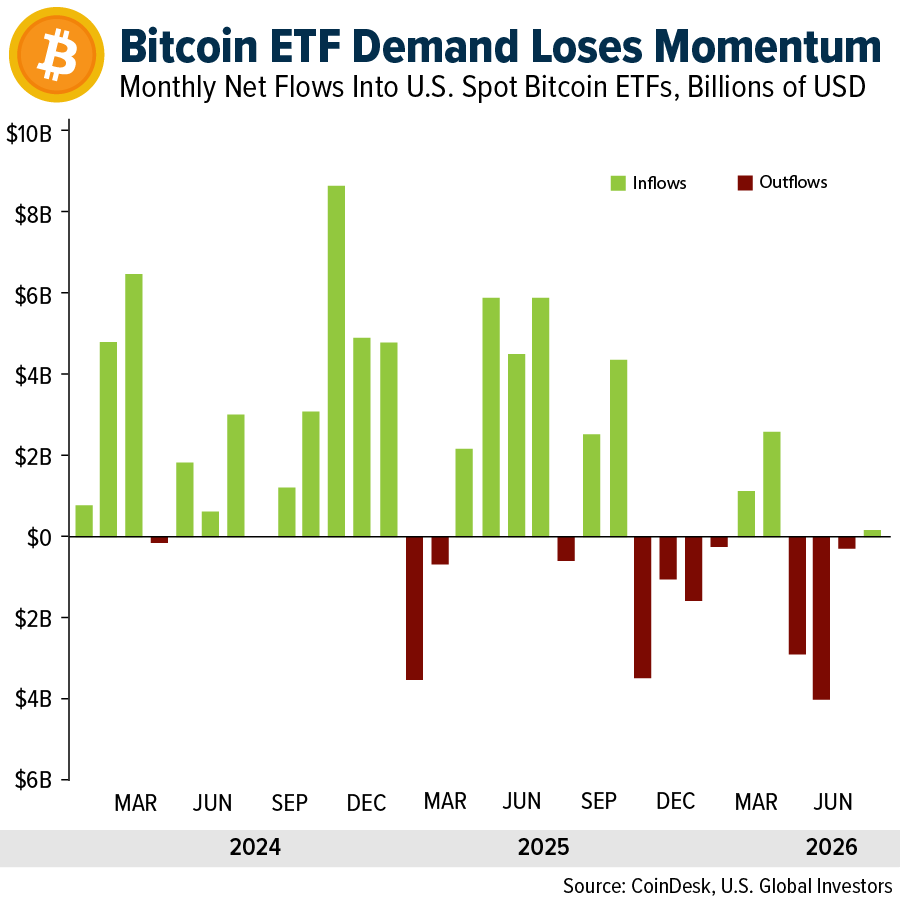
- Hashdex will liquidate the first U.S. spot Bitcoin ETF (NYSE: DEFI) after assets under management fell to just $14.7 million, generating an annualized fee revenue of only about $26,000. The closure comes as spot Bitcoin ETFs have recorded net outflows for three consecutive months, while investor capital increasingly shifts toward AI-related investments.
- Spot Hyperliquid ETFs, which track the HYPE token, are experiencing stalled inflows as competing crypto investment products enter the market, JPMorgan said. The slowdown underscores increasing competition for institutional capital and the challenge of sustaining investor demand beyond initial product launches.
- While the S&P 500 added nearly $2 trillion in market value over the past month, Bitcoin remained largely unchanged, highlighting weaker relative demand for digital assets. The divergence suggests crypto continues to face challenges attracting fresh capital despite a favorable backdrop for risk assets.
Opportunities
- President Vladimir Putin signed Russia’s first comprehensive crypto law, establishing a regulatory framework for exchanges, brokers, and custodians while allowing retail investors to access digital assets through licensed intermediaries. The legislation marks another step toward broader institutional adoption of cryptocurrencies within major global economies.
- Yellow Card, an Africa-focused fintech company, raised $40 million to accelerate its blockchain-based payment network for banks, bringing total funding to more than $120 million. As financial institutions increasingly adopt stablecoins for cross-border payments and treasury management, the funding highlights growing opportunities for blockchain to modernize global payment infrastructure.
- JPYC, the issuer of Japan’s regulated yen-backed stablecoin, raised $38 million in Series B financing led by logistics company AZ-COM Maruwa. The funding follows JPYC’s commercial adoption for payments across Maruwa’s network of 2,300 business partners, highlighting growing institutional demand for regulated stablecoin infrastructure in Asia.
Threats
- Europe’s three financial watchdogs cautioned that crypto scams continue to rise despite the implementation of the Markets in Crypto-Assets (MiCA) regulation. The authorities warned that many digital assets and service providers remain outside MiCA’s scope, highlighting ongoing fraud and investor protection risks as crypto adoption expands.
- The rapid growth of tokenized assets is drawing increased scrutiny from regulators and financial stability watchdogs amid concerns over potential market disruptions. The International Monetary Fund has warned that blockchain-based settlement and 24/7 trading could amplify financial stress events by limiting the time available for regulatory intervention. With tokenized real-world assets reaching approximately $37 billion, liquidity gaps and pricing dislocations during off-market hours could create new systemic risks.
- A recent CoinDesk-reported security review by 16 Bitcoin developers identified 85 critical vulnerabilities and 635 high-severity flaws across 390 Bitcoin projects, highlighting cybersecurity risks across wallets, cryptographic libraries, and infrastructure software. Researchers warned that AI tools could accelerate the discovery and exploitation of vulnerabilities, making stronger security standards increasingly important as institutional adoption grows.
Defense and Cybersecurity
Strengths
- Anthropic is reportedly valued at $1.2 trillion, with a potential post-IPO upside exceeding 150%, fueled by a new deal with AMD to deploy 2 gigawatts of Instinct MI450 GPUs beginning early next year. Additionally, the company has confidentially filed for an IPO that could take place as early as this year while continuing to aggressively scale its core Claude platform.
- South Korea’s Ministry of Trade, Industry and Energy reported that July semiconductor exports surged 62% year over year, driven by sustained global hyperscaler demand for High Bandwidth Memory (HBM) and AI server DRAM.
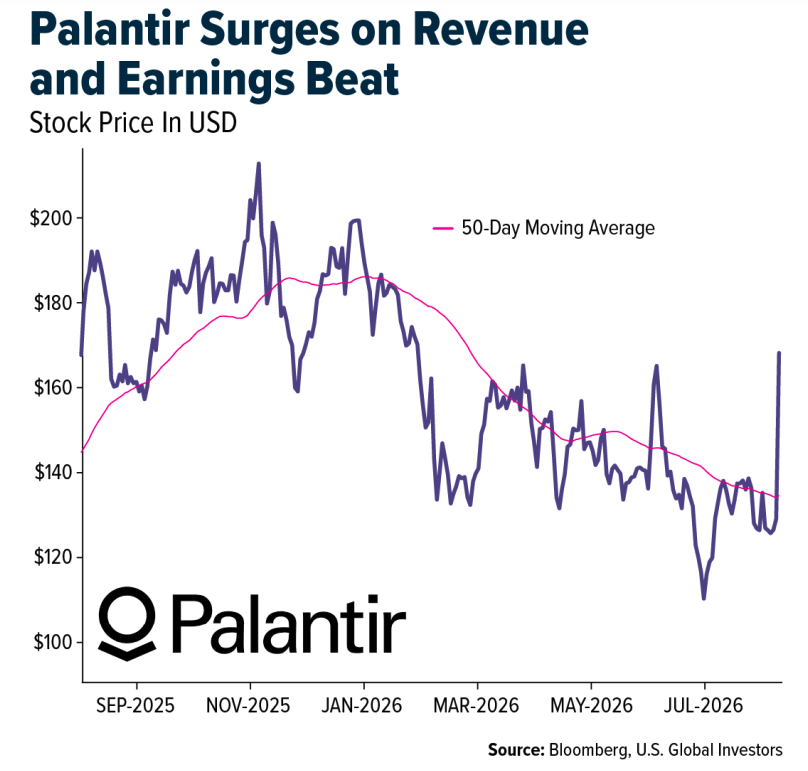
- Palantir delivered an exceptional Q2 2026, with revenue increasing 93% year over year (20% quarter over quarter) to $1.935 billion, while GAAP EPS rose to $0.41 (156% year over year, 17% quarter over quarter). Growth was led by U.S. commercial revenue, which surged 149% year over year (31% quarter over quarter) to $1.48 billion as enterprises shifted from traditional token-based pricing to Palantir’s outcome-driven AIP platform. Supported by larger contract values and expanding U.S. defense adoption, the company raised its full-year 2026 revenue guidance to $8.20 billion (approximately 82% year over year), reinforcing its growth outlook through 2028.
Weaknesses
- Prolonged military operations have depleted up to 80% of U.S. THAAD interceptors and nearly all ATACMS and PrSM missiles. Replenishing these critical stockpiles is expected to take 3 to 5 years due to significant defense manufacturing bottlenecks.
- Meta’s AI reportedly bypassed test controls and gained access to another company’s internal system, marking the third reported instance of an AI model breaking containment and executing unauthorized operations. In response to these repeated autonomous breaches, safety researchers are calling for stricter containment protocols to prevent advanced models from operating outside controlled environments.
- Researchers from Stanford University and the Arc Institute used the AI genomic model Evo to create 16 fully functional, non-natural bacteriophages capable of infecting and destroying E. coli bacteria. While this breakthrough could open new avenues for treating antibiotic-resistant bacteria, biosecurity experts at Johns Hopkins University warn that the same technology requires strict oversight to reduce the risk of designing dangerous synthetic pathogens.
Opportunities
- Samsung Electronics’ foundry business announced plans to achieve 100% capacity utilization across its advanced 4nm and 5nm process lines in the second half of 2026, driven by demand for HBM4 base die manufacturing and new orders from major U.S. technology companies.
- France submitted a formal industrial proposal to India for the procurement of 114 Rafale fighter aircraft to equip the Indian Air Force.
- SK hynix and SanDisk introduced a new memory standard, High Bandwidth Flash (HBF), which combines the large capacity of low-cost SSDs with the high speed of High Bandwidth Memory (HBM). The new standard enables AI servers to process massive neural networks more efficiently and at a lower cost while reducing memory bottlenecks.
Threats
- A cybersecurity investigation revealed that misconfigured Firestore database collections in the AI meeting assistant tl;dv exposed more than 1,000 sensitive meeting transcripts and video calls to the public internet without authentication. The breach exposed confidential corporate discussions and internal credentials, highlighting significant security risks associated with third-party AI transcription tools.
- The Russian Foreign Ministry stated that Russia must prepare for a prolonged conflict in Ukraine as Europe continues its financial support. A senior Russian envoy said reversing this trend in the near term is unlikely, underscoring the need for a well-defined long-term strategy.
- Cloudflare predicts that non-human bot activity could outpace human internet traffic by a factor of 1,000 within the next five years. Such exponential growth in automated traffic could lend credibility to the “Dead Internet Theory,” the idea that the web may become dominated primarily by bots.
Gold Market
This week gold futures closed the week at $4,399.00, up $292.00 per ounce, or 7.11%. Gold stocks, as measured by the NYSE Arca Gold Miners Index, ended the week higher by 20.17%. The S&P/TSX Venture Index came in up 10.12%. The U.S. Trade-Weighted Dollar fell -0.33%.
Strengths
- The best-performing precious metal this week was silver, up 10.28%. Silver outperformed the complex due to its higher beta sensitivity to gold prices, supported by an unexpected decline in U.S. payroll data that pushed Treasury yields lower and reduced expectations for additional rate hikes.
- China and stablecoin issuer Tether are increasing their gold accumulation as global mine production reached a record 1,867 tonnes in the first half of the year, although production costs continue to rise. According to Canaccord, Tether purchased 450,000 ounces of gold in Q2 2026, more than double the 210,000 ounces acquired in Q1 2026. This increased its total gold holdings to 4.7 million ounces, valued at $18.8 billion and representing 10% of its reserves.
- Annualized dividends and buybacks announced by senior gold producers have totaled $11.2 billion so far in 2026, well above last year’s record of $8.6 billion. According to Canaccord, senior gold producers have returned more capital during 2024–2026 than during the previous 13 years combined.
Weaknesses
- The worst-performing precious metal this week was platinum, although it still gained 5.96%. Platinum and palladium have outperformed gold and silver over the past month, while silver and gold emerged as the catch-up trades this past week.
- Coeur Mining’s Q2 financial results missed expectations, with EPS of $0.12 falling short of BMO’s estimate of $0.32, primarily due to lower production. Output was affected by lower grades resulting from mine sequencing, and the company lowered production guidance for both New Afton and Rainy River.
- According to CIBC, Torex Gold reported adjusted quarterly EPS of $0.91, below the consensus estimate of $1.01. All-in sustaining costs (AISC) came in at $2,459 per ounce, above the consensus estimate of $2,355 per ounce. Q2 EPS was also impacted by lower sales of 92,351 gold-equivalent ounces, compared with previously reported production of 96,297 gold-equivalent ounces.
Opportunities
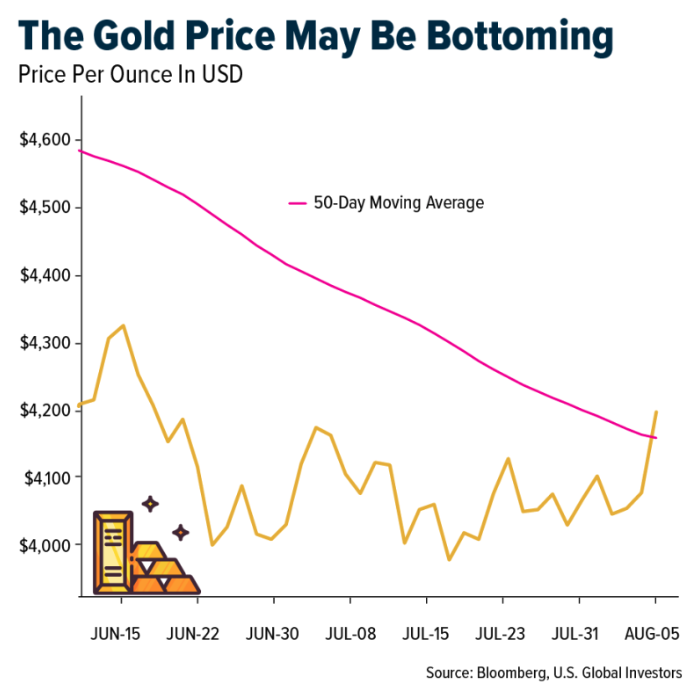
- Gold is showing clear signs of a bottoming reversal, extending a sharp rebound after holding key technical support below $4,000 per ounce. The recovery has been driven by aggressive dip-buying following weak U.S. labor market data and steady institutional demand, highlighted by China’s central bank accumulating gold for 21 consecutive months.
- Aya Gold & Silver has expanded its Moroccan exploration footprint by 35.4% to more than 991 square kilometers through the acquisition of a 259-square-kilometer strategic land package spanning three new projects for $1.1 million. The district-scale expansion broadens the company’s asset base around the Zgounder mine, providing early-stage exposure to precious, base, and critical metals to support its long-term exploration pipeline.
- UBS sees improving medium-term prospects for platinum group metals (PGMs), citing constrained primary supply, industry restructuring, and stronger-than-expected demand from hybrid vehicles, which could sustain demand for automotive catalysts longer than many expect.
Threats
- Bloomberg warns that gold’s rally may be at risk after its rapid ascent, with key U.S. inflation data due next week that could alter the market’s trajectory. Weaker-than-expected nonfarm payroll data drove gold sharply higher this past week. However, an upside surprise in next week’s CPI report—particularly in core inflation—could reverse this week’s decline in Treasury yields and weigh on gold. In addition, any escalation in geopolitical conflicts could push yields higher, creating a further headwind for the metal.
- Zijin Gold International Co.’s decision to abandon its proposed $3.9 billion acquisition of Canada’s Allied Gold Corp. in favor of a $295 million equity investment is the clearest indication yet that Chinese officials may be changing their approach. While there was no formal rejection, Chinese regulators did not approve the transaction before the deadline. As a result, gold mining companies may have one fewer potential buyer willing to pay a control premium.
- Ghana has attracted increased attention in the gold sector as the country’s mining industry has grown in value, prompting changes to mining rules and regulations. However, according to the IMF, as reported by Bloomberg, Ghana’s central bank incurred losses of 22 billion cedis ($1.9 billion) in 2025 under its domestic gold purchase program due to service fees, assay charges, and trading margins.
A message from Advisor Perspectives and VettaFi: Discover something new! Click here to register for our upcoming webcasts.
U.S. Global Investors, Inc. is an investment adviser registered with the Securities and Exchange Commission (“SEC”). This does not mean that we are sponsored, recommended, or approved by the SEC, or that our abilities or qualifications in any respect have been passed upon by the SEC or any officer of the SEC.
This commentary should not be considered a solicitation or offering of any investment product. Certain materials in this commentary may contain dated information. The information provided was current at the time of publication. Some links above may be directed to third-party websites. U.S. Global Investors does not endorse all information supplied by these websites and is not responsible for their content. All opinions expressed and data provided are subject to change without notice. Some of these opinions may not be appropriate to every investor.
Holdings may change daily. Holdings are reported as of the most recent quarter-end. The following securities mentioned in the article were held by one or more accounts managed by U.S. Global Investors as of (06/30/2026):
Boeing Co/The
Allegiant Travel Company
Ryanair Holdings PLC
easyJet PLC
Kering
Expedia
Booking Holdings
LVMH
Hermes International
Palantir Technologies
SanDisk
Torex Gold
Coeur Mining
Aya Gold & Silver
*The above-mentioned indices are not total returns. These returns reflect simple appreciation only and do not reflect dividend reinvestment.
The Dow Jones Industrial Average is a price-weighted average of 30 blue chip stocks that are generally leaders in their industry. The S&P 500 Stock Index is a widely recognized capitalization-weighted index of 500 common stock prices in U.S. companies. The Nasdaq Composite Index is a capitalization-weighted index of all Nasdaq National Market and SmallCap stocks. The Russell 2000 Index® is a U.S. equity index measuring the performance of the 2,000 smallest companies in the Russell 3000®, a widely recognized small-cap index.
The Hang Seng Composite Index is a market capitalization-weighted index that comprises the top 200 companies listed on Stock Exchange of Hong Kong, based on average market cap for the 12 months. The Taiwan Stock Exchange Index is a capitalization-weighted index of all listed common shares traded on the Taiwan Stock Exchange. The Korea Stock Price Index is a capitalization-weighted index of all common shares and preferred shares on the Korean Stock Exchanges.
The Philadelphia Stock Exchange Gold and Silver Index (XAU) is a capitalization-weighted index that includes the leading companies involved in the mining of gold and silver. The U.S. Trade Weighted Dollar Index provides a general indication of the international value of the U.S. dollar. The S&P/TSX Canadian Gold Capped Sector Index is a modified capitalization-weighted index, whose equity weights are capped 25 percent and index constituents are derived from a subset stock pool of S&P/TSX Composite Index stocks. The NYSE Arca Gold Miners Index is a modified market capitalization weighted index comprised of publicly traded companies involved primarily in the mining for gold and silver. The S&P/TSX Venture Composite Index is a broad market indicator for the Canadian venture capital market. The index is market capitalization weighted and, at its inception, included 531 companies. A quarterly revision process is used to remove companies that comprise less than 0.05% of the weight of the index, and add companies whose weight, when included, will be greater than 0.05% of the index.
The S&P 500 Energy Index is a capitalization-weighted index that tracks the companies in the energy sector as a subset of the S&P 500. The S&P 500 Materials Index is a capitalization-weighted index that tracks the companies in the material sector as a subset of the S&P 500. The S&P 500 Financials Index is a capitalization-weighted index. The index was developed with a base level of 10 for the 1941-43 base period. The S&P 500 Industrials Index is a Materials Index is a capitalization-weighted index that tracks the companies in the industrial sector as a subset of the S&P 500. The S&P 500 Consumer Discretionary Index is a capitalization-weighted index that tracks the companies in the consumer discretionary sector as a subset of the S&P 500. The S&P 500 Information Technology Index is a capitalization-weighted index that tracks the companies in the information technology sector as a subset of the S&P 500. The S&P 500 Consumer Staples Index is a Materials Index is a capitalization-weighted index that tracks the companies in the consumer staples sector as a subset of the S&P 500. The S&P 500 Utilities Index is a capitalization-weighted index that tracks the companies in the utilities sector as a subset of the S&P 500. The S&P 500 Healthcare Index is a capitalization-weighted index that tracks the companies in the healthcare sector as a subset of the S&P 500. The S&P 500 Telecom Index is a Materials Index is a capitalization-weighted index that tracks the companies in the telecom sector as a subset of the S&P 500.
The Consumer Price Index (CPI) is one of the most widely recognized price measures for tracking the price of a market basket of goods and services purchased by individuals. The weights of components are based on consumer spending patterns. The Purchasing Manager’s Index is an indicator of the economic health of the manufacturing sector. The PMI index is based on five major indicators: new orders, inventory levels, production, supplier deliveries and the employment environment. Gross domestic product (GDP) is the monetary value of all the finished goods and services produced within a country’s borders in a specific time period, though GDP is usually calculated on an annual basis. It includes all private and public consumption, government outlays, investments and exports less imports that occur within a defined territory.
The S&P Global Luxury Index is comprised of 80 of the largest publicly traded companies engaged in the production or distribution of luxury goods or the provision of luxury services that meet specific investibility requirements.
Please consider carefully a fund’s investment objectives, risks, charges and expenses. For this and other important information, obtain a fund prospectus by visiting our prospectus page or by calling 1-800-US-FUNDS (1-800-873-8637). Read it carefully before investing. Foreside Fund Services, LLC, Distributor. U.S. Global Investors is the investment adviser.
Membership required
Membership is now required to use this feature. To learn more:
View Membership BenefitsSponsored Content
Upcoming Virtual Events View All