
The first step in recovery is recognizing a problem. For decades, some U.S. states have had problems with indebtedness. But as we take stock of state finances today, we see many examples of recovery.
Each state has its own funding mix, but all combinations have worked well in the current cycle. States generally rely on some combination of sales taxes and personal and corporate income taxes. These revenue sources are sensitive to economic activity, but that risk has played out to the upside. Since 2021, state coffers have gained from a jobs rebound, steady consumer spending and strong profit growth.
Federal funding provides about 35% of state revenues, designated for specific purposes. The majority of federal dollars pay for Medicaid health coverage, which is managed at the state level. Washington may also provide funding for infrastructure, nutrition and education programs.
See more: US Set to Pay Most for 30-Year Debt in Quarter of a Century
Each state treasury keeps a budget stabilization or “rainy day” fund to draw on when needed. Funding shortfalls may also be filled through debt issuance. Use of debt must be prudent: unlike the federal government, states cannot issue currency to manage their debt burdens. If the states lose discipline, markets may bring it back.
Pandemic interventions helped to set states on a healthier course. The CARES Act of 2020 and American Rescue Plan Act of 2021 together allocated over $500 billion in funding to states. Unlike most federal grants in aid, these streams left wide discretion for states to use in the recovery. While not designed to support state finances, these funds allowed indebted states to make a fresh start.
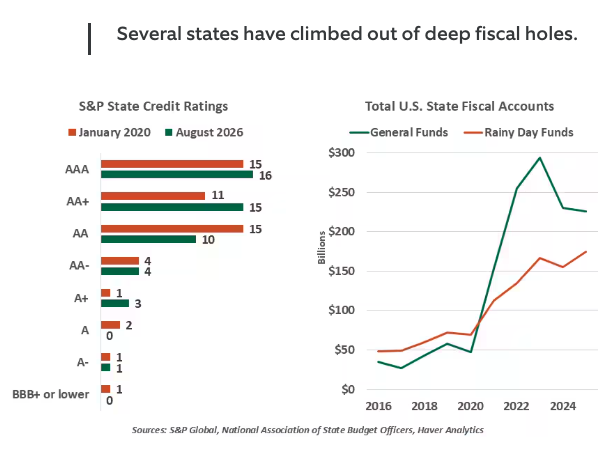
The S&P rating or outlook for 16 states is higher today than it was at the start of the decade. In aggregate, state general funds have risen more than fourfold, and rainy funds have more than doubled, far outpacing inflation. Every state has benefitted from this shift.
Illinois has shown the greatest rebound in its fortunes, but remains a work in progress. Chronic pension underfunding and a budget deadlock pushed the state’s credit rating to the brink of investment grade in 2017. Reforms to future pensions and commitment to managing costs are paying off. However, Illinois still has the lowest credit rating of any state, and the pension burden is a generation away from resolution. Other states appear to have learned from Illinois’ example to fix small problems before they grow into fiscal crises: Previously problematic Kentucky is on the mend, while no state has a lower S&P rating today than it did entering the decade.
The forces that have supported states’ fiscal gains are receding. Pandemic stimulus is long in the past, and all federal funding is coming under closer scrutiny. The “Big Beautiful” fiscal reconciliation bill of 2025 will reduce Medicaid funds to states by an average of 14% in the coming decade. States will administer stricter eligibility screenings, raising administrative costs. Declines in federal support will force reductions in coverage or the raising of more funding by the states.
States employ over 5.4 million workers (3.4% of US employment), about half of which are in state university systems. Higher education employment will face ongoing challenges from lower federal grant funding and flattening enrollment. But pension demands for former and current state employees will carry on regardless.
Debt issued by the 50 states remains significant, at over $2.6 trillion, but the burden is uneven. Liabilities per capita vary from $1,952 in Tennessee to $26,187 in Connecticut. As the states increasingly compete with each other to attract employers and residents, higher taxes to service debt may affect each state’s competitiveness. Tax holidays to attract new firms add to near-term strains on state treasuries. And low state levies may necessitate higher municipal property taxes.
Recovery after hitting rock bottom requires time and discipline. States have made good progress in shoring up their finances, but reductions in federal support may test their fiscal discipline in the years ahead.
A message from Advisor Perspectives and VettaFi: Discover something new! Click here to register for our upcoming webcasts.
© Northern Trust
More Tax Loss Harvesting Topics >

 States employ over 5.4 million workers (3.4% of US employment), about half of which are in state university systems. Higher education employment will face ongoing challenges from lower federal grant funding and flattening enrollment. But pension demands for former and current state employees will carry on regardless.