Did America Just Become a Nation of Luddites?
Membership required
Membership is now required to use this feature. To learn more:
View Membership Benefits
Something strange has been happening in America lately. The Wall Street Journal says this is the summer when the U.S. became “a nation of Luddites.” The Economist calls it “the Summer of Ludd.”
Luddites, in case you’re unfamiliar, are historically what we’ve called people who stand in the way of progress and innovation, who want to turn the clock back to a “better time.”
The word comes to us from 18th-century England, near the start of the Industrial Revolution. Followers of Ned Ludd, a fictional weaving apprentice, destroyed textile machinery, mills and factories to protest the advancement of automation.
See more: Midterm Year Pullbacks Have Been Followed by Double-Digit Gains
The violence didn’t stop anything. Parliament made machine-breaking a capital crime. Ringleaders were hanged or shipped off to Australia. Not a single job was saved. As the Economist put it, the Luddites survive in our memory more for their theatricality than for their economic relevance.
I think of that when I read about the growing backlash to data centers.
Why Young People Are Turning Against the AI Buildout
Public perception of data centers right now is not the best, to put it mildly. The Annenberg Public Policy Center at the University of Pennsylvania ran a survey this summer and found that 61% of American adults oppose new data center construction in their area. That’s 12 points up from the spring. Annenberg says it’s the largest shift they’ve measured on any question about artificial intelligence (AI).
And the results don’t fall along partisan line, either. Democrats oppose at 69%, Republicans at 54%, Independents at 53%. Support for new local data centers has fallen to 14%.
Look at the age breakdown in the chart below. Opposition is highest among Americans under 30, at 70%, and lowest among those 65 and older, at 57%. Normally it’s young people who embrace new technology while their grandparents might resist it. This time, the trend is flipped.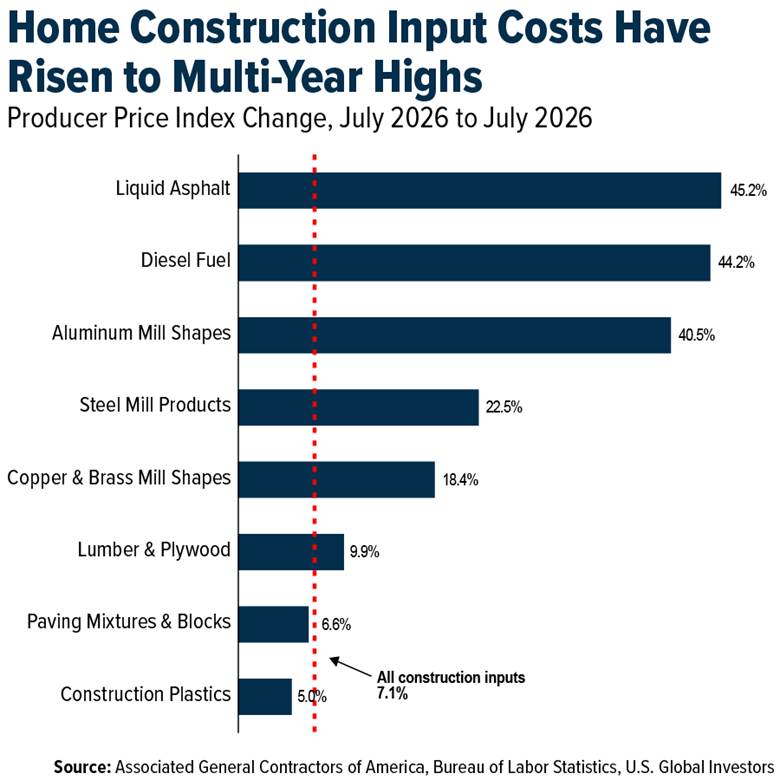
Texas Is Listening
Like other states, my adopted state of Texas is listening to the pushback. Governor Greg Abbott hasn’t banned new data center construction, but he’s issued a series of directives requiring new projects to bring their own power, supply and reuse their own water, add generation to the grid rather than simply draw from it, stay out of residential neighborhoods and give up state economic incentives. He’s also ordered the Public Utility Commission and ERCOT, the group that operates the state’s grid, to audit every project sitting in the queue.
Compare that to the rest of the country, where more than 500 outright data center bans are now on the books.
I believe the blanket bans are an overreaction, and I support what Governor Abbott is doing. That includes ending the incentives and subsidies.
The Electricity Story Everyone Gets Wrong
The inconvenient truth is that what most people believe about data centers does not, simply put, hold up.
Let’s start with electricity. The widely held belief is that data centers will jack up everyone’s bills. On the contrary, a recent study found that data centers actually caused average U.S. retail electricity rates to fall modestly between 2015 and 2024. The logic is straightforward: power systems carry enormous fixed costs, and when you add a large customer with steady, around-the-clock demand, you can spread those costs across more sales.
USAFacts ran a separate study and found no statistically significant relationship between how much data center capacity a state has and how much residential rates changed there. Texas and Virginia, the two biggest data center states in the country, saw rates rise less than the average state.
So why does everyone feel as though energy prices are climbing? Well, because they are. Between 2021 and 2025, residential electricity prices rose 27% in nominal terms. But when you adjust for inflation, prices increased only 7%.
The bill went up, but the U.S. dollar went down harder.
Follow the Money to Loudoun County
The water complaint is even weaker. If you combined all the water that data centers in the U.S. use, it’d be less than half a percent of national freshwater. Our golf courses use roughly 30 times more.
What about home values? Realtor.com matched 43 ZIP codes that received a large data center against comparable neighborhoods that didn’t get one. They found that prices moved together, with no meaningful difference in either direction.
Jobs and income? A recent academic study found that data center activation raised local employment 3.5%, total wages 5.0%, business establishments 4.7% and median household income 1.9%.
Then there’s Loudon County, Virigina, which has been running this experiment for two decades. Taxes on the computer equipment inside data centers are expected to throw off about $1.3 billion next year, roughly 40% of the county’s entire tax revenue. Loudoun has slashed residential property taxes every year for 10 years, eliminated the vehicle license fee and funded schools, roads, libraries and fire and rescue out of the proceeds.
The Buildout Needs Tens of Thousands of New Workers
Private data center construction ran flat at around $10 billion a year for most of the last decade. It’s now approaching $70 billion… per month. That curve is what county zoning boards are voting on, whether they realize it or not.
And the growth doesn’t stay inside the tech sector. The Federal Reserve’s July Beige Book reported rising demand for primary metals and machinery, driven by defense contractors and data center builders.
That brings me back to the young people in the first chart.
The Center for Strategic and International Studies (CSIS) estimates this buildout will need somewhere between 63,000 and 140,000 additional skilled trade workers. Think electricians, engineers, technicians and more. Jobs that pay well above local averages and do not require a four-year degree or six figures of student debt.
Seventy percent of Gen Z believes AI will hurt employment. Watching what’s happening to entry-level, white-collar work, it’s hard to call that irrational.
But the thing they’re protesting outside city halls is one of the few things that will hire them right now.
The original Luddites learned the hard way that the looms and factories came anyway. They always do. The question they never seemed to ask themselves is who would be standing next to and operating the machines when they arrived.
Airlines and Shipping
Strengths
- The best-performing airline stock for the week was Airports of Thailand, up 4.7%, on strong passenger growth and growth outlook. According to Goldman, Allegiant Management noted that it has seen an improvement in pilot attrition trends in recent weeks, with no change to competitive dynamics since the merger announcement. Demand remains strong, and the integration process is off to a strong start.
- This past week, laden vessels from China to the U.S. were up sequentially (+0.5% this week) and up on a year-over-year (YoY) basis (+6% YoY). Data suggests TEUs coming into the Port of Los Angeles will turn positive next week (+24%), following this past week’s +1% sequential move, according to Goldman.
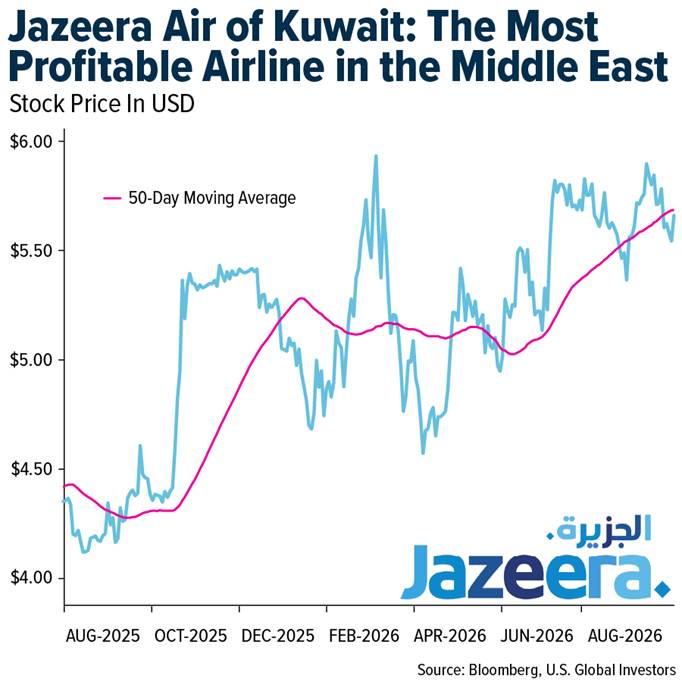
- July Canada CPI data showed that airfares were up 12.0% year-over-year (YoY), with YoY increases accelerating for three consecutive months as airlines continue to pass on higher jet fuel prices through higher airfares. This is a positive market tailwind for Canadian carriers like Air Canada.
Weaknesses
- The worst-performing airline stock for the week was JetBlue, down 13.5%, on higher jet fuel prices. July U.S.-citizen international travel declined compared with 2025, while non-U.S.-citizen arrivals to the U.S. also decreased year-over-year (YoY). In July, the number of U.S.-citizen departures to international destinations was down 2.0% YoY (and up 25% vs. 2019). The number of non-U.S.-citizen international arrivals into the United States remained below 2019 levels at -13% and decreased 3.0% YoY, according to Morgan Stanley.
- Shipping through the Strait of Hormuz slowed further, with five vessels transiting on Saturday and none on Sunday, versus 31 the prior weekend, according to Kpler data. Bab el-Mandeb transits also fell to 49 over the weekend from 55 a week earlier, according to Reuters.
- Three factors are constraining global refinery runs despite record margins across regions and U.S. utilization surging to 97%. First, Middle Eastern and Russian refineries are both operating at only 60% of capacity due to unplanned outages from drone and missile attacks. With nearly 10 million barrels per day (mb/d) of global refining capacity currently offline, the 7 mb/d year-over-year (YoY) drop in runs is consistent with the strong historical negative relationship between outages and refinery runs, according to Goldman.
Opportunities
- According to Canaccord, over the longer term, a more indebted competitor like EasyJet could face greater challenges in seizing opportunities from either 1) a potential Gatwick slot pool expansion following a post-2030 runway expansion or 2) other opportunities that may arise, which would require balance sheet flexibility and capacity. This would be positive for Jet2.
- Goldman sees significant room for improvement in returns on capital outside of container shipping over the medium term. Container shipping rates have continued to rise due to port congestion and restocking demand in the U.S. Its FY3/27 recurring profit estimates for the three Japanese shipping companies under its coverage exceeded guidance by an average of 14%.
- Cathay Pacific management indicated healthy forward bookings and strong summer travel demand heading into August for its passenger business, reports UBS. In cargo, demand remained resilient, as the airline continued to benefit from robust semiconductor shipments within Asia, along with lithium battery exports.
Threats
- The New York-area air traffic control facility remained well below targeted staffing levels, limiting the volume of traffic controllers could safely manage across the Northeast. Thunderstorms further reduced usable airspace, forcing wider aircraft spacing, ground stops and flow restrictions that amplified delays throughout the region, according to BMO.
- According to Metro, a large-scale return to the Suez Canal could initially increase congestion rather than improve schedule reliability. Cape diversions have altered vessel arrival patterns, and switching significant numbers of ships back to the shorter route would change those patterns again, potentially creating bunching as vessels reach European terminals earlier and in different sequences.
- JPMorgan remains cautious on the Chinese airline industry, as the investment case remains an earnings-downgrade story heading into FY26. While volumes improved from the third week of July, pricing remains the key constraint, with July domestic economy-class base fares down 4% year-over-year (YoY), excluding the fuel surcharge.
Luxury Goods and International Markets
Strengths
- European economic sentiment improved in August, with Germany’s ZEW expectations index rising to 34.2 from 26.3 and the Eurozone reading increasing to 31.4 from 23.4, both above expectations. According to ZEW, strong corporate results, export growth and infrastructure spending are boosting confidence, supporting a more constructive outlook for consumer spending and luxury demand in Europe.
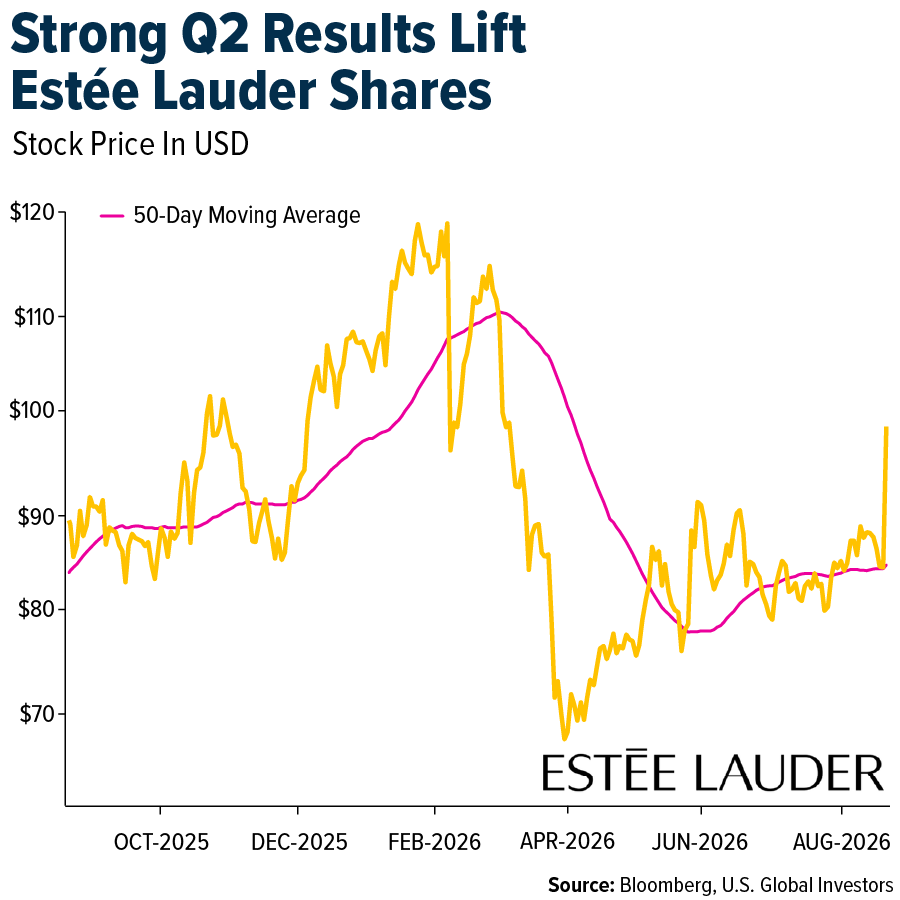
- Estée Lauder shares gained about 20% this week after reporting better-than-expected earnings, driven by strong skincare and fragrance sales, improving demand in China and a positive outlook for fiscal 2027.
- Ananti Inc., a South Korean luxury hospitality company that develops and operates high-end resorts, hotels, golf facilities and vacation properties, gained approximately 42.56% over the past five trading days, making it the top performer in the S&P Global Luxury Index. Shares rallied after the company reported strong quarterly results and improving demand across its resort and hospitality portfolio.
Weaknesses
- According to Bloomberg, luxury sales in China fell more than 10% in July across the 25 largest luxury brands, reflecting weaker spending among wealthy consumers. The decline comes as China steps up efforts to tax offshore wealth and strengthen tax compliance, making affluent shoppers more cautious about discretionary purchases.
- JD Sports Fashion, a leading U.K.-based retailer of athletic footwear, apparel and sportswear brands such as Nike and Adidas, traded lower after cutting its full-year profit outlook. The company reported a 3.1% decline in comparable sales, driven by weaker consumer demand in North America, slower footwear sales and a highly promotional retail environment.
- RH, a luxury home furnishings retailer, declined approximately 15.7% over the past five trading days, making it the worst performer in the S&P Global Luxury Index. The selloff reflected broader weakness in home furnishings and consumer discretionary stocks as investors grew more cautious about consumer spending, higher interest rates and housing market conditions.
Opportunities
- Ralph Lauren and Tapestry, best known for its Coach brand, are showing that listening to customers can be more powerful than simply raising prices. By offering aspirational products at different price points, both companies are attracting new customers while strengthening their brands. The strategy is paying off, with Ralph Lauren and Tapestry among the best-performing major luxury stocks over the past three years.
- Fresh data showed Swiss watch exports to the U.S. jumped 27% in July, while exports to China fell 18.5%. LVMH is seeing a similar trend, with U.S. sales up 6% in Q2. The strength appears increasingly tied to the U.S. wealth effect, as rising markets and the artificial intelligence (AI) boom create new pools of affluent consumers. Brands with strong U.S. exposure may continue to benefit from the country’s wealth creation.
- Beauty is emerging as a bright spot in luxury. Estée Lauder reported a 6.3% increase in quarterly sales to $3.63 billion, beating expectations, with fragrance sales up 10% and skincare also showing solid growth. The company expects 3–5% organic sales growth next year as its turnaround gains traction. Consumers may be more willing to spend on affordable luxury categories such as fragrance and skincare than on high-ticket handbags, making beauty an attractive growth area within the broader luxury sector.
Threats
- Under new rules announced in July 2026, China is imposing a 20% individual income tax on certain income and gains associated with offshore trusts. This could leave wealthy Chinese consumers with less disposable income for luxury purchases, as more of their wealth may go toward paying taxes, potentially putting further pressure on luxury sales in China.
- Viking Holdings reported very strong quarterly results, with revenue and earnings significantly ahead of expectations. Bookings also remain strong, with 96% of 2026 capacity and 53% of 2027 capacity already booked. However, Viking shares sold off as investors focused on low water levels on European rivers, particularly the Rhine and Danube, which could disrupt itineraries, increase costs and lead to cruise cancellations. This highlights a key near-term risk despite the company’s strong demand and booking outlook.
- The U.S. Federal Reserve became more hawkish, with three officials supporting a 25-basis-point rate hike and growing concerns that rates may need to rise if inflation remains elevated. A more hawkish Fed could keep borrowing costs higher for longer, putting pressure on consumer discretionary stocks as higher rates reduce consumers’ disposable income and spending on non-essential goods and services.
Energy and Natural Resources
Strengths
- The worst performing commodity for the week was WME spot aluminum, down 1.76%, on news that the Trump administration indicated it would lower tariffs on certain Canadian aluminum exports. In other news, Chinese steel production fell 3.6% year-over-year to 76.93 million tons in July, the lowest monthly output of 2026, putting the industry on track for its weakest annual production this decade, according to Bloomberg. The decline comes as construction activity continues to contract and fixed-asset investment weakens, underscoring softer demand for industrial commodities.
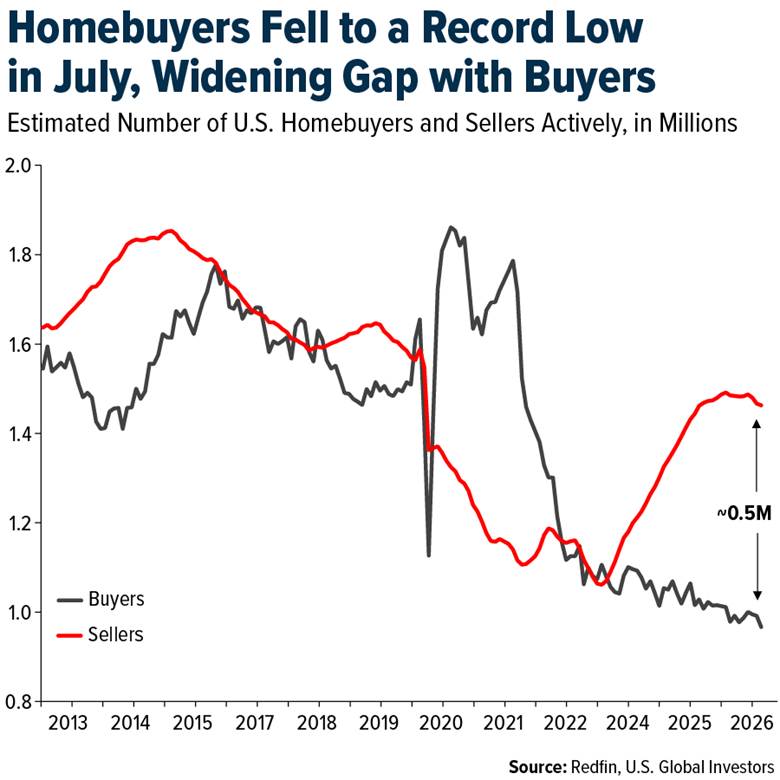
- Argentina overhauled regulations under its Mining Investment Law, establishing a centralized Mining Investment Registry and digitizing VAT refunds for exploration activities. The reforms come as annual mining exploration spending has climbed to roughly $400 million in recent years, up from $100–$200 million during 2014–2021, supporting the country’s efforts to attract greater investment into its mineral resources sector.
- A key one-day copper spread on the LME surged to a premium of as much as $110 per ton on Tuesday, its widest backwardation since the historic 2021 squeeze, as rising shipments to the U.S. depleted LME inventories. Copper’s spot price traded as much as $545 per ton above three-month futures, while futures approached the record high above $14,500 per ton reached in January.
Weaknesses
- The worst performing commodity for the week was WME spot aluminum, down 1.76%, on news that the Trump administration indicated it would lower tariffs on certain Canadian aluminum exports. In other news, Chinese steel production fell 3.6% year-over-year to 76.93 million tons in July, the lowest monthly output of 2026, putting the industry on track for its weakest annual production this decade, according to Bloomberg. The decline comes as construction activity continues to contract and fixed-asset investment weakens, underscoring softer demand for industrial commodities.
- Tightness in the copper market eased after on-warrant LME inventories jumped by more than 35,000 tons on Wednesday, the largest increase since 2024, following an addition of more than 20,000 tons the previous session, according to Bloomberg. The rapid inventory rebuilds helped unwind some of the extreme tightness that had pushed copper backwardation to its widest level since 2021.
- German gas grid operators warned that the country’s target of filling storage facilities to 70% by November is now “virtually unattainable,” according to Bloomberg. Storage sites are currently only 50% full, well below the European average of 61%, raising concerns over Germany’s energy supply heading into the winter heating season.
Opportunities
- Scotia estimates that copper miners are trading at an average implied premium to spot prices of just 1%, well below 6% year-to-date and 17% over the past three years. The unusually narrow premium suggests copper equities remain reasonably attractive at current metal prices, potentially offering upside if valuations revert toward historical levels.
- The U.S. is considering reducing tariffs on Canadian steel and aluminum to 25% from 50%, while automobile tariffs could fall to 15% from 25%, as the two countries negotiate a new trade framework. While no agreement has been finalized and terms could still change, lower tariffs could improve market access and competitiveness for Canadian producers.
- Ur-Energy completed its first uranium shipment from the Shirley Basin mine in Wyoming to its Lost Creek processing facility, marking an important step in ramping up domestic uranium production. Shirley Basin has licensed production capacity of up to 2 million pounds of U3O8 equivalent annually, positioning the project to contribute additional U.S. uranium supply as demand for nuclear fuel grows.
Threats
- ArcelorMittal confirmed that its Ukrainian operations were struck by a missile over the weekend, killing two employees and injuring 13, according to Bloomberg. The attack damaged key production facilities and partially halted operations, highlighting the continued operational and infrastructure risks facing industrial assets amid the war in Ukraine.
- Global copper supply faces additional pressure after MMG halted operations at its Las Bambas mine in Peru following the deaths of two workers, while Lundin Mining lowered 2026 copper production guidance for its Caserones mine in Chile to 120,000–130,000 tons following severe winter storms. The simultaneous disruptions highlight continued operational risks across major South American copper-producing regions.
- U.S. data center developers are increasingly turning to dedicated natural-gas power plants to meet surging electricity demand, potentially adding significantly to carbon emissions. Ninety-nine proposed plants could emit about 318 million metric tons of CO₂ annually if operated at industry-standard rates, according to Bloomberg, potentially increasing environmental and regulatory scrutiny as data center power demand accelerates.
Bitcoin and Digital Assets
Strength
- The SEC formally introduced “Regulation Crypto Assets,” its first major crypto rule proposal under Chairman Paul Atkins, creating tailored pathways for digital-asset issuers to raise capital. The framework includes exemptions for offerings of up to $5 million over four years and up to $75 million annually, alongside a safe harbor that could allow qualifying crypto assets to cease being treated as investment contracts. The proposal marks a significant step toward clearer rules for crypto innovation and capital formation in the U.S.
- China added eight banks to the e-CNY network in August, bringing the number of operating institutions to 24, triple the eight banks participating at the start of 2026. The digital yuan had already processed 4.49 billion transactions worth RMB 16.7 trillion ($2.4 trillion) as of November 2025, while individual wallets reached 225 million. The continued expansion highlights growing adoption and scale of central bank digital currency infrastructure within China’s financial system.
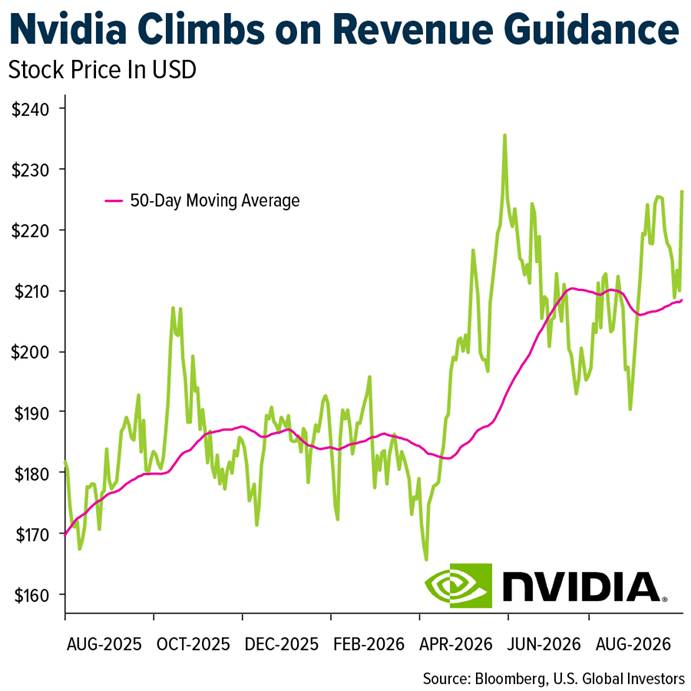
- Bitcoin extended its rally above $71,000, reaching its highest level since June after breaking out of a six-week trading range between roughly $62,000 and $66,900. BTC gained about 11% over 24 hours, while daily trading volume jumped 250% to $59 billion. The rally was supported by roughly $842 million in net inflows into U.S. spot bitcoin ETFs, their largest daily intake since early May, signaling renewed investor demand alongside strengthening price momentum.
Weaknesses
- More than $2.7 billion in bearish crypto positions were liquidated within 24 hours as bitcoin’s sharp rally caught leveraged traders off guard, marking the largest short-liquidation event in CoinGlass data since 2021. Overall, more than 172,000 traders were liquidated, with short positions accounting for roughly 92% of total liquidations. The episode highlights how elevated leverage can amplify market swings and increase volatility across crypto markets.
- Despite bitcoin climbing above $72,000, the two-day rally was driven largely by short covering after more than $3 billion in leveraged crypto positions were liquidated, while perpetual futures open interest remained subdued. The average cost basis for U.S. bitcoin ETF investors is estimated at roughly $82,465, leaving much of the cohort still underwater. With digital-asset treasury companies also remaining depressed, a sustained move higher will increasingly depend on fresh spot demand rather than forced buying.
- Despite growing institutional adoption of blockchain infrastructure, major cryptocurrencies remain well below their record highs, with bitcoin roughly 38% below its peak, ether 52% lower and solana down about 69%. STS Digital CEO Maxime Seiler described the environment as an “institutional summer” but a “crypto winter” in price terms. The disconnect suggests that growing institutional use of blockchain technology is not yet translating into proportional demand or stronger valuations for crypto tokens.
Opportunities
- Kalshi filed with the CFTC to offer perpetual futures linked to an index of 500 major U.S. companies and to copper prices, with the copper contract using Pyth Network’s blockchain-based price feed. The move follows CFTC approval in May for Kalshi to offer a bitcoin perpetual contract. The expansion shows how trading products widely used in crypto markets are increasingly moving into traditional financial markets.
- HSBC and Standard Chartered, two major global banks, completed the first live interbank transaction on Swift’s new blockchain-based ledger, using tokenized deposits to settle cross-border obligations in real time. The initiative involves 17 banks across six continents and could eventually extend to Swift’s network of more than 11,500 financial institutions, which processes over $7.5 trillion daily. The milestone highlights the growing opportunity for blockchain and tokenized deposits to become part of mainstream global banking infrastructure.
- Toyota Finance plans to issue 1 billion yen ($6.8 million) in digital bonds using blockchain technology, offering investors Toyota Wallet electronic money as an additional benefit. The offering brings blockchain-based tokenization to a traditional corporate debt product from one of the world’s largest automotive groups. The initiative highlights the growing opportunity for tokenized real-world assets to expand beyond crypto markets and into mainstream finance.
Threats
- Europe’s MiCA framework is limiting access to Tether’s USDT because the stablecoin does not meet the region’s regulatory requirements, prompting several crypto platforms to restrict or delist the token for European users. Despite strong global demand for USDT, the restrictions highlight the risk that different regulatory standards across jurisdictions could fragment stablecoin markets. Greater regulatory fragmentation could reduce liquidity and limit access to widely used digital assets in major markets.
- use of AI in crypto-related crime increased 40% year-over-year, according to TRM Labs, while reported losses from deepfake scams in 2026 have already exceeded all of 2025 by 263%. Digital-asset hacks also reached a record 201 incidents in the first half of 2026. Fireblocks CEO Michael Shaulov warned that increasingly autonomous AI agents could further amplify the scale and speed of attacks, raising cybersecurity risks across exchanges, protocols and digital-asset infrastructure.
- The SEC reportedly delayed a planned innovation exemption for tokenized securities, originally expected in August, to avoid complicating political negotiations around the Clarity Act. The exemption could allow certain on-chain securities trading without relying on traditional market intermediaries. Industry leaders also warn that potential legal challenges could delay implementation by as much as two years, highlighting the risk that political and legal uncertainty could slow digital-asset innovation in the U.S.
Defense and Cybersecurity
Strengths
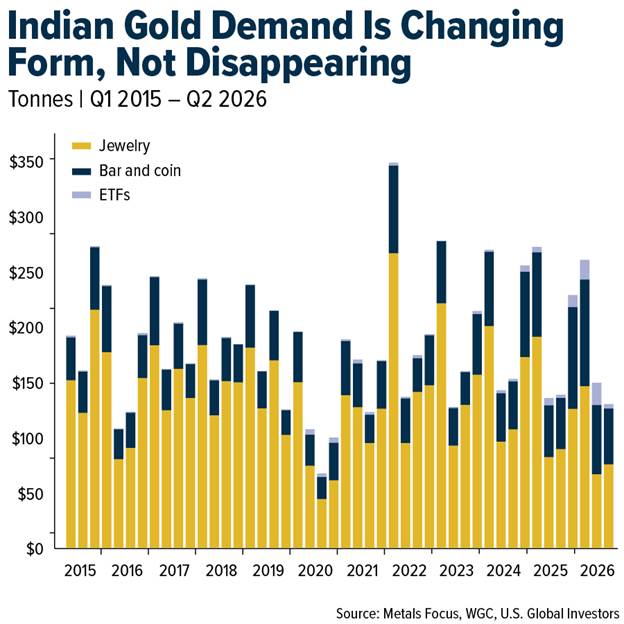
- Google has agreed to purchase custom artificial intelligence (AI) accelerators and infrastructure semiconductors from Marvell Technology to support and scale its Tensor Processing Unit (TPU) ecosystem. Under the agreement, Marvell issued Google warrants to buy up to 58.97 million shares, worth approximately $12.2 billion at $206.58 per share. The warrants will vest alongside every $500 million in hardware purchases.
- RTX’s Raytheon business was awarded an unprecedented $22.9 billion, seven-year contract from the U.S. Department of War under the Arsenal of Freedom initiative to accelerate annual production of Tomahawk cruise missiles to more than 1,000 units for the U.S.
- SK hynix approved a record $28.6 billion share buyback to repurchase and cancel approximately 24.07 million shares, or 3.3% of total shares outstanding, over the next three months following a recent 49% stock pullback. The company also raised its 2025–2027 capital return policy to more than 50% of cumulative free cash flow, paving the way for total 2026 shareholder distributions to surpass $72 billion through buybacks and dividends.
Weaknesses
- Taiwan’s Ministry of Digital Affairs released technical briefings confirming that suspected Chinese state-sponsored threat actors deployed near-autonomous agentic artificial intelligence (AI) workflows to conduct automated reconnaissance and exploit execution against government networks.
- Cybersecurity audit firm TrendAI identified more than 6,300 internet-exposed industrial control systems (ICS) and building automation system (BAS) devices across newly commissioned U.S. data centers, exposing cooling and power systems to potential remote manipulation.
- Critics argue that the U.S. government’s heavy subsidization of Intel under the CHIPS Act has proved problematic as the company faces mounting foundry losses, extensive layoffs and major factory delays. Consequently, Intel’s ongoing struggle to rival TSMC has fueled scrutiny over state-led industrial policy aimed at picking market winners.
Opportunities
- BofA Research says cybersecurity providers are positioned for durable demand as enterprise artificial intelligence (AI) adoption and autonomous threats make security a critical part of infrastructure. The firm raised its price targets for key names, including SentinelOne, Zscaler and SailPoint.
- Kratos Defense and GE Aerospace’s GEK800 turbofan engine received U.S. military type designation F143-ZZ-100, along with an Engineering and Manufacturing Development contract from the U.S. Air Force for the Joint Air-to-Surface Standoff Missile.
- A global market study projects the green data center market will grow from $83.81 billion to $525.8 billion by 2035, a 20.16% compound annual growth rate (CAGR), driven by liquid cooling requirements and the increased use of renewable power purchase agreements (PPAs).
Threats
- Yemen’s Houthis claimed ballistic missile strikes against a Saudi military landing vessel and patrol boats off Mocha, escalating anti-access/area-denial (A2/AD) risks around the Bab el-Mandeb Strait.
- Despite Oman being a long-standing U.S. security ally, President Donald Trump threatened military action against the Gulf nation if it “gets in the way” of Washington’s naval blockade and negotiations with Iran over control of the Strait of Hormuz.
- Donald Trump directed the Pentagon to significantly scale back joint military exercises with South Korea, criticizing Seoul for refusing to join U.S.-led initiatives concerning Iran and citing his strong personal relationship with Kim Jong Un. In parallel, the U.S. redeployed the USS George Washington carrier strike group from East Asia to the Persian Gulf to enforce naval deterrence and secure shipping near the blocked Strait of Hormuz, maintaining maximum military leverage over Tehran despite active 60-day ceasefire talks.
Gold Market
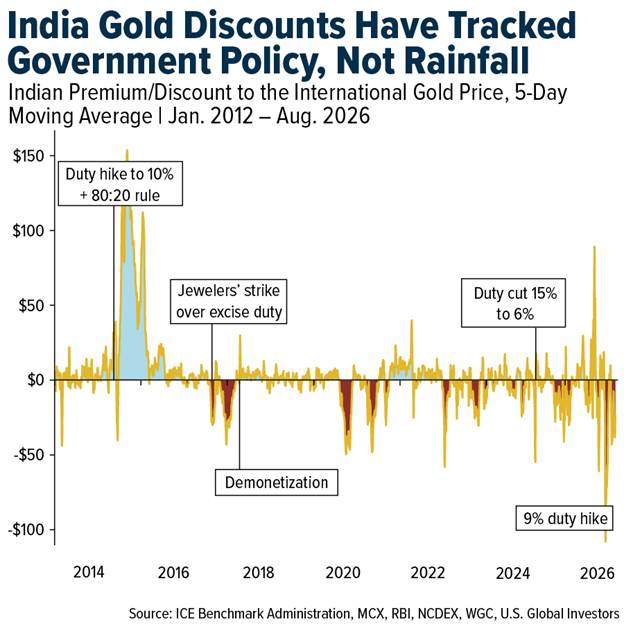
This week gold futures closed the week at $4,674.2, up $236.9 per ounce, or 5.34%. Gold stocks, as measured by the NYSE Arca Gold Miners Index, ended the week higher by 14.25%. The S&P/TSX Venture Index came in up 1.88%. The U.S. Trade-Weighted Dollar fell -0.84%.
Strengths
- The best performing precious metal for the week was platinum, up 7.75%. Platinum prices surged due to a widening structural supply deficit and critically low above-ground inventories, compounded by mining constraints in South Africa. This tight physical backdrop was further amplified this week by a weakening U.S. dollar and steady demand from hybrid auto catalysts.
- Spot gold rose as much as 2.4% on Friday to $4,625.75, on track for its third consecutive weekly gain of approaching 6%, trading at its highest price since May. The rally was triggered by the U.S. Treasury’s surprise announcement of ramped-up buybacks of long-dated government debt, which sent the dollar lower, a tailwind for gold.
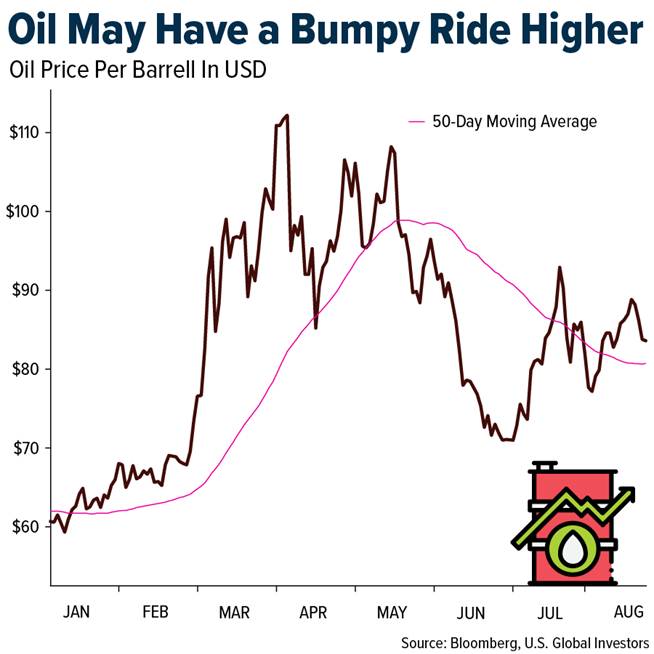
- Investors added a net $1.01 billion to the SPDR Gold Shares ETF in the latest session, bringing the fund’s total assets to $146 billion. ETFs added 34,870 troy ounces of gold in the latest trading session.
Weaknesses
- The worst-performing precious metal for the week was palladium, still up 2.04%, underperforming as the market shifted toward an expanding supply surplus, driven by rising secondary recycling and the ongoing substitution of palladium with platinum in automotive applications. The metal’s heavy dependence on traditional gasoline auto catalysts left it uniquely vulnerable compared with other precious metals, with little support from jewelry or green-energy applications.
- Costs have been moving up for major gold producers. According to UBS, average all-in sustaining costs (AISC) for the eight largest listed gold miners increased by 7% ($120/ounce), while cash margins declined by 11% ($400/ounce).
- Russia has been a net seller of gold, and its gold reserves have fallen by 1.6 million ounces year-to-date to 73.2 million ounces as of August 1, reaching their lowest level since January 2020. The total reserve value dropped by $33.7 billion over the seven-month span as the government tapped gold holdings to help fund budget deficits.
Opportunities
- Billionaire Ray Dalio said investors should reduce their bond holdings and put as much as 15% of their portfolios in gold to hedge against the risk of a U.S. debt crisis. Bloomberg reported that Dalio estimates U.S. government revenue at about $5.5 trillion this year, compared with $7.5 trillion in spending, leaving a $2 trillion shortfall. He warned that a U.S. debt crisis could arrive “in three years, give or take two.” Dalio advocates reducing the budget deficit through a combination of spending cuts, higher tax revenue and lower interest rates, and expects “non-government-produced monies like gold and Bitcoin to do relatively well.”
- China’s platinum jewelry market is transforming as younger consumers pivot toward understated “quiet luxury” styles, favoring minimalist aesthetics over traditional yellow gold. According to Platinum Guild International, this shift is broadening platinum demand beyond bridal and wedding rings into the rapidly expanding market for daily and lifestyle fashion pieces.
- UBS analysts expect gold to challenge the $5,000/oz mark again in the first half of 2027, viewing the price’s breakout above a key resistance zone as significant. Morgan Stanley sees a more robust path for gold above $5,000/oz, potentially in 2027 or sooner, citing fading Fed rate-hike expectations, a weaker dollar, strong central bank buying and growing investor concern over fiscal risks. According to a Bloomberg Markets Live blogger, gold’s rally signals a market increasingly attaching a premium to institutional and policy volatility in the U.S., beyond just the reversal in yields.
Threats
- U.S. federal debt hit a record $40 trillion, with faster debt growth and higher interest costs raising market concerns. Michael Peterson warns that debt could reach $50 trillion within six years, jeopardizing the economy and the country’s future.
- Canaccord lowered its gold price assumptions by approximately 12–14% across the forward curve and its silver assumptions by approximately 12–20%. Its revised deck includes 2026 and long-term gold price targets of $4,374/ounce and $4,747/ounce, respectively, and silver price targets of $69.09/ounce and $72.70/ounce.
- Higher costs are a major concern for investors. According to UBS, concerns over increases to cost guidance were most acute among gold miners with a poor track record of executing against guidance.
A message from Advisor Perspectives and VettaFi: Discover something new! Click here to register for our upcoming webcasts.
U.S. Global Investors, Inc. is an investment adviser registered with the Securities and Exchange Commission (“SEC”). This does not mean that we are sponsored, recommended, or approved by the SEC, or that our abilities or qualifications in any respect have been passed upon by the SEC or any officer of the SEC.
This commentary should not be considered a solicitation or offering of any investment product. Certain materials in this commentary may contain dated information. The information provided was current at the time of publication. Some links above may be directed to third-party websites. U.S. Global Investors does not endorse all information supplied by these websites and is not responsible for their content. All opinions expressed and data provided are subject to change without notice. Some of these opinions may not be appropriate to every investor.
Holdings may change daily. Holdings are reported as of the most recent quarter-end. The following securities mentioned in the article were held by one or more accounts managed by U.S. Global Investors as of (06/30/2026):
Viking Holdings
Estee Lauder
LVMH
Tapestry
JD Sports Fashion
Air Canada
Allegiant Travel Co.
easyJet PLC
Cathay Pacific
Viking Holdings
*The above-mentioned indices are not total returns. These returns reflect simple appreciation only and do not reflect dividend reinvestment.
The Dow Jones Industrial Average is a price-weighted average of 30 blue chip stocks that are generally leaders in their industry. The S&P 500 Stock Index is a widely recognized capitalization-weighted index of 500 common stock prices in U.S. companies. The Nasdaq Composite Index is a capitalization-weighted index of all Nasdaq National Market and SmallCap stocks. The Russell 2000 Index® is a U.S. equity index measuring the performance of the 2,000 smallest companies in the Russell 3000®, a widely recognized small-cap index.
The Hang Seng Composite Index is a market capitalization-weighted index that comprises the top 200 companies listed on Stock Exchange of Hong Kong, based on average market cap for the 12 months. The Taiwan Stock Exchange Index is a capitalization-weighted index of all listed common shares traded on the Taiwan Stock Exchange. The Korea Stock Price Index is a capitalization-weighted index of all common shares and preferred shares on the Korean Stock Exchanges.
The Philadelphia Stock Exchange Gold and Silver Index (XAU) is a capitalization-weighted index that includes the leading companies involved in the mining of gold and silver. The U.S. Trade Weighted Dollar Index provides a general indication of the international value of the U.S. dollar. The S&P/TSX Canadian Gold Capped Sector Index is a modified capitalization-weighted index, whose equity weights are capped 25 percent and index constituents are derived from a subset stock pool of S&P/TSX Composite Index stocks. The NYSE Arca Gold Miners Index is a modified market capitalization weighted index comprised of publicly traded companies involved primarily in the mining for gold and silver. The S&P/TSX Venture Composite Index is a broad market indicator for the Canadian venture capital market. The index is market capitalization weighted and, at its inception, included 531 companies. A quarterly revision process is used to remove companies that comprise less than 0.05% of the weight of the index, and add companies whose weight, when included, will be greater than 0.05% of the index.
The S&P 500 Energy Index is a capitalization-weighted index that tracks the companies in the energy sector as a subset of the S&P 500. The S&P 500 Materials Index is a capitalization-weighted index that tracks the companies in the material sector as a subset of the S&P 500. The S&P 500 Financials Index is a capitalization-weighted index. The index was developed with a base level of 10 for the 1941-43 base period. The S&P 500 Industrials Index is a Materials Index is a capitalization-weighted index that tracks the companies in the industrial sector as a subset of the S&P 500. The S&P 500 Consumer Discretionary Index is a capitalization-weighted index that tracks the companies in the consumer discretionary sector as a subset of the S&P 500. The S&P 500 Information Technology Index is a capitalization-weighted index that tracks the companies in the information technology sector as a subset of the S&P 500. The S&P 500 Consumer Staples Index is a Materials Index is a capitalization-weighted index that tracks the companies in the consumer staples sector as a subset of the S&P 500. The S&P 500 Utilities Index is a capitalization-weighted index that tracks the companies in the utilities sector as a subset of the S&P 500. The S&P 500 Healthcare Index is a capitalization-weighted index that tracks the companies in the healthcare sector as a subset of the S&P 500. The S&P 500 Telecom Index is a Materials Index is a capitalization-weighted index that tracks the companies in the telecom sector as a subset of the S&P 500.
The Consumer Price Index (CPI) is one of the most widely recognized price measures for tracking the price of a market basket of goods and services purchased by individuals. The weights of components are based on consumer spending patterns. The Purchasing Manager’s Index is an indicator of the economic health of the manufacturing sector. The PMI index is based on five major indicators: new orders, inventory levels, production, supplier deliveries and the employment environment. Gross domestic product (GDP) is the monetary value of all the finished goods and services produced within a country’s borders in a specific time period, though GDP is usually calculated on an annual basis. It includes all private and public consumption, government outlays, investments and exports less imports that occur within a defined territory.
The S&P Global Luxury Index is comprised of 80 of the largest publicly traded companies engaged in the production or distribution of luxury goods or the provision of luxury services that meet specific investibility requirements.
The ZEW Index is a monthly survey that measures investor and analyst expectations for Germany’s economic outlook over the next six months.
Please consider carefully a fund’s investment objectives, risks, charges and expenses. For this and other important information, obtain a fund prospectus by visiting our prospectus page or by calling 1-800-US-FUNDS (1-800-873-8637). Read it carefully before investing. Foreside Fund Services, LLC, Distributor. U.S. Global Investors is the investment adviser.
Read additional important information. +
Membership required
Membership is now required to use this feature. To learn more:
View Membership BenefitsSponsored Content
Upcoming Virtual Events View All