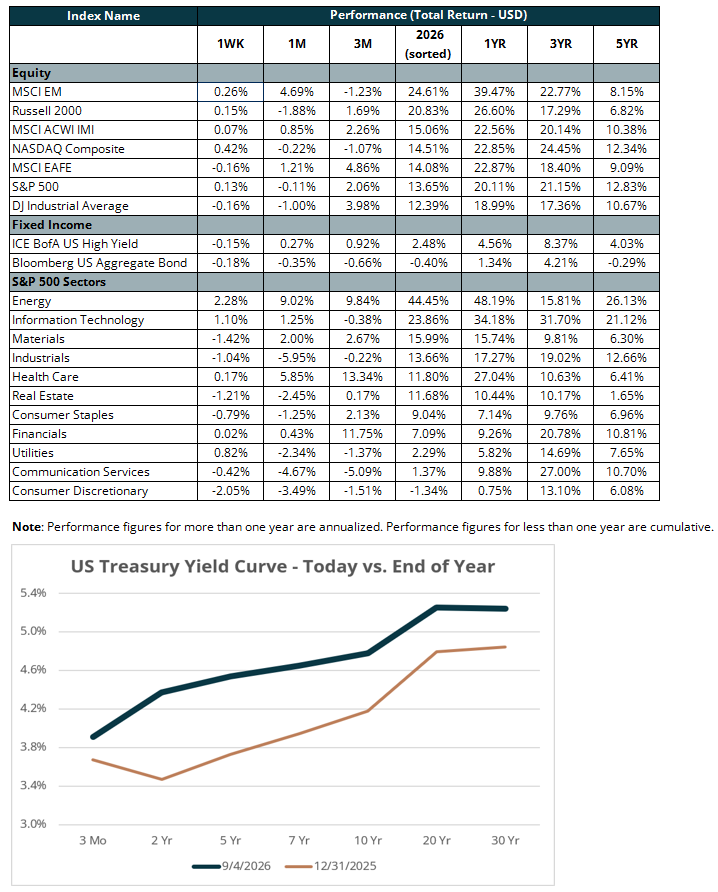
U.S. equities were little changed on the week – the S&P 500 rose 0.1 per cent, the NASDAQ gained 0.4 per cent, and the Russell 2000 added 0.12 per cent – but those modest moves masked a far more turbulent week in the global rates markets. The U.S. 10-year Treasury yield briefly touched 4.8 per cent on Tuesday, its highest level since January 2025, as renewed conflict in Iran and hawkish Fed commentary pushed inflation expectations higher. The move was global in scope: Japan’s 10-year government bond yield hit its highest level in three decades, Germany’s Bund yield reached levels not seen since 2011, and U.K. gilt yields touched their highest levels since 2008 (10-year) and 1998 (30-year).
The more notable story last week, however, was the resumption of major hostilities between the U.S. and Iran. U.S. forces struck two Iranian rocket launchers on Larak Island in the Strait of Hormuz – the first American strike in about a month – after receiving intelligence reports that Iran was preparing to lay more sea mines. Iran retaliated by firing missiles at Jordan, most of which were intercepted, calling the U.S. strike a “fatal error.” Rather than continuing to target Iran’s nuclear program, the Pentagon has redirected its efforts toward keeping the Strait open. On Tuesday, U.S. forces hit nearly 60 military targets, including air defenses, radar systems, and mine-laying equipment. At the same time, they escorted 40 commercial vessels carrying 18 million barrels of oil through the Strait — the largest flow since the conflict began. However, that’s still below the roughly 20 million barrels/day that transited the Strait before the war. WTI rallied 9.7 per cent for the week, reinforcing the inflationary pressure building in the economy.
See more: Why Advisors Shouldn’t Overlook the Private Infrastructure Powering AI
Fed policy expectations swung drastically during the week. Chair Kevin Warsh’s hawkish remarks at last week’s Jackson Hole Summit set a strong expectation heading into the week that the FOMC would raise rates at its September meeting. That conviction faded by midweek after Governor Waller signaled openness to holding steady, provided upcoming inflation data continue to show progress. Friday’s blockbuster August jobs report reasserted the upward pressure on short-end rates, with nonfarm payrolls rising 162,000, far ahead of the consensus estimate of 53,000. The unemployment rate held at 4.1 per cent. The market is currently pricing the odds of a September hike at 60 per cent. Next week’s producer and consumer price reports will be the last major inputs before the Fed’s decision.
The views expressed represent the opinion of Sequoia Financial Group. The views are subject to change and are not intended as a forecast or guarantee of future results. This material is for informational purposes only. It does not constitute investment advice and is not intended as an endorsement of any specific investment. Stated information is derived from proprietary and nonproprietary sources that have not been independently verified for accuracy or completeness. While Sequoia believes the information to be accurate and reliable, we do not claim or have responsibility for its completeness, accuracy, or reliability. Statements of future expectations, estimates, projections, and other forward-looking statements are based on available information and Sequoia’s view as of the time of these statements. Accordingly, such statements are inherently speculative as they are based on assumptions that may involve known and unknown risks and uncertainties. Actual results, performance or events may differ materially from those expressed or implied in such statements. Investing in equity securities involves risks, including the potential loss of principal. While equities may offer the potential for greater long-term growth than most debt securities, they generally have higher volatility. Past performance is not an indication of future results. Investment advisory services offered through Sequoia Financial Advisors, LLC, an SEC Registered Investment Advisor. Registration as an investment advisor does not imply a certain level of skill or training.
A message from Advisor Perspectives and VettaFi: Discover something new! Click here to register for our upcoming webcasts.
© Sequoia Financial Group
Read more commentaries by Sequoia Financial Group