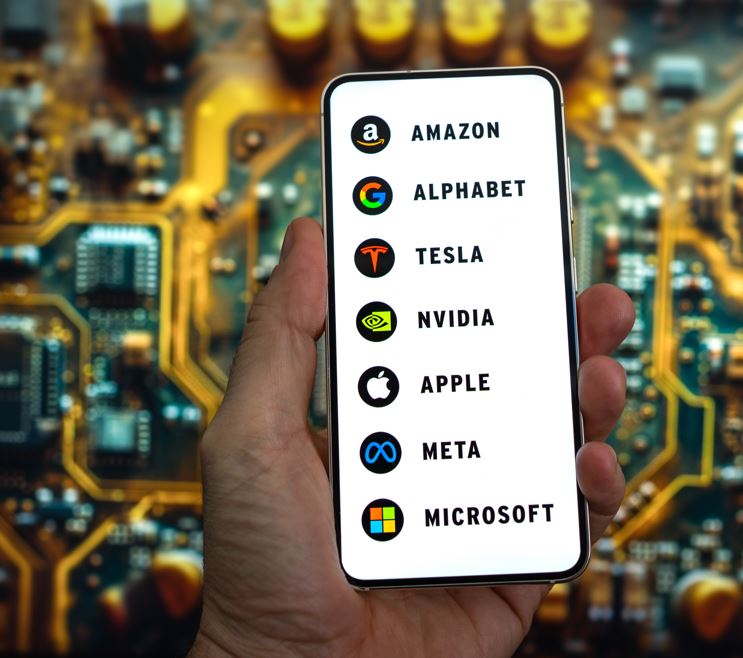
The Magnificent 7 kicked off fourth quarter reporting in a similar fashion to the Q3 season. Tesla once again missed expectations when they reported on Wednesday, on both the top and bottom-line this time (vs. only missing on revenues in Q3), yet investors seemed unbothered.
The Q4 earnings season continued on a positive note after big banks and other financials struck a bullish tone in the first two weeks of reporting.
Big US banks marked the beginning of the Q4 earnings season when they released results last week, and overall they were positive. Because of their position opening up the earnings season they tend to set the tone for things to come.
Something unusual came down the chimney late last year. During the holidays and the preceding weeks, there were a slew of splits among US ETFs – the most in the past four years, according to Wall Street Horizon’s data.
The same themes that drove sharp 2024 returns among the Magnificent 7 stocks appear to be very much alive in the new year.
The S&P 500 earnings growth rate will likely come in just below the 6% mark for the third quarter.
Uncertainty ahead of the election may have resulted in lower corporate capex and M&A trends, but hope abounds that 2025 could bring about renewed animal spirits.
The Q3 earnings season is coming to a close in its usual fashion, with a word from retailers. With 93% of S&P 500 companies reporting at this point, YoY S&P 500 EPS growth has settled around 5.4%, while revenue growth increased 5.5% for the quarter.
In many ways it didn’t matter what those answers were, just that they were out of the way and investors and US companies could begin to plan accordingly for Q4, 2025 and beyond.
There’s a problem brewing in the world of ETFs: We are running out of ticker symbols. Bloomberg recently reported that, with so many new funds hitting the marketplace in recent years, issuers are forced to produce catchy four-letter ticker symbols rather than the more eye-pleasing three-letter abbreviations.
Looking ahead to the post-November 5th world, three Analyst Days caught our team’s attention. NXP Semiconductor (NXPI), CSX (CSX), and ASML Holding (ASML) each hold events that may shed light on key cyclical areas of the global economy.
The bar is raised for Q3. With a handful of earnings reports delivered from major banks, companies from other sectors begin now to report results to the street.
The wait is over for earnings watchers, as the latest quarterly read on US corporations kicks off with reports from JPMorgan Chase and Wells Fargo on Friday. Earnings will provide a gut check on the state of the US economy, and investors will be looking for these results to confirm the mostly improving economic data that’s been released in the last month or so.
After falling to their lowest level last year (in Wall Street Horizon's eight years of data), the total number of announced global corporate buybacks has been improving throughout 2024.
Conference season brings about its own set of volatility catalysts. Portfolio managers and traders must keep their ears out for clues on the state of the broad economy, specific industries, and individual companies.
This year, the bears have asserted themselves after the bulls controlled the first half. Shares of companies that recently announced stock splits are well off their highs, generally not benefiting from the historical trend of outperformance.