Many advisors want to write or have an idea for a book stuck between their ears. They’re waiting for the time and inspiration to get it down on paper. So let me tell you a secret.
We are at the start of the period when companies release their results for the first quarter of 2023, known as earnings season. With everything going on—inflation, rate hikes, a labor shortage, the weakness of the dollar, a pending recession, the list goes on and on...
Apple Inc. is racing to build a trove of software and services for its upcoming mixed-reality headset, seeking to win over potentially wary consumers with apps that use the device’s novel 3D interface.
There was a time when investors would send money into Cathie Wood’s funds even when they were struggling. This year, even as ARK Investment Management roars back, the flows are notable by their absence.
The first wave of academic research applying ChatGPT to the world of finance is arriving — and judging by early results, the hype of the past few months is justified.
Nexus or Icebreaker? Two competing ideas are jostling for attention, each promising to reshape the inefficiency-ridden landscape of moving money from one country to another. Instead of trying to choose between them, central banks ought to give both a shot.
Chat UX creates a natural-language interface to help us use software.
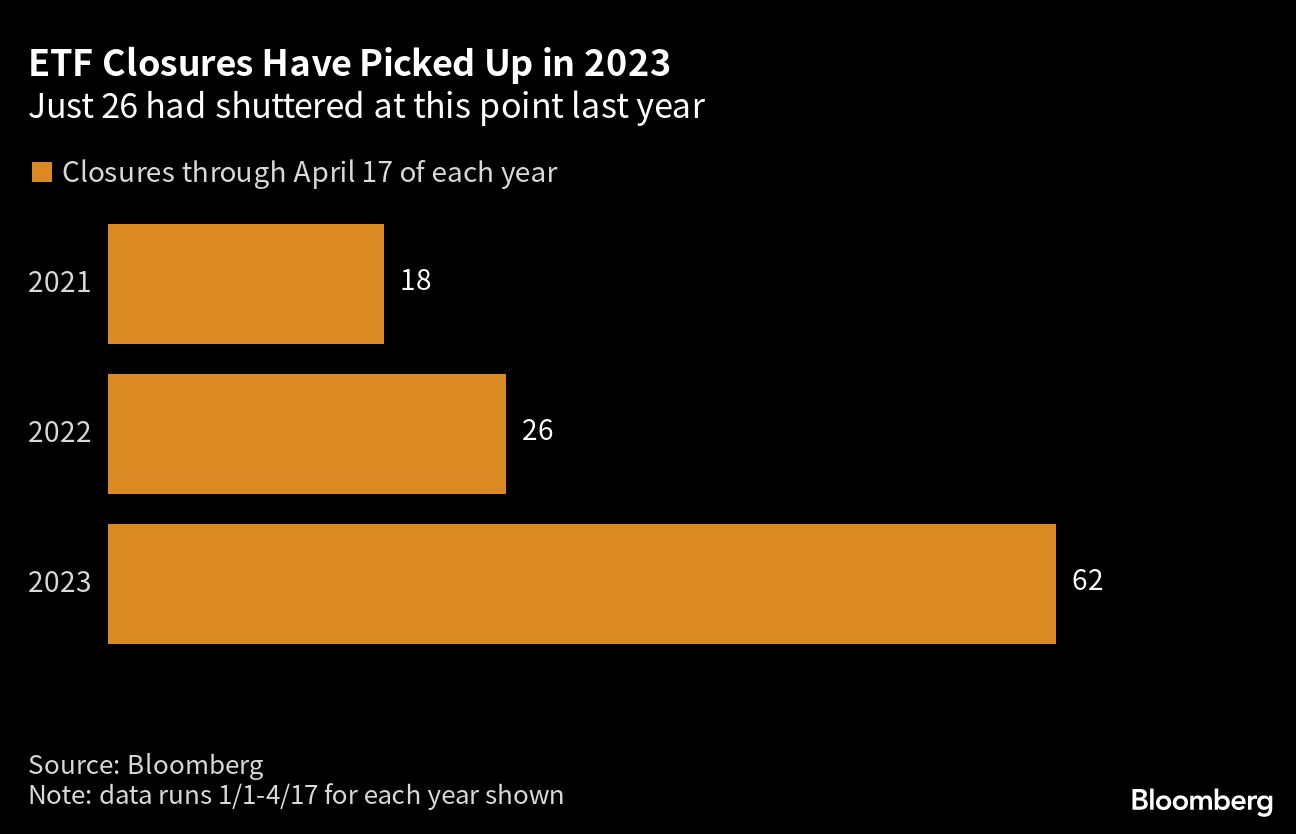
The pace of failures has more than doubled in the $7 trillion exchange-traded fund industry so far this year, as volatile markets and fierce competition put pressure on issuers.
Two brutal weeks for banks have mostly scuttled hopes in markets that a US recession can be avoided. But a close read of the cross-asset landscape still finds investors unconvinced the stress portends a genuine financial crisis.
At the end of 2021, the Dow Jones Industrial Average closed at 36,338, and the career scoring total of LeBron James stood about 60 points lower…
Technology enhancements have increased the speed of panic.
VettaFi’s Roxanna Islam discusses the evolving Communication Services sector, along with ETFs covering the space. Hashdex’s Marcelo Sampaio explains the first 1933 Act bitcoin futures ETF (DEFI) and offers perspective on the future of crypto. Amplify ETFs’ Christian Magoon spotlights several ETFs including the Amplify CWP Enhanced Dividend Income ETF (DIVO).
The Digital Assets Council of Financial Professionals (DACFP) gives financial professionals the ability to establish expertise in blockchain technology and digital assets through its online self-study program, the Certificate in Blockchain and Digital Assets®, webinars and conferences, video interviews with leaders in the field, the DACFP Yellow Pages and unmatched consulting services.
In his latest memo, Howard Marks discusses the significance of the Silicon Valley Bank collapse. He argues that it likely doesn’t portend a wave of banking failures but may amplify preexisting wariness among investors and lenders, leading to further credit tightening and additional pain across a range of industries and sectors.
We announced our Venerated Voices awards for commentaries published in Q1 2023.
Markets have been very positive this week on better-than-expected inflation numbers. The Consumer Price Index (CPI) printed a better than expected 0.1% in March with the year-over-year rate declining to 5.0% compared to a 6.0% year-over-year rate reported in February of this year.
The dollar's strengths still outweigh its weaknesses.
Spotting trend changes is the key to economic forecasting. They don’t happen often. Most of the time, this year will be similar to last year. The pace varies but the overall trend continues… until it doesn’t.
It’s believed that to meet this goal, two out of every three passenger vehicles manufactured in the U.S. would need to be electric models.
There was a downer vibe at the IMF/World Bank meetings this week. The World Bank Group told the international community to brace for low growth and the possibility of a lost decade. The International Monetary Fund warned of low growth and considerable downside financial risks on top of it.
Just as it is getting ever-more important to anticipate changes in Fed policy, those changes are becoming more uncertain. One way to help resolve this dilemma is by explicitly incorporating political and public policy goals into the monetary policy calculus.
The Northern Trust Economics team shares its outlook for U.S. growth, employment, interest rates and inflation.
After the market selloff in 2022—a period that was particularly hard on growth stocks—we think our companies are attractively priced for the next five years, which is our baseline investment horizon.
Despite recent headwinds, structural drivers underpinning China’s growth remain intact. Sectors that will benefit from the structural trends include healthcare, industrial automation, and domestic brands targeting increased spending by Chinese consumers.
Amazon.com Inc. is joining Microsoft Corp. and Google in the generative artificial intelligence race, announcing technology aimed at its cloud customers as well as a marketplace for AI tools from other companies.
Apple Inc. assembled more than $7 billion of iPhones in India last fiscal year, tripling production in the world’s fastest-growing smartphone arena after accelerating a move beyond China.
PE will remain a factor in the RIA space for years to come, but it’s not for everyone.
The race for the first leveraged Bitcoin exchange-traded fund is heating up as applications land amid a surge in cryptocurrency prices.
Xi Jinping led a parade of officials this spring vowing to revive China’s economy, hoping to repair the damage wrought by years of Covid Zero and regulatory clampdowns. Some of the world’s biggest investors are selling anyway.
The US power grid includes everything from 100-year-old hydro dams to brand-new batteries. It’s evolving as coal power diminishes, wind and solar rise and energy storage smooths out operations. But those changes are a shadow of what might come next.
March inflation data may put the Federal Reserve close to its terminal policy rate this cycle, if it hasn’t already reached it.
The Federal Reserve Board reduced banking reserve requirements to zero in March 2020. So banks in the United States are technically not required to back customers' deposits with anything.
While direct indexing has been a hot topic for the past couple of years, many advisors and investors are still trying to assess what it is, if it's right for them, and where it might fit into their portfolios. Head of Vanguard Personalized Indexing Emily LeStrange works with advisors to understand where direct indexing fits into an advisor's practice – and whether the benefits of direct indexing outweigh the challenges.
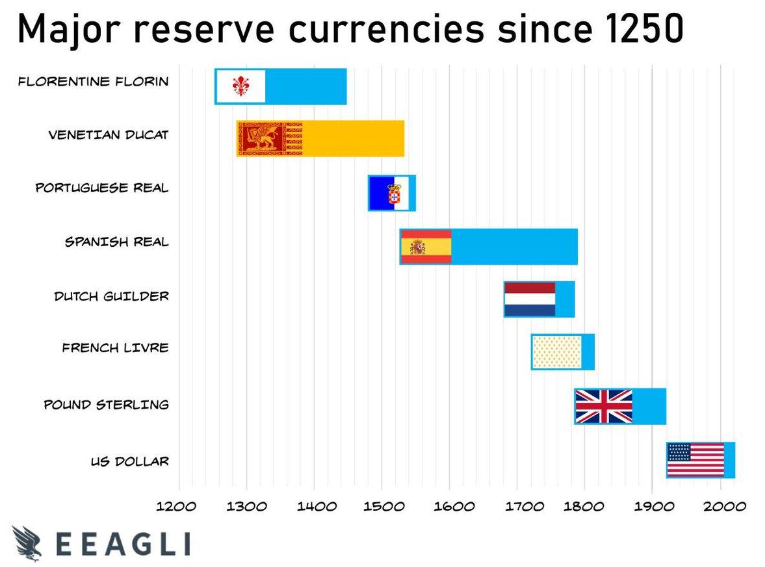
There are four critical reasons why the dollar will not lose its global reserve status anytime soon.
One thinks Tesla’s stock is a buy and headed back to $300; the other believes it’s a sell and will fall to $150.
Born of the Global Financial Crisis, additional tier-1 securities were designed to absorb bank losses in times of turbulence and maintain financial safety at no cost to taxpayers. Despite good intentions, we’ve found AT1s to be flawed instruments that are contingently junior to common equity in practice.
I “interviewed” Chat GPT 4.0 and asked it questions you might find of interest. Then I asked it to suggest additional questions I should have asked.
Instead of constantly developing a new marketing plan each year (or quarter, as I recommend), it's best to work the plan. In those periods, establish a marketing routine rather than creating an entirely new plan.
Why finding ways to break the tie to these variables is so important, and outline a few ideas for how to do it.
Long-term bonds usually pay a higher yield than shorter-term ones to encourage investors to lend for longer. But sometimes the so-called yield curve inverts, as it has now, and short-term bonds offer the highest yield.
Hedge funds are reloading on bearish wagers on US equities, betting the latest market retreat will persist amid worsening economic data and corporate earnings.
We think dividend-income strategies can be effective across multiple environments, provided that they’re designed to tap into a wider opportunity set beyond traditional dividend payers alone.
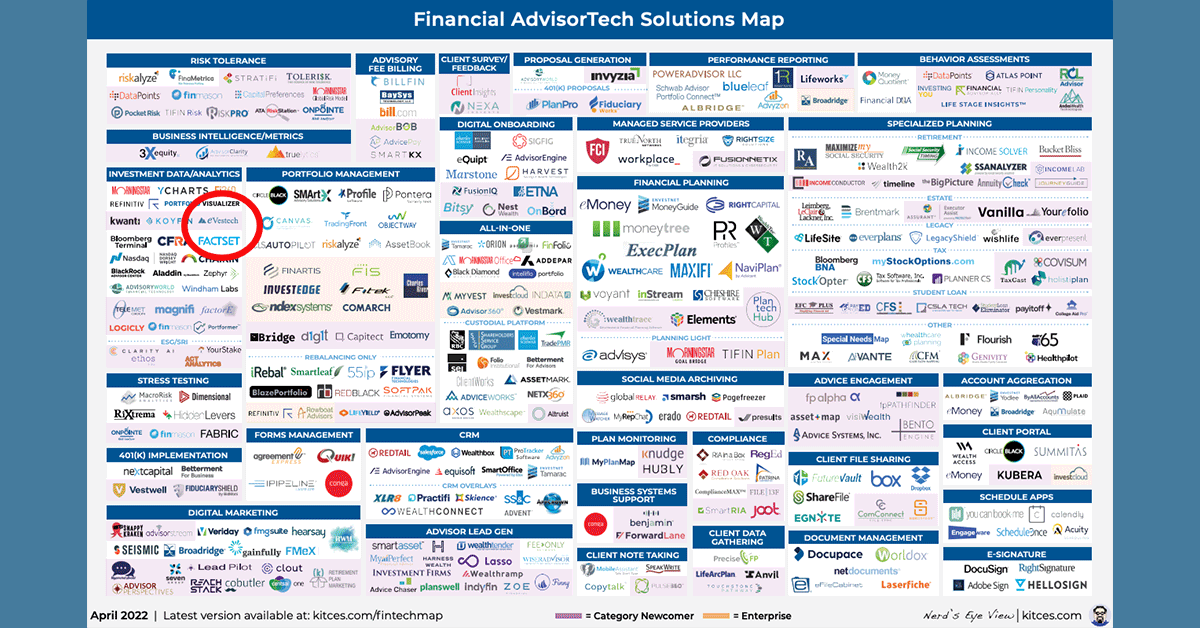
With so many offerings to choose from, how should an advisory practice build or refine its tech stack? Let’s examine options to maximize your chances of success.
VettaFi’s Tom Hendrickson discusses the firm’s recent acquisition of the ROBO Global Index suite and highlights the latest thematic ETF engagement data on their platform. etf.com’s Sean Allocca discusses finalists for their annual industry awards. Eddy Elfenbein explains the AdvisorShares Focused Equity ETF (CWS), which is based on Crossing Wall Street’s “Buy List”.
Model portfolios have become an essential component of virtually every advisor’s investment processes. Models can be constructed to meet investor profiles, including their level of risk tolerance, need for income, or tax considerations. Countless third parties, including many asset managers, offer models. That has led other firms to create model marketplaces, where advisors can research and choose from commercially available model portfolios.
My guest today is Lee Andreatta of Advyzon Investment Management, and his firm just announced that it has added a model marketplace that enhances its TAMP offering and moves Advyzon closer to offering a fully comprehensive solution for financial advisors and investment managers to run their firms.
Western countries have become increasingly wary of sharing technology with China, with the US and Netherlands recently imposing new restrictions on exports of semiconductors and the equipment used to make them.
Central banks accumulated gold at the fastest pace on record in the first two months of 2023. In January and February, central banks collectively bought a net 125 tonnes of the metal, the highest amount for the year-to-date period since banks became net buyers in 2010.
Bailouts of the banking system create social tension. Eventually, bailouts introduce so much risk into the system that failures and bailouts become too costly for society to bear. The government creates draconian rules to prevent them, which kills innovation and new business, and the result is a stagnating economy.
It is not every day that I read a prediction of doom as arresting as Eliezer Yudkowsky’s in Time magazine last week. “The most likely result of building a superhumanly smart AI, under anything remotely like the current circumstances,” he wrote, “is that literally everyone on Earth will die.