Primark — the fast-growing “cheap chic” clothing brand owned Associated British Foods Plc. — faces a muscular Chinese rival in the form of Shein. The last thing it needs is turmoil in its top ranks.
On Monday, Primark’s parent said the chain’s chief executive officer, Paul Marchant, had resigned with immediate effect following an investigation into his alleged inappropriate behavior toward a woman in a social setting. Although the company appears to have dealt with the matter decisively, appointing a third party to lead the probe, it should perhaps have flagged to investors earlier that Marchant was under investigation. (Marchant has not commented.)
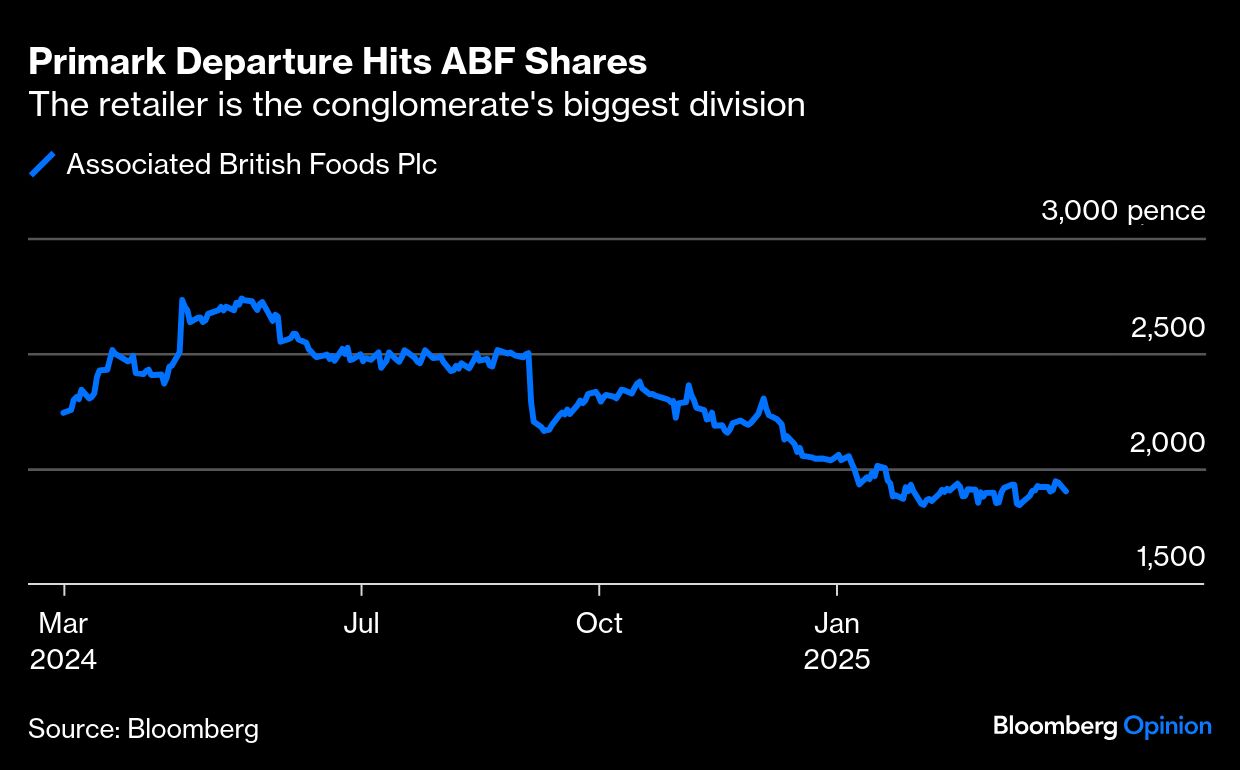
This now leaves ABF and Primark with a big problem of whom to appoint to continue the retailer’s growth at a time of international expansion, crumbling consumer confidence and a nimble Chinese rival nipping at its heels. ABF shares fell as much as 5% on Monday.

Marchant has been CEO of Primark since September 2009, succeeding Arthur Ryan who founded the business as Penneys in Dublin in 1969. Under Marchant’s tenure, “Primani,” as it’s known, drew shoppers to its cape jackets and skinny jeans after the great financial crisis, as Britons looked to trade down from pricier rivals.
The chain made its clothing even more cutting edge, expanding its size range and introducing a more premium selection, The Edit. It had already colonized high streets up and down Britain before moving to larger, more stylish premises, such as the biggest ever Primark in a former shopping mall in Birmingham in 2019. Crucially, under Marchant, supported by ABF CEO George Weston and former ABF finance director John Bason, the company built on its early forays into Europe with a wave of international expansion, first across the continent, and then into the US in 2015.
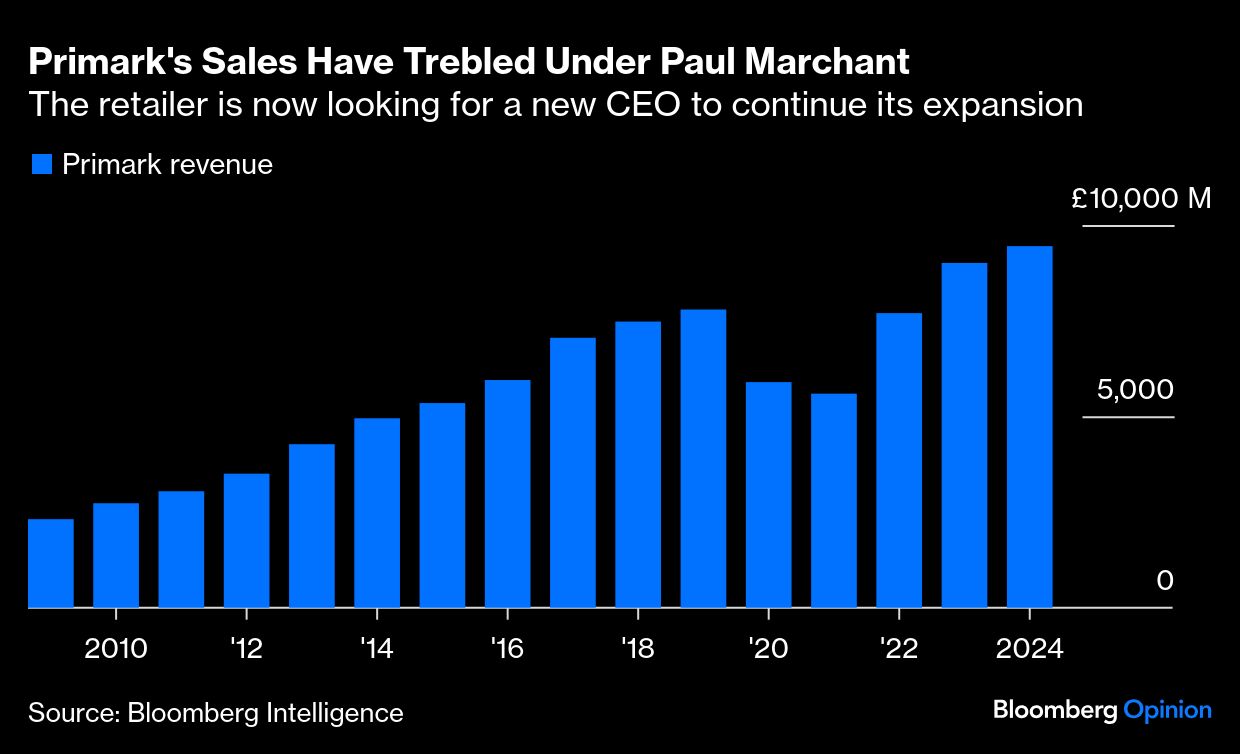
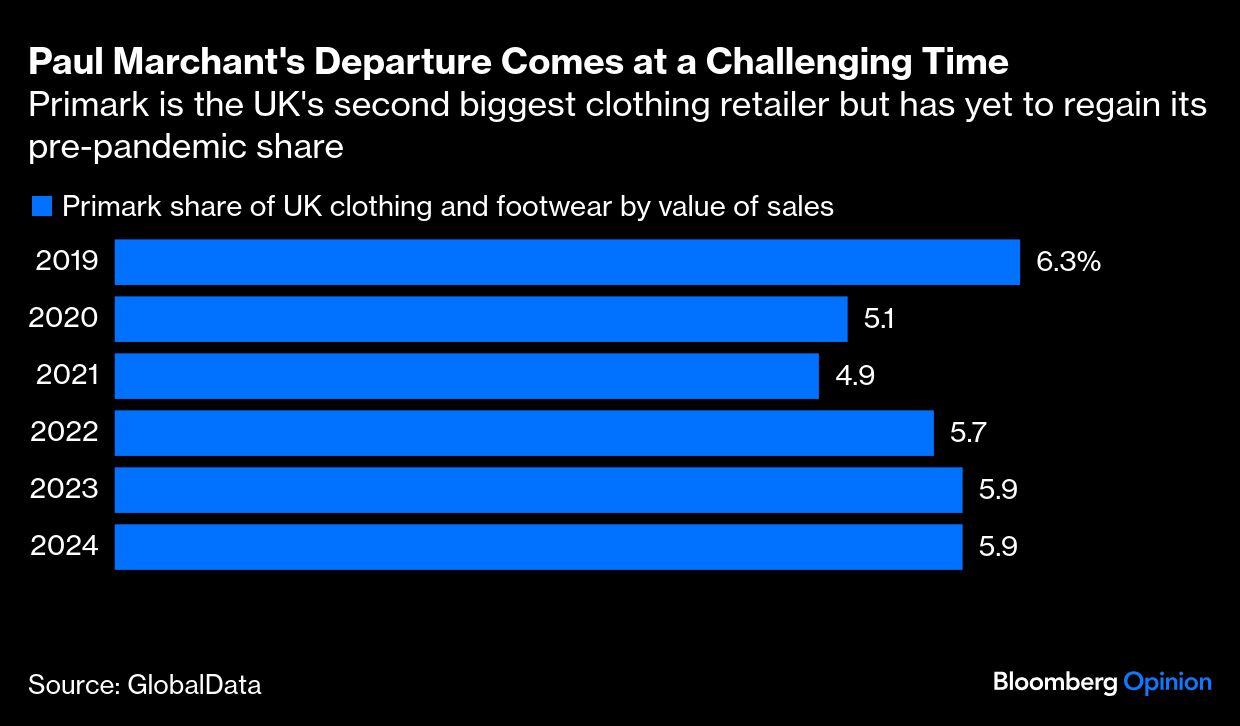
Primark, which for many years eschewed selling online because its cheap prices combined with the expense of delivering to customers’ homes made digital sales unprofitable, has also introduced the ability to order via the internet and collect items in stores. Sales at Primark were £9.5 billion ($12.3 billion) last year, up from £2.3 billion in 2009. It is the second biggest UK retailer of clothing and footwear by value after Next Plc, according to GlobalData.
The company is in the midst of the US expansion, after setting out plans in 2021 to have 60 American stores within the following five years. It currently has around 30. But although Primark has been one of the few European retailers to crack the US, the competitive environment is getting tougher: Gap Inc.’s Old Navy is being reinvigorated by the group’s CEO Richard Dickson and creative director Zac Posen. Meanwhile, Walmart Inc. is trying to make its fashion more stylish, while Target Corp. has pledged to bring back the “Tarjay magic.”
Perhaps the biggest threat, in both the US and Europe, is Shein, which is seen by some shoppers as better value for money, particularly as consumers on both sides of the Atlantic are struggling with the cost of living.
Eoin Tonge, ABF finance director, will become CEO of Primark on an interim basis. Joana Edwards, group financial controller, will become interim finance director. Tonge has a broader background, having also been strategy director at Marks & Spencer Group Plc. He will also be able to draw on the experience of Weston and Bason, who now chairs Primark’s strategic advisory board.
But ABF will need to appoint a new CEO to continue Primark’s ascent. Tonge is clearly a candidate, but the company will also look externally. Richard Price, who revived M&S’s fashion, is leaving the high street stalwart to pursue a portfolio career — could he be tempted by one of the biggest jobs in retail?
Primark will also be able to draw on former Whitbread and Tesco Plc executive Nigel Jones, who joined as chief operating officer last year, alongside Michelle McEttrick, chief customer officer, previously at Tesco and Barclays. Beyond this, investors will have to trust that ABF has a capable team. Marchant was not a board director, and other executives are not well known.
Weston said ABF’s culture “has to be, and is, bigger than any one individual.” He must demonstrate that’s also the case with Primark’s thus far spectacular success.
A message from Advisor Perspectives and VettaFi: To learn more about this and other topics, check out some of our webcasts.
Bloomberg News provided this article. For more articles like this please visit
bloomberg.com.
Read more articles by Andrea Felsted