To most people, black gold means oil, the substance that helped build the modern world while causing the climate crisis. But a new treasure on the market is getting prospectors excited, not least for the role it could play in fixing the problem fossil fuels created.
This lucrative material, called biochar, is a novel method of carbon dioxide removal. By essentially baking organic material at extremely high temperatures in the absence of oxygen — a process named pyrolysis — a black charcoal packed with stable carbon is created. The CO2 that would have otherwise entered the atmosphere as organic matter decomposes is therefore stored for hundreds of years.
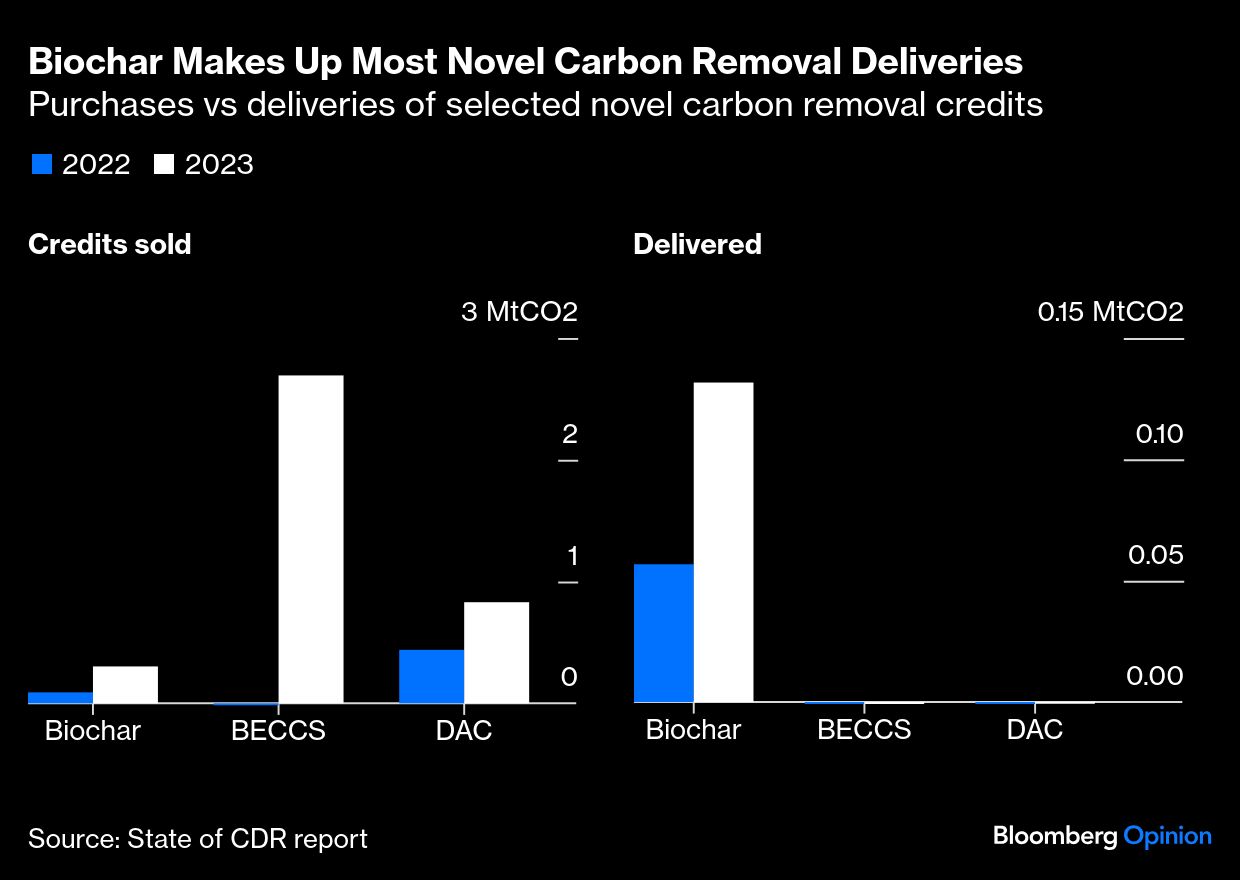
When it comes to sales, purchases of direct air capture (DAC) and bioenergy with carbon capture and storage (BECCS) dwarf those of biochar. That may be down partly to its durability. Carbon in the black stuff is stored for centuries, depending on what the charcoal is used for, while DAC and BECCS have the potential to store carbon for millennia.

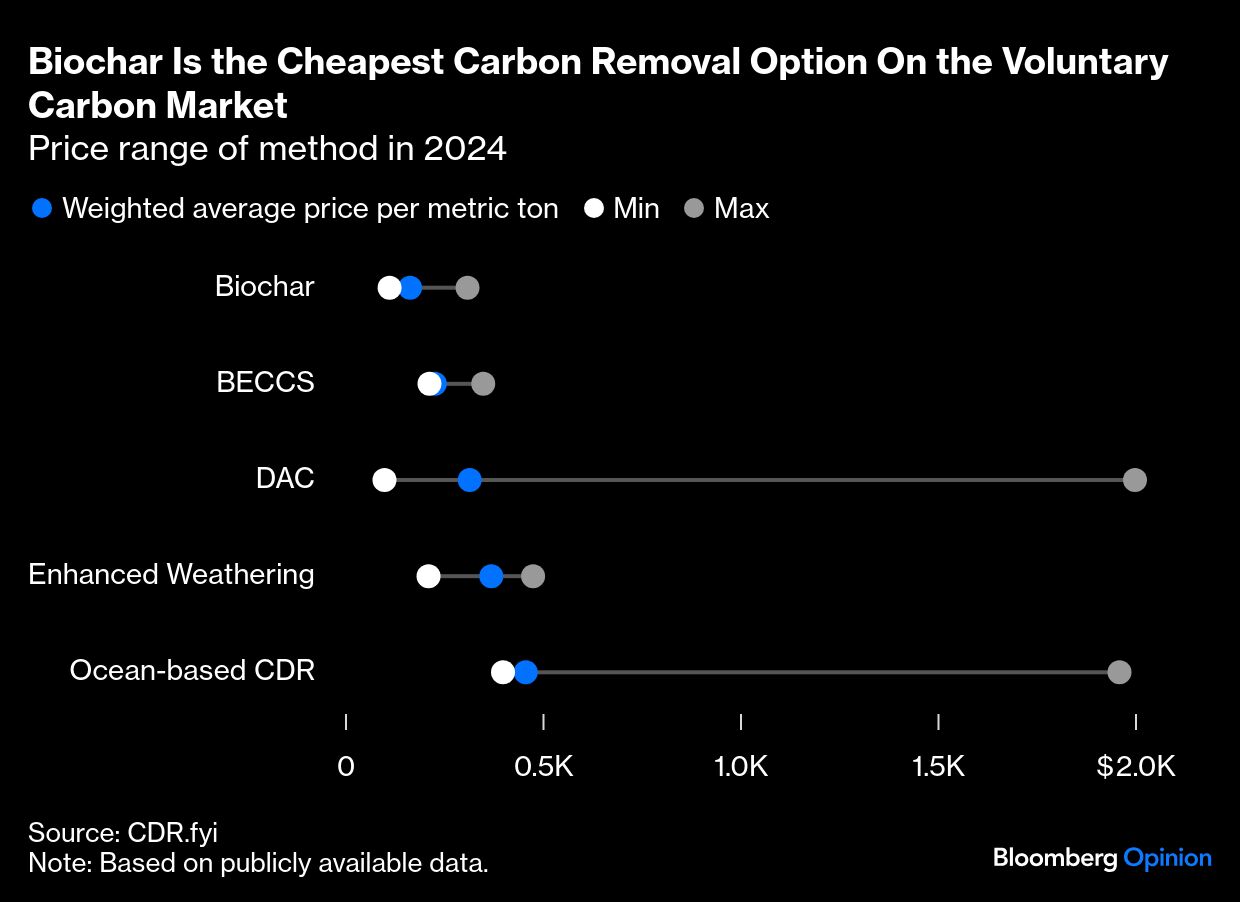
But the world ought to be more bullish on the black stuff. It accounts for far more deliveries, which means that the carbon dioxide represented by the purchase has been successfully removed and stored. According to CDR.fyi, a data platform that monitors the market, biochar represented 86% of delivery volume in 2024. Simply put, if you’re looking for a carbon removal credit you can use, biochar is the one — and among the cheapest, too.
This is still a nascent industry, but facilities are popping up all over the world. China is making enormous pyrolysis equipment, while a new startup called Residual is aiming to develop large-scale biochar production, starting in Brazil, a nation where industries from agriculture to paper mills produce a lot of biogenic waste. Denmark has even crafted a national biochar strategy.
The largest facility underway in the UK is a collaboration between climate tech company A Healthier Earth and German manufacturer Pyreg GmbH, which will make 9,000 metric tons of the black gold. But smaller self-starters currently dominate the nation’s industry: from Restord Ltd, a pilot project set up by Tom Previte in Cornwall capable of producing 40 tons of biochar, which removes close to 100 tons of net CO2 a year, to a council-owned project in Shropshire, which will generate as much as 900 tons of biochar a year using machinery developed on a family farm in mid-Wales.
When speaking to the people behind the UK’s projects, it’s clear why everyone is racing to grab a piece of the market. As one developer put it to me, biochar is “like an onion” — something with many (delicious?) layers.
For the council, it offered a method of carbon sequestration while being financially viable. Making biochar results in three sellable products: carbon removal credits, which are traded in the voluntary carbon market but may eventually have a place in emissions trading programs; the physical biochar and green energy. As pyrolysis processing results in waste heat, it can be used to generate electricity. The facility in Ludlow will have a grid connection, but pairing biochar plants with places that could use the heat directly would be even more efficient.
I was told the credits are very easy to sell now, but the market for the physical biochar is less clear.
It’s not that there’s a lack of applications. Biochar has been explored for use:
- as an aggregate in asphalt and concrete
- in agricultural use to improve water and nutrient retention in soils
- as a replacement for peat in potting soil
- added to bedding in poultry farms to control ammonia emissions
- in water filtration
- as a substitute for coal and coke in steelmaking
But industrial-scale uses, such as in construction materials, require millions of tons of biochar. Acquiring that quantity currently necessitates importing either the feedstock — the biomass used to create the substance — or the biochar itself. That not only makes the carbon removal benefits smaller but raises the risk of dodgy sourcing — Drax Group Plc, a BECCS developer, was caught in a huge controversy when it became known that some of the wood pellets it burns originated from a Canadian primary forest. The company was slapped with a £25 million ($33 million) penalty for the incident.
Then, on the agricultural side, UK government regulation is getting in the way. Not all biochar is the same — whether the substance is made from virgin wood or your dinner leftovers determine its grade and what you can do with it. The ideal from a sustainability point of view would be to make biochar out of all the green waste, such as garden trimmings and tree cuttings, that councils now have to pay someone else to deal with. Converting that waste into sellable products would be a huge boon for cash-strapped local authorities, but any waste-derived biochar is barred from use on agricultural land — eliminating an entire market from the most plentiful and cheapest feedstock.
That should be remedied, and a proper grading system agreed with a list of acceptable sources and applications. A voluntary version already exists in Europe, which could be adopted. Only when this is ironed out will the budding industry be able to grow. It may require some proper large-scale field trials, but a sense of direction and strategy would help build the case for the wonder material.
Biochar might not seem quite as sexy as direct air capture, but the more you peel the onion the better it looks.
A message from Advisor Perspectives and VettaFi: To learn more about this and other topics, check out some of our webcasts.
Bloomberg News provided this article. For more articles like this please visit
bloomberg.com.
Read more articles by Lara Williams