Jane Fraser’s elevation to chair as well as chief executive officer of Citigroup Inc. is a reward for progress and a bulwark against potential pretenders to her throne. Her restructuring of the lumbering and longtime dysfunctional beast that is the US’s third-largest bank by assets is taking time and is far from done. But it was always going to be a tough, disruptive task.
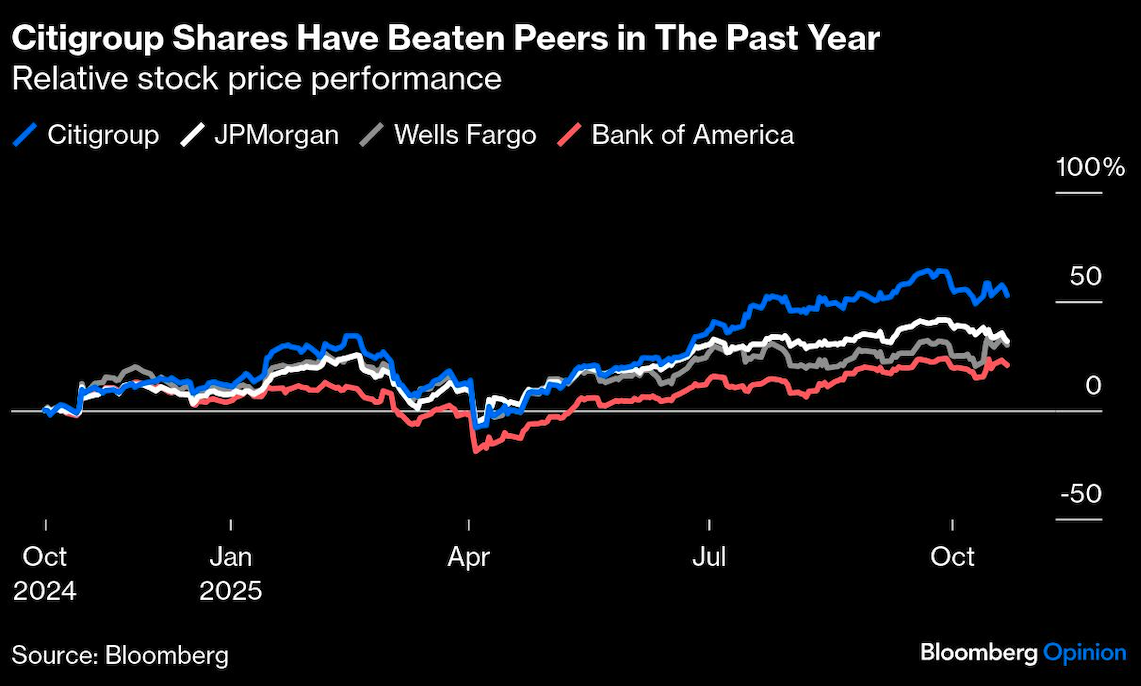
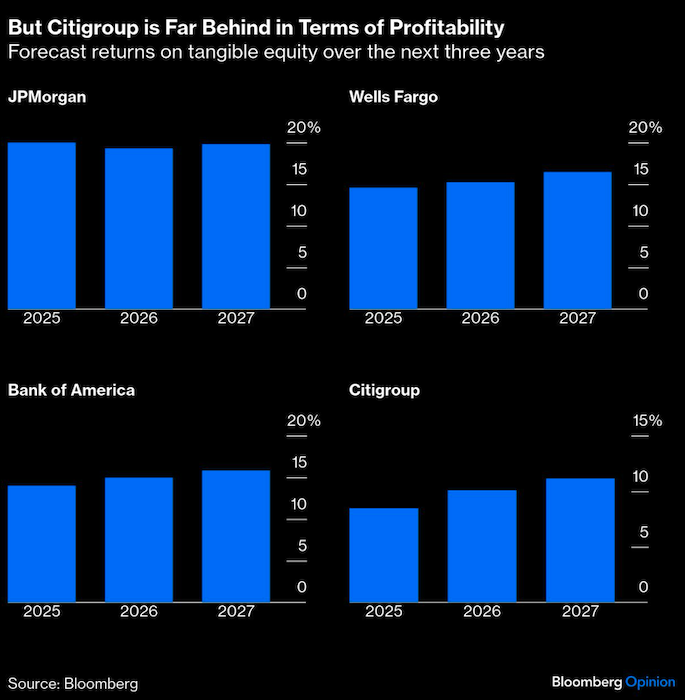
Signs of improvement are starting to show, and Citigroup’s shares have rallied more than rivals in the past year. Its returns on equity are a long way from catching up with Bank of America Corp. or Wells Fargo & Co. — let alone JPMorgan Chase & Co. — but Fraser has earned her solidified position.
She faced skepticism inside and outside the bank when she took the helm in February 2021, as the second winter of Covid-19 was still ravaging people and the world economy. Her background as a McKinsey & Co. consultant was enough to cast doubt on whether she was suited to take on a turnaround that had defeated several executives since the 2008 financial crisis. Some dinosaurs even quibbled shamefully about a woman doing the job.

She says she avoids being unpleasant but her decision-making is as hardnosed as any other leader, and more consequential than her predecessors. Fraser, 58, began by starting to exit weak positions in consumer banking in 14 foreign countries, moves that should have happened years before. In 2023 she announced a radical overhaul of Citigroup’s complex bureaucracy to sharpen minds and speed decisions. That meant thousands of job cuts and a cultural shift she admitted would make plenty of Citi folk “very uncomfortable.”
Nor has she been timid in her hiring. Fraser brought in Andy Sieg from Bank of America’s Merrill Wealth Management to run Citi’s wealth division, and more recently Viswas Raghavan from JPMorgan to run the corporate and investment bank. Sieg dramatically improved performance but has been accused of bullying and unfair treatment by some staff. The bank brought in a law firm to investigate. Fraser said she was comfortable with the outcome, although offered no details. Raghavan, meanwhile, has bought in many of his old JPMorgan crew to help shake up the investment bank. Feathers have most definitely been ruffled, as Fraser predicted.
Fraser’s recruitment of heavy hitters is testament to her determination to break with Citi’s past. Both men have CEO ambitions and no doubt will be snapping at her heels the moment they sniff an opening. Her election as chair and a fat bonus have let Sieg and Raghavan know that the board sees her in the top job for a few years yet.
Doubling up as chair and CEO isn’t uncommon for Americans, particularly at big banks, even if it’s a corporate sin in Britain and Europe. Every other major US lender has a twin-titled chieftain after Charlie Scharf at Wells Fargo snagged its chairmanship alongside his CEO role this summer.
Similarly, a handsome multi-million-dollar bonus for just doing your job is no great shakes on Wall Street. Fraser will be handed $25 million in restricted stock that vests in three, four and five years’ time, plus another roughly 1 million stock options, which Bloomberg News reported could end up being worth tens of millions of dollars. In January Goldman Sachs Group Inc. handed CEO David Solomon and John Waldron, chief operating officer and most favored successor, $80 million each in restricted stock to stay for five more years.
Jamie Dimon, JPMorgan’s billionaire boss, was given a special award of 1.5 million stock options in summer 2021, worth more than $50 million at the time, as an incentive to keep him in situ. While some investors and governance experts don’t like these double bonuses, they've become a Wall Street habit.
What Fraser has accomplished is finally putting Citi on what looks to be the right path. Its transformation is well underway and some analysts see it as a top pick for growth and accelerating profits — even if it still lags well behind peers on profitability. It needs to escape regulatory restrictions in the US to do with the quality of its data, controls, compliance and risk management after many embarrassing snafus. And it needs to offload its Mexican unit Banamex.
Once Fraser has shown Citi can consistently produce returns north of 10%, its shares should finally join its peers in being valued at more than the sum of its parts. Investors have enjoyed a more than 50% rise in the stock price over the past 12 months. Total shareholder returns over five years have beaten Bank of America and investor favorite PNC Financial Services Group Inc., according to Gerard Cassidy, an analyst at RBC Capital Markets.
Yes, there’s much work left to do at Citi. Locking in Fraser for a few more years is the smart way to get it done.
A message from Advisor Perspectives and VettaFi: Looking for a way to gain exposure to the evolving digital asset landscape? Learn about CoinShares ETFs.
Bloomberg News provided this article. For more articles like this please visit
bloomberg.com.
Read more articles by Paul J. Davies