A period of financial recovery for US hospitals is coming to an end as healthcare systems brace for the full force of federal policy changes and a wave of aging baby boomers.
After years of gradual improvement, “the tone for the sector has turned more cautious,” according to an analysis of 222 not-for-profit hospitals and health systems by Fitch Ratings. “The current operational recovery may be at or very near a transition point.”
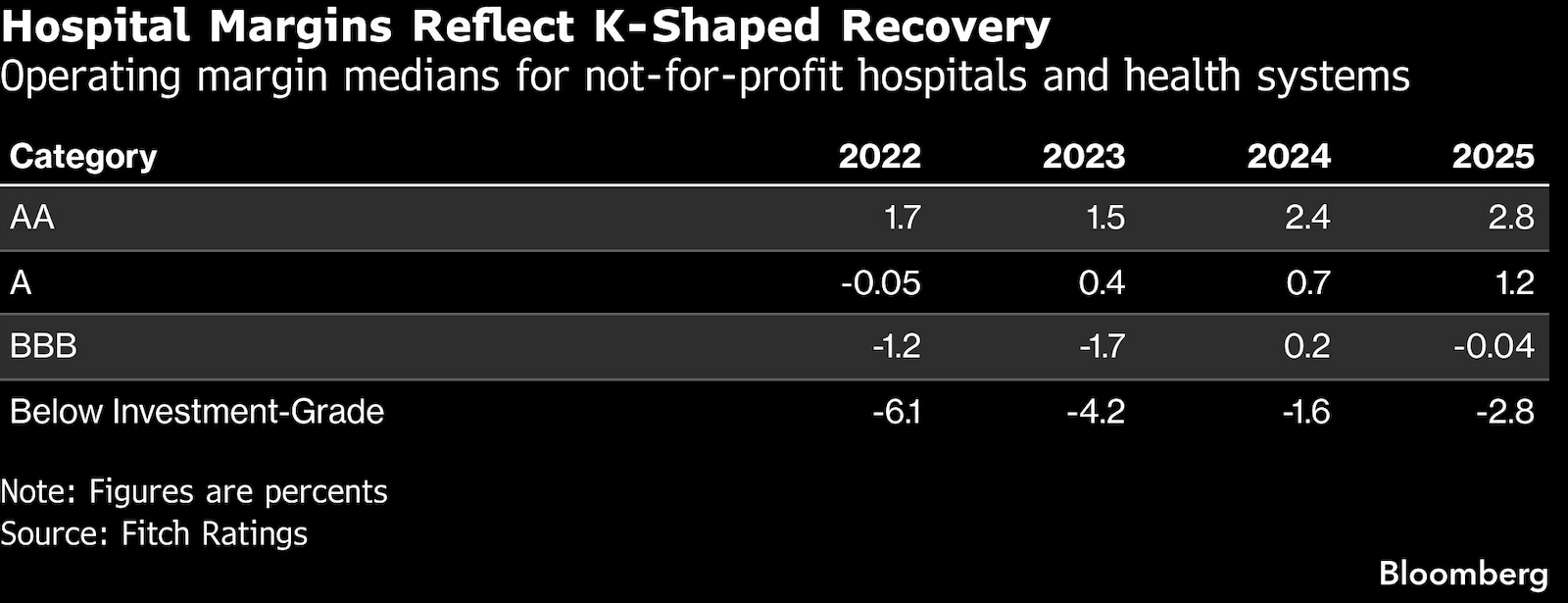
The report showed a deepening K-shaped recovery at not-for-profit hospitals. Many financial metrics among the group improved overall, but those gains were generally driven by higher-rated systems. Lower-rated hospitals saw their finances deteriorate, reversing years of modest progress.
This comes as healthcare executives across the country prepare for financial pain tied to last year’s expiration of enhanced Affordable Care Act subsidies, along with sweeping Medicaid cuts which ramp up next year. Some of the largest for-profit operators, which were not included in the report, have already seen a spike in uninsured patients.

See more: Q2 Earnings Preview: Tech & Energy Drive Growth Amid Healthcare Headwinds
The report showed a widening gap between stronger and weaker providers. AA rated systems saw median operating margins improve to 2.8% in fiscal 2025, near pre-pandemic levels, while junk-rated hospitals saw the same metric fall to -2.8% from -1.6% the year prior.
Similarly, strong gains in hospitals’ investment portfolios drove record cash-to-debt ratios, a measure of hospitals’ leverage. But the gain was “almost entirely an upper-tier phenomenon,” the analysts wrote. BBB and junk-rated systems reported sharp declines in the amount of cash they hold, with days cash on hand falling 22% and 31%, respectively, compared to fiscal year 2022.
Most of Fitch’s rated portfolio is concentrated in the higher end of the credit spectrum — with over three quarters falling in either the AA or A rating category. That concentration is the result of decades of consolidation in the sector and the attrition of weaker credits.
President Donald Trump’s One Big Beautiful Bill Act, which became law last year, is the dominant near-term threat to the sector’s credit profile, according to the report. The law imposes new work requirements for Medicaid recipients, limits hospital funding sources like state directed payments and could result in more than 10 million individuals losing insurance coverage.
The report also highlighted demographic challenges as a major macroeconomic risk for the sector. Over the next four years, approximately 11,000 baby boomers will turn 65 each day, which will simultaneously drive up demand for more advanced medical care and draw skilled labor out of the workforce.
Many hospitals are turning to capital spending to prepare. A measure of capital spending rose to the highest level since 2008, and hospitals across the credit spectrum reported increases.
That surge has fueled an increase in bond issuance from hospitals in the municipal market. Year to date, hospitals have sold about $29.2 billion of muni bonds, according to data compiled by Bloomberg, and hospital munis have returned 0.89% in that period.
A message from Advisor Perspectives and VettaFi: Discover something new! Click here to register for our upcoming webcasts.
Bloomberg News provided this article. For more articles like this please visit
bloomberg.com.
Read more articles by Nic Querolo