High indebtedness has prompted a call for France to cancel part of its public liabilities. Ideas spread, so expect similarly unorthodox demands elsewhere as governments grapple with high debt, while political disruptors air increasingly unconventional policies. All those roads, however, lead to more inflation and the debauchment of financial assets.
The greatest hits of the GFC keep getting played. The latest is the call from the left-leaning French populist politician, Jean-Luc Mélenchon, to cancel 18 percent of the country’s public debt; in his words, “to just take the bonds, and burn them.” We have heard similar appeals before: in Europe as the euro zone debt crisis detonated, and around the same time in the US.
See more: The Hidden Concentration Between a Portfolio's Equity & Bond Sleeves
Debt cancellation, however, is nothing more than monetary financing and would be highly inflationary. The argument for real versus financial assets only strengthens.
You may remember the (serious) proposal in 2011 — which had to be officially denied — for Treasury to mint a $1 trillion platinum coin. The Federal Reserve would exchange it for a trillion dollars of government bonds, that the Treasury would then annul. The plan would circumvent the debt ceiling that the US had accelerated into after the Lehman crisis.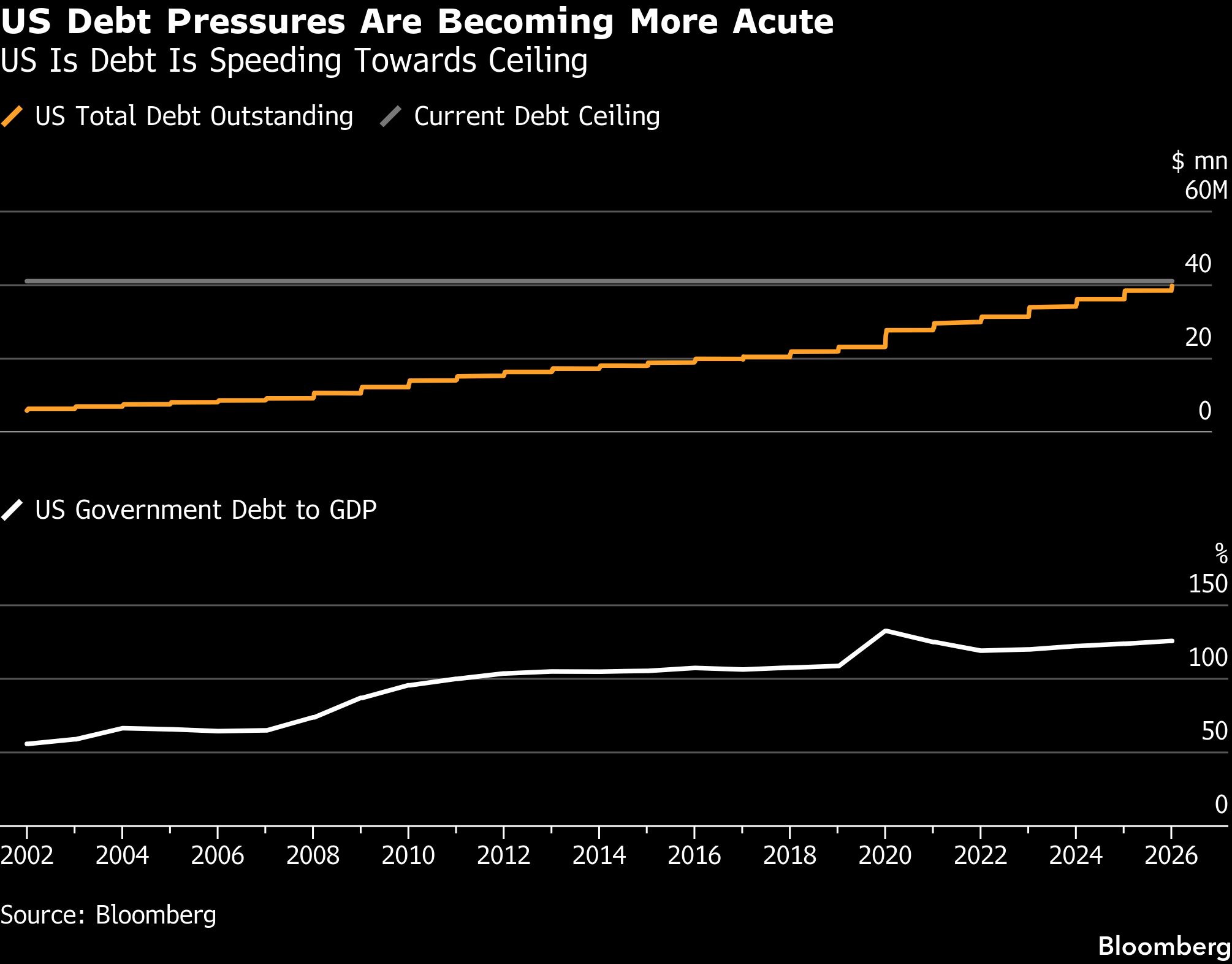
Today, we’re only $1.1 trillion away from the debt ceiling and speeding toward it, while the debt/GDP ratio is 25 percentage points higher than it was 15 years ago. As the interest bill rises to more than $1 trillion it wouldn’t be surprising if some in the US echo Mélenchon’s call to cancel or haircut some of the Treasury’s debt.
I hadn’t looked at the US debt dynamics for a while, but they are still the most troubling in the world. The US’s twin deficit — current account plus budget balance — is greater than every large EM and DM country in GDP terms bar Brazil.
The size of the deficit is wildly inappropriate for an economy at this stage in the cycle. Some of the blame is on the ballooning interest bill, but even after X-ing that out, the US has the largest deficit in the world in GDP and dollar terms.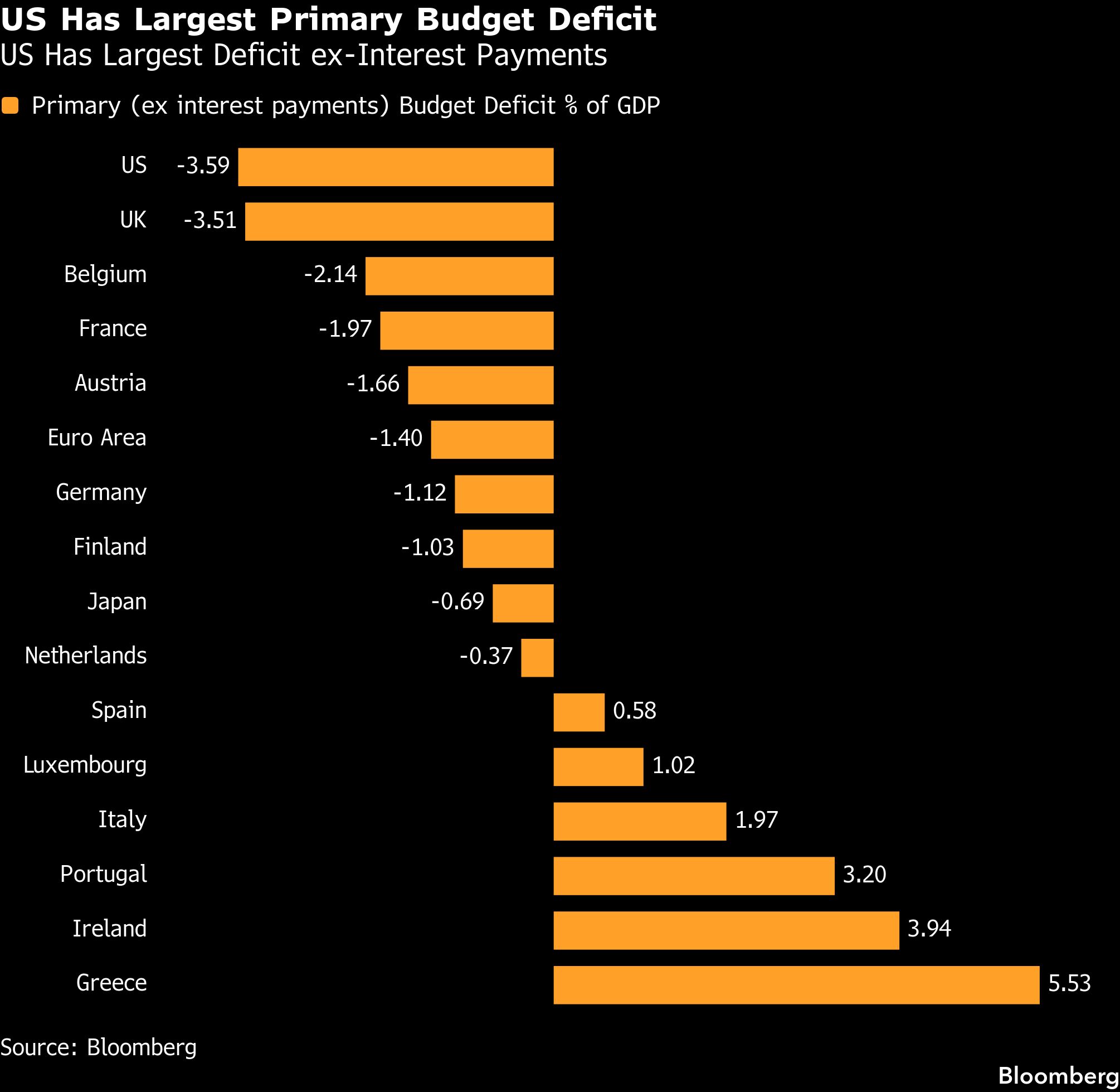
With no side seriously advocating for the fiscal punchbowl to be taken away – and with politics and politicians vacating the centre ground and gravitating to less conventional policies — it’s not inconceivable that more avant-garde approaches to deal with the debt, such as cancellation, will increasingly be heard.
Even if they don’t come to fruition, low-probability, high-impact events materially warp the distribution of risks as the tails are much fatter than initially thought. We should therefore take them seriously, if not literally, especially with the clear air of frustration evident in the current administration after the Treasury’s panicky looking announcement to increase long-end buybacks.
If this frustration turns to desperation, which I wouldn’t bet against, then expect other unorthodox prescriptions to deal with the debt, either put into play by policymakers or brought on to the political agenda by the opposition.
So what are the options to reduce government debt?
- Fiscal consolidation
- Growth/inflation
- Financial repression
- Selling of government assets
- Debt default or restructuring
- Debt cancellation, or other types of monetary financing
Let’s go through them. Fiscal consolidation is too risky for votes; growth is already being charged by massive government deficits, and inflation is already an issue for rising interest payments; financial repression will eventually come, but too late (and is already here if you include the Treasury’s enhanced buyback operations); selling government assets, such as Fort Knox’s gold, is a one-off and unlikely to move the dial; and debt restructuring or default would cause more harm than good.
We can start to see why debt cancellation might start to look appealing, as it’s relatively easy to do. But it would be a grave error to mistake ease for efficacy.
Debt cancellation, as France would also discover if it ever went down that path, is likely to be highly inflationary as it is just monetary financing dressed up another way.
As mentioned above, the US has flirted with this idea before, with Ron Paul its main proponent, introducing the Debt Crisis Resolution Act in August 2011.
But how would it work in practice? The Treasury would apply a haircut (or outright cancel) some or all of its bonds held at the Fed, say 10%. The Fed would then do what only central banks can do: write its equity down to a negative value. (There are other options, such as creating a new replacement asset, eg a platinum coin, or extending a central bank overdraft facility to the Treasury, but all lead to the same place.)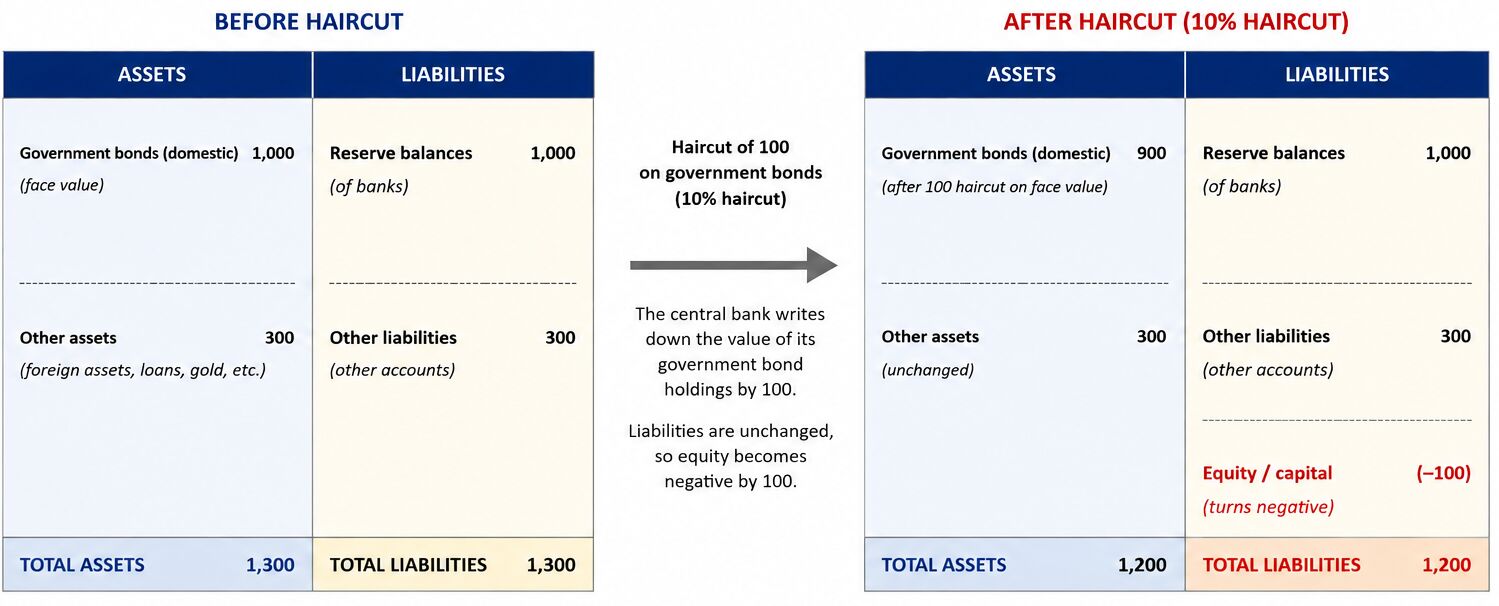
Voila! Problem solved. Except not really. The reserves that the Fed originally created to buy the Treasuries as part of QE now have no natural date when they will be extinguished, which otherwise would have been when the Treasury redeemed the bonds at their maturity.
Instead the increase in reserves has become permanent, and explicitly so. One of the reasons why QE was not inflationary in the first instance is that it was understood that the reserves would be retired at some point in the future.
The private sector typically adjusts its own spending if it thinks the tax bill from deficit spending will eventually come due. But if monetary financing suspends this Ricardian equivalence, then the private sector can spend with abandon in concert with the government.
Even in the current monetary system of plentiful reserves, explicitly making the increase in the base money supply permanent would be crossing the Rubicon, and would likely prove highly inflationary.
There are other forms of monetary financing, such as QE or yield curve control accompanied by fiscal expansion, or simply a no-limit credit card issued by the central bank to the Treasury. All lead to more inflation.
That’s the path we’re already on, and the risks are likely to grow as long as the less palatable approaches to improving the US’s debt dynamics are shunned in favour of ineffective gambits or, worse, trillion-dollar coins.
Simon White is a macro strategist who writes for Bloomberg. The observations he makes are his own and not intended as investment advice. The MacroScope column is a wide-angled take on the most important macro and market topics, rising above the short-term noise to get the big picture.
A message from Advisor Perspectives and VettaFi: Discover something new! Click here to register for our upcoming webcasts.
Bloomberg News provided this article. For more articles like this please visit bloomberg.com.