Where to Invest Now as Data Centers Turn Copper Into a Hot Commodity
Membership required
Membership is now required to use this feature. To learn more:
View Membership BenefitsCopper is having a moment. It may be a long one.
The metal has hit record highs in 2026 and is currently up 15% since the start of the year, trading above $14,300 a ton on the London Metal Exchange.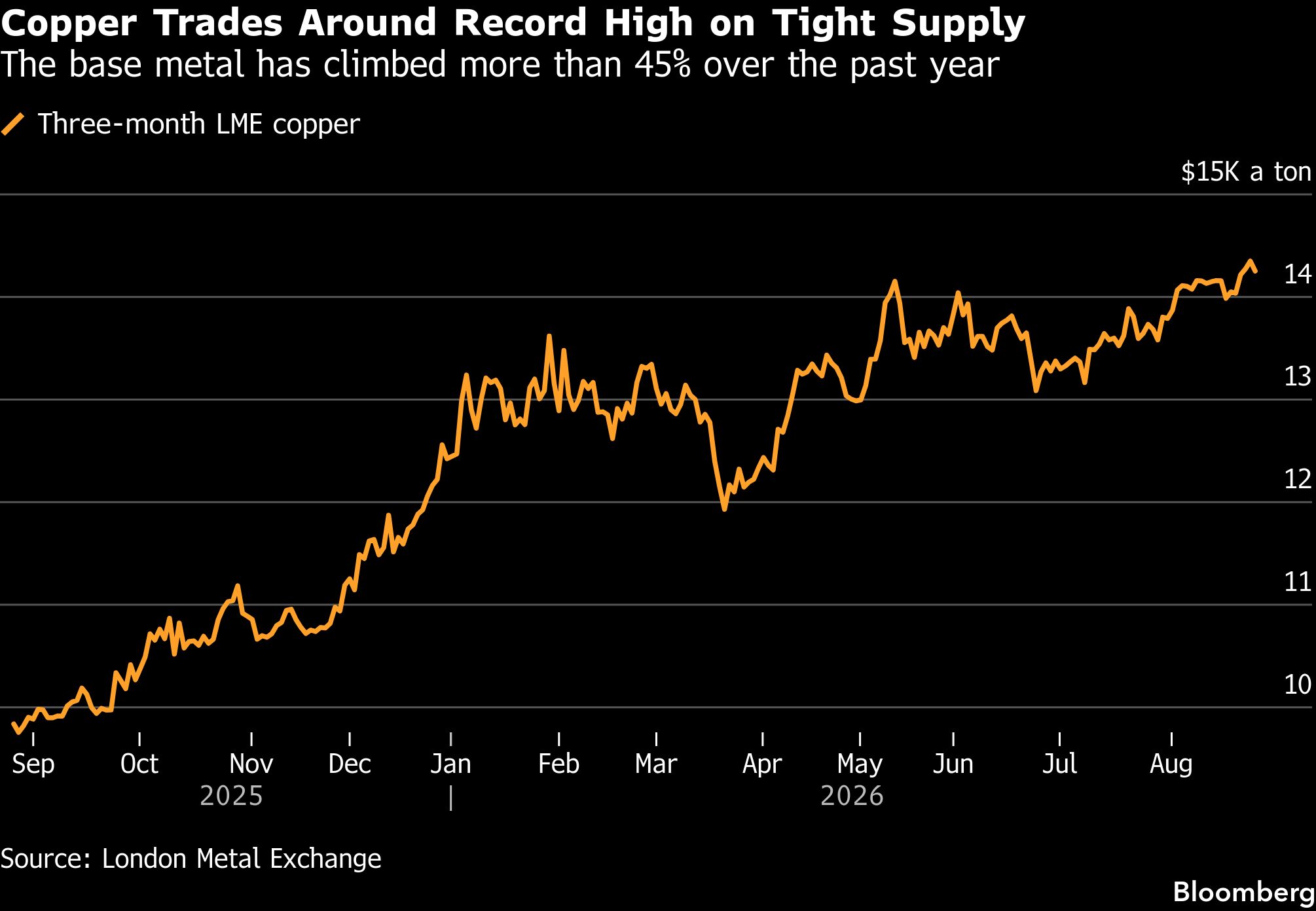
Behind the the recent price action is a powerful longer-term story. Copper is essential to everything from power grids and electric vehicles to renewable energy and the rapidly expanding network of data centers needed to support the boom in artificial intelligence.
Read More: Bellwether Industrial Metal Copper Is Trading Like an AI Stock
See more: Gold Regains Its Luster
And the world is going to need a lot more of it. Analysts at S&P Global project copper demand will rise 50% to 42 million metric tons by 2040 from 28 million tons last year. Supply is looking increasingly tight. The same study estimates a supply deficit of 10 million metric tons by 2040 due to soaring demand and mining constraints.
That supply-demand imbalance has strengthened the investment case for copper. Betting on copper doesn’t have to mean buying the metal itself, or trying to identify the one mining company that will strike it rich. Jon Lapp, founder and financial planner of Haven Financial Advisors, recommends limiting a dedicated copper allocation to 1% to 3% of a portfolio, with 5% as an upper limit for someone with a high risk tolerance.
Here are some ways investors can approach the theme.
Want Copper? Buy Copper
The purest way to buy copper is, well, buying copper. That means owning piles of copper sheets, bars and rounds in a physical warehouse. But given the metal’s low value-to-weight ratio compared with gold or silver, owning a valuable amount of copper can come with substantial storage and insurance costs, as well as security risks. And because retail markets for physical copper are relatively illiquid and underdeveloped, investors may face wide bid-ask spreads or have to find and vet private buyers themselves.
So the slightly less direct way would be buying the United States Copper Index Fund (ticker: CPER), which invests in copper futures. The exchange-traded fund tracks the commodity and is fairly liquid, with about $750 million in assets. It’s up 14% since the start of the year.
Still, futures contracts expire, and funds like CPER have to periodically “roll” their positions by buying futures. The underlying structure of the futures market means that the ETF can sometimes incur costs while doing that, and so its return can diverge from changes in the spot price of copper. CPER is also a commodity partnership, meaning investors receive a Schedule K-1 tax form, which adds another wrinkle at tax time, according to Lapp.
Lapp also views it as a tactical vehicle rather than a permanent portfolio holding. “At today’s prices, I would invest in several installments and establish a rebalancing rule in advance,” he said. “If the position grows well beyond its target, trim it rather than allowing it to become too dominant in your portfolio.”
A few factors to consider when picking copper ETFs include the type of assets the fund is exposed to, trading volume and expense ratios, country and operating risks, concentration of top holdings and taxes, said Jason Katz, managing director and senior portfolio manager at UBS Financial Services Inc.
Picks and Shovels
Another way for ordinary investors to benefit from higher copper prices is through the companies that dig it out of the ground. When copper prices rise, miners can enjoy an amplified benefit: The price they receive for their product increases, while some of their costs don’t rise nearly as quickly.
For individuals comfortable with single-stock holdings, Freeport-McMoRan Inc. provides significant copper exposure with large-scale operations, Lapp said. But it also exposes investors to considerable operational and geopolitical challenges, with operations in Indonesia, US, Peru, Chile and Spain. Southern Copper Corp. is another established producer, but it brings jurisdictional and controlling-shareholder risks, he said.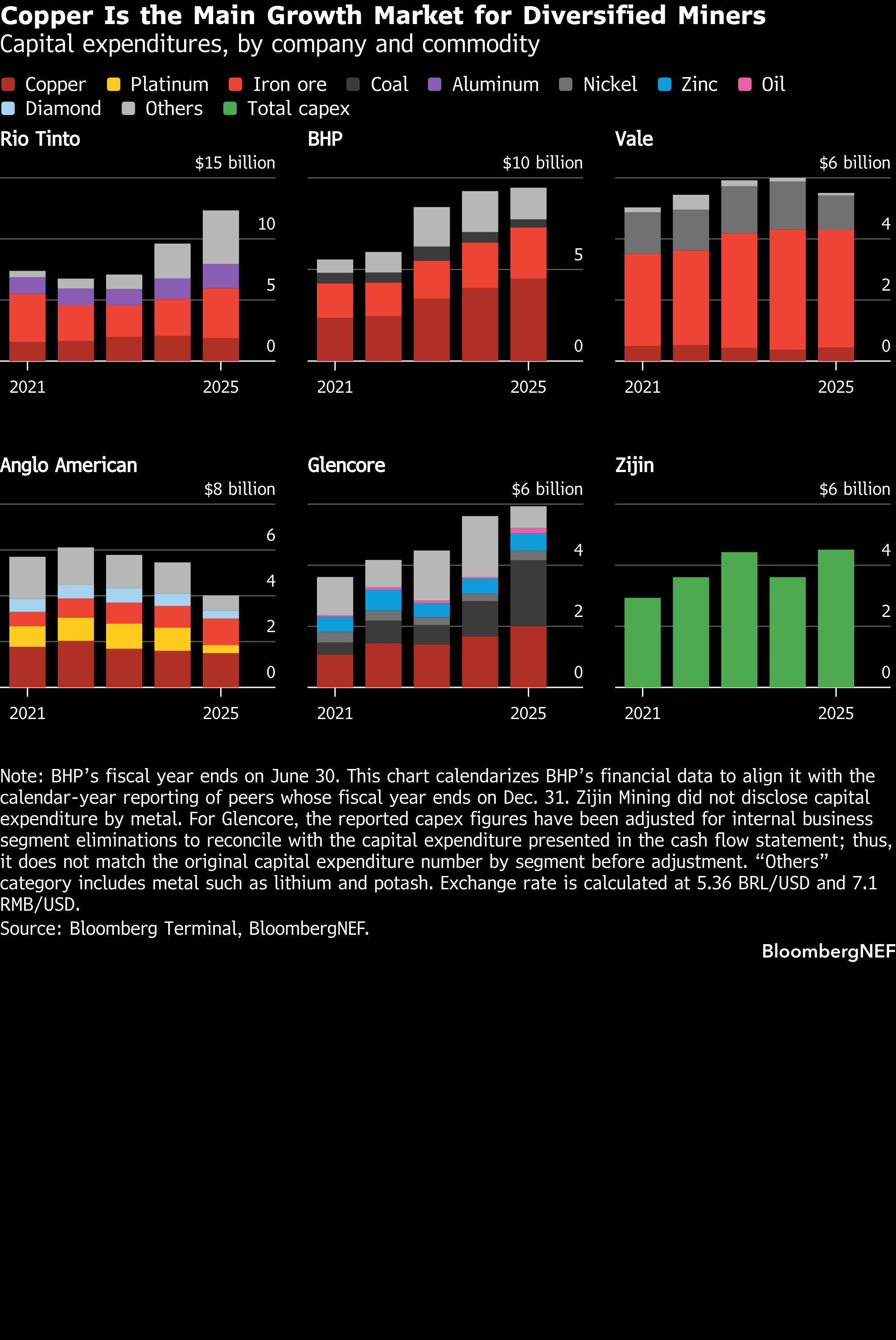
Outside of the US, Barclays strategists, including Hannah Greenberg, identified Antofagasta Plc, First Quantum Minerals Ltd. and Anglo American Plc as copper mining companies that are best positioned in the next two years to benefit from the AI boom.
Mike Casey, president at American Executive Advisors, also favors financially strong, diversified producers rather than smaller mining companies with limited financial resources. The Solactive Global Copper Miners Index, which includes international companies active in the exploration, mining and refining of copper, has gained about 35% since the start of the year.
“Companies with high-quality reserves, low production costs and strong balance sheets can provide leveraged upside when copper prices rise, but that leverage works both ways,” he said. Aside from Freeport-McMoRan and Southern Copper, he highlights BHP Group, Rio Tinto Plc and Teck Resources Ltd. for research.
And the opportunities aren’t limited to companies pulling copper out of the ground.
An emerging source of demand for copper comes from the highly conductive metal’s essential role in AI data center buildouts. So another way is to invest in companies that make mining equipment and components for electric grids, as well as the utilities and renewable energy producers along the copper supply chain, said Jeff Judge, managing partner at Chesapeake Financial Planners. He has started pointing clients toward the broader infrastructure angle and companies such as Eaton Corp., Vertiv Holdings Co. and Quanta Services Inc.
“It’s a more diversified way to ride the theme,” he said. “Buy the story, not the ticker.”
Spread Your Bets
A mine can flood. A government can change the rules. A new project can cost far more than expected. On top of that, labor strikes, cost overruns, currency moves, political intervention and management mistakes can all hurt a mining company’s shares even when the commodity itself is doing well. So for many financial advisers, investing in a diversified copper or mining fund is the preferable approach.
“Single-name mining risk can wipe out the copper thesis overnight,“ Judge said, adding that he never recommends individual mining stocks as a core holding. “A broad materials or copper-focused ETF is the right entry point for almost everyone. It gives you the theme without betting on one CEO’s execution.”
That’s where the Global X Copper Miners ETF (COPX) comes in. Holding about 40 copper mining companies and with an expense ratio of 0.65%, the fund has total assets of $8.7 billion, meaning it has ample liquidity. The iShares Copper and Metals Mining ETF (ICOP) offers similar global exposure with a lower 0.47% expense ratio, but it is smaller and less liquid.
Another rule of thumb Judge uses: If you can’t explain why a particular company should outperform its competitors, you probably don’t have a reason to own it instead of a fund.
There is also an important difference in time horizon. Exposure through copper ETFs or futures contracts is likely to require closer attention to inventories, Chinese demand and monetary policy, and may make more sense as a six-to-18-month position, Katz said. Investors can typically hold copper miners and mining ETFs for about 12 months to 36 months, while electrical equipment, grid and infrastructure companies may warrant a three-to-five-year holding period.
Financial advisers may wince reading this next idea, but investors willing to take an even more speculative approach can wager on copper through prediction markets. Kalshi offers short-dated contracts tied to whether copper will close above a specific price level at a particular time, with daily, weekly and monthly copper markets available. Polymarket offers similar markets, as well as event-driven bets connected to the industry, including whether copper cable will face certain tariffs by specific dates.
A message from Advisor Perspectives and VettaFi: Discover something new! Click here to register for our upcoming webcasts.
Bloomberg News provided this article. For more articles like this please visit bloomberg.com.
Membership required
Membership is now required to use this feature. To learn more:
View Membership BenefitsSponsored Content
Upcoming Virtual Events View All