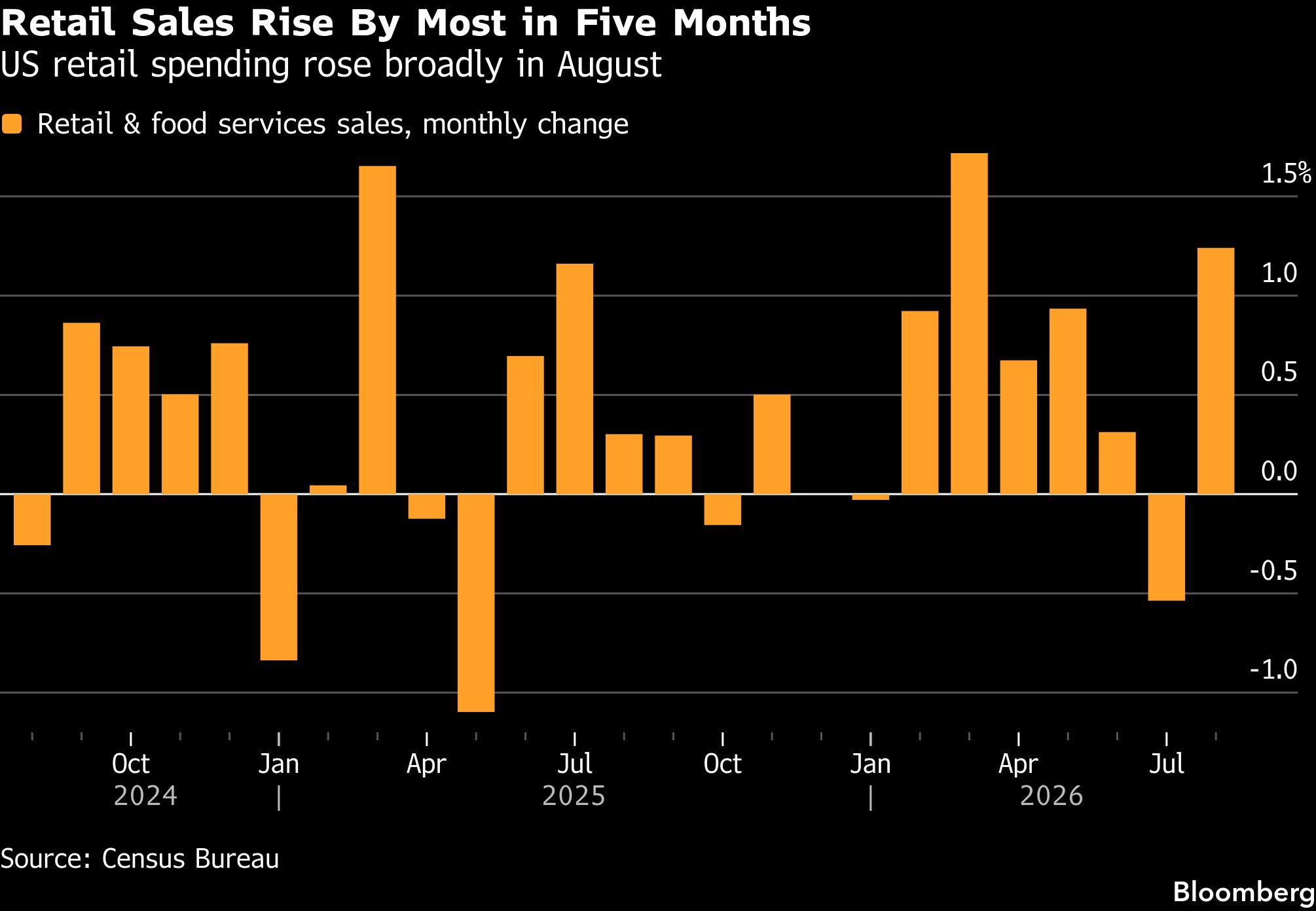
US retail sales rose by the most in five months in a broad advance, showing consumers continued to spend despite rising gasoline prices.
The value of retail purchases increased 1.2% in August after a revised 0.5% decline in July, according to Census Bureau data released Wednesday. The median estimate in a Bloomberg survey of economists called for a 0.8% advance. The figures are not adjusted for inflation.
Consumer spending has been resilient this year, helping power overall economic growth. While the boost from tax refunds has faded, low unemployment and stock market gains are supporting households.
Twelve of 13 retail categories in the report posted increases, including gasoline stations and online retailers. Back-to-school shopping likely supported outlays at general merchandise stores as well as spending on clothing, electronics, sporting goods and other hobbies.
“This consumer has time and time again surprised us with their resilience,” said Shannon Grein, an economist at Wells Fargo & Co. Still, “I don’t think the consumer has enough support behind them to keep at this pace. This is a very strong retail sales print, so I’d expect them to pull back.”
So-called control-group sales — which feed into the government’s calculation of goods spending for gross domestic product — increased 1.4%, the most in nearly two years. The measure excludes food services, auto dealers, building materials stores and gas stations.
Sales at nonstore retailers, primarily online shopping, climbed 2.6% in August — the most since February 2025 — after falling the prior month. Amazon.com Inc. moved its Prime Day sales event to June this year from July the year before, a shift that likely distorted data and dragged down July’s headline retail sales numbers.
The value of gasoline station sales rose 3.1%. The nationwide average price of a gallon of gas held above $4 a gallon through August, according to American Automobile Association data. Prices have since climbed above $4.30 this month as wars in the Middle East and Ukraine limit fuel supplies.
The retail data showed sales at motor vehicles and parts dealers rose 0.6%. Industry data earlier this month showed auto sales climbed in August to the strongest pace since April 2025. Excluding autos and gasoline, sales also rose 1.2%.
Receipts at restaurants and bars, the only service-sector category in the retail report, climbed a robust 1.2%. Sales declined at building materials stores.
Selective Consumers
US retailers are looking for ways to appeal to choosier consumers. Walmart Inc. last month said it lowered prices on thousands of items, in part with proceeds from tariff refunds.
The latest consumer snapshot comes as the Federal Reserve considers raising interest rates in an effort to tamp down inflation, which has held above the central bank’s target for more than five years. Futures show that investors expect a quarter-point rate hike when the Fed’s interest-rate setting committee concludes a two-day meeting later on Wednesday.
Last week, a Bureau of Labor Statistics report showed that overall consumer prices were up 3.4% from a year earlier, climbing a full percentage point since the Iran war sent energy prices higher.
Still, many Americans have been squeezed as pay gains fail to keep up with rising prices. Compared with a year earlier, inflation-adjusted average hourly earnings fell for the fifth consecutive month in August.
Separate data out Wednesday showed US import prices increased in August by more than forecast. Compared with a year earlier, the costs of imports rose 7% — the most in four years.
“It is hard to imagine that the degree of strength seen in August retail sales can be sustained through the fall, but I expect the consumer to weather this storm,” Stephen Stanley, chief US economist at Santander US Capital Markets LLC, said in a note.