China’s latest effort to prop up its battered housing market and spur the economy is getting a poor reception. The measures are underwhelming and unlikely to achieve much beyond improving Beijing’s chances of meeting its already restrained growth ambitions.
That is damning the initiative with faint praise. The deeper problem lies in how China measures economic success. The government itself deserves some blame: It doesn’t aspire to beat expectations, merely to meet them. And those expectations are set at the start of each year with the much-heralded unveiling of an economic growth target. China should jettison it.
The negative reception for the real estate package, which includes subsidized loans and support for favored sectors, helps explain why a change of approach would be beneficial. President Xi Jinping has been trying to nurse the property market back to health for years, with limited success. There’s nothing wrong with experimenting when existing remedies aren’t working. Washington tried repeatedly to contain the subprime crisis in 2007-2009. Several measures proved inadequate before policymakers eventually restored confidence.
But the criticism also misses a more fundamental point. Investors and businesses still haven’t fully adjusted to the reality that this isn’t the China of old. Growth will be slower, more modest and likely to drift lower over time. Beijing’s annual gross domestic product targets can help manage that transition by signaling what policymakers consider an acceptable pace of expansion. But they can also become a trap. By turning that number into a test of economic success or failure, the government encourages policies aimed at hitting the target rather than confronting the deeper problems holding back growth.
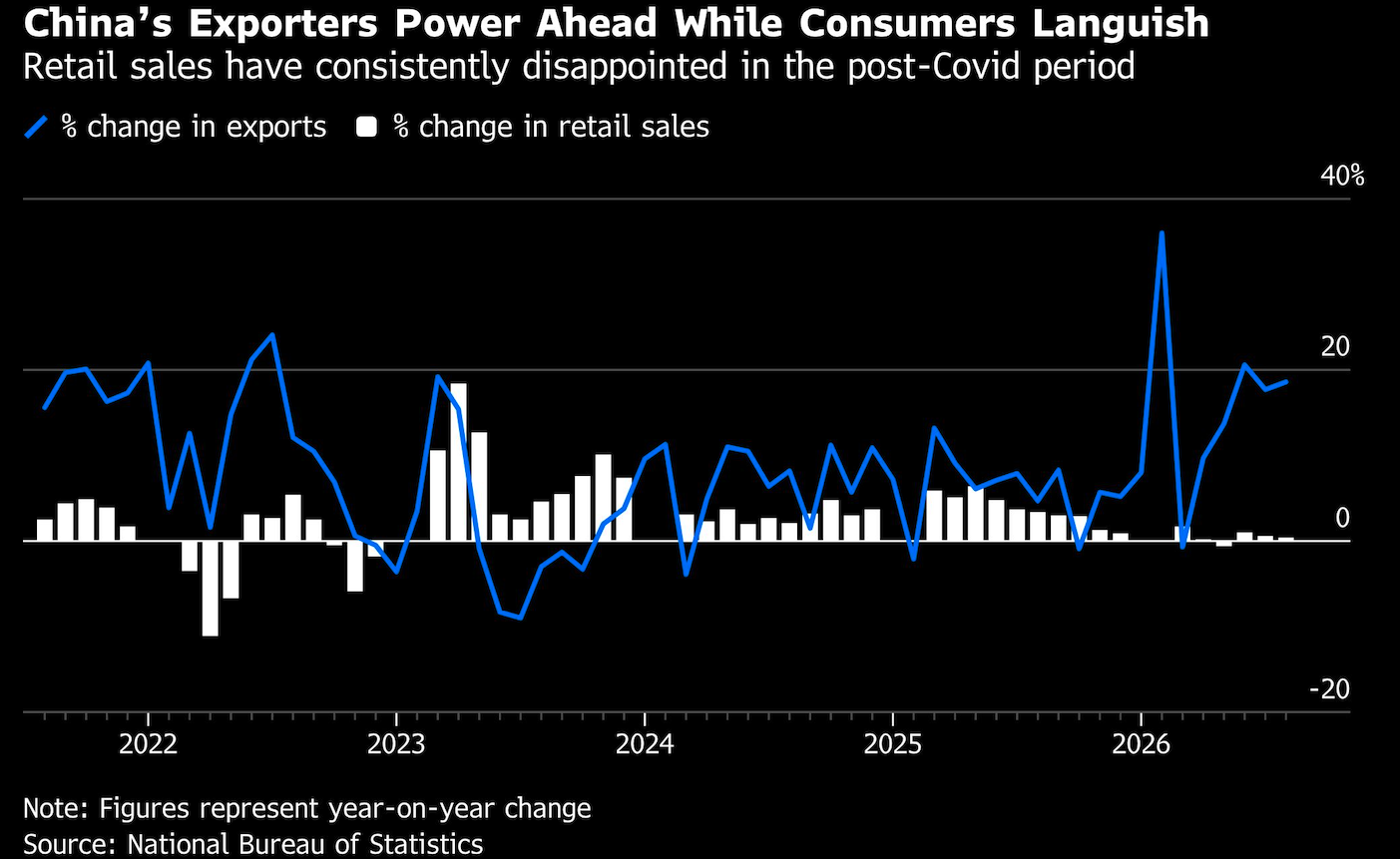
There is no sign that major stimulus along the lines of 2008 is in the works. That doesn’t mean a fresh policy push isn’t needed. What’s required, though, is a new narrative. Each batch of data produces much the same picture — and a similar disappointed response: Domestic demand is weak while exports power ahead. September’s numbers and third-quarter GDP, due in two weeks, are unlikely to alter that story.

See more: Rethinking the Trust Operating Model With AI in Mind
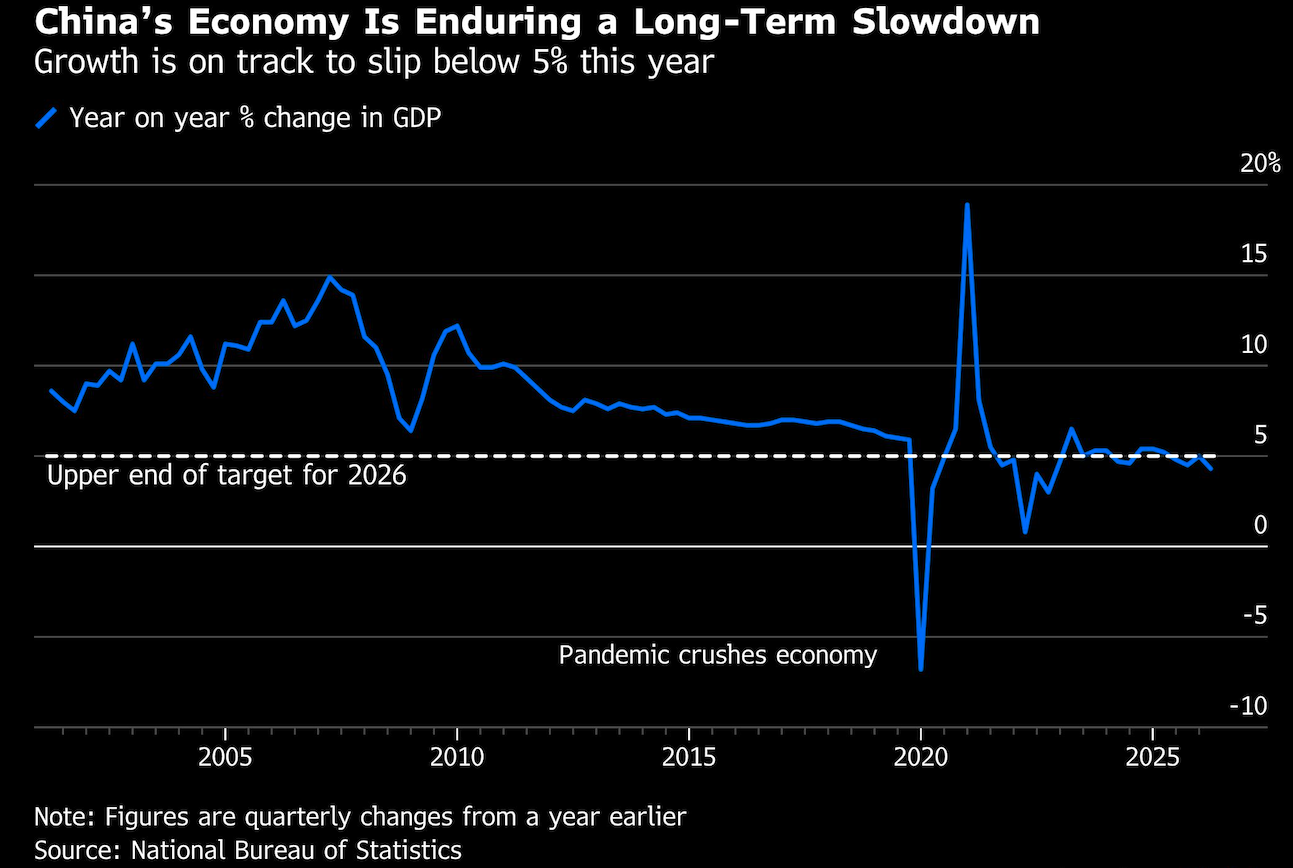
The report card can almost be written in advance. The figures will be judged largely by whether they leave China on course to meet its growth aspirations. Fall too far behind, and calls for another dose of stimulus will intensify; stay on target, and policymakers can afford to wait. In the preceding quarter, the economy expanded 4.3% from a year earlier, slightly below the bottom of the 4.5%-5% range articulated by Xi. The near-universal prescription was for more public spending. But monetary easing looked a distant prospect then, and still does. People’s Bank of China officials have repeatedly stressed that they are in no hurry.
The stated goals get in the way of a dispassionate assessment of China’s economic performance. They establish useful parameters and offer some insight into the expectations of top decision-makers, but they also create an artificial benchmark for what is not merely achievable, but desirable. If the goal looks comfortably within reach, everyone can relax. If it appears distant — or attainable only with considerable effort — the case for stimulus strengthens. Either way, the target ends up driving the interpretation. The numbers rarely get to stand on their own.
Targets do have a useful signaling role. They allow Beijing to indicate the pace of economic growth it wants, and the degree of weakness it is prepared to tolerate. For much of the post-Covid period, the goal has hovered around 5%. Moving to a range acknowledges that growth may undershoot that pace and, more broadly, that tougher times lie ahead.
But Beijing isn’t solely to blame. Some of the problem lies with those of us assessing China. If the economy is performing poorly, we should say so; that judgment shouldn’t depend on whether an official target is met. And there is plenty to criticize. For years, hopes have rested on a rebalancing of growth away from exports and toward domestic demand. It has yet to happen. That’s hardly a new critique, but it remains a valid one.
The narrative surrounding China’s economy is stuck. The numbers aren’t great, but nor are they terrible, assuming they can be believed. Some slowing is only natural: The bigger the economy becomes, the harder it is to keep delivering outsize gains. Government support increasingly seems designed to stabilize the expansion, not accelerate it. As Bloomberg Economics points out, this isn’t a sprint. A gradual deceleration toward annual growth of around 2% over the next decade is increasingly in the cards.
What’s needed is a new way of thinking about the world’s second-largest economy, one that doesn’t depend on crystal-ball gazing by cadres. Only then can we judge whether China is doing well, doing poorly or simply muddling through. Don’t expect that breakthrough anytime soon. Whether 4.5% is comfortably in the bag or tantalizingly out of reach, expect it to dominate discussion of the third-quarter report.
Xi would be well advised to dispense with numerical growth targets. Once the current one has been met, of course.
A message from Advisor Perspectives and VettaFi: Discover something new! Click here to register for our upcoming webcasts.
Bloomberg News provided this article. For more articles like this please visit
bloomberg.com.
Read more articles by Daniel Moss