Amid heated discussion of the astonishing (and also rather worrying) capabilities of artificial intelligence, investors are realizing that the underlying computing and energy infrastructure relied upon by OpenAI, Anthropic PBC and their ilk is much harder to construct than a chatbot prompt.
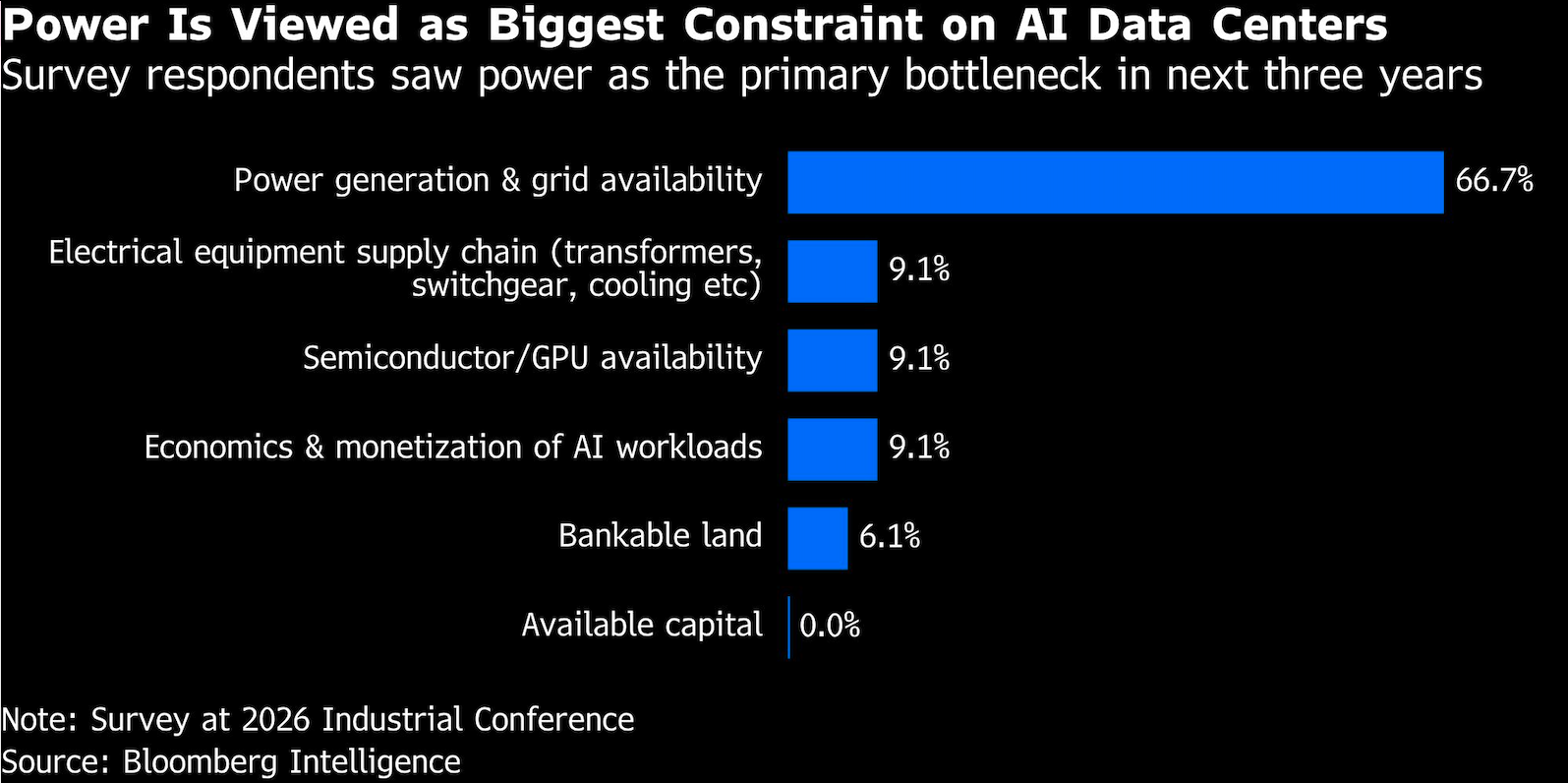
Data-center projects are encountering a cornucopia of holdups, from equipment and labor shortages to local-community opposition, construction moratoria and permit delays. Moreover, protracted grid-connection timelines and lagging production of gas turbines could mean there’s not enough power to run all the electricity-hungry server farms the tech industry wants to build.
Considering that a single gigawatt of computing capacity can cost tens of billions of dollars,1 money managers need to pay attention to the financial consequences of these gargantuan projects falling behind schedule, or never coming online at all. That could mean a hit to developers and would-be tenants, of course, but also to semiconductor shipments.
I can see why some experts reckon supply-chain bottlenecks are actually helpful for the AI boom. They prevent computing capacity from outstripping demand, while simultaneously driving up tech earnings and inflating the price of everything to do with data centers.
Right now, anyone able to supply scarce equipment and services is printing money. Elon Musk’s SpaceX is renting out computing capacity at astronomical rates. Caterpillar Inc. and Bloom Energy Corp. are piling up orders for on-site power generation. And top electricians are getting $750,000 salaries — a rare sign of hope for youngsters worried about jobs in the superintelligence era.
And yet, the tech industry’s frantic construction workarounds might not be enough to avoid it ending up with too many chips and not enough operable server farms.
“There isn’t enough power to do what everyone wants to do, and there are more semiconductors being built than there are places to put them,” Morgan Stanley analysts wrote in a recent report, echoing a similar warning from Musk. His rockets-to-AI conglomerate, which has been unusually adept at bringing computing capacity online quickly, wants to put processors into orbit to bypass such obstacles.

See more: Communication Is the Key to a Successful Team
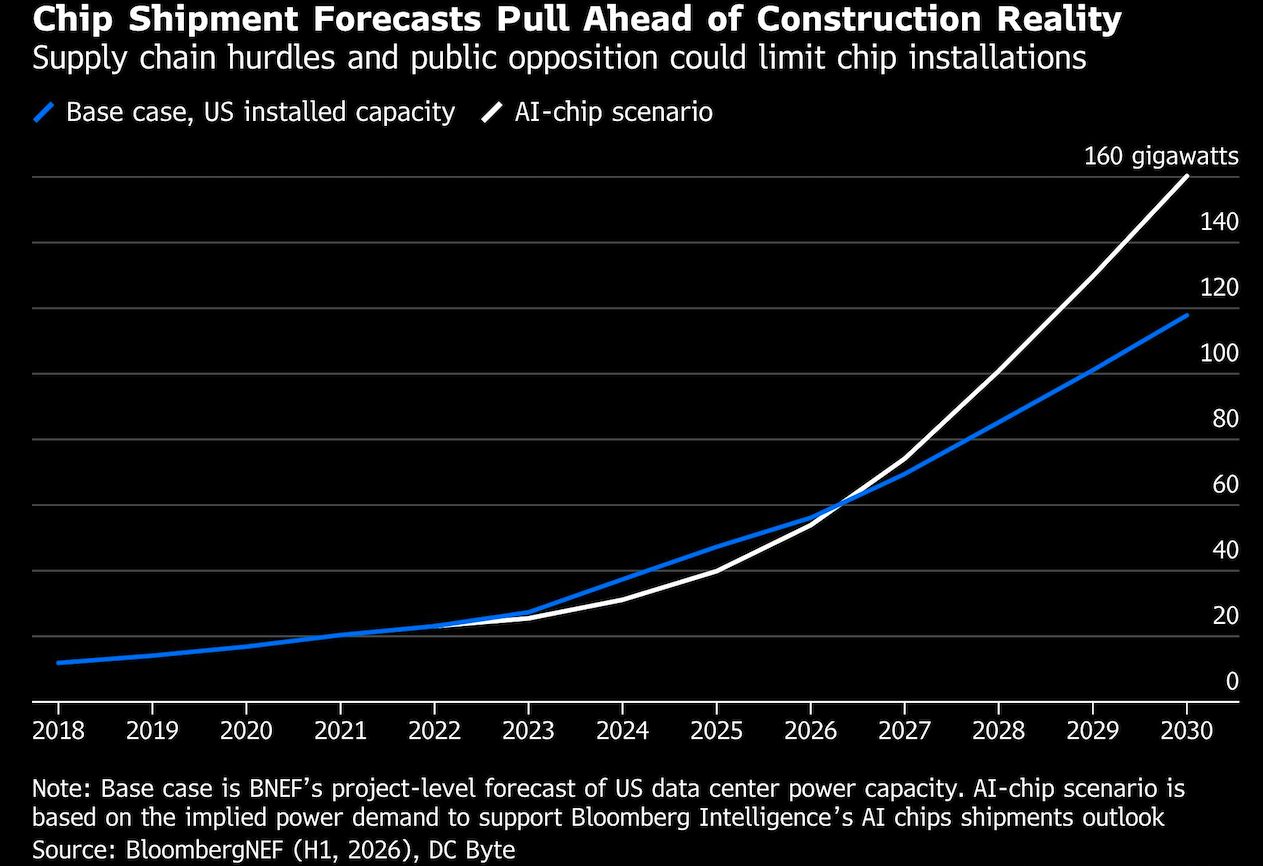
Given all of the money being plowed into AI infrastructure, and the top Wall Street minds working on its funding, you’d expect pretty wide agreement about how much computing power will end up getting built in the next few years. And yet current estimates show quite a dispersion, likely reflecting the doubts about how soon supply-chain and regulatory bottlenecks will unblock. It’s hard to be certain, too, about what projects will end up being financed as borrowing costs rise and lenders get more choosy.
There are signs that these constraints are taking a toll on project timelines. Half of large data center projects announced for this year have yet to break ground, according to market intelligence firm Currence.2
With inexperienced developers responsible for some of the largest prospective computing sites, there’s little comfort that the industry will get a grip on these issues quickly. Almost half of the US data-center pipeline by capacity is being built by first-timers, according to BloombergNEF.3
Take SB Energy, a company backed by SoftBank Group Corp., which boasts in its initial public offering prospectus of its 8.8 GW pipeline of contracted computing projects, much of which is meant for OpenAI. Only a fraction of this is currently under construction and none of its data centers are operating yet. No wonder investors might balk at its purported $50 billion valuation.
For landlords and lenders, it helps that contract terms can shield them from cost overruns and prevent intended occupants from walking away if there are delays. However, as my colleague Paul Davies notes, these protections vary. The devil’s in the document detail, including the quality of tenants and guarantors.
London-based startup Nscale Ltd.’s IPO paperwork describes how a $44.6 billion compute contract with Anthropic provides for “only limited relief in the event of supply-chain delays.” If Nscale fails to meet delivery timelines, Dario Amodei’s company may be entitled to terminate the deal “without liability.”4
Oracle Corp. has had to reassure investors that its tenancy at the Project Jupiter data center in New Mexico is on track, despite permitting issues with a natural-gas pipeline. So issuing a force majeure notice that could shield it from delay expenses didn’t inspire confidence. Oracle still appears to be on the hook for some payments to the project’s financiers, even if it can defer rent.5
Overall, US data-center developers are facing an electricity shortfall of around a third through 2028 compared with what would be required to power the chips Morgan Stanley expects to be sold during the same period. Unless project managers get a move on, the stock market’s bullish expectations for semiconductor shipments could prove overly optimistic.
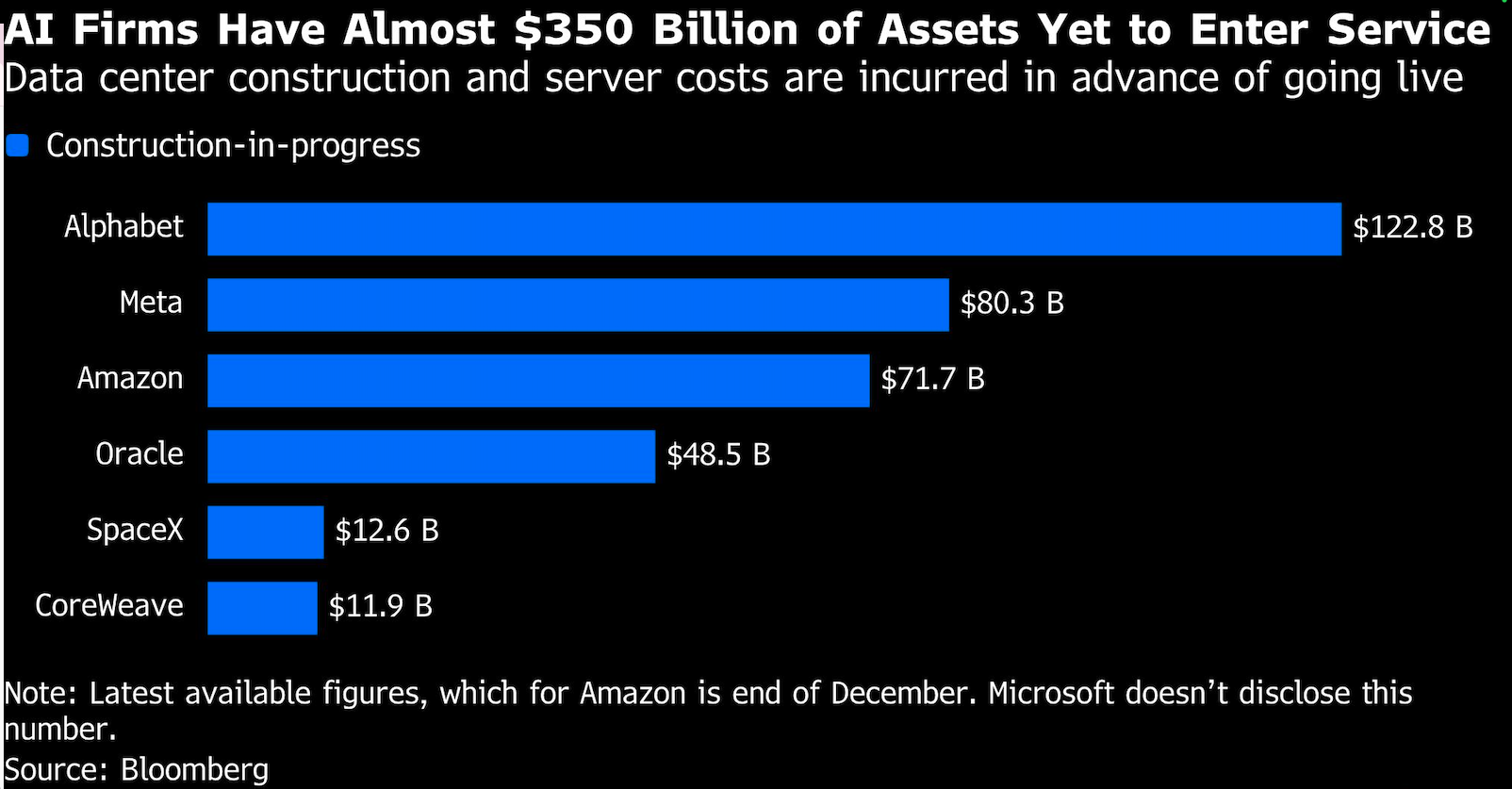
The tech giant “hyperscalers,” who are building these mammoth sites to service the AI companies, probably don’t want to warehouse chips that can’t be powered up and risk becoming outdated. Amazon.com Inc., for one, typically buys servers and network equipment “a few months” prior to a data center entering service, its managers have said.
As BNEF notes, one way to bridge some of the gap while waiting for new sites to come online, would be to remove older chips from existing data centers to prioritize Nvidia’s latest models, which are computationally far more efficient. But splurging even more on expensive new chips would further inflate hyperscalers’ already huge capex bills and add to their depreciation expenses.6
Alternatively, data-center capacity may shift to countries with better access to alternative energy, perhaps giving Europe more chance to exploit the AI boom.7
Big tech companies also try to hedge their bets by bringing on capacity in phases, rather than attempting to complete a massive computing campus all at once. Nonetheless, they’re increasingly having to make hefty long-term financial commitments to secure precious supplies of computer memory.
With Nvidia’s market cap nearing $6 trillion, investors don’t appear overly worried that Jensen Huang’s company will struggle to find a home for its extremely profitable processors.8
But the chipmaker’s taking no chances. Shortages of land, power, buildings or capital affecting the data-center buildout could hinder its future financial performance, its latest earnings report warns. And that’s doubtless one reason why it’s supporting SB Energy’s buildout with a $105 billion guarantee of tenant OpenAI’s lease obligations.9
After a celebratory couple of years, the AI party may be becoming a high-stakes game of musical chairs. Somebody could be left with too many chips and without a seat.
1. Including AI chips, which are by the far the most expensive part.
2. Even on an optimistic timeline, construction takes 12-18 months, it notes.
3. And even the more experienced firms are attempting to build sites far larger than those they delivered in the past.
4. Nscale is also yet to secure financing for the Anthropic deal.
5. Oracle will remain liable for a “carry cost,” covering lender interest plus a specified equity return, for up to three years in the case of delays, according to the Financial Times. An unpowered data campus would mean Oracle also temporarily forgoes substantial revenue.
6. Advanced processors also have specific cooling requirements.
7. Notwithstanding public opposition to data centers, which is mounting on this side of the Atlantic too.
8. Morgan Stanley thinks shipments of other processing chips, memory and optical components are potentially more vulnerable.
9. Nvidia is also an investor in SB Energy.
A message from Advisor Perspectives and VettaFi: Discover something new! Click here to register for our upcoming webcasts.
Bloomberg News provided this article. For more articles like this please visit
bloomberg.com.
More ETF Topics >