US Treasuries led a global bond rally as a selloff in artificial-intelligence shares deepened, spurring demand for haven assets.
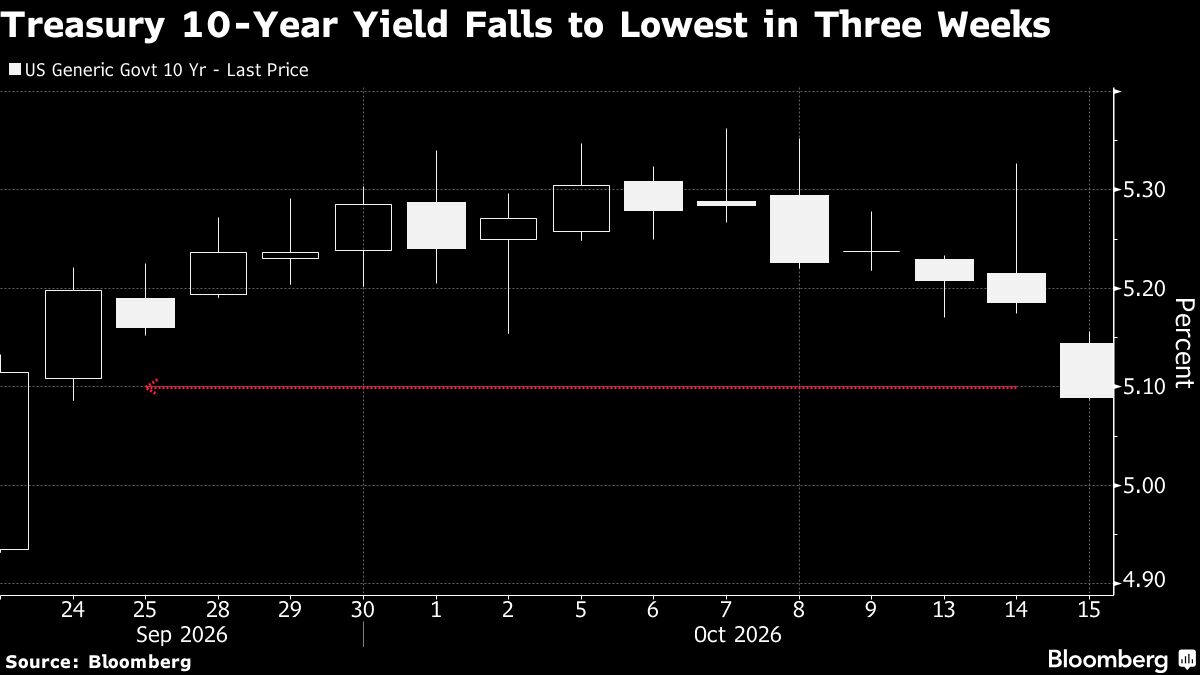
Gains across the US government debt curve on Thursday pushed yields on 30-year bonds lower by 12 basis points to 5.39%, the lowest in three weeks. Futures on the tech-heavy Nasdaq 100 Index were lagging after the index slumped 1.9% on Wednesday.
Investors also looked for safety in government debt elsewhere, pushing yields on Japanese, UK, German and Australian bonds lower by as much as 10 basis points.
See more: Bonds At 5%: Is The 10-Year Treasury Finally A Buy?
“Risk-off is in the driving seat as tech sells off,” said Erik Liem, a rates strategist at Commerzbank AG.

Traders were pricing in about a 35% chance the Federal Reserve opts for an interest-rate hike later this month after US producer prices rose in September at the fastest pace in more than four years as higher energy costs reverberated through the US economy.
The data echoed a hotter-than-expected reading of consumer prices on Wednesday, which led to a brief selloff in Treasuries. Traders are fully pricing in a 25-basis-point increase by the end of the year.
“Markets seem to be becoming more comfortable with duration, with concerns over AI from overnight helping to push rates lower,” said Molly Brooks, rates strategist at TD Securities. She also pointed out that certain components of this week’s reports that feed into the Fed’s preferred gauge of inflation stand to bring that number lower, giving bonds more room to rally.
But concern about inflationary pressures in the bond market was outweighed by investor appetite for safety as they question the sustainability of AI spending, given the outlook for higher rates.
The turnaround is intensifying a debate about whether bonds are offering value after a rout that propelled yields to multi-year highs earlier his month. Several money managers including Pacific Investment Management Co. and Morgan Stanley Investment Management are positive on bonds, even as accelerating US inflation and heavy debt supply keep the risk of another selloff alive.
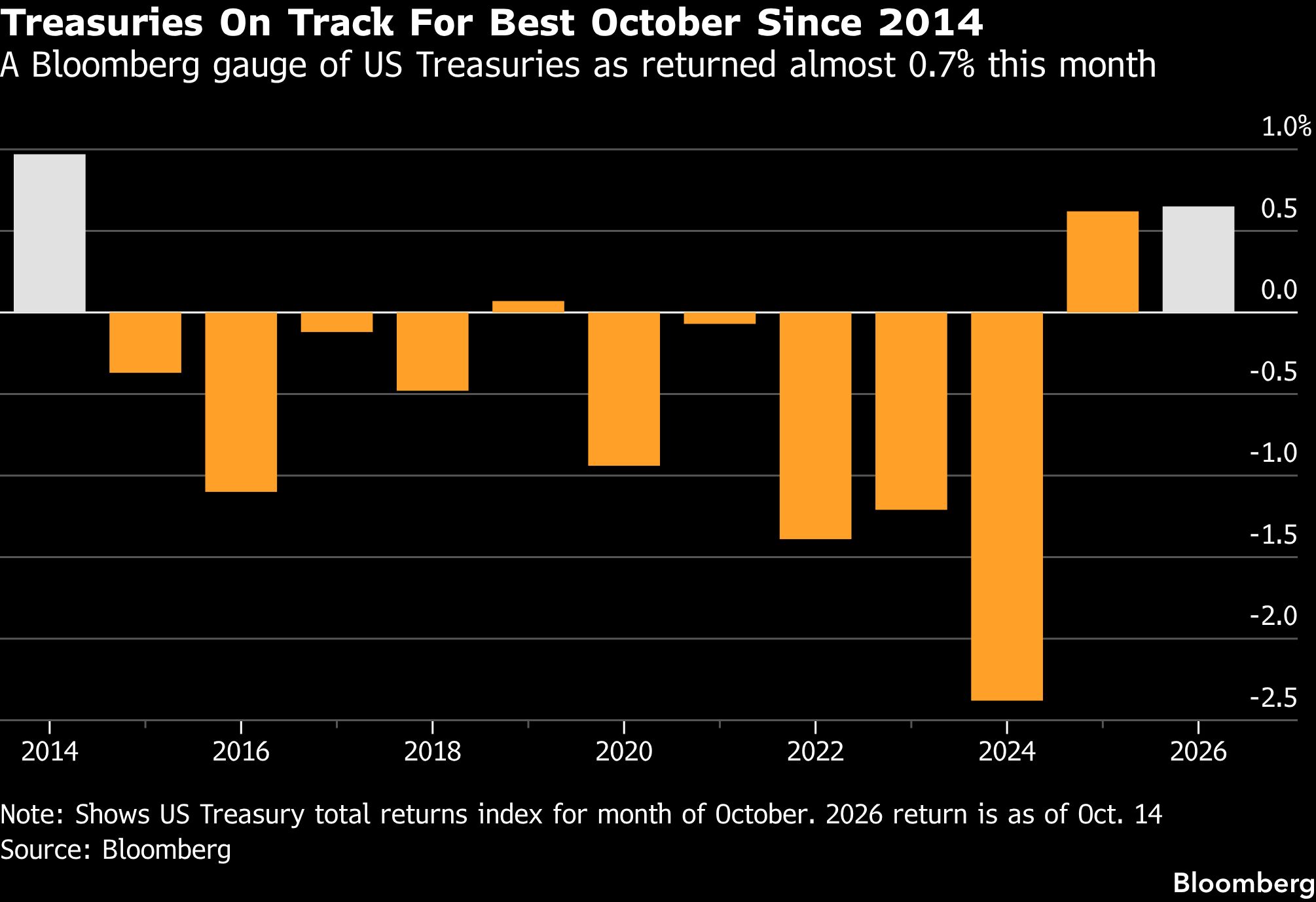
A gauge tracking returns in US Treasuries has climbed almost 0.7% this month after a 2.2% slump in September. Should the gains hold, it will be the best October for Treasuries since 2014, according to data compiled by Bloomberg.
“It feels like — at least short term — the bond selloff might be getting a little fatigued,” said Andrew Canobi, a director of fixed income at Franklin Templeton.
Traders were pricing in about a 35% chance the Federal Reserve opts for an interest-rate hike later this month after US producer prices rose in September at the fastest pace in more than four years as higher energy costs reverberated through the US economy.
The data echoed a hotter-than-expected reading of consumer prices on Wednesday, which led to a brief selloff in Treasuries. Traders are fully pricing in a 25-basis-point increase by the end of the year.
“Markets seem to be becoming more comfortable with duration, with concerns over AI from overnight helping to push rates lower,” said Molly Brooks, rates strategist at TD Securities. She also pointed out that certain components of this week’s reports that feed into the Fed’s preferred gauge of inflation stand to bring that number lower, giving bonds more room to rally.
But concern about inflationary pressures in the bond market was outweighed by investor appetite for safety as they question the sustainability of AI spending, given the outlook for higher rates.
The turnaround is intensifying a debate about whether bonds are offering value after a rout that propelled yields to multi-year highs earlier his month. Several money managers including Pacific Investment Management Co. and Morgan Stanley Investment Management are positive on bonds, even as accelerating US inflation and heavy debt supply keep the risk of another selloff alive.
A gauge tracking returns in US Treasuries has climbed almost 0.7% this month after a 2.2% slump in September. Should the gains hold, it will be the best October for Treasuries since 2014, according to data compiled by Bloomberg.
“It feels like — at least short term — the bond selloff might be getting a little fatigued,” said Andrew Canobi, a director of fixed income at Franklin Templeton.
The latest rally in global bonds is renewing the debate about the role of Treasuries as a haven as stock markets worldwide come under pressure.
“There has been a lot more value created in core government bond markets,” said Kerry Craig, global market strategist at JPMorgan Asset Management. “Government bonds can both help to rebalance portfolios and offer a genuine way to diversify this concentration risk” in equities, he said.
For more news, information, and strategy, visit the Fixed Income Content Hub.
Bloomberg News provided this article. For more articles like this please visit
bloomberg.com.
More Innovative ETFs Topics >