What Is the Doom We Face?
Membership required
Membership is now required to use this feature. To learn more:
View Membership Benefits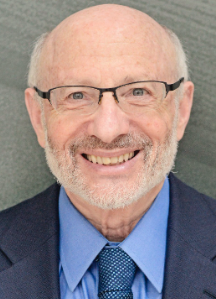 The views presented here do not necessarily represent those of Advisor Perspectives.
This review is, in part, about Eswar Prasad’s latest book, “The Doom Loop: Why the World Economic Order Is Spiraling into Disorder.” But it will also cover a seemingly unrelated article, Robert Kagan’s March piece in The Atlantic magazine, “America vs. the World,” and his 2018 book, “The Jungle Grows Back.”
Why this pairing? Prasad is a Cornell University economics professor best known for books about money and finance, such as “The Future of Money” and “The Dollar Trap.” Kagan is a Brookings Institution political scientist known for geopolitical realism. He is often considered a “neocon” — one who believes that global freedom and security require active U.S. military and moral leadership. In Prasad’s book, there is not a single mention of Kagan; in Kagan’s article and book there is not a single mention of Prasad.
Then why the combination of the two? Because in talking about doom — apart from the recent spate of panic over AI doom, which plays little role in his book — Prasad doesn’t specify exactly what doom he’s talking about. Kagan, by contrast, does. We don't know whether Prasad sees things spiraling toward Kagan's doom, because he doesn’t say. But Prasad’s spiral, while less doom-laden than his title might suggest, is perfectly consonant with Kagan’s doom.
American Hegemony
In January, in a widely acclaimed speech at the World Economic Forum in Davos, Switzerland, Prime Minister Mark Carney of Canada said, “For decades, countries like Canada prospered under what we called the rules-based international order. We joined its institutions, we praised its principles, we benefited from its predictability. And because of that, we could pursue values-based foreign policies under its protection.”
Carney argued that while this order was always partially false and imperfect, it had profound benefits. “American hegemony, in particular,” he said, “helped provide public goods: open sea lanes, a stable financial system, collective security, and support for frameworks for resolving disputes.”
Since 1945, American hegemony has provided a protective umbrella, allowing the world’s biggest countries to cease making war on each other and focus on becoming prosperous. Even China benefited from this cover — perhaps most of all.
America won that hegemony during and after World War II by emerging as the strongest country — and a fundamentally moral one — after so many others had been devastated by the war, and by its magnanimity toward those countries, helping them to recover and revitalize their economies, even if they were former enemies.
The glow from the reputation the U.S. earned in that period and continued to earn afterward, with some setbacks along the way, sustained the country as the reigning hegemon for 80 years.
Prasad and Kagan also refer to that protective umbrella, which American hegemony has provided since 1945. As Kagan points out, there have been no wars among the great powers during this period (with the sole exception of the Korean war of 1950–51) and:
. . . deaths from all recent smaller wars have declined dramatically, as indeed have deaths of all kinds. Since the end of the Second World War the world has also enjoyed a period of prosperity unlike any other, with more than seven decades of global GDP growth averaging almost 3.5 percent per year . . . [and] some four billion people around the world have climbed out of poverty.
The Jungle Grows Back?
This, Kagan says, is historically unique. In virtually all other periods of history, he says, there have been constant wars among the major powers, causing a steady stream of death and destruction. And there is no evidence from history that the recent 80 years of relative peace and prosperity is part of a secular trend that can be expected to continue.
The evidence from history is the opposite: “When it comes to human behavior,” says Kagan, “history is a jagged line with no discernible slope.” The world has, in the last 80 years, been protected from the law of the jungle that previously prevailed only by the power of a relatively benign hegemon: the United States.
Both Prasad and Kagan see this hegemony fading, with the U.S., giving up the will to serve in that role, or eroding it away.
Many pundits now say that, as a result, we are entering a new period of global multipolarity. This is what Prasad portrays, though he makes no prediction that things will stay that way. Some say this multipolarity is welcome; some even say U.S. President Donald Trump was smart to recognize the inevitability of this transition and facilitate it. In Trump’s view, it would seem, the western hemisphere should belong to the American pole, while the rest of the world is left to the Russian and Chinese (and perhaps Israeli) poles.
Neither Prasad nor Kagan see the emerging multipolarity as a positive. Prasad says, “Shifting from a unipolar world . . . should offer opportunities for greater stability. . . That, at least, is the theory. Reality is proving to be rather different.”
Kagan warns that a multipolar world will be neither a good nor safe world. He says that on transitioning to the coming multipolar world, the United States and, by implication, the rest of the world “are entering the most dangerous world they have known since World War II, one that will make the Cold War look like child’s play and the post–Cold War world like paradise.”
“In fact,” he says, “this new world will look a lot like the world prior to 1945, with multiple great powers and metastasizing competition and conflict.”
As a case in point, Kagan uses the period from 1815 to 1914 in Europe. This was a period that some call “the long peace.” But during that time, he says, the great Eurasian powers fought dozens of wars with one another and with smaller states. “Today’s equivalent of 19th-century multipolarity,” he says, “would be a world in which China, Russia, the United States, Germany, Japan, and other large states fought a major war in some combination at least once a decade.”
What then must be done, or will be done? I’ll come to that in a moment.
Prasad’s More Sedate — or Less Explicitly Specified — Scenario
Prasad warns of many of the same things Kagan does, but his warnings of what he might call “doom,” at least in his book’s title, are more vague and less frightening. His predictions of the negative consequences that the more multipolar order may lead to are characterized by words like “instability” and “disorder” rather than “war” or even “doom,” a word that appears in this 300-page book only twice, apart from the title.
For example, Prasad says:
Intensifying competition in the marketplace for global power is fomenting destabilization and tribalism as the world lurches toward a new order in which instability seems typical. Some might find comfort in the hope that this turmoil is simply the result of the world’s adapting to a reconfiguration of economic and financial power and that eventually things will settle into a new and more stable equilibrium. This is not the case, though. In fact, I contend that the forces that should be pushing the world toward balance are deepening the rifts and inciting disorder rather than fostering stability.
The multipolarity of Prasad’s book has more to do with the rise of middle powers like India, Brazil, and Indonesia, and the many smaller nations that have been steadily rising economically. Prasad emphasizes that the global power structure, especially in such international institutions as the International Monetary Fund (IMF), needs to change because it is dominated by the advanced economies that formerly held, collectively, the lion’s share of global GDP. That lion’s share is increasingly being held by the rising economies.
While U.S. influence is likely to decline, Prasad argues, the U.S. dollar will dominate international finance for a long time, simply because there is no good alternative, although its dominance may be very slowly eaten away. However, this doesn’t assure U.S. hegemony. In the past, gold was the dominant currency, but that didn’t guarantee the dominance of the foremost gold producer.
My Article Is Rejected by the China Daily and the South China Morning Post
Because I live in Hong Kong half of each year and am an adjunct professor at the Hong Kong University of Science and Technology, I have been asked from time to time to contribute to local media. As a result, I contribute articles to the China Daily and the South China Morning Post. The China Daily is an official China organ and thus has certain preferences for publication, though those preferences are not onerous and have little affected me. Most of my recent articles, for example, have been about AI. The South China Morning Post is independent but may have some of the same preferences.
Most of the time, the articles I submit are accepted and published. Therefore, it is interesting to note what they wouldn’t publish.
In a submission earlier this year, I made the following argument, motivated by Kagan’s article in The Atlantic:
Given that Kagan, like so many others, believes that the American-led order is over, and that a world without a benign hegemon will be a chaotic and dangerous world, what does he advocate instead? He does not say. He only warns that a multipolar world without a hegemon like the United States will be a very bad one.
What could he be suggesting then, except that the world must avoid the multipolar scenario, finding a new benign hegemon instead? Kagan would never in a million years even think the thought — except as (from his point of view) a dreadful exercise in thinking about the unthinkable — but as of now, the only candidate for that new hegemon is China, reluctant and unprepared though it may be. A transition to such a new hegemony seems almost unimaginable. But it could happen faster than we think.
Such scenarios seemed utterly impossible in the history of the world, until they happened. China could actually be roped into becoming the new hegemon. In such a potential role it would, ideally, inspire the level of trust and respect that the United States did when it assumed that role in 1945. China is not there yet. It should prepare as quickly as possible for this eventuality, even if it doesn’t want it, leading with diplomacy and goodwill. Let’s hope it doesn’t have to win the mantle the way the U.S. initially did, by leveraging its strength to win a war against a brutal and deranged coalition of global tyrants. Nevertheless, sadly, such things have happened before.
This possibility is real, and we should get used to it, and so should China — in fact, China is undoubtedly preparing for such a possibility, however reluctantly. This is not to say that it doesn’t want to be the global hegemon eventually — some people in the U.S. State Department think that is definitely what China ultimately wants. However, it does not want to step into this role soon, and it certainly doesn’t want to project any such ambition. As a result, it rejects articles that even mention the possibility.
Nevertheless, we must begin thinking about this previously unthinkable scenario. How would China, ideally, serve in the same relatively benign way the U.S. served for the last 80 years, as delineated by Carney? In what way could we expect it to create and enforce a “rules-based international order” or “provide public goods: open sea lanes, a stable financial system, collective security, and support for frameworks for resolving disputes”?
These may be unthinkable, but they are not idle thoughts. Some new regime is coming. And if Kagan is right, it should not be multipolarity. China is the only visible candidate for hegemon if the U.S. relinquishes the role. We must acknowledge that possibility and think about it.
See more by Michael Edesess:
- How to Properly Measure Risk
- Could the Dollar Be in Trouble — If So, What Then?
- Financialization Has Corrupted the Financial Industry
Economist and mathematician Michael Edesess is an adjunct professor and visiting faculty at the Hong Kong University of Science and Technology. In 2007, he authored a book about the investment services industry titled “The Big Investment Lie,” published by Berrett-Koehler. His latest book, “The Three Simple Rules of Investing,” co-authored with Kwok L. Tsui, Carol Fabbri, and George Peacock, was published by Berrett-Koehler in June 2014.
A message from Advisor Perspectives and VettaFi: Discover something new! Click here to register for our upcoming webcasts.
Membership required
Membership is now required to use this feature. To learn more:
View Membership BenefitsSponsored Content
Upcoming Virtual Events View All