In a recent letter to investors, Paul Singer’s Elliott Investment Management predicted a substantial bear market ahead. There might be an abrupt change from fear of missing out, or FOMO, to fear of getting obliterated, or FOGO, the $80 billion manager wrote.
While known for doom-and-gloom commentary, Elliott’s warnings of a “self-reinforcing unwind” of the bull market were nonetheless being played out last week. As hedge funds limp into the year end, bargain hunters would be wise to sit on the sidelines.
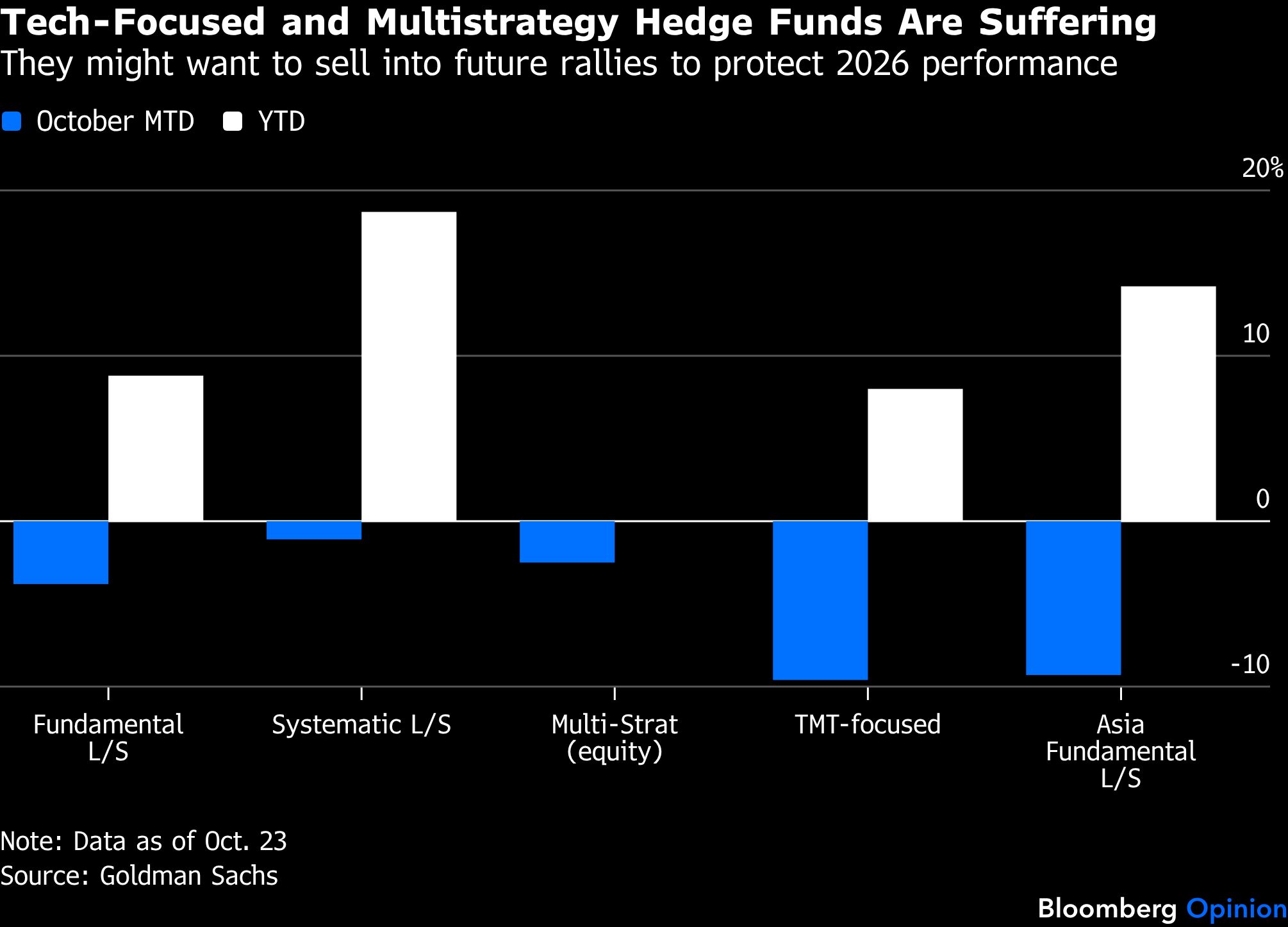
Over the next two months, hedge funds will have strong incentives to sell into a rally to protect their 2026 performance if nothing else. It’s been a pretty good year for artificial intelligence’s most fervent advocates. Firms from Gavin Baker’s Atreides Management to the “tiger cubs” of Coatue Management and D1 Capital Partners delivered double-digit year-to-date returns as of October. But gains can evaporate in a matter of days as data center fatigue sets in. Already, more than 40% of stock-picking funds were flat or negative for the year ending October.
See more: When AI Speeds Up the Advisor, Can the Rest of the Firm Keep Pace?
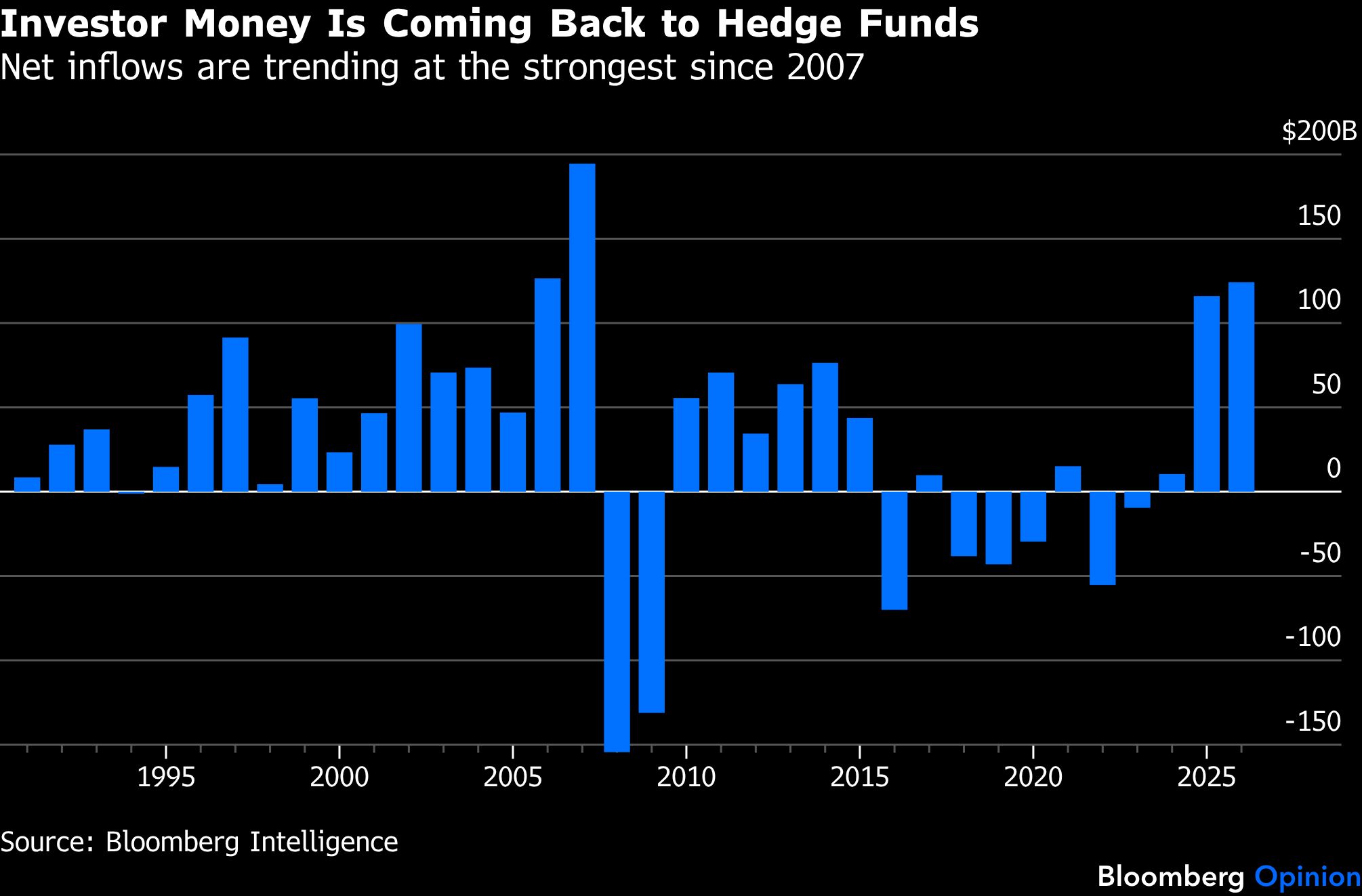
A pretty 2026 report card is all the more important now because investors are putting money into hedge funds again. After almost a decade of withdrawals, net inflows are trending at the strongest since 2007, according to Bloomberg Intelligence. To keep that going, hard-charging portfolio managers need to show that they can not only deliver better returns than private equity, but also consistent ones.

The fear now is that idiosyncratic selling will quickly morph into systemic selling that wipes out not just paper gains, but initial investments. Just like the July selloff, tech-focused and multistrategy funds are at the center of forced liquidations and deleveraging. And evidence suggests that while hedge funds have become more defensive in recent weeks, they have not reduced their market exposure yet. The 10 major multistraetgy firms manage around $2.2 trillion in gross assets, or about six times investor capital, according to research firm PivotalPath. Meanwhile, the industry’s overall gross leverage stood at an elevated 312% as of late October, higher than 95% of the readings over the past five years, according to Goldman Sachs Group Inc. There can be more pain ahead.
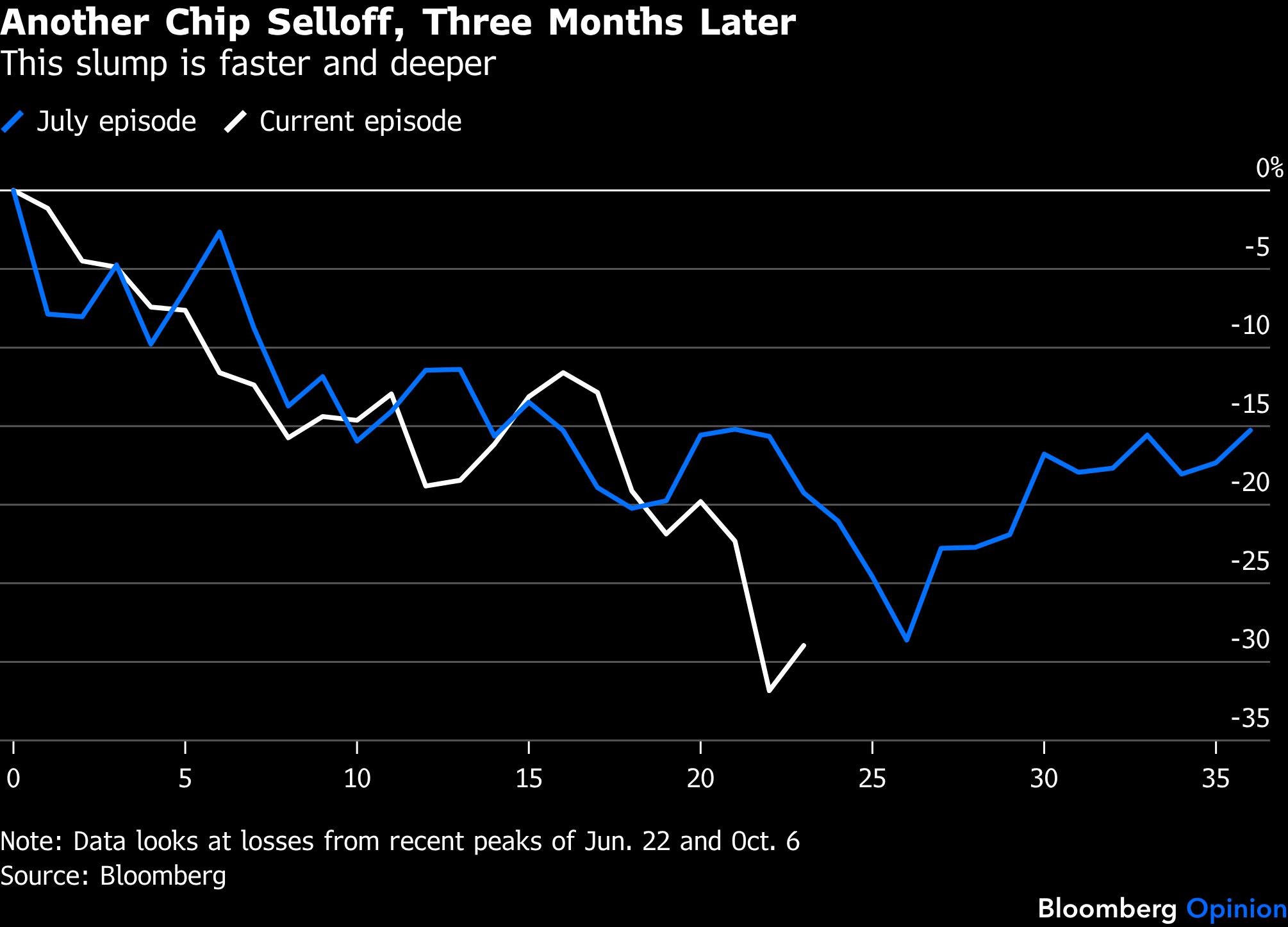
For those looking to buy the dip, it’s natural to point to the July selloff in semiconductor stocks, which recovered half of their losses after bottoming out at the end of that month. But the latest slump is faster and deeper, and unlike three months ago, major institutional buyers haven’t emerged yet. Further, the recovery might be limited, because fundamentals for the AI trade are worsening with Democrats taking control of Congress. Data center construction in the US is likely to be delayed, denting demand for semiconductors. Those with little exposure to chip stocks may not be missing out on much as a result.
At the same time, the downside could be substantial. The severity of the recent meltdown only three months after July’s losses raises red flags about hedge funds’ risk management as well as the degree of concentration in their positions. You might want to step aside when fast money is heading for the exit.
In the past, retail investors have consistently gone bargain hunting and stabilized AI stocks. This time around, however, they might do well to preserve capital. Don’t catch the falling knife.
A message from Advisor Perspectives and VettaFi: Discover something new! Click here to register for our upcoming webcasts.
Bloomberg News provided this article. For more articles like this please visit
bloomberg.com.
More Wealth Management Topics >