As she prepared to speak to investors on Tuesday evening, Nvidia Corp.’s interim chief executive officer, Colette Kress, alongside its new chairman, Harvey Jones, had two goals. First, stem the bleeding. And then: Sell Wall Street on life after Jensen Huang.
She seems to have succeeded — for now, which is all that could have been expected. Nvidia shares rose as much as 5% in after-hours trading after the company reported fiscal third-quarter results that beat estimates across the board. It forecast as much as $133.9 billion in revenue for the current quarter, well above analysts’ forecasts.
Kress also reassured investors the company’s “ambition will not change” and raised the company’s guidance on revenue growth in fiscal 2028 — which begins in February — to 75%, up from the previous 70% forecast.
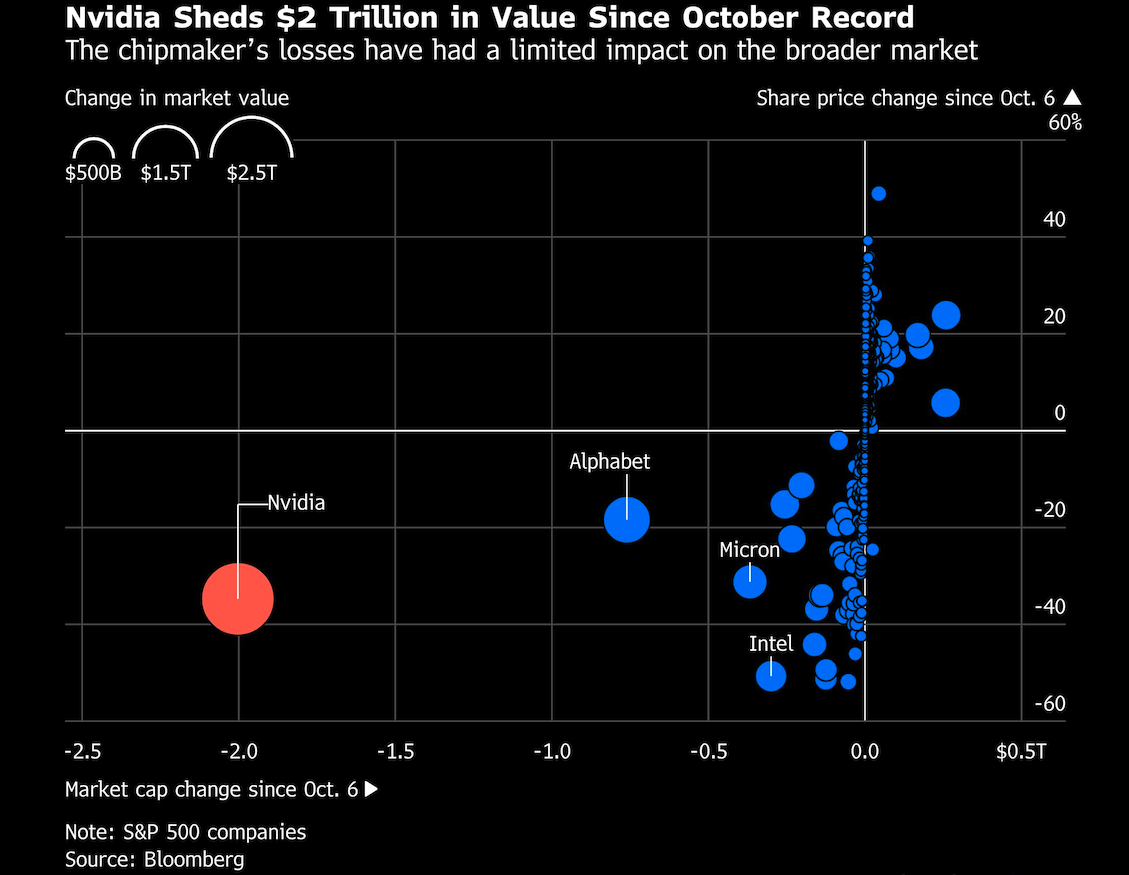
But it might be said that these numbers are Huang’s achievements. This brief reprieve won’t do much to reverse the damage done by the former CEO’s actions. More than $800 billion has been wiped off Nvidia’s value in the days since Huang’s stunning admission of an affair and potential exposure to Chinese espionage. Or, if we’re to get truly gruesome, down $2 trillion since a high in early October.

See more: Nvidia After Jensen Huang – What Leadership Change Means for Investors
Despite that, the message to investors was “business as usual.” Kress stressed that the company’s supply-chain relationships were intact, specifically calling out the most important, Taiwan Semiconductor Manufacturing Co., which makes Nvidia’s top chips. Kress said the company would continue to financially backstop data-center companies and other AI projects, maintaining Nvidia’s position as the so-called central bank of AI. Investors seemed encouraged.
The strong results will not dampen the soap-opera atmosphere that engulfs America’s most important AI company. Huang chose earnings day to break his silence since resigning to signal his willingness to return to the company. He has high-profile backing from President Donald Trump and Elon Musk, as well as supporters within the technology sector such as Amjad Masad, whose AI-coding platform Replit was used to build a petition calling for Huang’s reinstatement. It now has more than 195,000 signatures, claiming more than 10,000 current and former Nvidia employees among them — though it’s not clear how many of them are genuine.
Such is the fervor that one prominent tech investor, Balaji Srinivasan, suggested Trump might use the Defense Production Act to force Nvidia to bring Huang back, given the company’s importance to America’s competitive edge in AI and therefore national security. Even in the wacky AI echo chamber that X has become, the idea has been mostly dismissed as nonsense. More measured voices, such as Goldman Sachs CEO David Solomon, urged the board to go “slowly and thoughtfully” in selecting a new boss.
On the call, Jones stated within the first few moments that Huang’s resignation was accepted unanimously and that the board “does not intend to reinstate Jensen as CEO.”
One reason may be that Nvidia’s troubles — and Huang’s role in them — may only just be emerging. Huang has agreed to brief Congress on Dec. 1 in a closed-door session. Nvidia’s general counsel, Tim Teter, will appear the next day. Both will be scrutinized over the reported $7 billion in Nvidia chips that are said to have made their way to Chinese firms through a company with alleged ties to Alice Huang, the suspected spy with whom Huang had his now infamous affair. The pileup continues: The Securities and Exchange Commission is investigating the company, the Wall Street Journal reported on Tuesday. California’s attorney general told Bloomberg he saw a number of “red flags.”
And so on, and so on. It’s clear Nvidia is in the early stages of a long and rocky leadership transition during which it must also navigate multiple, disruptive investigations into its executives and business practices. Huang would be reckless to return. The interim leadership appears to be doing a good job so far in tuning out the noisy cabal calling for forgiveness, no matter Huang’s misdeeds. Kress excelled at reassuring investors the company was in safe hands while it faces these challenges. As she ended the call, she displayed the merest flicker of the real human emotions behind the turbulence: “We’ve got this,” she said.
A message from Advisor Perspectives and VettaFi: Discover something new! Click here to register for our upcoming webcasts.
Bloomberg News provided this article. For more articles like this please visit
bloomberg.com.
More ETF Topics >