Editor’s note: The Economics team benefits from a range of thoughtful interactions across the organization. Today, we’re interviewing our collaborator Peter Wilke, Head of Tactical Asset Allocation for Northern Trust Asset Management.
1) What is your and your team's role, and how do you steer Northern Trust’s investment decisions?
We provide research and advice on asset allocation, the selection and weighting of various investment categories. Subject to internal review and governance, our recommendations guide the investment decisions in our family of mutual funds and institutional client portfolios. The bar for rigor in our decisions is the same, whether the client is a retail investor or a pension trustee weighing a nine-figure allocation. The team also manages multi-asset mandates directly for a broad range of global clients.
In addition, we publish market insights and forecasts, host webinars, and join client meetings. We approach thought leadership as a discipline, not a marketing add-on. Being wrong in writing or front of clients concentrates the mind more acutely than being wrong in a committee room. It also forces a clear house view to take shape. A portfolio that quietly hedges every position is not a view, it is an absence of one.
See more: How to Properly Measure Risk
2) Can you describe how you incorporate the macroeconomic outlook into your investment strategies?
The macro backdrop matters most as a filter for surprises. Growth and inflation are most useful in studying how they diverge from expectations, especially comparing across countries and across industries. A single data point rarely moves a portfolio; the pattern of surprises does. For example, a hot inflation print in one region while another cools would be a more actionable signal than either number read alone, because it says something about relative policy paths, not just price levels. Expectations have moved widely in these eventful recent years.
Speed matters as much as direction. Markets move faster than investment committees, so the job is to size up a macro event or policy decision quickly enough to judge whether it is the start of a persistent trend. That judgment rests on two questions asked in sequence: how large is this effect, and how long will it last? If we get the magnitude and longevity roughly right, the appropriate portfolio response — add risk, trim exposure, sit still —follows mechanically.
3) What changes have you made in the past year as the macro outlook has evolved?
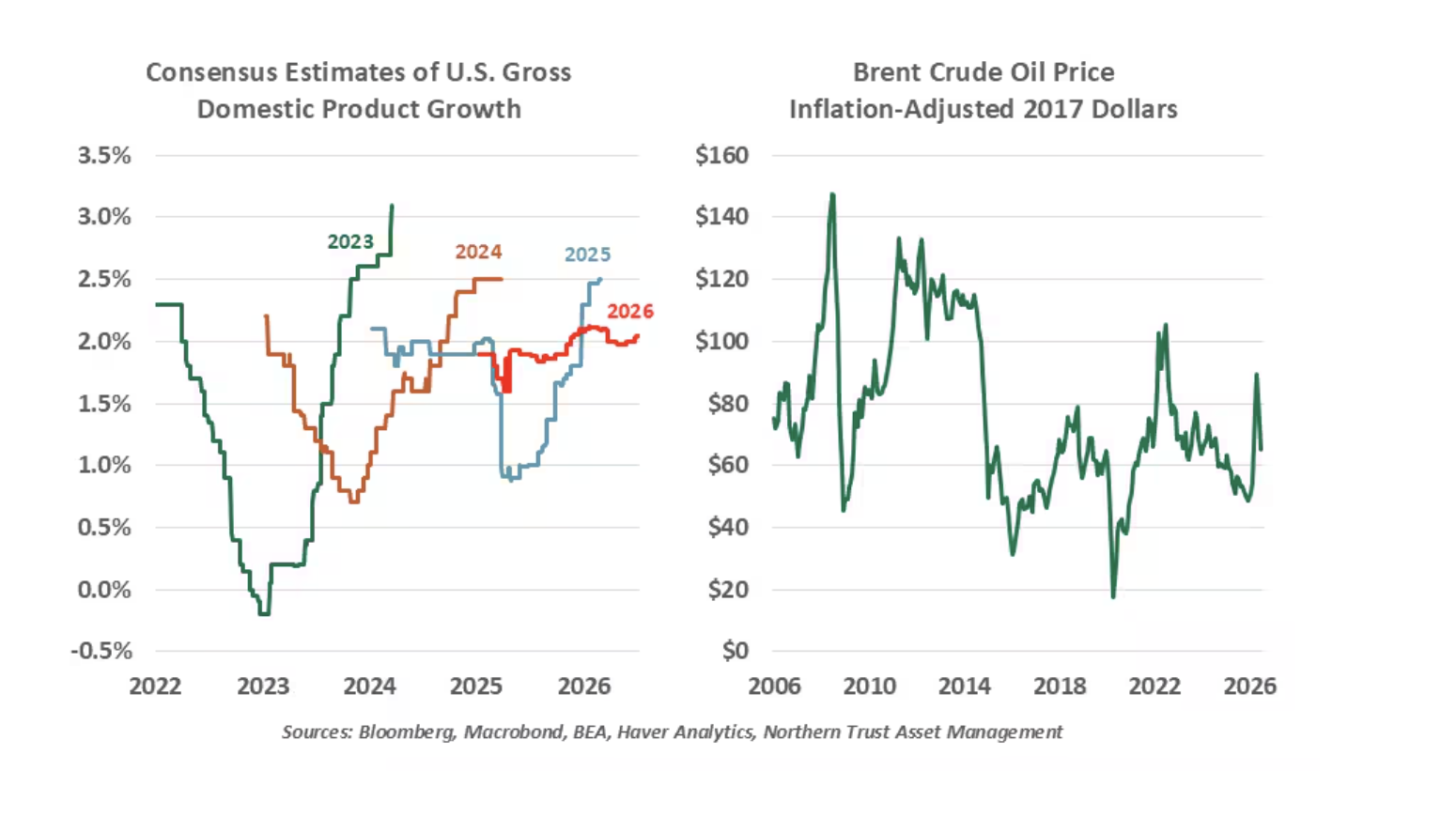
The energy shock earlier this year, as the conflict in the Middle East escalated, was significant. Instinct may be to press the sell button, but we worked out the plumbing first: how the conflict might spread, which countries and sectors were exposed through energy imports, and where the spillovers would land once the initial repricing had passed through.
The conclusion so far is that the shock, while real, was not large enough to knock the major economies off their growth path. That call has worked so far, but we revisit it continually while the conflict remains unresolved. The working assumption now is that energy prices will stay elevated for longer. A price spike is a shock to be weathered, while a plateau is a persistent drag on margins; the two scenarios call for different positioning in energy-sensitive sectors and currencies.
4) What developments are you watching that could bring about the next change in allocation?
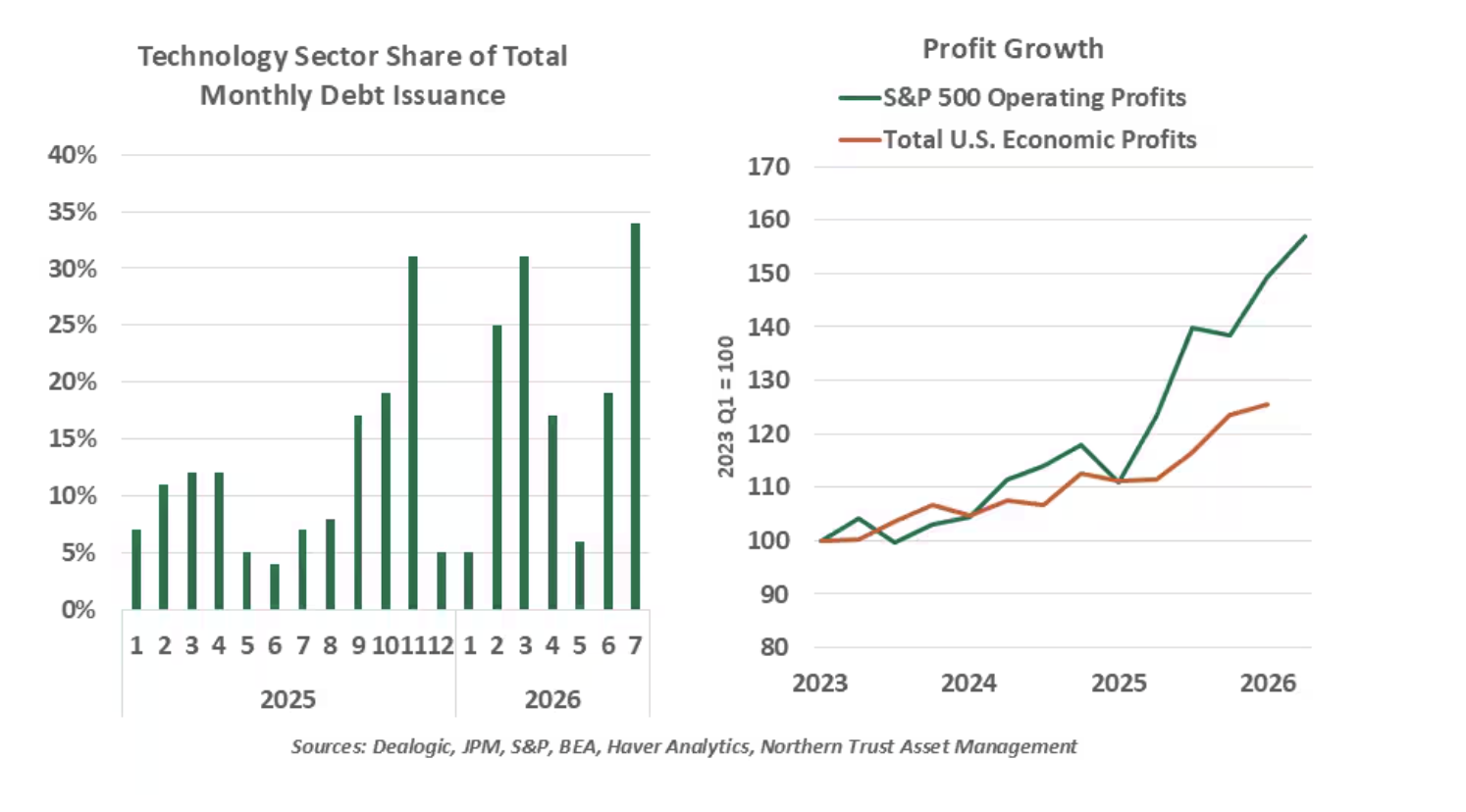
The more interesting story is running quietly in the background: several years of relentless upward revisions to capital spending on AI from the largest U.S. and Chinese technology companies. That kind of run does not go on forever. Our job is to spot the moment growth expectations stop being revised up and start merely being met, or worse, taper off. The gap between “growing fast” and “growing as fast as everyone now assumes” is where multiples will step down.
The signal to watch is not the spending itself but how it is financed. The largest AI players have tapped capital markets comfortably and on their own terms, with balance sheets deep enough to absorb any near-term market disappointment. The more instructive test comes from the smaller, more marginal players riding the same theme without the same cushion. Cheap financing will be harder for them to find once growth shows any sign of slowing; credit spreads will probably move before the equity story catches up. I’m watching the fringes of the AI trade, not the center.
5) What are the top upside and downside risks on the horizon?
The upside case centers on profit growth. Over the past five years, S&P 500 earnings have compounded at more than 15% annually, about twice the pace of economy-wide corporate profits, which have still been healthy. The divergence reflects the S&P 500's concentration in large, globally diversified, high-margin companies, as well as the benefit of share buybacks. This trend will be tested in each quarterly earnings season, but we expect it to continue.
The downside case is more structural, and slower-moving. Inflation that lingers rather than fades is the risk that matters most, because it is corrosive precisely where leverage is highest. Heavily indebted companies and some sovereigns could struggle to manage more expensive debt. Inflation does not need to spike to do damage. It just needs to stay high enough, for long enough, to keep debt service costs elevated and starve growth of oxygen. In the spinning wheel of the market, inflation less of a blowout than a slow puncture, which may be noticed too late.
Ryan James Boyle is the Chief U.S. Economist within the Global Risk Management division of Northern Trust.
Information is not intended to be and should not be construed as an offer, solicitation or recommendation with respect to any transaction and should not be treated as legal advice, investment advice or tax advice. Under no circumstances should you rely upon this information as a substitute for obtaining specific legal or tax advice from your own professional legal or tax advisors. Information is subject to change based on market or other conditions and is not intended to influence your investment decisions.
© 2026 Northern Trust Corporation. Head Office: 50 South La Salle Street, Chicago, Illinois 60603 U.S.A. Incorporated with limited liability in the U.S. Products and services provided by subsidiaries of Northern Trust Corporation may vary in different markets and are offered in accordance with local regulation. For legal and regulatory information about individual market offices, visit northerntrust.com/terms-and-conditions.
A message from Advisor Perspectives and VettaFi: Discover something new! Click here to register for our upcoming webcasts.
© Northern Trust
Read more commentaries by Northern Trust