Some of the largest US companies face billions of dollars in additional interest costs and hits to their profit if they refinance their 2024 maturities at current rates, with a third of them lacking the cash to repay upcoming debt.
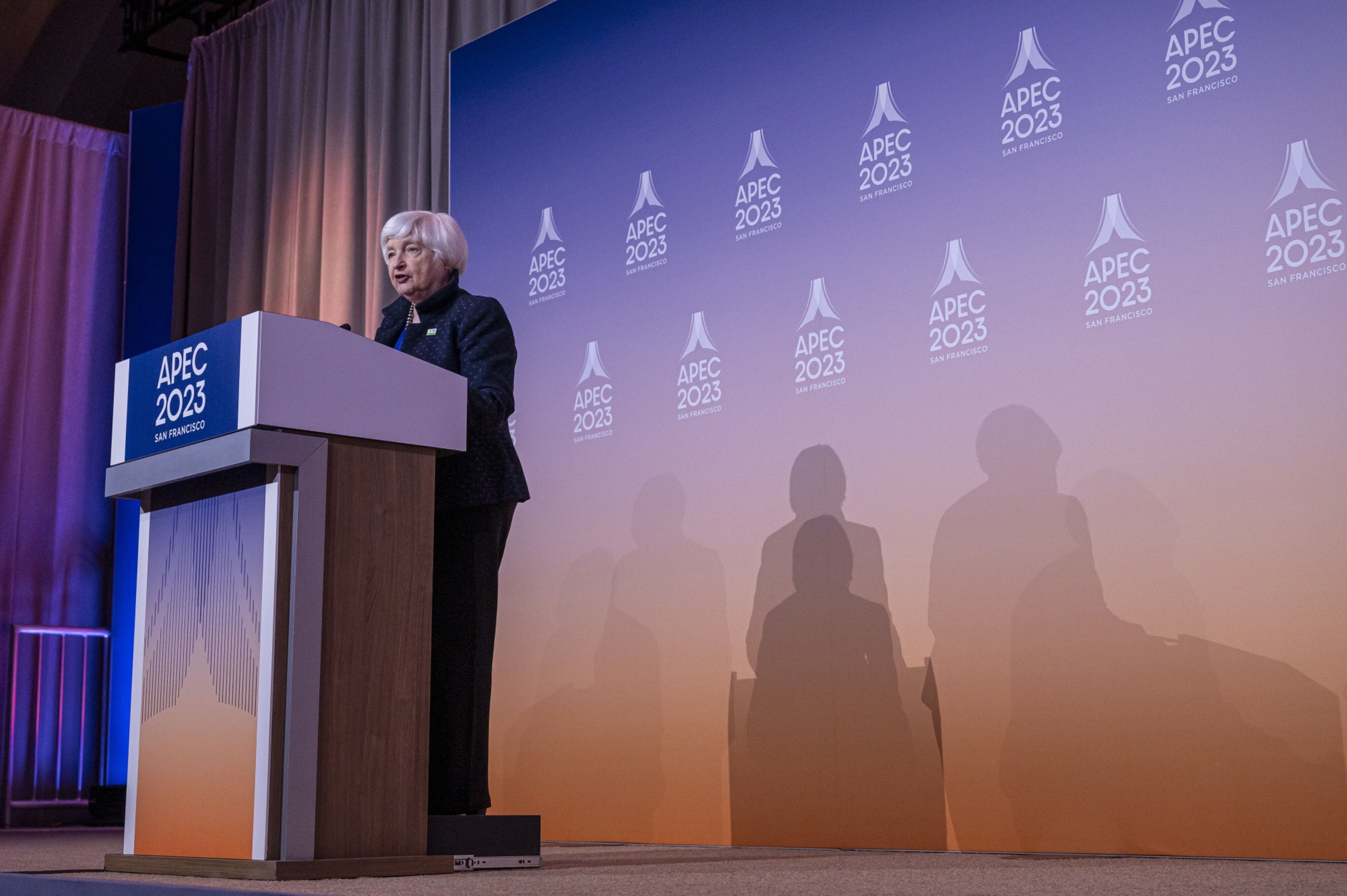
US Treasury Secretary Janet Yellen said she disagrees with Moody’s Investors Service’s shift to a negative outlook on the country’s Aaa credit rating, expressing confidence in the economy and in Treasuries as a safe asset.
The promise of artificial intelligence to rewire large swaths of the American economy supercharged tech shares for most of the year before the fever broke this fall. But investors would be remiss in thinking AI’s power to juice returns is over.
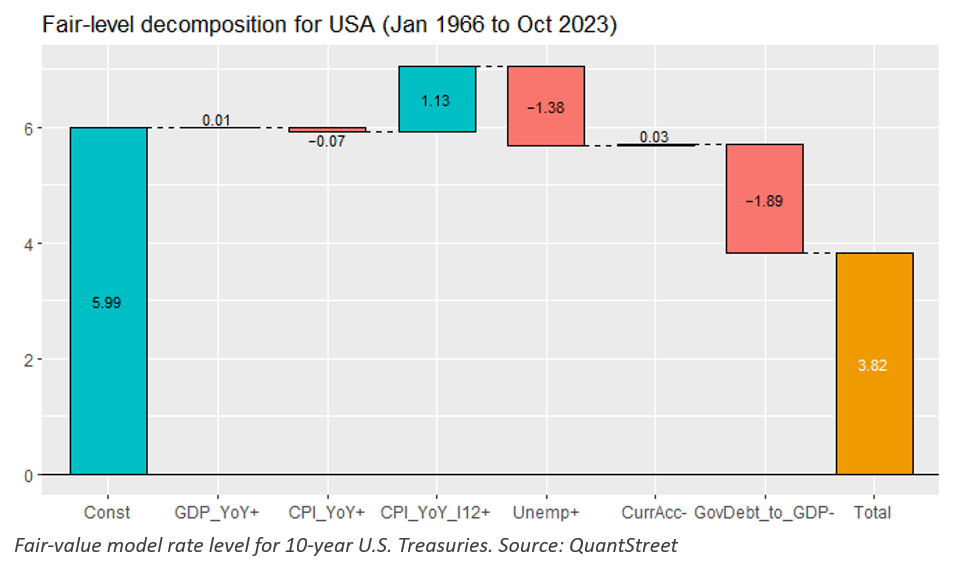
U.S. Treasury rates in the long-end of the curve are 100 basis points too high relative to a fair-value model. The risk-adjusted opportunity in long-dated, low-coupon Treasuries is attractive.
This article provides a brief guide to the AI technologies available (it’s not just ChatGPT), their applications in wealth management, and how your firm can define specific business outcomes to achieve.
“I guarantee to make you an investment genius in six months. Send me $199, and I will reveal my secret.”
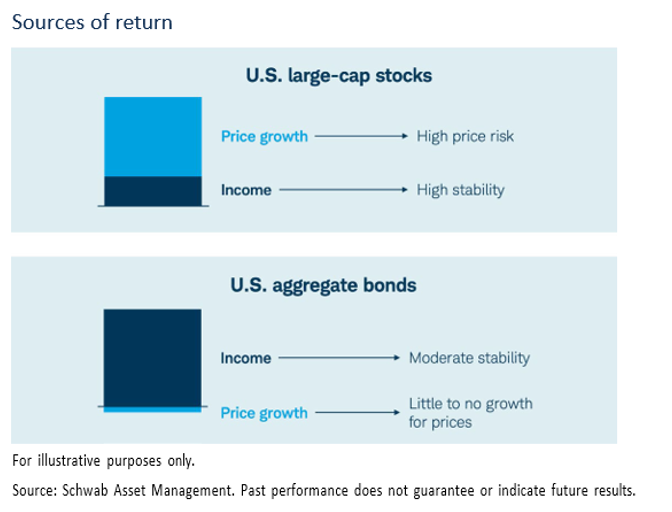
Investing for growth and investing for income shouldn’t be mutually exclusive. Learn how to build a personalized income strategy that balances immediate versus longer-term cash flow needs based on the investor’s unique situation.
Interest on our federal debt is 2% and heading towards 5%, which will crowd out other expenditures and escalate deficit spending.
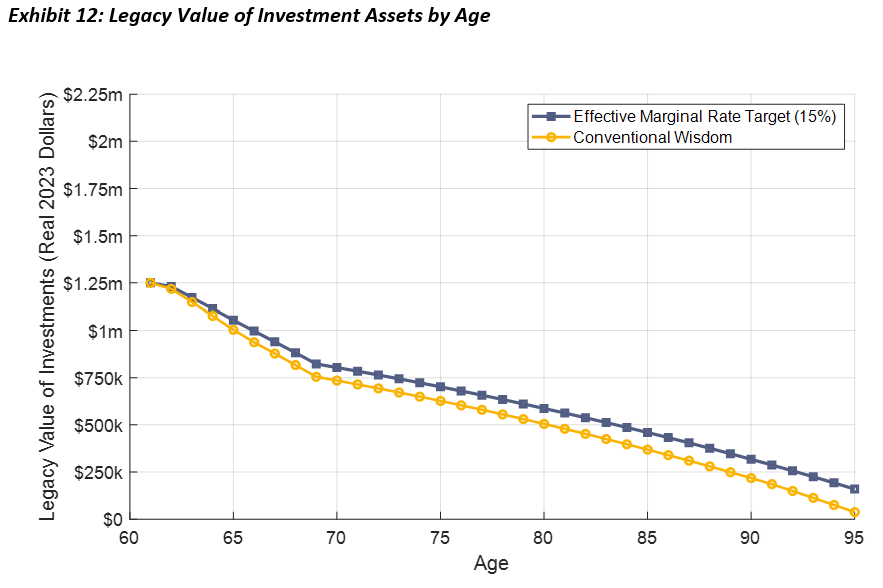
Research on tax-efficient retirement distribution strategies aims to sequence withdrawals from taxable, tax-deferred, and tax-exempt accounts to maximize after-tax spending. That can be either in terms of meeting an after-tax spending goal for as long as possible or preserving the most after-tax legacy after meeting spending needs over a specified timeframe.
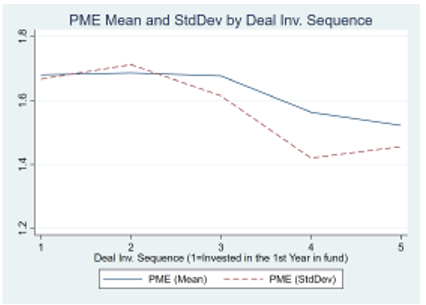
Private equity (PE) has become a staple of institutional portfolios, but its performance has often been disappointing. New research shows that the levels of specialization and portfolio diversification should be important considerations when selecting a manager to implement a PE strategy.
As it turns out, the big economic story of 2023 is not a recession, as many had predicted — it’s the disconnect between consumer sentiment and behavior.
Where is the line between selling a financial product and providing investment advice? That question is at the heart of a debate over a new proposal that aims to protect Americans’ retirement savings.
Morgan Stanley’s strategists see US stocks and bonds outperforming their emerging markets peers next year, according to a note to clients.
Emerging-market borrowers are piling back into global bond markets, selling about $20 billion in dollar notes in just a few days, all too aware that the window of opportunity may snap shut as suddenly as it opened.
Worries about an economic downturn aren’t enough to dissuade market participants from being bullish on risky debt as their top contrarian trade, according to the latest Bloomberg Markets Live Pulse survey.
Here are tips for handling prospect objections and how every advisor can improve client meetings.
A push by US regulators to rein in the Federal Home Loan Banks risks casting broad ripples through the US financial system, increasing costs to banks by pulling a major force from the nation’s funding markets.
Wall Street’s so-called Magnificent Seven has been living up to its name again, but none more so than Microsoft Corp.
Individual investors who had been behind the stock market rally this year pulled more money from US equities in October than they have in any month over the past two years.
Nvidia bulls are starting to throw around an adjective rarely used for a stock that’s more than tripled in less than a year: cheap.
The bond market giveth and the bond market taketh away. The S&P 500 Index closed in the red Thursday, blowing its widely-hyped chance at a nine-day winning streak, which would have been its best run since 2004.
I am not a fan of one-size-fits-all financial strategies. Yes, I see the value of making investment as simple as possible, but the right balance of risk and reward is a personal decision, and the most common strategies are either arbitrary or agnostic about crucial details.
Moody’s Investors Service recently released a report bluntly entitled, “Private equity exposure increases credit risk for universities with limited wealth.”
Credit risk will replace interest-rate risk as the market’s “big fear” next year, according to Mohamed El-Erian.
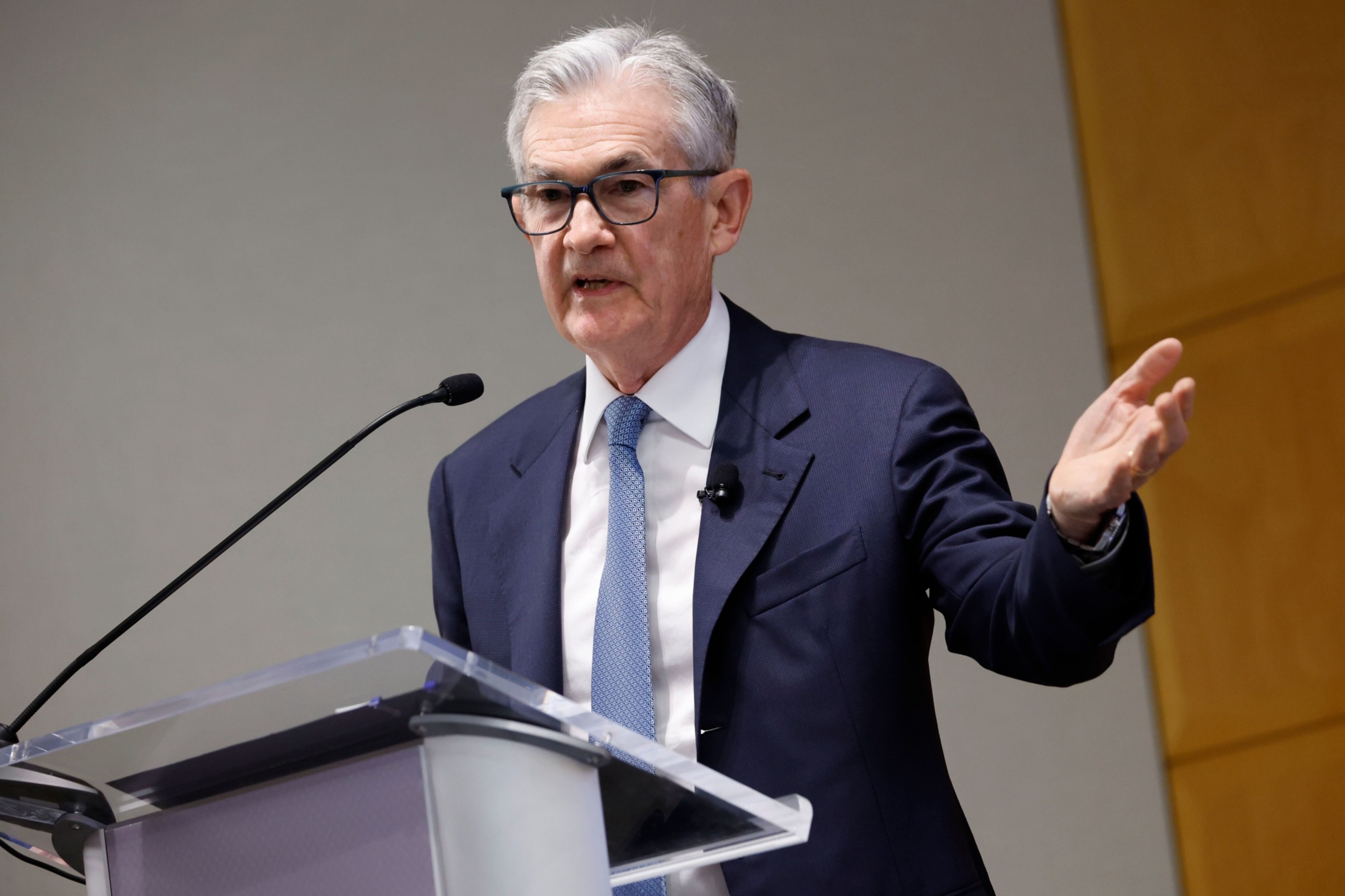
Federal Reserve Chair Jerome Powell said the US central bank will continue to move carefully but won’t hesitate to tighten policy further if appropriate.
It’s the buzz word on Wall Street and in the hallways of the Federal Reserve and Treasury Department. It’s blamed for triggering bond selloffs, shifts in debt auctions and interest-rate policy.
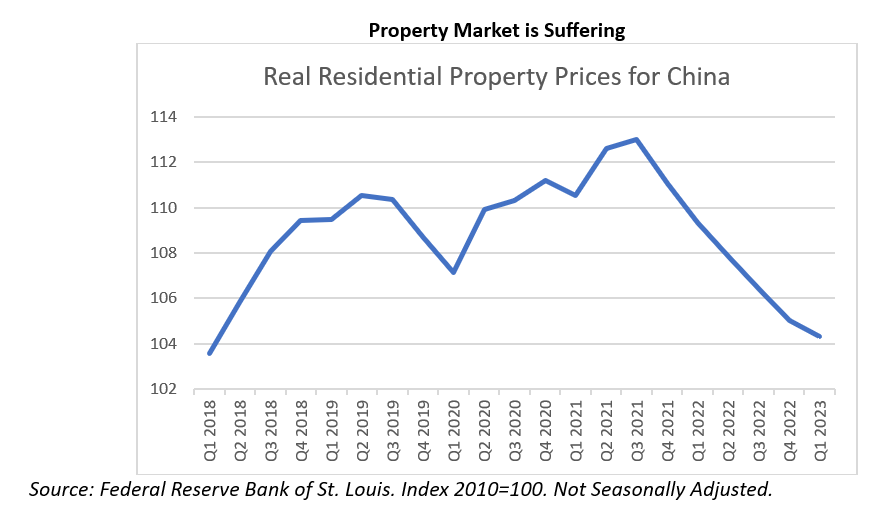
Whether or not you’re investing directly in China, there’s a possibility that what happens there will reverberate in your clients’ portfolios.
The S&P 500’s best week in a year was driven by investors locking in profits on bearish bets, suggesting little room for further gains, according to Citigroup Inc. strategists.
The inflation scare is barely behind us, and it is already time for the Federal Reserve to focus on recession risks. The recent trajectory of job growth means policymakers can no longer rule out unemployment snowballing in 2024, which should force a shift in how they think about managing their dual mandate.
Several ex-Cantor Fitzgerald executives started a crypto lending platform with the expectation that it will serve operators of spot Bitcoin exchange-traded funds once they gain US regulatory approval.
Federal Reserve Chair Jerome Powell said the central bank must be willing to think beyond the complex mathematical simulations it traditionally uses to forecast the economy.
For years, Americans have been giving their banking data to financial apps such as Venmo, YNAB and Rocket Mortgage. And for years, banks have been trying to figure out how to deal with the security risks. A new proposal from the Consumer Financial Protection Bureau suggests a better way.
Given the likelihood that economists are again myopic in their inflation forecasts and bond traders are betting on such projections, I see a day soon when a disinflationary or deflationary reality hits the bond market and bond yields plummet.
A recent study found significant differences in how our brains process in-person meetings and Zoom calls versus in-person meetings.
I’ll share some important insights gleaned from many decades of working in the advisory profession and being both an insider and an outsider.
Alarm bells sounded Friday when we learned that the US unemployment rate rose to 3.9% for October, well above the 50-year low of 3.4% that it hit earlier in the year. The latest reading is still very low, so what’s with the doomsayers telling us a recession has arrived?
Here are six key trends for HNW donors to consider during your giving season conversations.
Everything in the world is relative, including Warren Buffett’s cash position.
The average 30-year mortgage rate plunged last week by the most in more than a year, helping generate the biggest advance in home purchase applications since early June.
Hoisington Investment Management Co. was pummeled by its bullish stance on US bonds in recent years, driving its Treasury fund to some of the industry’s biggest losses as the Federal Reserve’s rate hikes sent prices tumbling.
User engagement is up on LinkedIn. How can you capitalize on it? Here are six steps to cultivate a LinkedIn network.
The team responsible for assembling BlackRock Inc.’s model portfolios is favoring the stock market’s largest companies, potentially unleashing a flood of billions of dollars into technology shares.
Few prospects have the mental bandwidth to plan ahead five weeks, let alone five to 20 years.
Sergio Ermotti promised ruthlessness in reshaping Credit Suisse Group AG, and the chief executive officer of UBS Group AG has been true to his word.
With the race to year-end now upon us, I share my thoughts on why, despite the recent reset and higher rates, I still see several reasons for market optimism for the remainder of the year.
Billionaire Stan Druckenmiller isn’t letting up on his criticism of US Treasury Secretary Janet Yellen. Druckenmiller says Yellen committed an epic mistake by failing to meaningfully term out America’s debt when rates were ultra-low — a missed opportunity he’s characterized as “the biggest blunder in the history of the Treasury.”
For years, Dutch payments fintech Adyen NV’s founders and management ran things their own way, thanks to some blowout growth.
The S&P 500 Index’s best week in a year has brought the broad equities benchmark to a decisive point where stocks can make a significant break higher or find their gains capped.
A record flood of cash has poured into opposite ends of the US Treasury yield curve this year, seeking either to seize on the highest short-term interest payments in over two decades or profit from a long-bond rally once rates finally peaked.
Let’s break down three key principles when designing or selecting illustrations to support your client communications outreach.