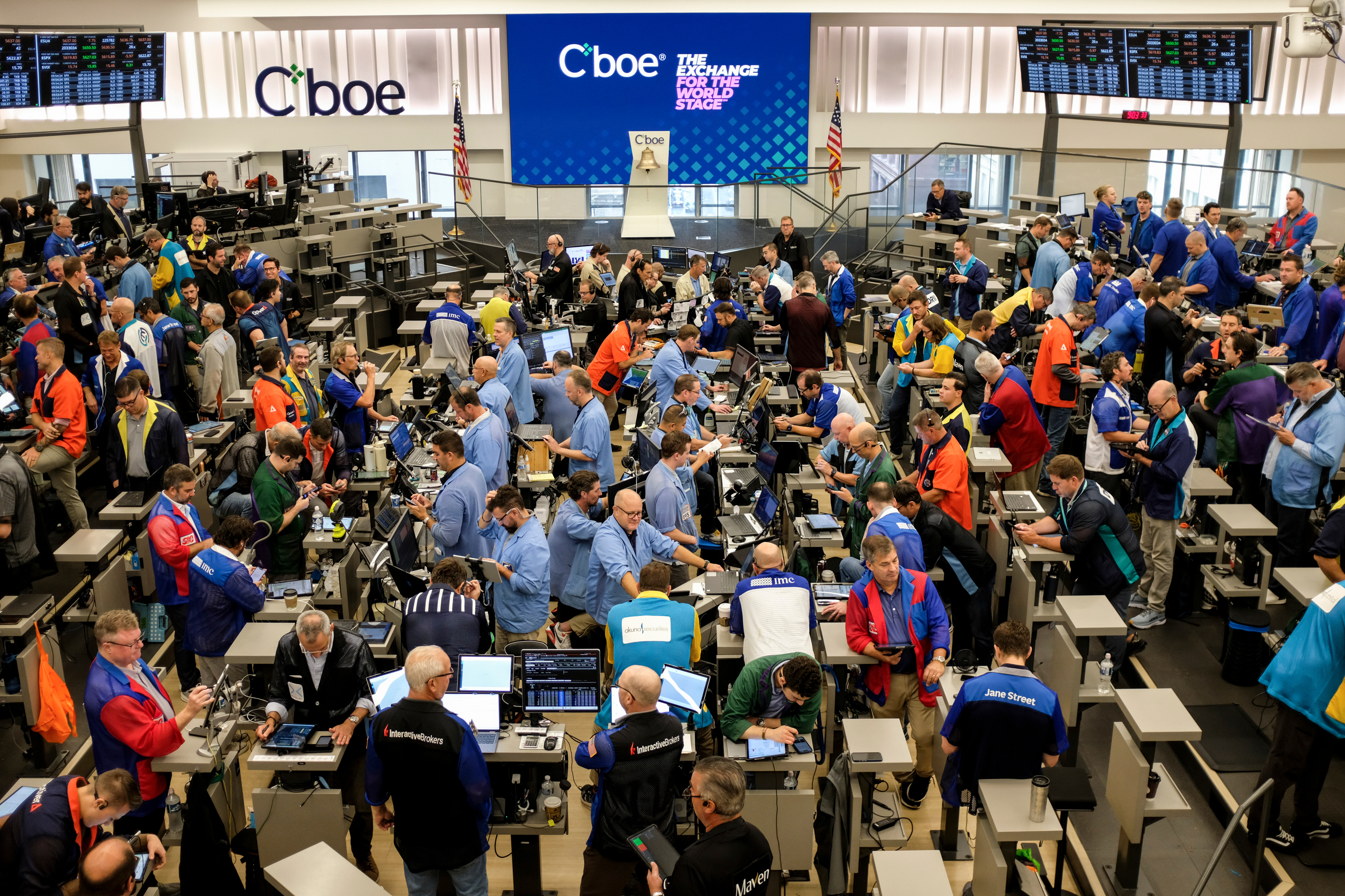
The single-stock ETF frenzy is going global, with a new bid to launch products that give US traders a way to bet directly on overseas companies — without fretting about currency risk.

Earlier this year, the Federal Reserve seemed to have time on its side. Payrolls were growing at a healthy clip and the unemployment rate hovered near a five-decade low. Even though there were signs that inflation was licked, there didn’t appear to be much harm in keeping interest rates elevated for a while longer — just in case.
In a niche corner of the bond market, an almost $140 billion wave of maturing debt is poised to lend momentum to what is already one of Wall Street’s hottest hedge fund trades.
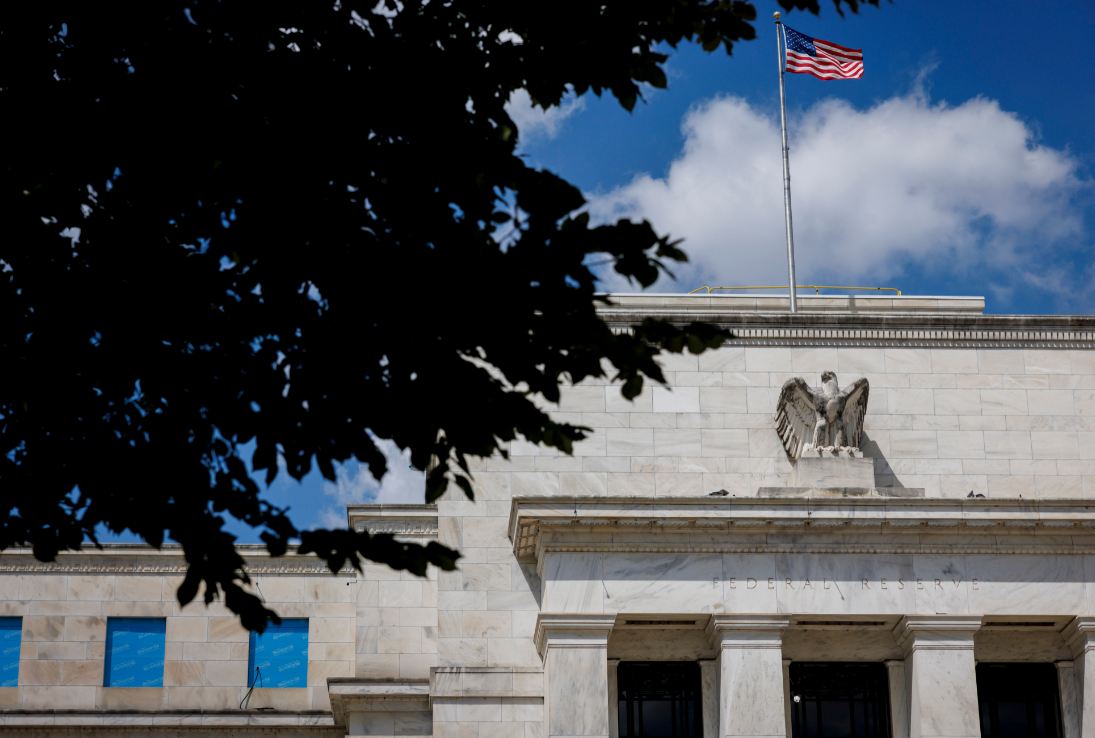
The Federal Reserve is likely to lower interest rates by a quarter-point next week and at each of the two meetings that follow, according to economists surveyed by Bloomberg News.
Investors are using their massive cash piles to lock in attractive yields in global bond markets, helping to limit losses in the asset class, according to Mohamed El-Erian.
Institutional investors, which have traditionally made up private debt’s largest pool of money, are no longer a source of growth for the $1.7 trillion industry.
Gold climbed to a record after another faster-than-forecast US inflation print and an uptick in applications for unemployment benefits substantiated bets that the Federal Reserve will cut interest rates next week.
All signs point to a tough few months ahead for investors charting the dollar’s path, after the US presidential debate and a key inflation reading left markets anticipating heightened volatility through year-end.
In some ways, central banking requires a trader’s instincts. Policymakers need to marry academic rigor with quick reflexes. There is a time for rumination and a time for action.
Tech companies of a certain size have long expected an easy ride from authorities, and for good reason. They always got it. Apple Inc. for years abused loopholes to pay virtually zero tax in the European Union while generating record profits there, thanks to special treatment from Ireland, where it bases its European headquarters.
Here’s a quote attributed to P. J. O’Rourke, an American author, journalist and political satirist: “There is a simple rule here, a rule of legislation, a rule of business, a rule of life: beyond a certain point, complexity is fraud.”
When you pay attention to details in the financial services industry, you elevate your firm’s standing and demonstrate to clients that their relationships are valued. Small, considerate gestures can transform clients’ perception of your service, often bridging the gap between a satisfactory experience and an exceptional one.
Try to understand specifically where you are going off track. Many times these are behavioral disconnects. If you have a boss who is highly attuned to rules and quality and you are someone who doesn’t notice details as much, you might be failing in their eyes. First, start with seeking to understand.
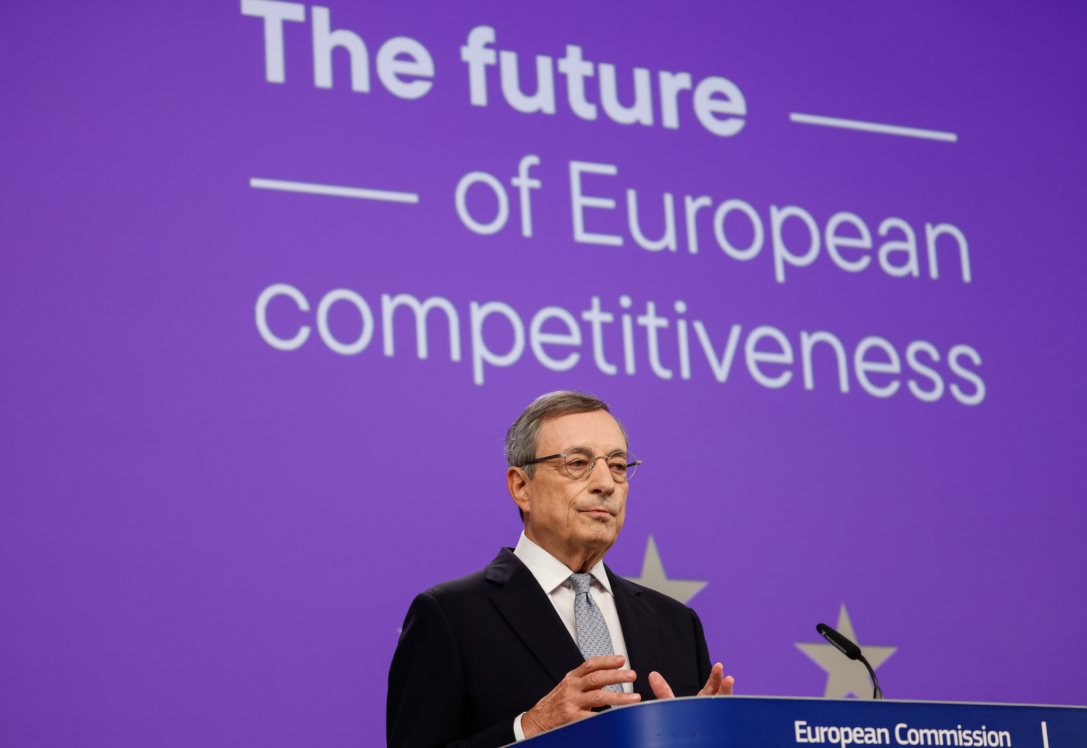
Mario Draghi wants Europe to follow the United States and China down the road marked “industrial strategy.” As Europe’s most influential economist — a former head of the European Central Bank, prime minister of Italy and technocrat supreme — Draghi had enormous leeway in preparing his report on European competitiveness.
Banks and shadow banks are meant to exist in separate worlds, but the financial links between them are increasingly seen as a source of potential instability. That’s a problem for banks because the business of forging those ties has lately been among the hottest activities on Wall Street.
Forecasters expect a monthly report on US consumer prices to show another month of muted increases, possibly playing into a Federal Reserve debate over how much to cut interest rates.
Goldman Sachs Group Inc. has a message for benchmark managers who are weighing big reshufflings of their indexes to account for a handful of stocks growing to interstellar size: slow down.
US Treasuries rallied ahead of a closely watched inflation reading that could cement bets on the size of the Federal Reserve’s interest-rate cut this month.
US mortgage rates slid last week to the lowest level since February 2023, emboldening homebuyers and spurring a pickup in refinancing applications in welcome news for the real estate market.
How do you convey your value and convince qualified prospects that hiring you will be a worthwhile investment without breaching your compliance obligations as an advisor?
The safest way to ensure retirement security is to match, on a year-by-year basis, future spending needs with a reliable stream of inflation-adjusted income and maturing fixed-income assets. As we’ve already seen, a conventional stock/bond portfolio may not cut that mustard.
State Street Global Advisors and Galaxy Asset Management are launching a trio of cryptocurrency-focused exchange-traded funds even as investors pull back from spot Bitcoin funds.
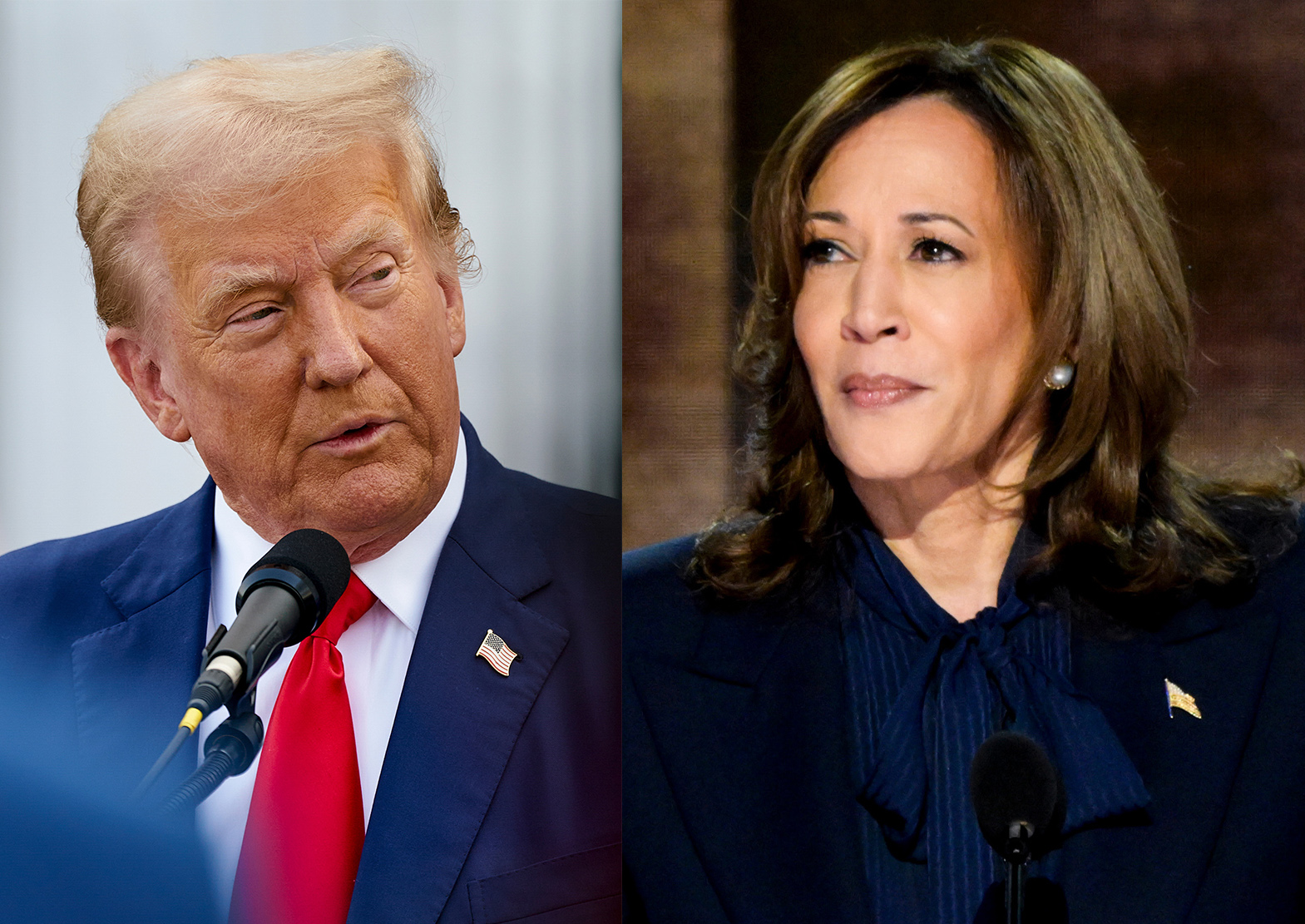
Investors weighing election risks ahead of the first US presidential debate between Vice President Kamala Harris and former President Donald Trump are already a lot more jittery than they were before Trump and his onetime opponent, President Joe Biden, met onstage in June.
Apple Inc. lost its court fight over a €13 billion ($14.4 billion) Irish tax bill and Google lost its challenge over a €2.4 billion fine for abusing its market power, in a double boost to the European Union’s crackdown on Big Tech.
The next-generation processor was unveiled six months ago, but has faced engineering snags that delayed its release. While Chief Executive Officer Jensen Huang tried to reassure the market last month that revenue from the chip is coming soon, some investors were left wanting for details.
The all-in view of Tesla Inc. was summed up in a line from a report this summer by one of the more all-in analysts covering the company: “The car is to Tesla what the video game chip is to Nvidia.
When John D. Rockefeller wanted to punish a rival, he cut prices to force them to operate at a loss. The father of the modern oil industry had a name for it: a “good sweating.” A century later, OPEC+ is giving Big Oil the modern equivalent of Rockefeller’s time-tested tactics. Not everyone will be fit enough for it.
78 million baby boomers are about one-third of the voter-eligible population and 77 percent of them vote, so there are 60 million baby boomer votes. That 60 million is 38 percent of the 158 million votes cast in the 2020 presidential election. The baby boomer voters’ bloc is a big deal.
Part one of this series described the burgeoning bull steepening yield curve environment and what it implies about economic growth and Fed policy. It also discussed the three other predominant types of yield curve shifts and what they suggest for the economy and Fed policy.
In this article, we’re going to throw some cold water on the DI love-fest by explaining why most tax-sensitive investors would be better off with a simpler approach to tax loss harvesting.
US Bitcoin exchange-traded funds have posted their longest run of daily net outflows since listing at the start of the year, part of a wider retreat from riskier assets in a challenging period for global markets.
Bond traders who struggled to predict how high the Federal Reserve would raise interest rates are finding the way down just as vexing.
Cloud computing has been one of the first industries to get a demonstrable boost from artificial intelligence. Oracle Corp.’s quarterly results on Monday are likely to extend that trend.
The US stock market has given us plenty of real and perceived calendar anomalies to think about. There’s the observed tendency for stocks to experience a “Santa Claus rally” (during the last five trading days of the year and the first two of the next) and the weekend effect (where stocks have a habit of slumping on Mondays).
American consumers have surprised many economists this year by continuing to spend even as their savings shrink and the labor market cools. They’ve been aided in part by pockets of deflation that have boosted their purchasing power on things such as gasoline, automobiles and airfares.
Former Treasury Secretary Lawrence Summers said that while the August employment report wasn’t particularly poor, it did make predicting the size of the Federal Reserve’s likely interest-rate cut this month a tougher call.
Amundi SA and First Eagle Investment Management are looking to raise as much as $5 billion for a new private credit strategy that will offer wealthy individuals in Europe, the Middle East and Asia access to private loans made to mid-size US companies.
Nvidia Corp. has wiped out more than $400 billion in value this week, weighing on key equity benchmarks as jitters spread over the health of the US economy and an AI trade that may have gotten ahead of itself.
After two days of record sales in the US blue-chip corporate debt market, another 11 companies are looking to sell bonds on Thursday, and demand for the securities is holding strong by key measures.
Former President Donald Trump’s proposals for targeted tax breaks are resonating with battleground-state voters, who overwhelmingly approve of his ideas to eliminate taxes on tipped income and retirement benefits.
Despite what you may have heard from the doomers, the US labor market is hardly falling apart at the seams. Layoffs are still extraordinarily low and a report Friday showed that the overall unemployment rate slipped to just 4.2%.
OPEC+ is like a teabag – it only works in hot water. The late Robert Mabro, one of the savviest oil-market observers, liked to say the cartel only got the job done when it was under prolonged financial pain. To judge by its latest actions, OPEC+ has yet to realize it’s inside a warming kettle.
Most people see “blockchain” and “funds” in the same sentence and immediately think of pools of money betting on cryptocurrencies like Bitcoin and Ether. That isn’t how Singapore sees the utility of distributed ledgers.
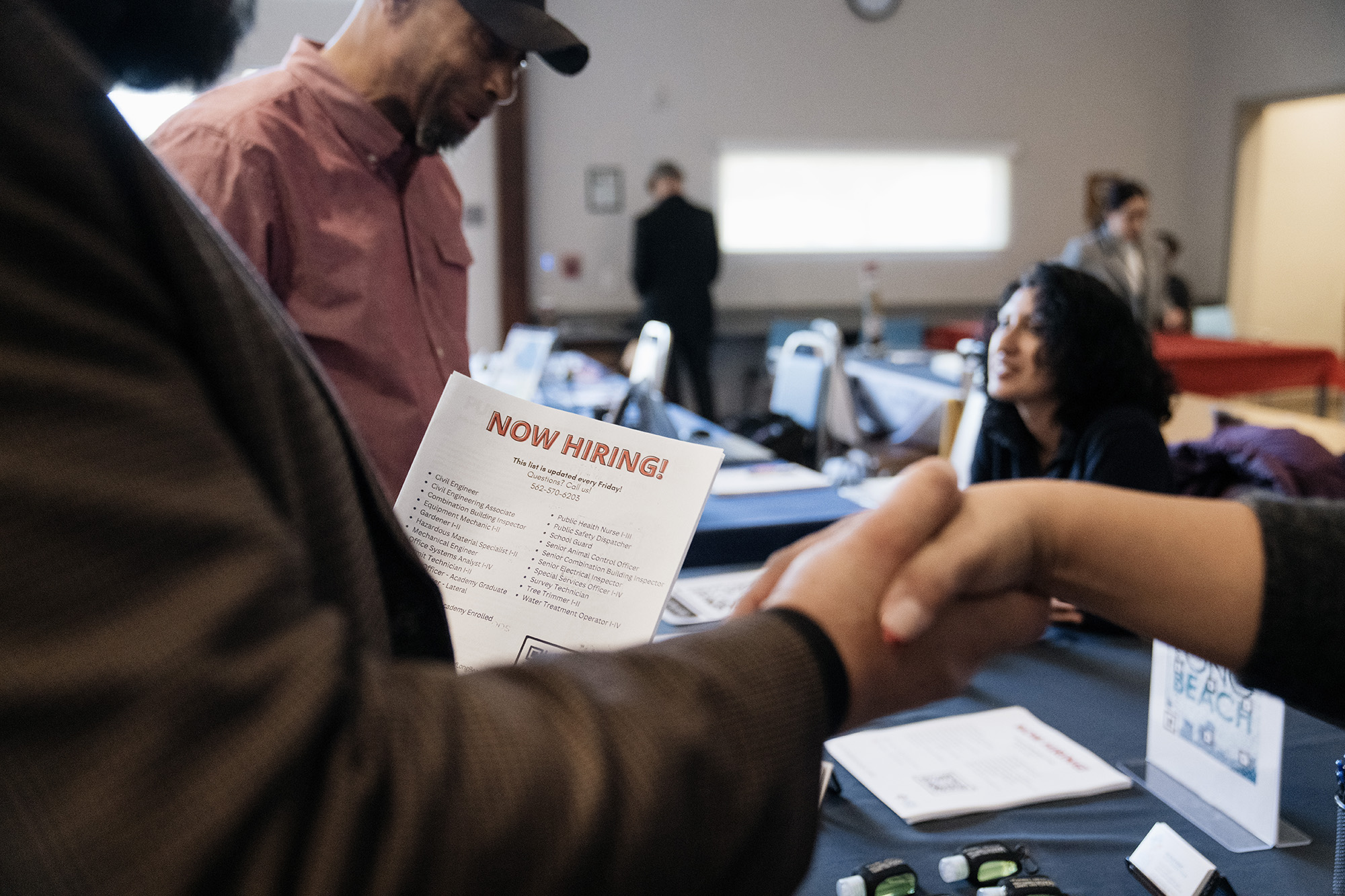
US hiring fell short of forecasts in August after downward revisions to the prior two months, a development likely to fuel ongoing debate over how much the Federal Reserve should cut interest rates.
US Treasuries gained and traders ramped up their bets that the Federal Reserve will opt for a supersized interest-rate cut this month after a mixed report on the US labor market.
The world’s biggest asset manager is taking some chips off the table as markets enter a “new phase” of turbulence ahead of a Federal Reserve interest rate cutting cycle and the US presidential election.
Tax policies touted in the US presidential election could have a big impact on S&P 500 earnings, according to Goldman Sachs Inc. strategists.
The bold bet from the likes of Citigroup Inc. and JPMorgan Chase & Co. that the Federal Reserve will slash interest rates by a half-percentage-point this month faces its biggest test yet from Friday’s US jobs report.
Labor Day weekend, marking the end of the US summer driving season, is typically the year’s last hurrah for gasoline producers. This year, the high-fives were reserved for drivers (and White House occupants): The average pre-long weekend pump price was down 13% from last year after gasoline refining margins collapsed in August. Pump prices have eased further this week.