The Fed’s balance sheet has two sides: On the asset side are Treasury bonds and mortgage-backed securities—the financial instruments the Fed buys to inject money into the economy. On the liability side are the reserves that banks hold at the Fed, along with physical currency in circulation.
Gold has been top of mind for many investors this week, with prices falling significantly at the start of the week. Despite a strong run in 2025, traditional valuation models suggest gold prices may have become somewhat stretched, creating some fragility in the asset class.
The equity market has shown remarkable resilience over the past two weeks despite rising U.S.-China trade tensions, a spike in equity market volatility, and growing credit concerns tied to business development company (BDC) and regional bank lending losses.
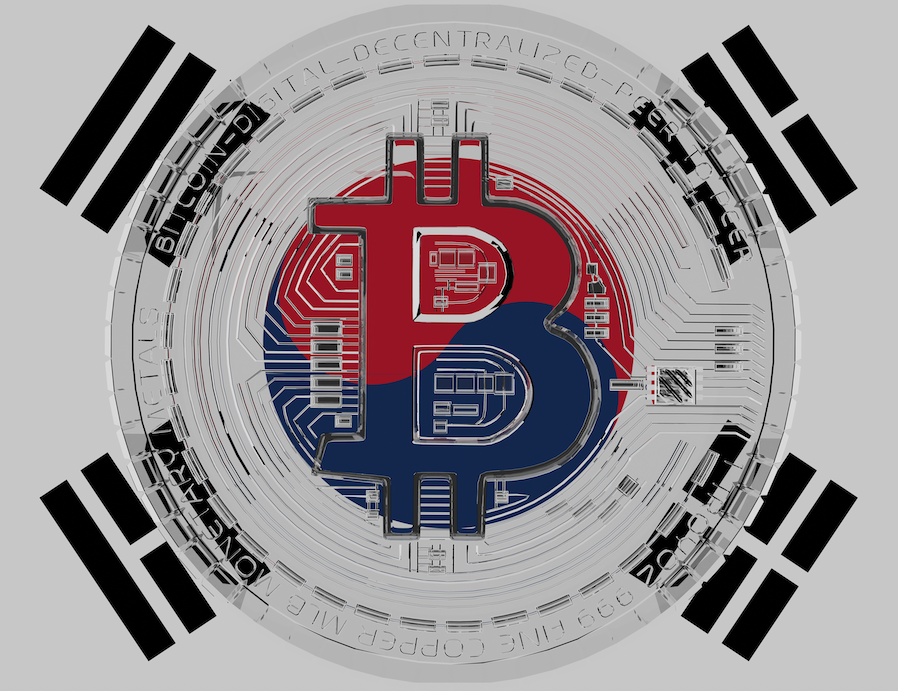
A weakening greenback is being compounded by global de-dollarization and lower interest rates, creating an environment for emerging markets (EM) ETFs to prosper. In turn, more investors are flocking into EM equities, but for more targeted exposure, South Korea could present an intriguing alternative.
For those new to the practice, it’s relatively straightforward. Nearly every investor and advisor has an investment that is on track for a loss this year. Not all investments hit, after all. Selling at a loss helps tamp down a portfolio’s overall gains for the record books, reducing the end-of-year tax bill, “harvesting” losses to offset gains.
The investment case for private assets in DC plans hinges on choosing high-performing managers—specifically those in the top third of the performance spectrum, committing to long holding periods, and accepting the risk of underperformance over time.
After an extended period of surprisingly resilient economic activity, marked by buoyant consumer spending and robust labor market gains, the U.S. economy is shifting gears. The sprint phase, characterized by fiscal tailwinds and pent-up demand, is giving way to a more measured pace.
We believe an OCIO partnership is the stronger choice. With broad access to top-tier managers, scale advantages, deep operational infrastructure and critical resources to oversee risk and capital deployment, OCIOs can often take advantages of opportunities that single-strategy boutiques often cannot.
The centerpiece of the One Big Beautiful Bill Act (OBBBA) is the extension of current income tax rates and brackets that were due to expire at the end of the year.
To analyze the impact of the Fed’s rate cut on the bond market, we are going to look at the impact of Treasuries maturing between 2 and 10 years and Treasuries maturing between 10 and 30 years. We will explore the month prior to the Fed’s September meeting and the month after, in order to understand the full impact of the Fed’s decision to cut rates.
The interest rate volatility over the last three years has many investors reaching for bond ladders. We think there’s a best number of bonds to navigate the market and, coincidentally, it has something in common with a sci-fi classic.
Aggressive policy changes from Washington have introduced potential long-term economic risks, but markets continue to rally because the near-term conditions remain favorable.
As noted by TMX VettaFi Head of Research Todd Rosenbluth, fixed income ETFs are having a banner year amid record inflows. The Vanguard Total Bond Market ETF (BND) and Vanguard Total International Bond ETF (BNDX) were two of the top funds responsible for the $325 billion in net inflows (as of October 15).
In a nutshell, the price of silver is rising because there simply isn’t enough metal to meet demand.
By contrast with traditional discretionary approaches, systematic fixed-income models are exclusively data-driven and operate autonomously—ranking securities, constructing optimized portfolios and managing risk without traditional inputs or discretionary overlays.
Earnings season gets underway this week, with reports from major banks providing the first look at corporate performance. The technology sector is expected to be the standout performer with over 20% projected earnings growth, driven by the ongoing "AI arms race".
Broad measures of the U.S. economy are strong. Stock market indices have set new record highs this year.
Even thoughtfully managed strategies may underperform or suffer sharp losses. This can encourage poorly timed emotional decisions that exacerbate the decline. A systematic risk-management framework that employs stop losses can help minimize such behavioral biases.
When most people hear the term “estate planning,” they think of the wealthy or those nearing retirement. However, estate planning is for everyone, regardless of age or net worth.
The U.S. has become the world’s top producer of natural gas liquids (NGLs) thanks to abundant supplies. Rising worldwide demand for plastics and clean fuels has sent U.S. NGL exports soaring, establishing a compelling long-term growth story for midstream players.
Although specific themes come in and out of favor, thematic investing is here to stay, as investors seek diversified exposure to hot new trends and industry disruption.
The de facto “passive” allocation of 60% equities/40% bonds has proven effective at compounding wealth over time by tapping into two key risk premia: the equity risk premium earned by underwriting the risk of an economic growth shock and an inflation risk premium received for bearing the risk of surprise inflation.
While markets have been focused on the expected trajectory of short-term interest rates through Federal Reserve (Fed) rate cut expectations, the Fed’s balance sheet has recently come into focus as well.
Northern Trust Asset Management provided justification for the mounting interest in munis in the fixed income space.
Over the last few years, the US housing market has defied expectations as prices, helped by constrained supply, have remained resilient—despite high mortgage rates and affordability challenges for homebuyers. But the outlook appears to be darkening, with recent headlines seizing on potentially adverse trends.
They may have never encountered unidentified flying objects, but something savvy investors can identify with is outperformance. And the Procure Space ETF (UFO) has been doing just that this year: outperforming the S&P 500 with an over 60% gain.
I want to discuss a different approach to portfolio management with you today. Rather, how to think like a “bear,” so you see the risks of the speculative bull run. However, to act like a “bull” to capture the gains while available. But that is a difficult skill to master.
Investors can be forgiven their skepticism towards small caps, despite the current rally. After all, small caps have underperformed the top-heavy, large-cap S&P 500 over the last decade.
As investor adoption of crypto, retail and institutional, continues to grow exponentially, discussions are typically centered around bitcoin and ethereum. The former is lauded for its store of value while the latter carries more functional utility when taking into account its role in the blockchain network.
Every week, this platform is used to highlight current ideas, fixed-income concepts, economic occurrences, and/or clarify a strategic fixed-income feature. The cohesive topic threads are fixed-income issues relevant to current market conditions.
On a recent episode of the Money Metals podcast, host Mike Maharrey interviewed Greg Weldon. Gold had pushed past $4,300, and silver broke $54 on the day of recording.
The most useful conversations about crypto don't start with block times or cryptography; they start with the monetary system. When money supply compounds and confidence in policy waxes and wanes, investors may reach for hard assets—tangible, scarce resources with intrinsic use value whose supply is difficult or costly to expand.
Earnings growth and attractive valuations for Japanese companies, reforms to corporate governance, and other shifts in the Japanese economy may create opportunities for investors.
In high-stakes negotiations, there are usually a series of threats and retreats before the final handshake. Each side uses bargaining chips to shape the outcome of the discussions. But bargaining chips don’t always lead to bargains.
In corporate credit markets, early indicators of stress often emerge subtly — not through dramatic dislocations, but through nuanced shifts in borrower behavior and market dynamics.
GMO has posted a new 7-Year asset class forecast as of September 30, 2025.
Last week’s scheduled release of the Consumer Price Index (CPI) for September was postponed due to the ongoing federal government shutdown, which has disrupted the operations of key agencies like the Bureau of Labor Statistics (BLS).
As the market concerns itself with a potential artificial intelligence (AI) bubble, there is a clearer and more practical approach that can be taken by investing in companies that could potentially benefit as AI technology progresses.
Since the shutdown began, air traffic controllers and TSA agents have been working without pay. Many are calling in sick, leading to longer lines and more flight disruptions.
Head of U.S. Fixed Income Greg Wilensky and Portfolio Manager Jeremiah Buckley discuss how balanced strategies can help investors stay true to their long-term objectives by providing a less volatile option to an all-equity portfolio.
So while there is a lot of focus on drug prices, measures taken to date are unlikely to make a meaningful impact on costs paid by the U.S. and its citizens. More fundamental reform would likely take an act of Congress, which would be hotly contested by lobbyists. There is no end in sight for debate on this front.
The 10-year Treasury briefly tested 4% and slipped just below, exactly what you’d expect when credit jitters boost demand for safe collateral. Real yields eased as well, consistent with a modest risk-off bid. Treasuries remain the cleanest hedge when credit fears pop, and that relationship asserted itself again last week.
While many investors entered 2025 heavily exposed to tech already, that hasn’t stopped markets from identifying other opportunities created by the need for AI computing power, like data centers.
Stock markets are at all-time highs, public companies are shutting down their operations to buy bitcoin, consumers can bet in real time on almost anything they can imagine, “meme stocks” are back in full force, even the US government is buying stocks.
Despite short-term bearish sentiment, the case for Bitcoin remains underpinned by persistent macro weakness, potential Fed easing, and renewed distrust in traditional financial systems.
As we recently argued, investors don’t need to worry about the federal government shutdown showdown causing a recession. Before the current shutdown, the federal government had been shut for eighty days in the prior thirty years, with none of those days during a recession.
For most investors, energy security probably tends to be an afterthought until an event drives a jump in prices at the pump, as seen with Russia’s invasion of Ukraine. However, energy security is about much more than geopolitics, especially as demand for electricity is poised for growth.
Active fixed income ETFs can provide the refresh many investors want as the year draws to an end in an uncertain rate market.
Pictet Asset Management just added three funds to a 2025 that’s seen a record number of actively managed ETF launches: the Pictet AI Enhanced International Equity ETF (PQNT), Pictet Cleaner Planet ETF (PCLN), and Pictet AI & Automation ETF (PBOT).
Every market cycle eventually changes investor psychology to believe risk has been conquered.