The amount of time between aircraft as they land at Toronto Pearson International Airport might seem prosaic to the untrained eye, but there’s a lot more going on than pilots negotiating the gentle return to earth of hundreds of tons of metal.
Slumping stock prices and slowing growth has the biggest technology companies — and investors — thinking about what it will take to reverse their fortunes.
Is globalization truly dead? Stephen Dover, head of Franklin Templeton Institute, explores what drives globalization, whether we are currently in a “de-globalization” wave—and what it means for investors.
Financial crises are really about trust. They tend to occur when people lose trust in assets, institutions, or people they had thought trustworthy. Whether the lost trust was a consequence of the crisis, or its cause is a different question. But they do seem to go together.
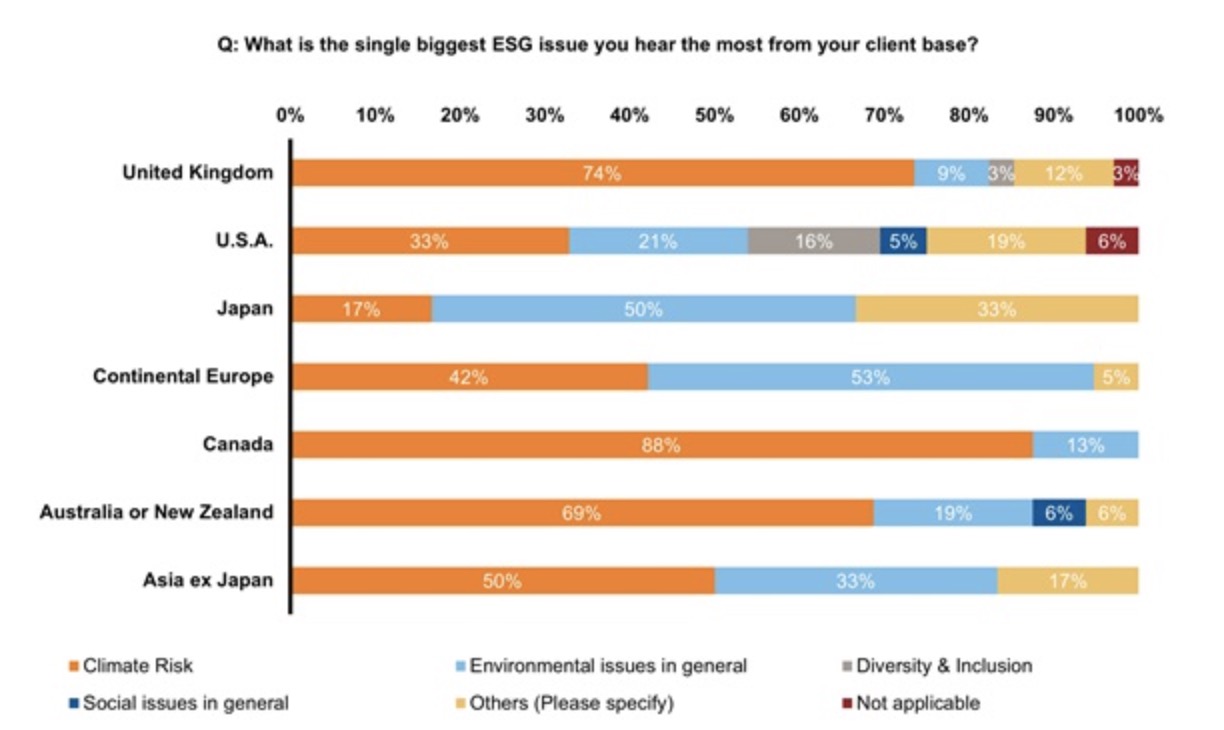
Our annual ESG manager survey of active managers assesses the integration of ESG considerations in investment processes among equity, fixed income and private markets managers, and spotlights firmwide policies, use of data, engagement and integration.
A year after the Nasdaq 100 Index last closed at an all-time high, there’s no sign the index is heading back to those heights any time soon.
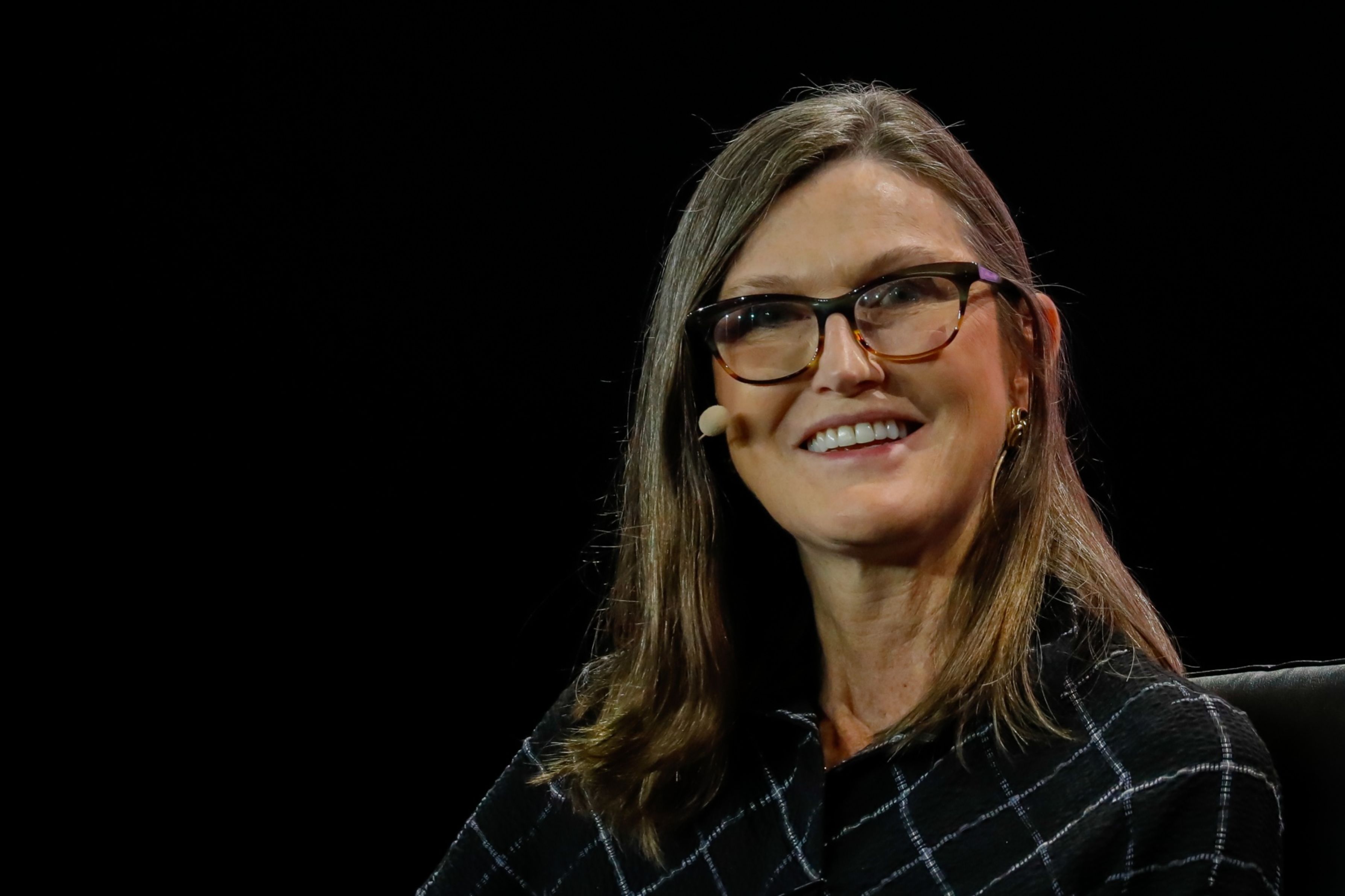
BMO Investments Inc. is introducing a suite of innovation-focused funds that will be overseen by Cathie Wood’s ARK Investment Management, in a bet that investor appetite for growth-centered products will persist even after this year’s slump.
Many Tesla Inc. investors watched in dismay as Elon Musk plunged into a battle over buying Twitter that pulled his attention away from the electric-car maker.
For the first time in years, rich Americans who cheat on their taxes face a growing threat from the Internal Revenue Service.
If the last few weeks are any guide, the coveted soft landing for the economy may be coming into view.
Review the latest portfolio strategy commentary from Mike Gibbs, managing director of Equity Portfolio and Technical Strategy.
My guest today will discuss how he works with UHNW/HNW individuals and families when it comes to charitable giving and meeting philanthropic needs. We will talk about the issues individuals should consider when making a gift of a business interest to a public charity. We will discuss the benefits for donors in making the decision to give a gift of a business interest to a public charity, the types of business interests that a donor may give to charity and the trends he’s seeing across his client base when it comes to charitable giving strategies such as this one.
The inflationary tremors shaking Wall Street all year are causing big changes to fixed-income capital flows that could ultimately end up disrupting the money-management industry over the long haul.
What do Bill Hwang, the disgraced US investor, and Liz Truss, Britain’s shortest-serving prime minister, have in common?
The dinner rush is on at Suga’s Diner in Stanton, Tennessee, the only restaurant in this town of 452 souls.
Will AI save crypto?
The person responsible for translating the math chapter of my book, Wealth Management, into Japanese told me, “You give me much headache.” Welcome to the math chapter.
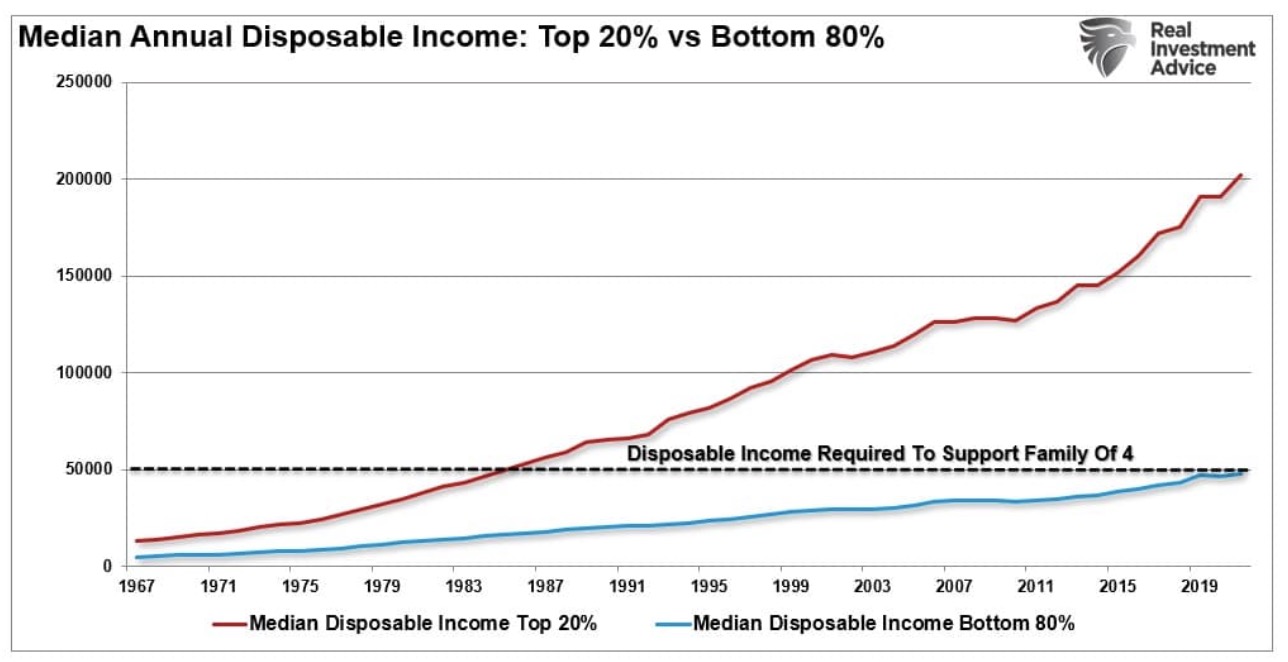
There was a time when a large portion of Americans belonged to the “middle class.”
Franklin Mutual Series believes dividend payers can give value investors better total returns over the longer term.
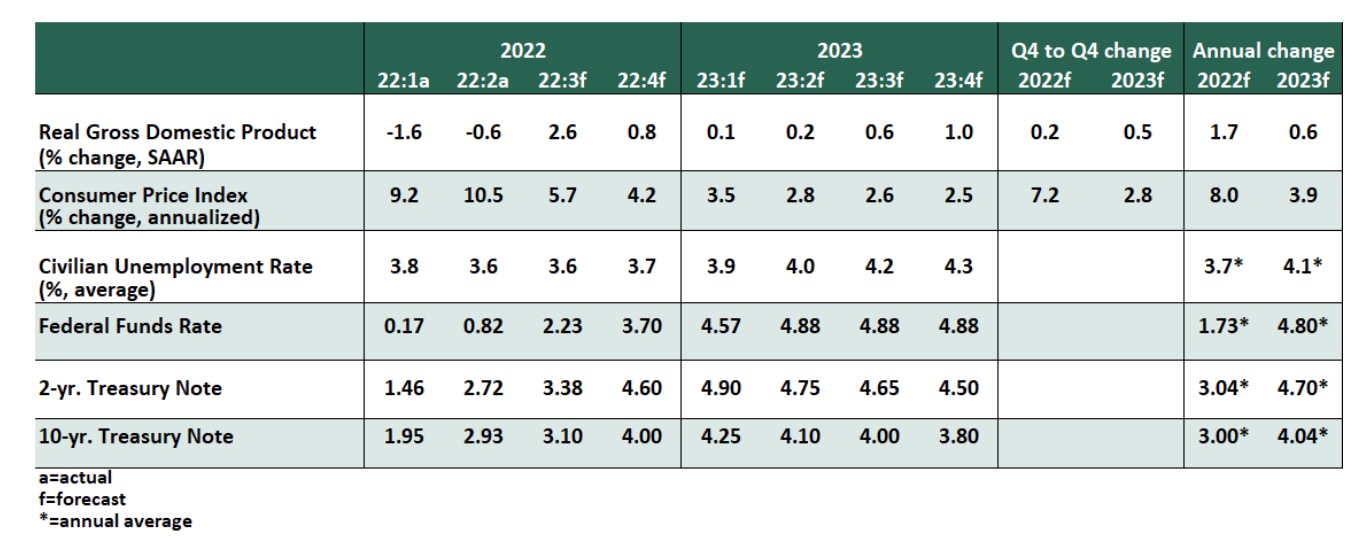
The Northern Trust Economics team shares its outlook for inflation, growth, employment and interest rates.
The recent implosion of FTX is explained and why the inevitable crypto and pension fund collapse was precipitated by Fed policy.
Corporate defined benefit (DB) plan sponsors face two primary risks: equity risk and interest rate risk.
With interest rates higher amid a challenging macro environment, we see a compelling case for bond allocations and are cautious about higher-risk investments.
Xi’s move to ease China’s COVID policy should reduce obstacles to normal life in the country and set the stage for a gradual economic recovery.
To foresee what crisis might be next, it is vital to understand the dollar's role in global finance and economics and the resulting role that the Fed plays in influencing global monetary policy.
Wall Street is struggling to whittle down the roughly $37.5 billion in risky corporate loans stuck on their books -- and the pile of so-called hung debt may be about to swell further as another large buyout financing stumbles.
Why do team members often resist change?
The most crowded trade on Wall Street -- long inflation -- is suddenly getting crushed like never before in the post-lockdown era, sparking a spate of forced deleveraging among a broad cohort of institutional funds.
In the wake of the last housing crash, online lenders came to dominate the mortgage market.
They say a picture is worth 1,000 words and a good chart fulfills a similar function.
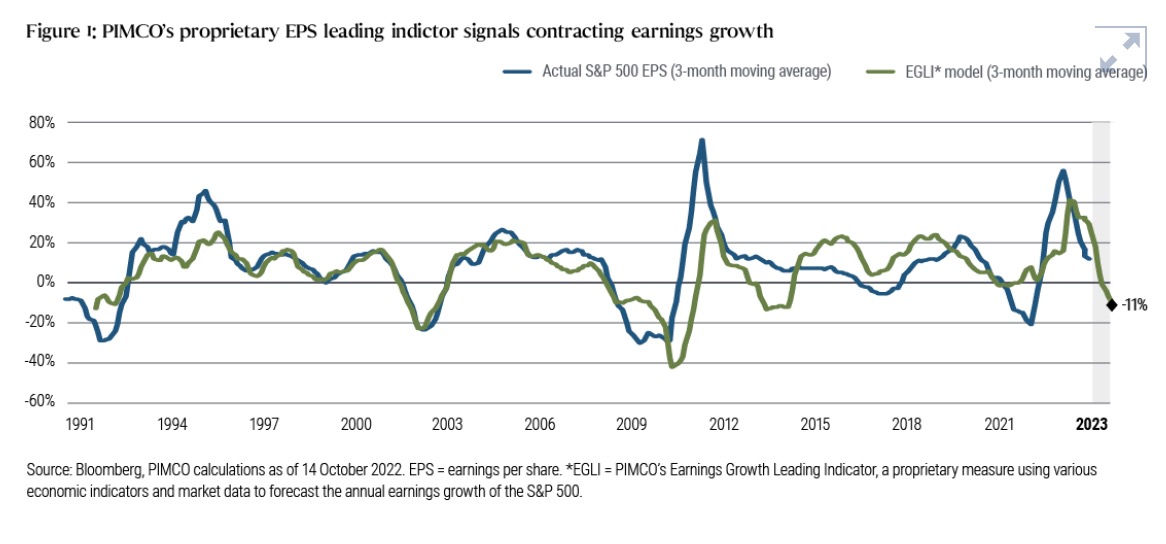
Fast-money quants were effectively forced to buy an estimated $225 billion of stocks and bonds over just two trading sessions, as one of Wall Street’s hottest strategies in the great 2022 bear market shows signs of cracking.
A broker who competes against RIAs is about as likely to win as someone who plays one-on-one basketball with one hand tied behind their back.
Elaine Weir’s home doesn’t sit on a volcano. Nor is it surrounded by natural geysers. But that hasn’t stopped the 69-year-old retiree in Scarsdale, New York from heating her house with geothermal energy.
As Sam Bankman-Fried’s crypto empire imploded last week, costing him effectively all of his $15.6 billion fortune, other digital-asset billionaires sought to make clear that their steep losses in 2022 wouldn't be similarly fatal.
We believe highly innovative companies, when accounted for properly, are cheaper than their non-innovative peers in all regions of the world.
Toyota Motor Corp. is about to take the wraps off a revamped Prius, the latest iteration of a car that normalized the idea of owning an environmentally conscious vehicle more than two decades ago.
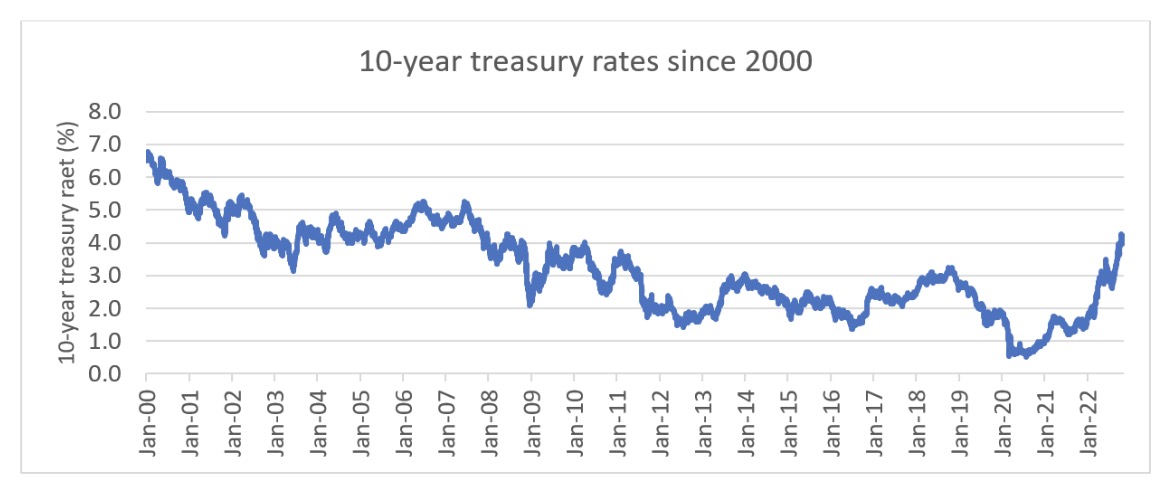
Treasuries fell across the curve and the dollar strengthened against most of its major peers after Federal Reserve Governor Christoper Waller pushed back on bets the US central bank was nearing the end of its hiking cycle, while traders were also on alert for a scheduled appearance by his colleague Lael Brainard.
Next month, Tesla Inc. plans to deliver the first of its electric Semi trucks—able to haul a full 40 ton-load some 500 miles on a single charge.
While many investors think that IPOs are exciting, they are risky investments. Academic research shows overwhelmingly that the returns to investors are not commensurate with the risk.
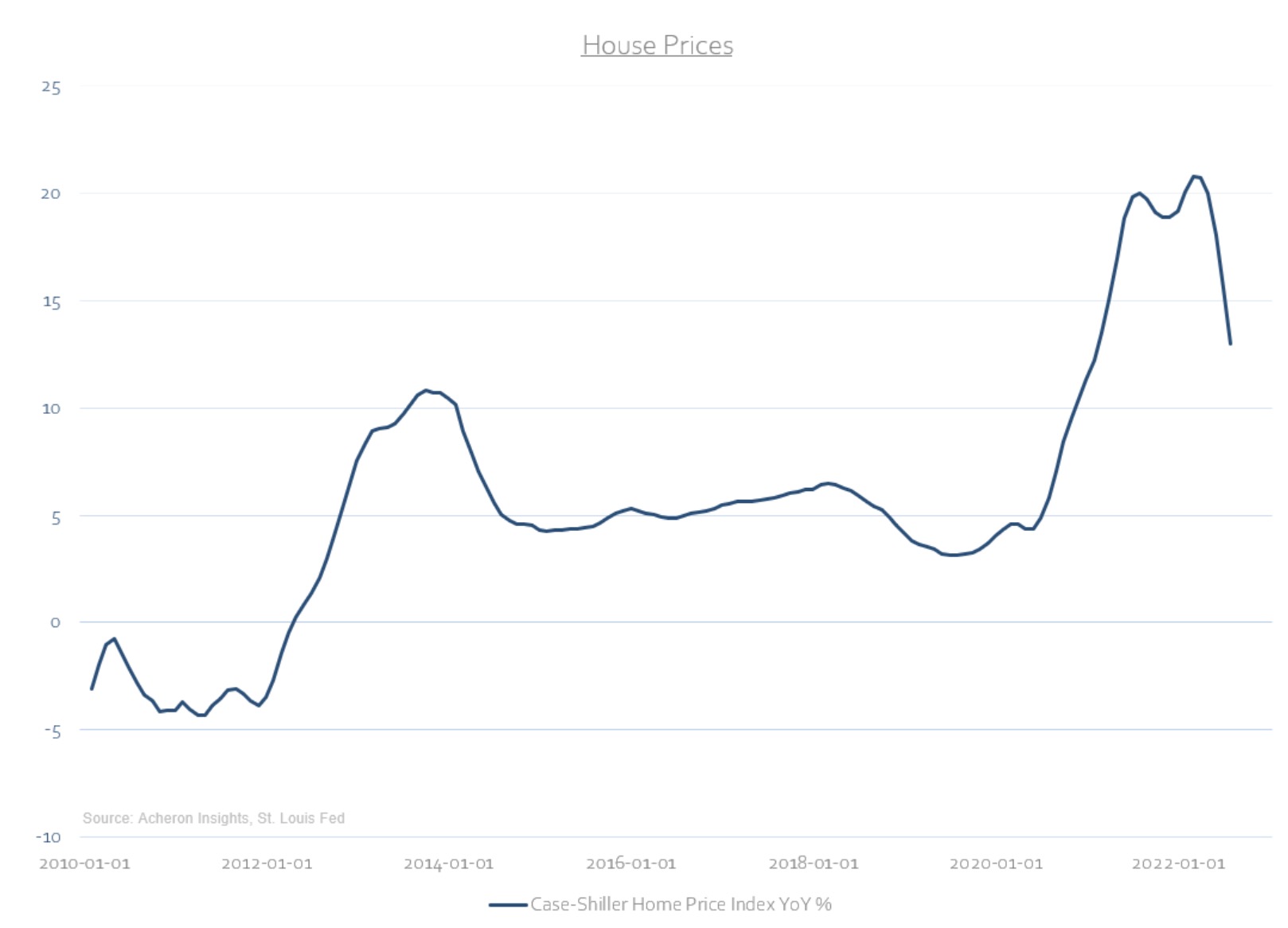
As a result of higher mortgage rates, an oversupply of housing and falling demand, the downturn in the housing market is only just getting started.
Cathie Wood’s flagship fund clocked its best session on Thursday as riskier assets bounce following a softer-than-expected inflation report.
Elon Musk, in his first address to Twitter Inc. employees since purchasing the company for $44 billion, said that bankruptcy was a possibility if it doesn’t start generating more cash, according to people familiar with the matter.
The US, Japan and other countries will offer a climate finance deal worth as much as $20 billion to help Indonesia shift its coal-dominated power grid away from the polluting fossil fuel.
Investors trying to gauge the strength of the risk-on shift that gripped markets Thursday should look no further than two of the biggest high-yield credit exchange-traded funds.
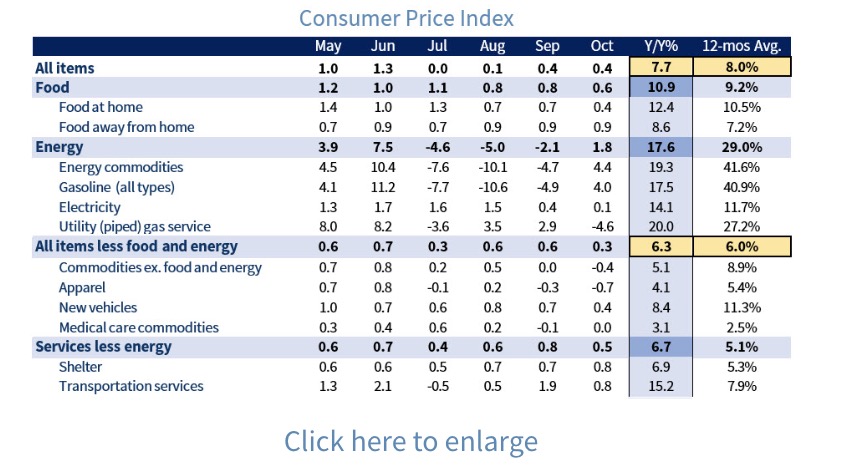
Early this week, with the severe inverted yield curve and other signals flashing recession, I planned to use this letter to delve into the data. Then Thursday’s CPI data convinced markets to blow the all-clear whistle.
FTX, until recently the world’s second-largest crypto exchange, filed for bankruptcy as its embattled founder, Sam Bankman-Fried, stepped down as CEO following a liquidity crunch that exposed the firm’s improper use of customer assets.
Chief Economist Eugenio J. Alemán discusses current economic conditions.
The dollar is heading for its worst week since the pandemic struck, yet analysts think a long-running stampede for the greenback isn’t over yet.
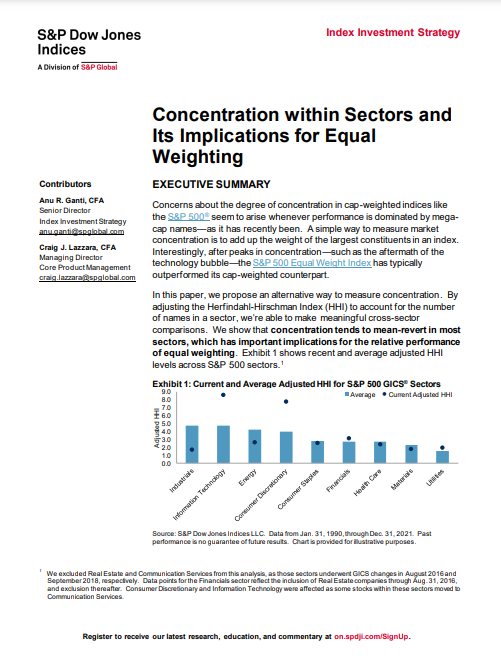
Concerns about the degree of concentration in cap-weighted indices like the S&P 500 seem to arise whenever performance is dominated by mega caps. After peaks in concentration, the S&P 500 Equal Weight Index has typically outperformed its cap-weighted counterpart. In this paper, we propose an alternative way to measure concentration. By adjusting the Herfindahl-Hirschman Index to account for the number of names in a sector, we’re able to make meaningful cross-sector comparisons. We show that concentration tends to mean-revert in most sectors, which has important implications for the relative performance of equal weighting.
What a difference a decade makes!