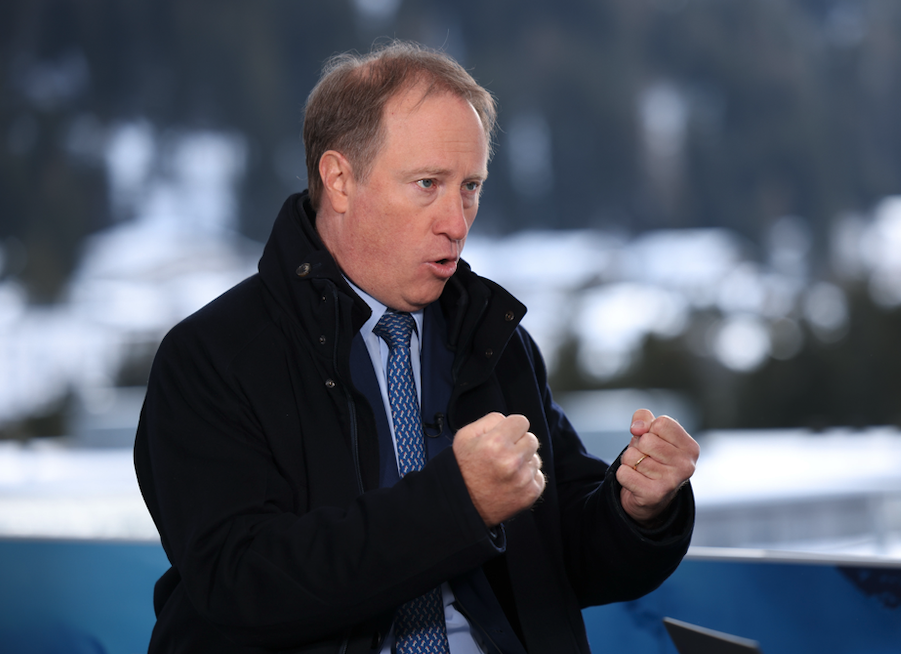
Amrita Nandakumar, President of Vident Asset Management, explains the role of an ETF subadvisor and shares her unique perspective on ETF product development, the forthcoming multi-share class structure, and the potential impact of a “lighter touch” regulatory environment. Roxanna Islam, Head of Sector & Industry Research at VettaFi, also weighs in on the multi-share class structure, and discusses the latest developments in crypto ETFs and the stellar performance of gold and silver miner ETFs.
Join the professionals at Fidelity Investments® for a product due diligence session covering their suite of options-based equity ETFs– Fidelity Yield Enhanced Equity ETF (FYEE), Fidelity Hedged Equity ETF (FHEQ), and Fidelity Dynamic Buffered Equity ETF (FBUF).
A new generation of ETFs is giving the crypto rich a novel way to fold their digital fortunes into the regulated financial system — without selling, and through funds run by big asset managers like BlackRock Inc.
Vanguard Group is expanding its proxy voting program — designed to give shareholders a greater say on corporate resolutions at portfolio companies — to add the investment giant’s oldest index fund.
Since the shutdown began, air traffic controllers and TSA agents have been working without pay. Many are calling in sick, leading to longer lines and more flight disruptions.
The 10-year Treasury briefly tested 4% and slipped just below, exactly what you’d expect when credit jitters boost demand for safe collateral. Real yields eased as well, consistent with a modest risk-off bid. Treasuries remain the cleanest hedge when credit fears pop, and that relationship asserted itself again last week.
While many investors entered 2025 heavily exposed to tech already, that hasn’t stopped markets from identifying other opportunities created by the need for AI computing power, like data centers.
A relentless surge in the price of gold is delivering windfalls across emerging markets, boosting investor confidence in countries that mine and buy the metal.
Stock markets are at all-time highs, public companies are shutting down their operations to buy bitcoin, consumers can bet in real time on almost anything they can imagine, “meme stocks” are back in full force, even the US government is buying stocks.
Despite short-term bearish sentiment, the case for Bitcoin remains underpinned by persistent macro weakness, potential Fed easing, and renewed distrust in traditional financial systems.
On this episode of the “ETF of the Week” podcast, VettaFi’s head of research, Todd Rosenbluth, discussed the T. Rowe Price QM U.S. Bond ETF (TAGG) with Chuck Jaffe of Money Life. The pair discussed several topics related to the fund to give investors a deeper understanding of the ETF.
For most investors, energy security probably tends to be an afterthought until an event drives a jump in prices at the pump, as seen with Russia’s invasion of Ukraine. However, energy security is about much more than geopolitics, especially as demand for electricity is poised for growth.
Buybacks raise important questions. Foremost amongst them are whether, and how much, buybacks push up stock prices, and whether they create other distortions relevant to investors and public finances. This article explores these questions by drawing on economic theory and broadly held views of real-world investor behavior.
Active fixed income ETFs can provide the refresh many investors want as the year draws to an end in an uncertain rate market.
Seldom has the middling been the cause of so much relief. Six months after the White House unveiled steep tariffs, the global economy has held up well — mainly by outperforming some doleful projections. There's been no recession. Forecasts have even been revised up a touch.
All it took was a classic bout of haven buying to wake up a slumbering Treasuries market and drive benchmark yields to the lowest in months.
Pictet Asset Management just added three funds to a 2025 that’s seen a record number of actively managed ETF launches: the Pictet AI Enhanced International Equity ETF (PQNT), Pictet Cleaner Planet ETF (PCLN), and Pictet AI & Automation ETF (PBOT).
I’m a big believer in simplicity for most things, and that includes investing. When constructing a portfolio, simplicity is what I aim for. In this piece, I offer a brief summary of how I analyze the holdings and make recommendations on what to keep and what to get out of when a client asks me to review and improve their investments.
Connecting the dots, we found that a nation's court system and level of justice have the most significant impact on its Freedom Index, and therefore, by extension, on the wealth and happiness of its citizens. Aristotle connected these ideas over 2000 years ago when he opined, “A just life is inherently a happy one.”
The third quarter demonstrated the market’s ability to focus on powerful, long-term themes like technological productivity and monetary policy, even amidst significant short-term political noise. While large technology companies were once again a driver of headline returns, the positive performance across nearly all global asset classes rewarded a diversified approach.
The stock and bond markets are taking the government shutdown—and lack of data releases—in stride, but how long the calm might last is an open question.
In a week marked by renewed S&P 500 volatility stemming from reignited tariff talks and the ongoing challenge of a government shutdown that continues to delay crucial government reports, investors and analysts have increasingly turned to secondary economic indicators for a timely view of the U.S. economy.
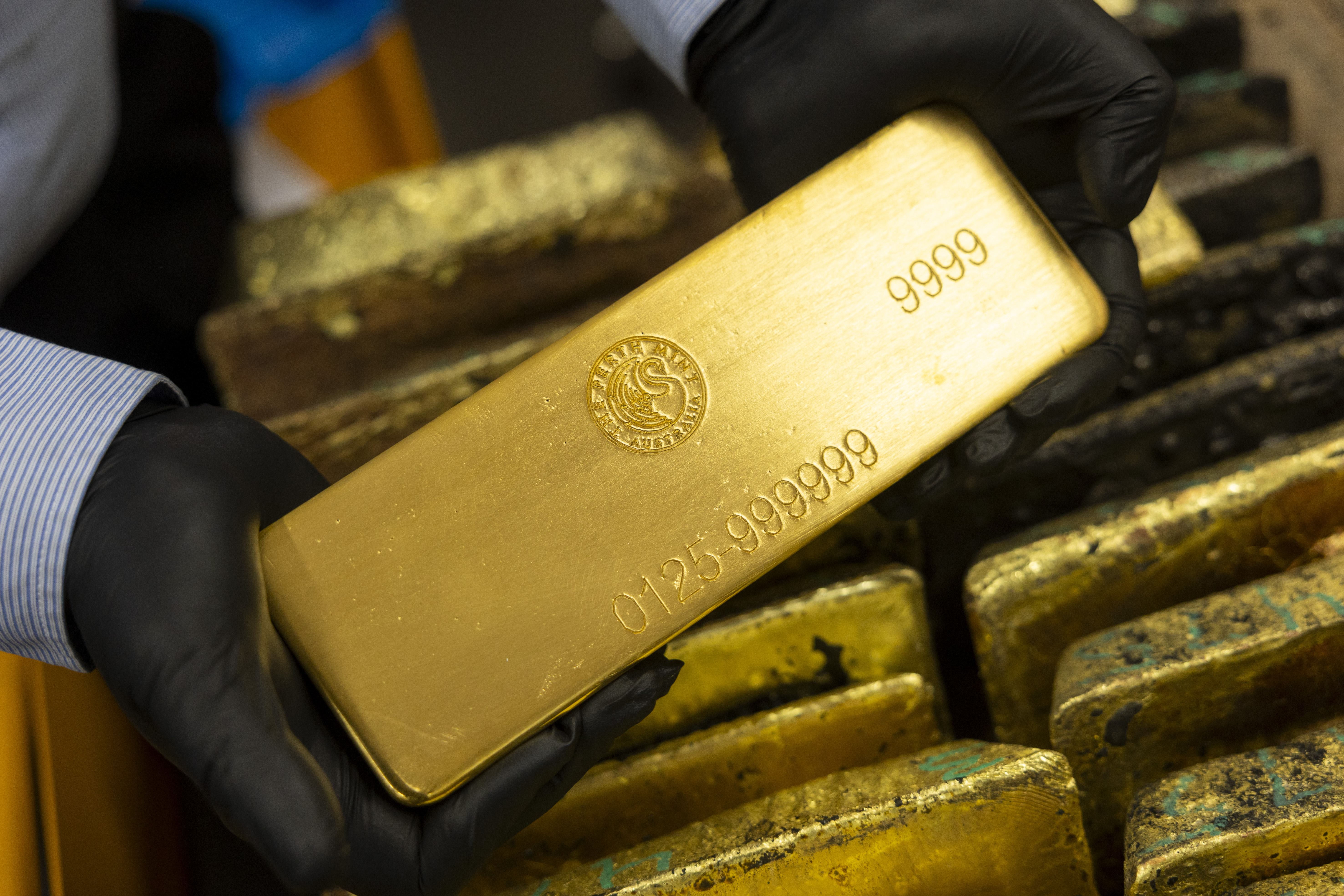
Wall Street has finally capitulated to gold’s record-breaking run.
Americans place a premium on elite and exclusive institutions. Many of us want to get into top-tier universities, pledge storied fraternities and, upon graduation, attain membership at Soho House.
The world’s metal traders are enjoying their most profitable ever year, after a series of supply upheavals propelled prices toward record highs and drove huge shifts in metal moving across the globe.
After a week-long rout that erased hundreds of billions in digital-asset value, Bitcoin has again failed to live up to its billing as a safe harbor asset.
Man Group Plc, the world’s largest publicly traded hedge fund, saw its assets soar to a record in the three months through September, as clients poured more money into long-only products and performance improved.
As the bond market expects more rate cuts to come after September’s drop of 25 basis points, investors may want to consider intermediate bonds as a way to maximize income.
According to Wall Street Horizon’s proprietary data, Q3 2025 marked a record in the number of new U.S. ETF launches. The tally (above 200) brought the trailing four-quarter sum to more than 800. Investors have never had more choice to tweak their strategies, aim for higher income yields, or even bet on single stocks in new, creative ways.
One of the most interesting changes was Vietnam’s upgrade from frontier to emerging market. This will affect all FTSE indexes as of September 2026, likely with a phased implementation.
In 1967, a helicopter from United States Steel Corp. carrying a team of geologists made an accidental discovery after landing in a remote corner of the Amazon rainforest: a giant iron-ore deposit that would become Carajás, one of the world’s richest mineral regions.
To start from the top, the dollar’s doing fine. Having appreciated 3% in the past month, it remains above its 40-year average. It still commands the lion’s share of currency trading and global central bank reserves, even if international investors are hedging more exposure.
We examine the broader implications of China’s threat to expand restrictions on rare-earth exports.
Bank of America Corp. and Morgan Stanley exposed a stock market puzzle on Wednesday. Both reported record third-quarter earnings following roaring results from rivals the day before.
Recent data shows that even after strong international stock performance year-to-date U.S. stock markets continue to dominate global equity indexes, representing around two-thirds of the market capitalization of all global stocks, as represented by the MSCI All Country World Index (ACWI).
During the third quarter of 2025, the U.S. markets demonstrated notable resilience despite facing a complex mix of trade tensions, policy shifts, and economic sector-specific developments.
Many investors are likely familiar with the rapidly increasing demand for electricity, and the role nuclear power can play therein. Rcapacity is complicated in a country that has only added three large reactors since 1996. But recent news from the U.S. military may jump start nuclear power infrastructure supply chains.
The financial markets have been laser-focused on upcoming policy decisions from the Fed, and rightfully so. Following the resumption of the current rate cut cycle, investors have been wondering what exactly this second phase will ultimately look like.
This Packers season has parallels to today’s financial markets. The Artificial Intelligence (AI) boom has propelled markets higher for the past 3 years. The S&P 500 is up just shy of 15% through 9/30/25, following 20%+ years in 2023 and 2024.
In the current economic climate, many high earners are living paycheck to paycheck and generally wrestling with anxieties about their financial security. However, there are ways financial planners can help calm clients’ fears and create a “cushion” in times of uncertainty.
The sector is also emerging as the most in-demand S&P 500 sector this quarter. XLV has attracted some $872 million in net new money by Oct. 13, according to our data. That places XLV among top 10 equity ETF asset gatherers this quarter.
Last week’s headlines around China tariffs and corresponding weakness in oil prices brought back memories of April and May when oil and energy stocks sold off sharply on the heels of tariff news. The weakness in energy infrastructure has been particularly acute.
Every market jolt this year — from April’s tariff scare to September’s tech pullback — has met the same reflex on Wall Street: more ETF buying. That collective impulse has now pushed US exchange-traded fund inflows past $1 trillion, the fastest asset haul the industry has ever seen.
Asset managers are looking to raise new private credit funds aimed at emerging markets to capitalize on an explosion of financing deals in the sector this year.
Doug Drabik discusses fixed income market conditions and offers insight for bond investors.
The GENIUS Act shows the way forward for payment stablecoins.
US manufacturing may now be at its most vulnerable after decades of ceding crucial mining and production activities to China in the pursuit of low costs and higher company profits, and robust government support will be needed to narrow the time for securing the manufacturing supply chain.
VettaFi’s Head of Research Todd Rosenbluth discussed the Vanguard Emerging Markets Ex China ETF (VEXC) on this week’s “ETF of the Week” podcast with Chuck Jaffe of “Money Life.”
Aakash Doshi, Global Head of Gold Strategy at State Street Investment Management, delves into the key drivers behind record-high gold prices and unprecedented inflows into gold ETFs. Todd Rosenbluth, Head of Research at VettaFi, discusses the firm’s rapidly expanding indexing business and shares his perspective on the role of thematic ETFs in today’s portfolios.
The Fed may be chasing economic balance with its tiny nudges. Our wisest course is to find our own personal financial balance within the context of the larger economy. We can build it one grounded financial decision at a time.