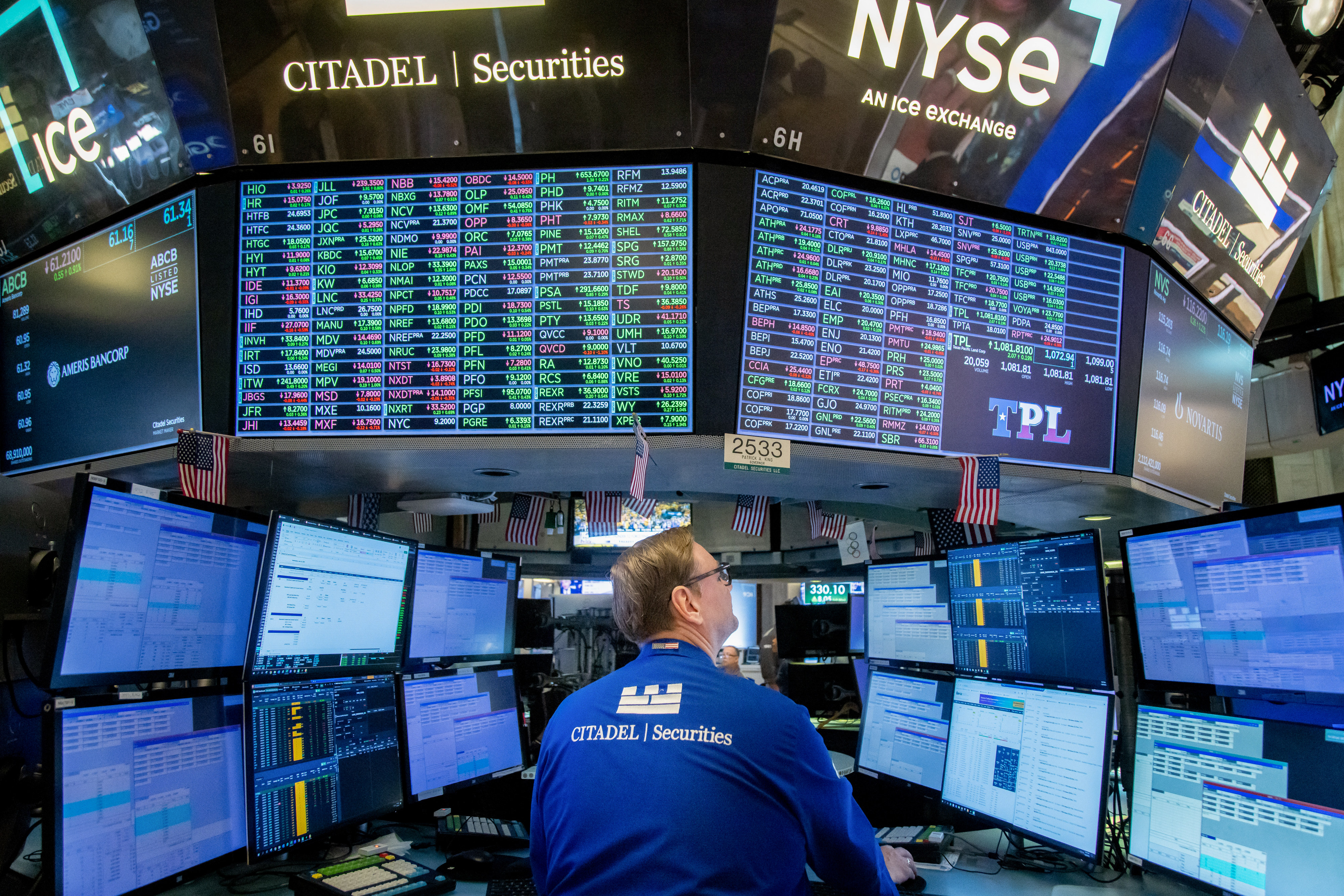
In big news for the energy infrastructure space, Targa Resources Corp. (TRGP) has announced significant new investments in its Permian Basin operations. The announcement includes a new natural gas liquids (NGL) pipeline and incremental natural gas infrastructure.
On this episode of the “ETF of the Week” podcast, VettaFi’s Head of Research, Todd Rosenbluth, discusses the Calamos Laddered S&P 500 Structured Alt Protection ETF (CPSL) with Chuck Jaffe of Money Life. The pair discusses several topics related to the fund to give investors a deeper understanding of the ETF.
Amrita Nandakumar, President of Vident Asset Management, explains the role of an ETF subadvisor and shares her unique perspective on ETF product development, the forthcoming multi-share class structure, and the potential impact of a “lighter touch” regulatory environment. Roxanna Islam, Head of Sector & Industry Research at VettaFi, also weighs in on the multi-share class structure, and discusses the latest developments in crypto ETFs and the stellar performance of gold and silver miner ETFs.
Many investors have turned to MLPs over the years for their income, which makes the outlook for distributions a perennial focus for investors. With MLP yields currently elevated relative to long-term averages and a flattish near-term outlook for U.S. energy production, the distribution outlook is particularly topical.
A trio of money managers want to sell exchange-traded funds that amp up swings in Tesla, Bitcoin and other assets to a rarely seen degree, setting the stage for another test of regulators’ tolerance for ultra-risky offerings.
Gold steadied as the dollar edged higher, cooling a record-breaking rally that’s been further fueled by the US government shutdown and the political crisis in France.
Investors are excited about OpenAI’s expansion driving big gains in technology stocks, but a rising number of Wall Street pros fear that the wild pops that add tens of billions of dollars in value in mere minutes are signaling an unhealthy market reminiscent of the dot-com era.
Rising investor appetite for digital infrastructure, energy and transportation assets boosted fundraising for Manulife Investment Management, which closed its largest-ever infrastructure fund with $5.5 billion.
Emerging markets investing has had an overall positive year in 2025. Entering the year, with many U.S. investors underweight foreign equities, some market watchers anticipated big opportunities abroad.
With the global economy proving more resilient than expected, we upgrade equities to overweight.
Markets digested a quiet jobs Friday without the official payrolls report, but the signal from the other indicators was clear enough: the labor market is slowing at the margin but not falling off a cliff.
Like AI stocks, precious metals look overbought; but unlike AI stocks, they’re structurally underinvested. As such, I believe they deserve another look.
Over the next decade, almost every rich country will have to face fiscal reality. All have expanded their welfare state to serve not only the needy but also the middle class, with expensive pensions, health care and worker benefits.
Investors and asset managers are often looking to markets to see if there are any early warning signs before a market blows up. Some investors swear by metrics such as credit expansion, IPO mania, or even meme stocks as early evidence that something is about to go wrong.
Electricity demand is on the rise globally thanks to electrification, adoption of electric vehicles, wider use of air conditioning, and the rise of AI-related data centers.
Boeing Co. is guiding suppliers that 737 Max output could reach a 42-jet monthly tempo as soon as this month, according to people familiar with its plans, highlighting growing optimism at the planemaker as it works to win approval for the move from US regulators.
The stock market as we know it is on the brink of a transformation.
Advanced Micro Devices Inc. shares surged after the chipmaker signed a deal with OpenAI for AI infrastructure that could generate tens of billions of dollars in new revenue.
In the absence of primary government indicators, policymakers and investors alike must turn to private sector releases to find clarity. These secondary reports paint a picture of a cooling labor market and an increasingly cautious consumer.
Within the emerging markets story in 2025 is a potentially even more intriguing subplot: the strong performance of Africa equities.
Vanguard announced the debut of a new low-cost, emerging markets (EM) exchange-traded fund (ETF) — the Vanguard Emerging Markets ex-China ETF (VEXC). EM assets have been garnering increased investor attention this year and could see additional interest with the prospect of more interest rate cuts to come.
Powering intelligence: the molecules, metals, and markets behind AI.
The U.S. government bought shares of Intel and other companies and made a deal with Nvidia for some of its revenue. What does this mean for investors and for those firms?
Debt is a curse that can also be a blessing, depending on how the borrower uses it. Sadly, human nature seemingly ensures we often use debt unproductively—and not just as individuals. Governments have their own special way of using debt to buy benefits (and votes?) today that future generations will pay for.
Private credit managers have proven their prowess in fundraising, but are falling short on dealmaking. With mountains of cash waiting to be deployed, they are latching onto the artificial intelligence data center boom, hoping to stay relevant as banks reclaim their dominant position in corporate lending.
As of midnight Tuesday, the U.S. government shut down, as lawmakers couldn’t reach an agreement on a short-term bill to continue funding government expenditures. Currently, none of the 12 appropriations bills have been passed.
There’s good news and bad news on the housing front: The buyers’ strike of the past three years is finally working, but the path to better affordability looks painful for many of those trying to sell a home, the construction industry and, ultimately, the US economy.
Listen as ETF experts review what occurred in the exciting third quarter and what's to come in the final months of 2025. Money flowed into low cost products but there were other exciting products in focus.
Given the current market environment, should investors include China, the top economy in emerging markets (EM), or simply avoid it?
Join Michael Mack of Victory Capital and Roxanna Islam of VettaFi for a product due diligence session on a suite of FCF ETFs. Find out how advisors are applying FCF in portfolios and why a forward-looking lens is redefining the factor in today’s market.
The louder the alarm bells are blaring about the stock-market rally getting excessive, the more investors appear to be tuning them out.
For more than two decades, US money managers have looked on enviously as Vanguard Group reaped the benefits of a unique structure that grafted the advantages of an ETF onto its biggest mutual funds.
Central banks are walking a tightrope, carefully fine-tuning their next moves as they face lingering inflation and subdued growth.
September’s rate cut may be exciting for many investors’ equities holdings, but those same investors may feel less excited about the income on offer from bonds going forward. Falling rates, of course, lead to falling yields in numerous debt securities and offerings.
In the coming week, several Federal Reserve officials will speak following the recent decision to resume rate cuts.
On the latest ETF 360, VettaFi’s Cinithia Murphy talked to Reckoner Capital Management’s John Kim. The two discussed CLOs and the Reckoner Leveraged AAA CLO ETF (RAAA).
There are many ways to navigate market uncertainty, and pursue both upside participation and some level of downside protection. Options-based approaches such as the Defined Outcome ETF category loom large here, fit for purpose.
At this point, it’s no longer just a crypto-friendly government propelling movement forward — it’s real regulations that have been created.
Signs of caution are emerging around high-flying tech shares. But that’s just making it cheaper to use options to bet on further gains in the stocks, Bank of America’s derivatives strategists say.
Earlier this year, GMO’s Asset Allocation Team invested a sizeable 13% of its flagship unconstrained Benchmark-Free Allocation Strategy into the GMO Alternative Allocation Strategy (ALTA). ALTA provides daily liquidity and seeks to deliver equity-like returns with sensible and competitive fees, allowing for realistic return forecasts and prudent risk management.
Nomi Prins brings rare credibility to these conversations. She holds a PhD in international strategic studies with a specialization in political economy, and her career spans some of the most powerful financial institutions in the world.
Venture Global (VG), which went public earlier this year, is a rapidly expanding, low-cost producer of U.S. liquefied natural gas (LNG). Its business centers around liquefaction, which is the process of cooling natural gas into LNG, making it possible to ship overseas.
When Amazon.com Inc. recruited longtime Microsoft Corp. product chief Panos Panay in 2023 to run its devices division, his new colleagues thought the e-commerce giant was preparing to take its consumer gadget line upscale.
Here are some key areas of focus as you think about solidifying your current team or preparing to transition and join a new team.
In what represents a positive trend for investors engaged with ETFs such as the Invesco QQQ Trust (QQQ) and the Invesco NASDAQ 100 ETF (QQQM), the AI adoption conversation continues gaining importance and momentum.
Changing CEOs won’t change the fact that the decision to pursue a merger lies with BNSF and Berkshire. Buffett and his management team are unlikely to be impressed by threats of proxy fights nor shareholder-activist bullies.
Over 60% of small cap investors use passive funds, but we strongly believe this is a missed opportunity, as small caps have consistently been one of the most reliable sources of alpha available in the public markets.
Will Rhind, Founder & CEO of GraniteShares, dives into their YieldBOOST lineup of ETFs and offers perspective on the growing demand for options-based ETF strategies overall. Zeno Mercer, Senior Research Analyst at VettaFi, breaks down one of the hottest segments in the market: artificial intelligence ETFs. He covers fund flows, performance trends, and the key drivers behind investor interest.
Scripts are a great start but the end goal is to rip them up and own your voice — because that’s the only part of the client experience no firm can dictate, and the only part that truly builds trust.
JPMorgan Chase & Co. is the latest issuer attempting to fit private credit assets into a retail-friendly exchange-traded fund vehicle.