Take a moment to understand a few recent breakthroughs in medicine and explore a few ways to get actionable exposure to them with ETFs.
With the re-election of President Donald Trump, the worries about tariffs and pro-business policies sparked concerns of “Trumpflation.” Inflation has been a top concern for policymakers, businesses, and everyday consumers, especially following the sharp price increases experienced over the past few years.
Politicians and think-tank wonks of all stripes love to condemn government “waste, fraud, and abuse.” But saying it isn’t hard. Who is the opposition? No one says we need more waste, fraud, and abuse. We’re all 100% agreed all three are bad.
This week, at the North American Blockchain Summit in Dallas, Texas, I had the distinct privilege of moderating a fireside chat with former Canadian Prime Minister Stephen Harper.
Today’s video is another in the continuing series of videos where we are looking for value in each of the 10 major sectors as reported by Standard & Poor’s.
Generosity knows no season. But as the year-end holidays approach, many of your clients may be thinking about making a charitable donation or increasing their charitable giving.
It is important for savers to understand guaranteed and non-guaranteed options when looking at retirement solutions offered within a 401(k) plan. Our Mike Dullaghan shares the highlights and talks about the need for personalized strategies.
Treasury inflation-protected securities can help buffer a portfolio against inflation. However, it's important to understand their unique characteristics and complex nature.
Rick Raczkowski, PM, Relative Return Team, Loomis, Sayles & Company, discussed how the team views fixed income investing looking ahead.
Actively managed ETFs are among the fastest-growing products in the broader ETF space.
Sticky underlying price pressures could prevent a faster return to neutral monetary policy.
Uncertainty ahead of the election may have resulted in lower corporate capex and M&A trends, but hope abounds that 2025 could bring about renewed animal spirits.
US President-elect Donald Trump's administration will face a wary, inflation-sensitive public and a Chinese regime that is well prepared to pursue large-scale retaliation. If it is serious about introducing new tariffs, it will need to clarify its priorities and then choose among conflicting policy goals.
Many of the myths and controversies surrounding the equity risk premium (ERP) are rooted in semantics: The same term is used for multiple purposes.
How does the euphoria for stocks in the days after the 1980 election contrast with today’s Trump election euphoria?
In 2025, Social Security will see a 2.5% cost-of-living adjustment. At the same time, Medicare Part B premiums and the annual deductible will increase.
U.S. policies are set for a major reshaping as full Republican control takes hold in 2025.
I’ve been looking for the best dividends in the market for over 13 years. Time after time, I keep coming back to this question.
Why the equity market rally following the U.S. presidential election could continue into year-end.
In January 2022, we ventured three hundred years back in time to an episode that has long been considered the classic example of mania in the early annals of market history.
To judge by the action in some foreign markets, Donald Trump’s election is pricing in economic winter.
Vanguard has a pair of bond options if fixed income investors are looking to get active with their portfolio.
In Europe, the ECB stimulates a sluggish economy while in the UK, the problem is inflation. In contrast, the US responds to stronger growth.
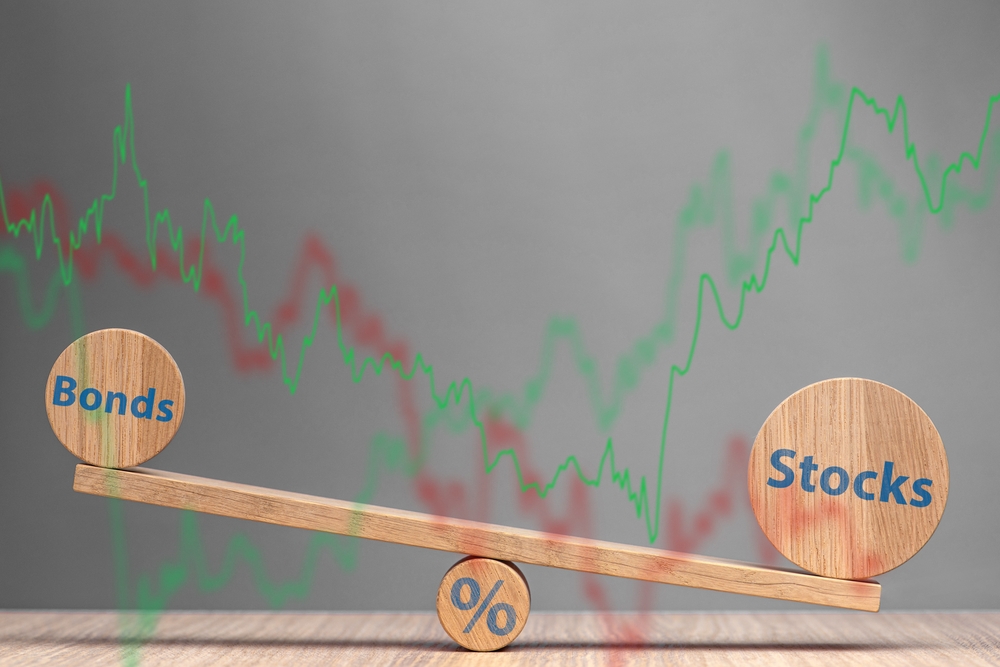
The inverse correlation between bonds and stocks has returned, broadening potential for risk-adjusted returns in multi-asset portfolios.
Is inflation tamed? It's a key question that got lost in election coverage. It looms more than a new administration does over portfolios.
The 2024 Global Survey of Financial Advisors from Natixis revealed the ongoing hesitance of investors to move out of cash and into bonds.
For most of the last fifty years, fixed income investing has been characterized by owning some combination of Municipals, Corporates, Treasuries and Agency Mortgage-Backed Securities which has worked well with periods of secular disinflation.
We seek to capitalize on today’s attractive yields while staying mindful of economic and market uncertainties.
Chief Investment Officer Sean Taylor considers the implications of a second Trump administration for emerging markets.
The Treasury yield curve has shifted appreciably all year long. In particular, the last few months have realized substantial rate changes. The shift in the Treasury curve is not isolated. The corporate curve is also changing.
We take an early look at how a new policy platform could factor into the US deficit and debt.
Paul Tudor Jones recently voiced concerns that rising U.S. deficits and debt and increasing interest rates could lead to a fiscal crisis. His perspective reflects the long-standing fear that sustained borrowing will trigger inflation, raise interest rates, and eventually overwhelm the government’s ability to manage its debt obligations.
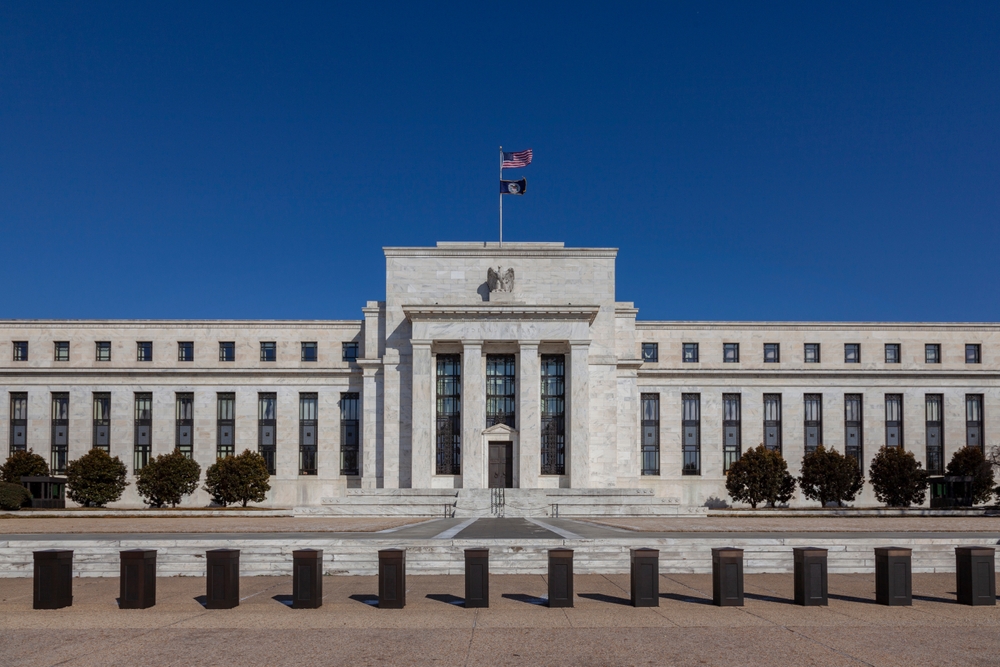
Lost in the excitement of election week was a meeting of the Federal Reserve. At its conclusion, interest rates were lowered by another quarter-point. But where they are heading from here is a matter of increasing uncertainty.
With his remarkable electoral comeback, Donald Trump has defined an era in American political history. But his legacy will depend on whether his policies advance long-term American prosperity by cutting taxes and boosting investment, or undermine it with trade wars and mass deportations.
GMO has posted a new 7-Year Asset Class Forecast.
Wait, what? The Fed cut interest rates and bond yields went up, not down. Yes, you read that right.
The current global expansion has been characterized as one of US exceptionalism. Despite many developed market economies outperforming low expectations, the robustness of the US expansion has stood out. We believe this can continue based on differences between the US and European economies.
Balancing credit risk with interest-rate risk in a dynamically managed portfolio can be an all-weather approach.
Market reactions to a potential trade war may be less extreme than anticipated by investors, although volatility is likely during trade negotiations.
In this video, Part 2 of 2, Chuck Carnevale, Co-Founder of FAST Graphs, a.k.a. Mr. Valuation will be looking for value in the Consumer Discretionary Sector and go over the final 4 of the 15 consumer discretionary stocks that look reasonably valued.
Expressions of dissatisfaction with the global dominance of the dollar go back at least to French finance minister Valéry Giscard d’Estaing in 1965. But even today, the euro is no challenger to the greenback, and no one should hold their breath waiting for the BRICS to unveil their own attempt at an alternative currency.
In sport, play is limited by time or innings. Lineups are set, rules are fixed and boundaries are defined. Winners are determined objectively.
The global transition to clean energy should open opportunities for fixed income investors in bond funds that focus on the ESG theme.
Small-cap stocks and related ETFs are among the most mentioned assets as levered to benefits from the “Trump trade.”
Change is the sum of fundamental trends, the gradual elimination of accumulated extremes, and the random arrival of new shocks.
Investor exuberance has rarely been so optimistic. In a recent post, we discussed investor expectations of returns over the next year, according to the Conference Board’s Sentiment Index.
The period from the 1960s to the 1990s defined by record-setting inflation and big swings in GDP bears a striking resemblance to the current environment.
Last week showcased the complexities driving markets and the economy, with inflation data, Federal Reserve commentary, and political developments at the forefront. While inflation metrics in the CPI came in as expected, the PPI surprised on the higher side, pushing up estimates for the Fed's preferred PCE inflation gauge.
From stock picking to benchmark selection, the construction of an active thematic equity portfolio will play a crucial role in its ability to deliver on a theme’s return potential.
The Federal Reserve (Fed) Chairman seems to be happy with the market’s new wisdom regarding the path of interest rates going forward.