The Wasatch team shares lessons they’ve learned on business models, portfolio management, management teams and markets.
Options-based ETFs are one of the fastest-growing categories in the market today, with product proliferation and adoption rising quickly.
Rate cut expectations pushed more investors into investment-grade corporate bonds, giving them their best quarter in nearly a year.
For registered investment advisors and others who provide financial advice, autumn is the start of a season loaded with opportunity.
If the risk of stepping too far out into the yield curve is too much to bear, consider using intermediate bond options.
Flashing green light – crowd will determine path forward.
As we look at today’s economy and financial markets, we are at a crossroads: Will it be a long straight highway to a soft landing, or will it be a bumpy road to recession?
If climate portfolios are positioned in the same giant US stocks held in broad equity allocations, investors may unwittingly double down on risk.
When looking at the increasingly complex structure of corporate lending in the present day, it can be easy to lose sight of the purpose of private credit and its lasting value to investors.
Investors can use this Natixis ETF to lock in robust income and capital appreciation, while generating security against equity volatility.
Investors have been embracing actively managed fixed income ETFs in 2024. The latest suite of active ETFs to catch my eye are from State Street Global Advisors.
Over the past several years, high-yield bonds have delivered impressive returns, outperforming most other sectors of the fixed income market.
The world could be undergoing a transformation akin to past technological revolutions. But the speed, size and impact of that investment is highly uncertain. We think leaning into the transformation and adapting as the outlook changes will be key.
September is typically the weakest month of the year for stocks, but thanks to the much-anticipated federal funds rate cut, the S&P 500 turned in its first positive performance in a September since 2019
We expect bond yields to trend gradually lower—but it may be a bumpy ride. These seven strategies may help investors take advantage.
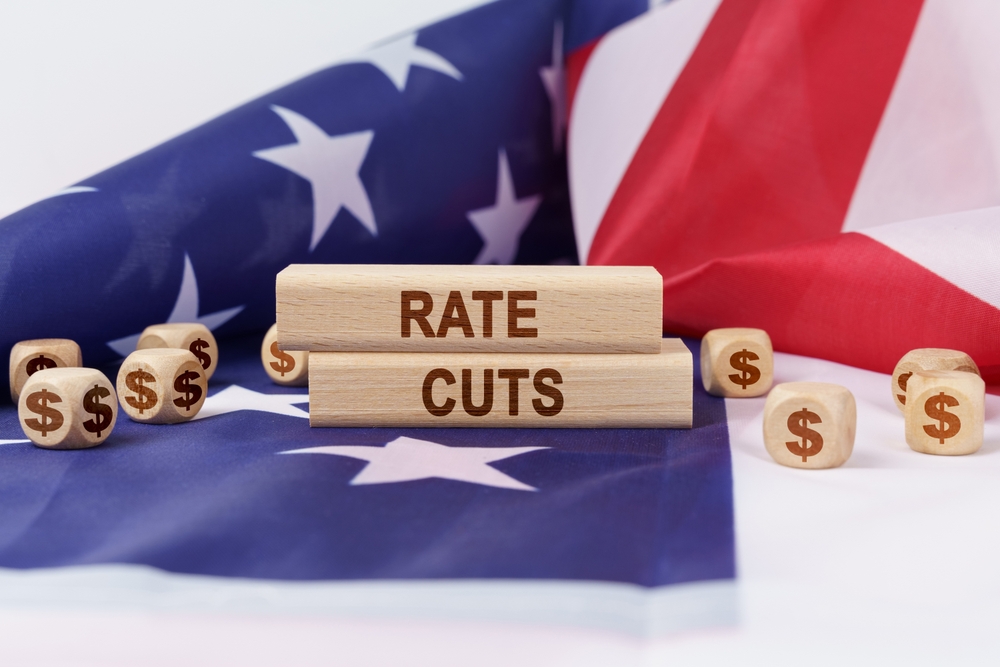
The major market event in September was the Fed's 50 basis point rate cut following the September 18th Federal Open Market Committee meeting. There was broad consensus the Fed would cut rates, though the 50 basis points (as opposed to 25) and perhaps the tone of Jay Powell's press conference surprised to the upside...
Semiconductor stocks continue to rally and will continue to do so as long as the AI and data center themes stay hot.
On the latest edition of Market Week in Review, Senior Director and Chief Investment Strategist for North America, Paul Eitelman, and Head of AIS Portfolio & Business Consulting, Sophie Antal-Gilbert, discussed the rally in Chinese equities.
The expiration of the Tax Cuts and Jobs Act (TCJA) in 2025 could mean a tax increase for many taxpayers. But the impact varies widely based on income, location, and personal circumstances. Our Bill Cass shares the details.
About eight in 10 investors (81%) believe they must fund their own retirement as opposed to relying on private and public pensions.
After falling to their lowest level last year (in Wall Street Horizon's eight years of data), the total number of announced global corporate buybacks has been improving throughout 2024.
CLOs have delivered the most attractive risk-adjusted returns in fixed income over the past decade, but are often deemed 'too complex.'
We believe municipal bonds currently offer a compelling balance of risk and reward for investors in higher tax brackets.
For many investors, the fixed income portion of their portfolio is intended to be the ballast of the portfolio.
We think it would be a mistake for investors to let tighter spreads and upcoming maturities deter them from the euro high-yield market.
In the report, Head of Greater China & Portfolio Manager Victoria Mio, explains why China’s decisive pivot from debt control to growth support could be the catalyst needed to restore confidence and unlock value in China’s markets.
Because of recent significant investments, economic growth is occurring in long-neglected areas and changing the geography of development.
The M2 money supply growth rate in the U.S. accelerated, marking the first time the monthly change exceeded a 5% annualized rate after several months of more moderate increases. A 5% money supply growth is a desirable target, as it reflects 2-3% growth in the economy with 2% inflation. Thus, the uptick in money growth is reassuring and supports the possibility that we will avert a hard landing for the economy.
While new tax proposals are grabbing election headlines, it’s important to remember that campaign rhetoric is not necessarily future policy.
Explore the significant opportunities for wealth advisors in managing 401(k) plans. Our Mike Dullaghan explains how these plans can help both advisors and clients with financial growth and retirement planning.
Emerging-market stocks are showing signs of life amid hints of earnings improvements. Where should investors look?
An analysis of Presidential Candidate Trump’s policy proposals recently suggests that tax cuts will increase the deficit. While the raw analysis is correct, as it subtracts the potential for reduced tax collections from the tariff revenue, it ignores the impact on economic growth.
Our experts explore the implications of wider S&P 500 earnings growth, potential Fed rate cuts, and the outlook for global equities and bonds amidst ongoing economic shifts.
Financial conditions are a collection of asset prices and interest rates that have the potential to affect the real economy.
The economy reached an inflection point, with labor market conditions squarely in focus.
The bond market is overextrapolating recession risk.
Historically, staying invested has been, in our view, an effective strategy and one to consider when it comes to election years and beyond.
The Northern Trust Economics team shares its outlook for growth, inflation and interest rates in major markets.
After the first rate cut in two years went according to market expectations as the Fed reduced the federal funds rate by 50 bps, markets have continued to run with the Fed’s ball and seem to have a ‘sugar rush.'
Like it does once every year, last week the Commerce Department went back and revised its GDP figures for the past several years. And while the top line revisions to Real GDP were pretty small, there was a larger revision to corporate profits.
As markets grapple with the implications of artificial intelligence, the AI frenzy has meant that the six largest companies accounted for more than half of the U.S. market’s return in 2023 and year-to-date (August 2024) they have accounted for nearly half again.
While agency mortgage-backed securities offer compelling valuations, not every mortgage is created equally.
The last two years brought challenges for investors across all walks of life, but particularly for retirees.
Last week, the Federal Reserve made a significant move by cutting its overnight lending rate by 50 basis points. This marks the first rate cut since 2020, signaling the Fed is aggressively supporting the economy amid a backdrop of softening economic data. For investors, understanding how similar rate cuts have historically impacted markets and which sectors tend to benefit is key to navigating the months ahead.
Two weeks ago, I began reviewing Martin Gurri’s important book, The Revolt of the Public. Rather than try to do a general review, I am going to liberally quote from Gurri’s book and interviews, trying to let him explain himself in his own words.
I attended and spoke at the European Blockchain Convention this week in Barcelona, where the energy around digital assets, Bitcoin and Web3 was palpable. Among the 6,000 attendees, there was a sense that we’re on the brink of a new era in finance and digital infrastructure.
The latest data suggests the U.S. economy is headed toward a soft landing rather than a recession. With Federal Reserve (Fed) rate cuts underway, markets are backing this view.
Strategies and best practices for equity portfolios.
After months if not years of investors asking when the Fed would cut rates, we finally got our answer.
Portfolio Manager Andrew Mattock, CFA, assesses the key components of the growth measures announced by the central bank and financial regulators in terms of their potential impact on the economy and the Chinese equity market.