What is interesting about the growth of hedged equity is that most of the assets are held in passively managed structures.
States enter fiscal 2025 maintaining stable reserves and moderating fixed costs, yet we expect many will need to make modest spending cuts due to exhaustion of federal pandemic aid.
Due to balance sheet concerns, the higher-for-longer interest rate environment has been a significant headwind for the relative performance of U.S. small-cap equities.
Certificates of deposit (CDs) and Treasuries both can offer steady, predictable investment income—but how to decide between them? Here are five factors to help you choose.
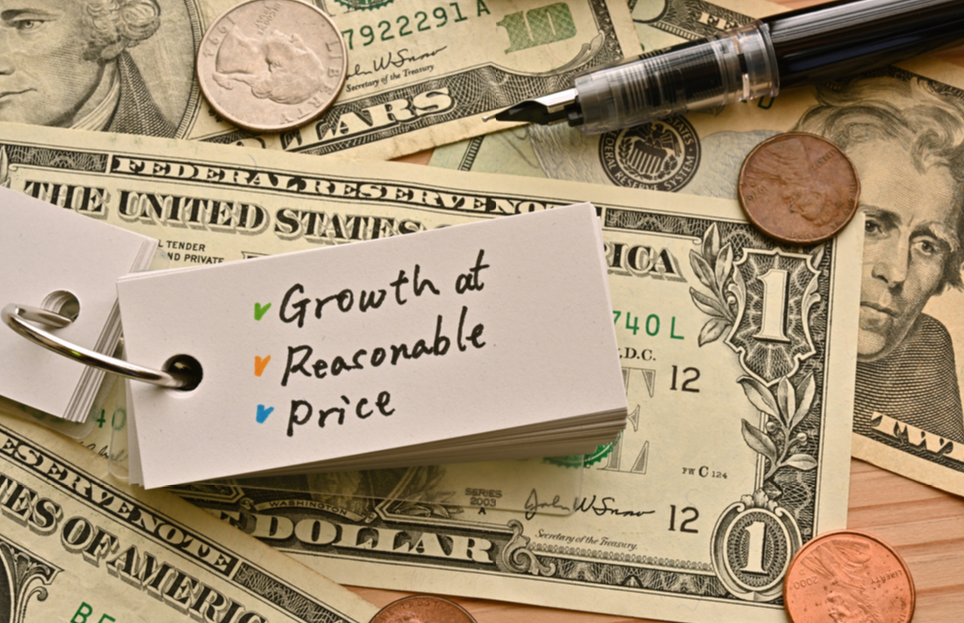
In this video, Chuck Carnevale, Co-Founder of FAST Graphs, a.k.a. Mr. Valuation and Professor Nathan Mauck, Phd. are going to talk about how to approach growth stock investing. As Mr. Valuation, Chuck is a proponent of growth at a reasonable price, often referred to as GARP investing, and Professor Mauck is going to provide some insights into what that actually means.
How are bull and bear markets defined and how should you approach them as an investor?
How an election affects stock market performance depends more on how close and contentious it is than on whether the winner is Republican or Democrat, liberal or conservative.
While the pace of Federal Reserve cuts is in question, all roads lead to lower interest rates.
As we approach the end of 2024, the latest Consumer Price Index (CPI) report from the Bureau of Labor Statistics (BLS) has provided us with critical insights into the health of the U.S. economy, particularly concerning inflation.
Balanced risks to inflation and employment indicate it’s time for the Fed to normalize interest rates, enhancing a positive backdrop for bonds.
Nvidia’s strong earnings exceeded expectations, but the stock fell as investors recalibrated their expectations given its high valuation.
Passive fixed income index investing has evolved significantly over the previous decade, offering investors the flexibility to align risk requirements and investment goals. Learn more from our experts.
Here we dispel three common myths about elections and investments, demonstrating why we think sticking to a long-term investment plan might be a better path to success than trying to predict political cycles.
As AI's usage becomes increasingly widespread around the globe, energy consumption is soaring, along with a demand for additional power.
Last week, the labor data showed a weakening labor market, but didn't give clear signals for the Fed to cut rates by 50 bp at the next FOMC.
Recent Fed commentary and economic data have crystallized investor confidence in rate cuts coming in less than a week
If you entered this NFL season as a Kansas City Chiefs fan, you’re probably hoping for a Super Bowl win after clinching three of the past five Super Bowls and having Patrick Mahomes as your quarterback and Taylor Swift backing the team.
Fed officials must recalibrate their policy stance to ensure the economy stays on solid footing to achieve that elusive soft landing they have been aiming for after their quest to quash inflation.
Determining the age when retirement account owners need to begin taking distributions is key for heirs to understand how to implement the 10-year rule for inherited accounts. Bill Cass explains what beneficiaries need to know.
Post-Jackson Hole and now post-jobs report, the markets can settle in for a rate cut at next week’s FOMC meeting.
Regardless of which administration takes power after an election, a balanced portfolio has made strong gains in the years immediately after.
Labor shortfalls will become the norm in advanced economies.
With U.S. equities perhaps calling for diversification, an active international ETF like TOUS could play a helpful role.
History typically shows that election years don't produce major volatility swings in the municipal bond market.
Is now the time for a small-caps ETF? Rate cuts and other potentially positive indicators could position the space to benefit.
The next U.S. president will face immediate fiscal challenges.
Investors may find themselves prognosticating about future rates relative to current rates in an attempt to optimize their portfolio.
While technology is a powerful driver of economic growth, it also presents challenges that can negatively impact productivity, equality, mental health, and societal cohesion. Addressing these issues ensures that technological advancements promote sustainable and inclusive economic growth.
We learned a long time ago that we wanted to know what smart professional investors were doing. It’s always better to know who is smart rather than being smart yourself. Therefore, we’ve constantly kept track of insider buying, what great investors like Warren Buffett and Carlos Slim were doing, and what the most successful hedge funds were up to. A recent chart stopped us in our tracks.
In a recent interview, Timothy Crawmer, global credit strategist at Payden & Rygel ($156.8 billion AUM), says it is the firm’s view that the Federal Reserve is going to start the rate cutting efforts in September with a 25 by 25 basis points, likely followed by another two 25 basis point cuts in November and December.
If overlays haven’t been on your radar so far this year, it’s high time to start thinking about them.
In emerging markets, technological advancements present a unique opportunity to empower underserved communities.
Given the backdrop of monetary policy stimulus, the global economy is poised for growth and international stocks for continued leadership.
On the back of recent cooling in economic growth, an uptick in unemployment, and moderating inflation, the Federal Reserve (Fed) looks set to begin its rate-cutting cycle at its September meeting.
An analysis of the leadership reversal and market sell-off observed in recent weeks and why an emphasis on equities with consistent fundamentals is justified.
August’s employment report, which was weaker than markets were expecting but stronger than our call, cements our view that the easing cycle will begin during the next FOMC meeting, September 17-18.
The BRICS Pay initiative aims to better integrate currencies for trade and facilitate cross-border transactions among its members.
Last week’s big day in the markets and for the economy was on Friday. I characterized the jobs report as being weakish—not disastrous but certainly not strong. The payroll report came in a bit short of expectations with weak lowered revisions to past reports, and although the unemployment rate adjustment was expected, the U-6 unemployment rate, a broader measure of labor underutilization, continued to rise indicating underlying weakness in the job market.
Friday’s employment report suggests the US economy may be slowing down faster than most investors think
Last week, the BlackRock Target Allocation Team reduced their equity exposure and reduced some growth allocations in favor of value.
Shares of Nvidia are down 17.22% for the week ending Sept. 4. The firm is widely viewed as one the equity proxies on the AI investment theme.
To tackle the costs of higher education, many families use a 529 plan to bolster savings. An ETF strategy can bring long-term savings growth.
Stock buybacks have boomed in recent years. With corporate cash flows remaining high and potential rate cuts from the Fed, the trend appears set to continue.
Since the end of the “Yen Carry Trade” correction in August, bullish positioning has returned with a vengeance, yet two key risks face investors as September begins. While bullish positioning and optimism are ingredients for a rising market, there is more to this story.
Shopping around for an active ETF? This strategy has outperformed SPY recently thanks to its ability to over- or underweight certain stocks.
We are entering a time I think will include a deep crisis. We are going to need each other. We really do need to “find our tribe.”
ETFs saw a record number of inflows in August, including bond-focused funds, which are offering opportunities in corporate debt.
The U.S. economy may be heading into choppy waters, and investors might be wise to buckle up.
High-yield investors put off by today’s narrow spreads could be missing out.
On the latest edition of Market Week in Review, Investment Strategist BeiChen Lin assessed the state of the economy, including the health of the services and manufacturing sectors, and the likelihood of a big rate cut at the upcoming Federal Reserve meeting.