On Thursday, July 30, Amazon Inc.(AMZN) released its Q2 2026 earnings report. Given its crucial position as a Mag 7 mega-cap straddling both tech and e-commerce, Amazon’s earnings reports are usually closely watched by the broader investing community.
Mega-cap tech stocks have helped large caps dominate small-cap ETF flows and performance for years. However, this year a shift is taking place. In 2026, small-cap index ETFs are outperforming their large-cap peers as the market has broadened out.
Schwab Sector Views is our six- to 12-month outlook for stock sectors, which represent broad sectors of the economy. The Schwab Center for Financial Research (SCFR) combines a factor-based approach with a market and economic assessment to determine the ratings.
For anyone worried about the gargantuan costs of developing artificial-intelligence infrastructure, it was comforting to think that Big Tech firms could just turn off the spending taps if demand for chatbots and coding tools didn’t pan out. That’s starting to look like wishful thinking.
As concerns grow about the market’s biggest companies, investors are looking further down the market-cap scale. Mid-cap innovators are drawing more attention because they have more room to grow.
Following historic inflows, momentum in the covered call ETF market continues unabated. Yet first-generation buy-write products were often viewed somewhat narrowly as high-yield income vehicles built on sacrificing equity upside for immediate cash flow. While early strategies proved the massive appetite for yield, they also exposed key advisor pain points — from steep NAV erosion in bull markets to tax-inefficient distributions.
One of the most noteworthy data points during July was the June CPI report. While some moderation in price pressures was expected, the actual ‘cooling’ in inflation that was reported was greeted as a long sought after welcome development by the financial markets.
Energy markets have reached a precarious moment, with the path of prices over the remainder of the year – and potentially beyond – hinging on two key questions.
Cash is king. Not for investors right now, but among the hyperscalers. The craving for capital is high as the AI arms race takes new twists and turns.
In this report, John P Kerschner, Global Head of Securitized Products, Daniel Siluk, Head of Global Short Duration and Liquidity, and Michael Contopoulos, Head of Multi-Asset Macro Investing, make the case for why it’s time for short-duration bonds.
GMO’s liquid alternatives are hedge fund strategies (e.g., equity long-short, global macro, event-driven) managed with an emphasis on risk control and liquidity. The GMO Alternative Allocation Strategy (“ALTA”) is a liquid alternative solution combining several underlying strategies; ALTA is available in a mutual fund with daily liquidity.
US stocks rose at the open on Thursday as Microsoft Corp. soared 16% after reporting the fastest cloud unit growth in four years. Top semiconductor companies, like Micron Technology Inc. and Nvidia Corp., gained as well.
Europe’s big banks have joined the global stock trading party. Danger lurks, however: When the market turns, it is often brutal.
If you’d rather get ahead of where income allocations are heading than read about them in next quarter’s flow report, this is the session.
Oil markets have entered a period of heightened volatility. Geopolitical tensions, shifting supply expectations, and uncertain demand forecasts continue to weigh on investor sentiment. This environment can make traditional energy investing challenging. However, it also increases interest income generation strategies like the Amplify Energy & Natural Resources Covered Call ETF (NDIV).
Once again, the Federal Open Market Committee (FOMC) decided to remain ‘on hold’, keeping the fed funds trading range at 3.50%–3.75%. Although there had been earlier conjecture in the money and bond markets the Fed may raise rates at the July gathering, that sentiment ultimately faded, and the final result was largely expected.
South Korea and Taiwan are grabbing the majority of financial news headlines when it comes to international exposure, but a peek inside Latin America reveals potential opportunities. Brazil, in particular, could be offering investors ample value in both equities and bonds beyond those aforementioned countries already benefiting from the artificial intelligence (AI) buildout.
Considering that the Federal Reserve has been meeting this week, it’s safe to say that inflation is likely front-and-center on the minds of many advisors and investors. After all, energy prices and supply chain constraints have kept inflationary pressures far more persistent than the Fed would like.
Join the experts at Harbor Capital and PanAgora for a product due diligence session exploring the Harbor PanAgora Dynamic Large Cap Core ETF (INFO).
Investors overwhelmingly recognize the value of financial planning, but a substantial planning gap remains. The desire for guidance is there. Access remains the challenge.
In the current macroeconomic landscape marked by higher-for-longer interest rates, investors looking to optimize their short-term capital allocations may want to consider collateralized loan obligations (CLOs) as a higher-yielding potential alternative to traditional cash proxies like money market funds.
At the party, hosted on a hot day last July at HPS business development head John Christmas’ New Jersey beach house, bandana-clad colleagues across his teams mingled poolside with the wind at their backs. With the addition of HPS, one of the biggest names in private credit, it seemed BlackRock was set to break through in the market in a way that had eluded the asset manager for years.
Wall Street is racing to roll out complex investment products tied to SpaceX shares that aim to shield buyers from future losses amid a sharp selloff following its market debut.
The US dollar will weaken if the Federal Reserve leaves interest rates unchanged this week, according to TD Securities.
Leverage, ratings arbitrage, liquidity transformation, and a growing willingness to embrace complexity and illiquidity are becoming more visible across parts of the financial system.
The market encountered its stiffest test in months last week as rising oil prices, higher bond yields, and renewed scrutiny of AI capital spending combined to pressure many of the year’s biggest winners. Easing tensions over the weekend have buoyed stocks. If the Strait of Hormuz was opened, I believe the market would be 5% to 10% higher.
As the Q2 earnings season kicks into high gear, market sentiment around the AI trade is undergoing a critical sanity check. Alphabet’s second quarter results last week served as a barometer for how Wall Street is weighing artificial intelligence investments against current profitability.
Without the support of rate cuts by the Federal Reserve, it’s been a lethargic year in terms of performance by municipal bonds and the related ETFs, but that doesn’t mean advisors and fixed income investors should ignore this bond segment.
Discover Aberdeen’s closed-end funds (CEFs) for high yields, illiquid assets, long-term investments, and resilient income for 2026.
It’s becoming increasingly clear that tariff tensions between the United States and the rest of the world won’t be going away any time soon. Last Friday, the U.S. imposed a series of tariffs on 60 different trading partners, including China, Canada, and the European Union.
On July 28, Morgan Stanley launched two new spot crypto ETFs on NYSE Arca. The Morgan Stanley Ethereum Trust (MSSE) and the Morgan Stanley Solana Trust (MSOL) provide spot price exposure to underlying ethereum (ETH) and solana (SOL), alongside additional distributions from staking yields.
Brent crude crossed above $100 a barrel this week, all due to a 20-mile-wide stretch of water some 6,500 miles away from the U.S. Tanker traffic through the Strait of Hormuz—the Persian Gulf bottleneck that carried roughly a fifth of the world’s seaborne oil before the fighting started—has fallen to virtually zero.
As markets place a greater premium on shareholder-friendly capital allocation, companies that consistently combine buybacks with dividends may be better positioned to outperform.
A wave of new active ETFs is reshaping the fund landscape, and advisors now need extra care when screening funds for their models.
Join the experts at SS&C ALPS Advisors, Ladenburg Thalmann, and VettaFi for a product due diligence session exploring the ALPS Electrification Infrastructure ETF (ELFY) and how it is designed to invest in companies supporting the electrification of everything.
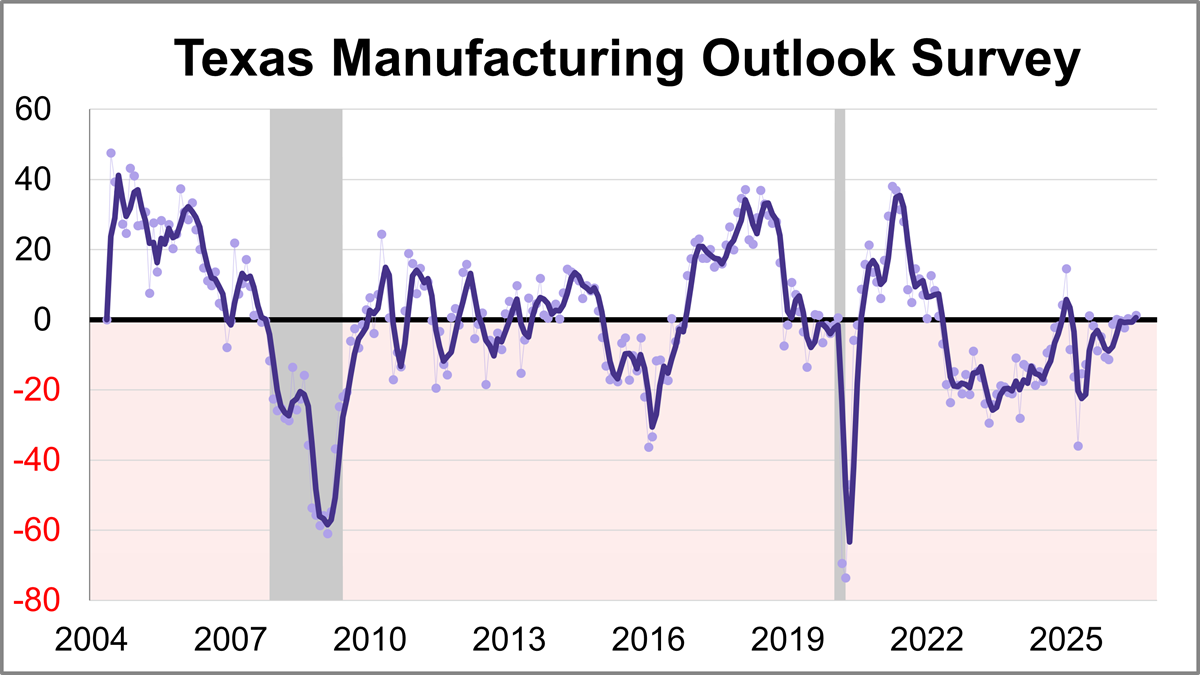
The Dallas Fed released its Texas Manufacturing Outlook Survey (TMOS) for July. The general business activity index rose 1.3 points to 1.3, indicating accelerated growth of manufacturing activity and improved business conditions perceptions.
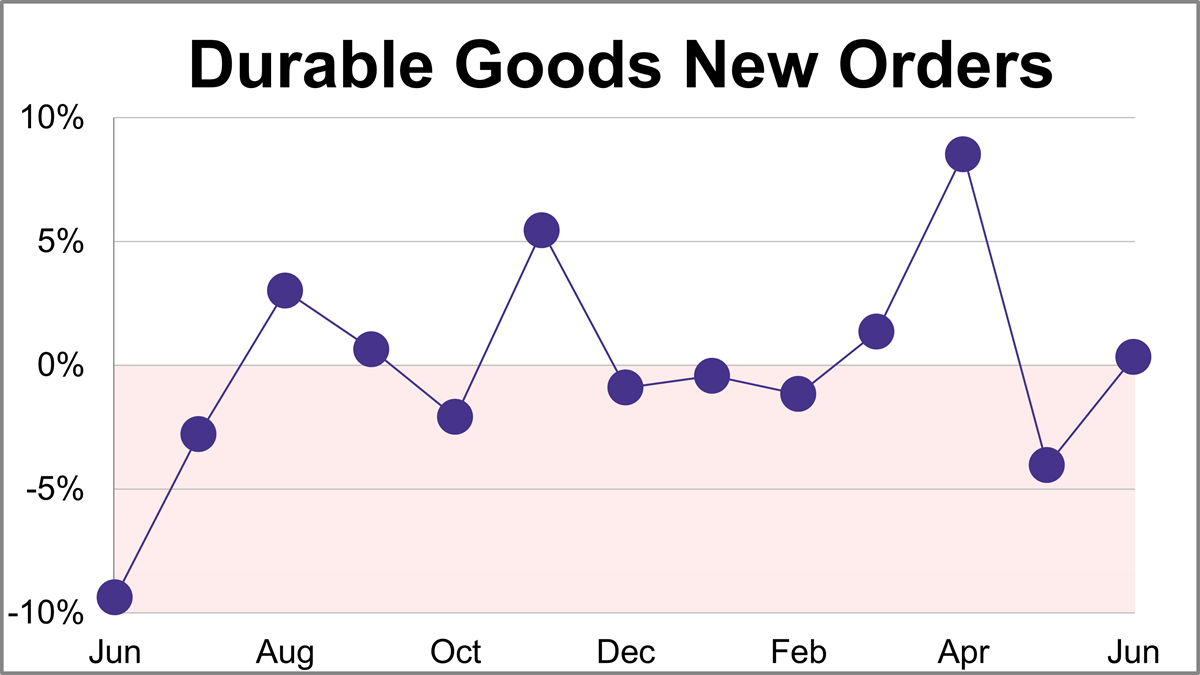
New orders for manufactured durable goods rose 0.3% in June to $334.77B, less than the projected 1.6% monthly growth.
June may have proven to be a difficult month for silver investors, but it’s likely far too soon to give up on the precious metal. To better understand this, it’s important to contextualize why silver’s price is struggling and why the metal’s long-term opportunities are still there.
Kioxia Holdings Corp. faces more wild price swings with leveraged exchange-traded funds tracking the Japanese memory chipmaker’s shares set to be listed in the US.
The equity bull market is expected to continue through the second half of 2026, supported by resilient U.S. growth, AI investment and solid earnings.
The ETF market saw a push in capital away from the concentrated U.S. tech sector to defensive broad market exposure, short duration bonds, and commodities. The shift in flows is amplified by the semiconductor market pullback, interest rate uncertainty, and ongoing geopolitical tensions in the Middle East.
The U.S. energy sector has outperformed in 2026, driven primarily by geopolitical-related supply fears, elevated oil prices, and rising demand from the AI infrastructure buildout. While broad energy funds have also surged, investors can potentially enhance exposure by targeting specific segments of the energy market.
In June, market news continued to be dominated by the Middle East conflict as frequent flare-ups in hostilities gave way to repeated ceasefire efforts and the signing of a high-level memorandum of understanding between the US and Iran.
Semiconductor exchange-traded funds have gained more than 25% this year. Intel Corporation’s (INTC) second-quarter earnings report after today’s close could test whether that rally continues.
Research Affiliates and PIMCO leadership analyze key 2026 midyear market shifts, warning of elevated U.S. and AI equity valuations.
During periods of elevated market stress, including those that see pinched corporate bonds, collateralized Loan Obligations (CLOs) often outperform other corporate bond assets. Add to that, CLOs often emerge from those rough patches in strong form, delivering impressive returns a year after downturns.
Those who are familiar with Vanguard’s ETF lineup are likely well-acquainted with the Vanguard S&P 500 ETF (VOO). After all, this fund — which provides low-cost exposure to the S&P 500 — is currently the largest fund in terms of AUM.
It's difficult to call any stretch a calm, quiet summer week, but this one would seemingly fit the bill. Earnings from Alphabet (GOOGL), Tesla (TSLA), and IBM (IBM) are the standouts, along with a slew of cyclicals reporting Q2 results.
From severe wildfires in northern Ontario to record heat across Europe, extreme weather is back in the headlines. Such events are becoming more frequent and intense, and the risks associated with them are testing the limits of insurability. With our research partners at Columbia Climate School, we examine how strains on the insurance system can transmit climate-related risks through the capital markets.
Kevin Warsh’s early overhaul of Federal Reserve communication and policymaking suggests investors should prepare for a higher-for-longer rate environment with greater uncertainty around policy signals.