This week, around my trip to a far-too-cold Denver, then to Dallas, and ultimately Tulsa to spend the Thanksgiving holiday with family, Keith and I did a 45-minute "interview" via Zoom. Less an interview, perhaps, than the two old friends catching up. I was surprised how many topics Keith and I aligned on perfectly, though our few disagreements about what comes next made for a great debate.
Americans who work remotely, either full-time or part-time, can save between $2,000 and $7,000 in transportation and work-related costs. They can also gain back the equivalent of two to three weeks per year in commuting time.
Any time you neglect to maximize diversification, whether to chase active management, indulge personal intuition or save trouble, you need to think carefully about whether you are getting paid enough for the additional risk.
Historic turmoil in cryptocurrency markets sparked by FTX’s implosion hasn’t stopped one funds issuer from moving forward on a new investment product tied to Bitcoin.
Under the surface of one of the quietest weeks on Wall Street all year, some money managers are renewing speculative bets, hoping against hope that a more friendly -- or at least less-hostile -- Fed, is back in their corner.
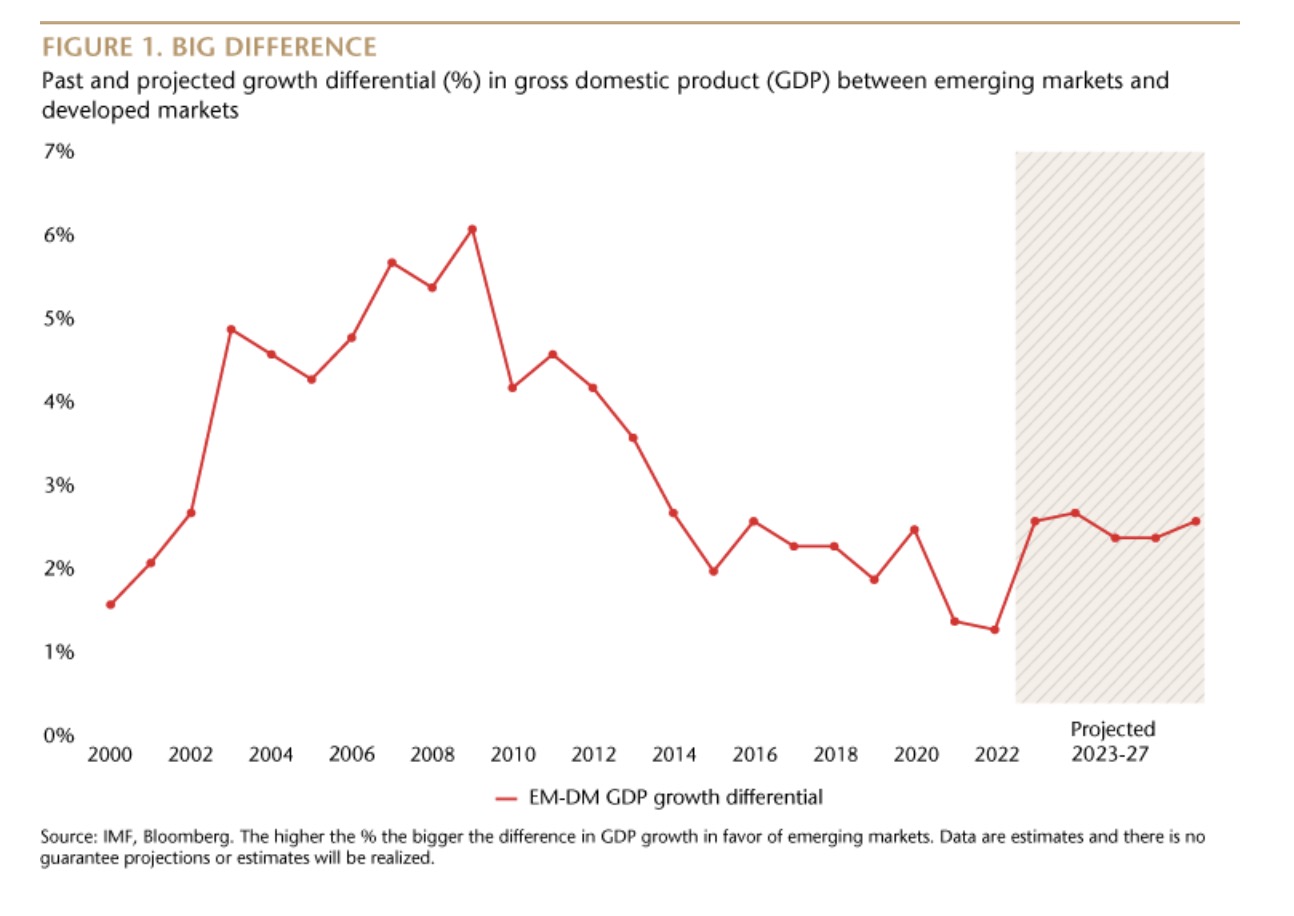
Vivek Tanneeru, portfolio manager, sees structural and cyclical tailwinds converging for emerging markets equities.
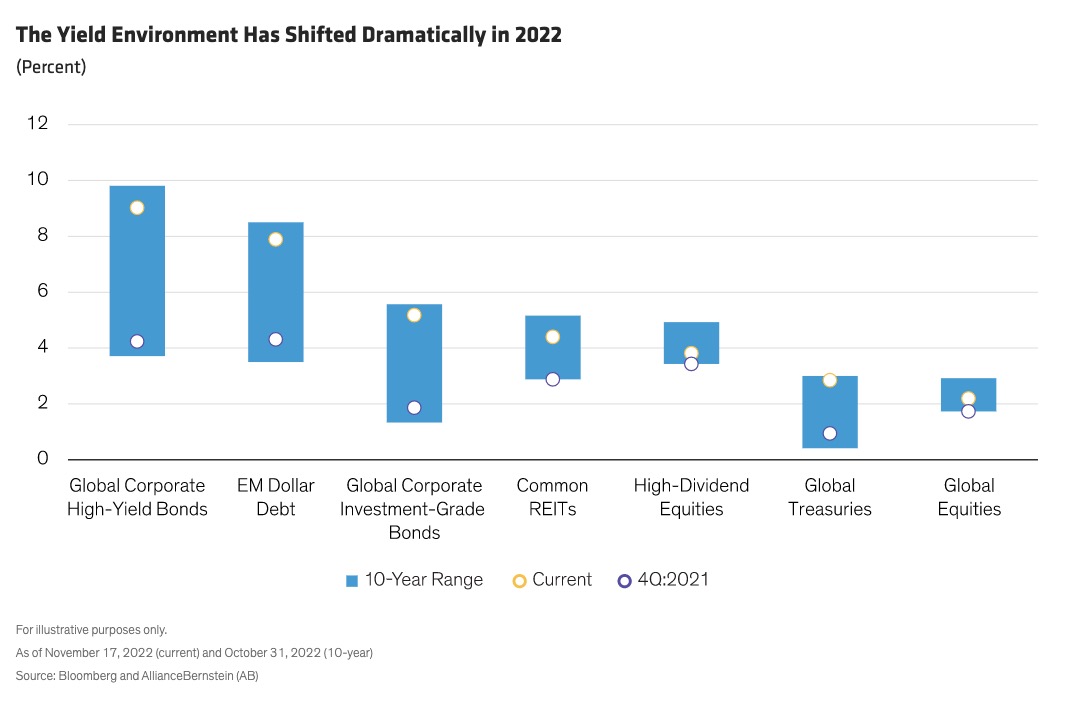
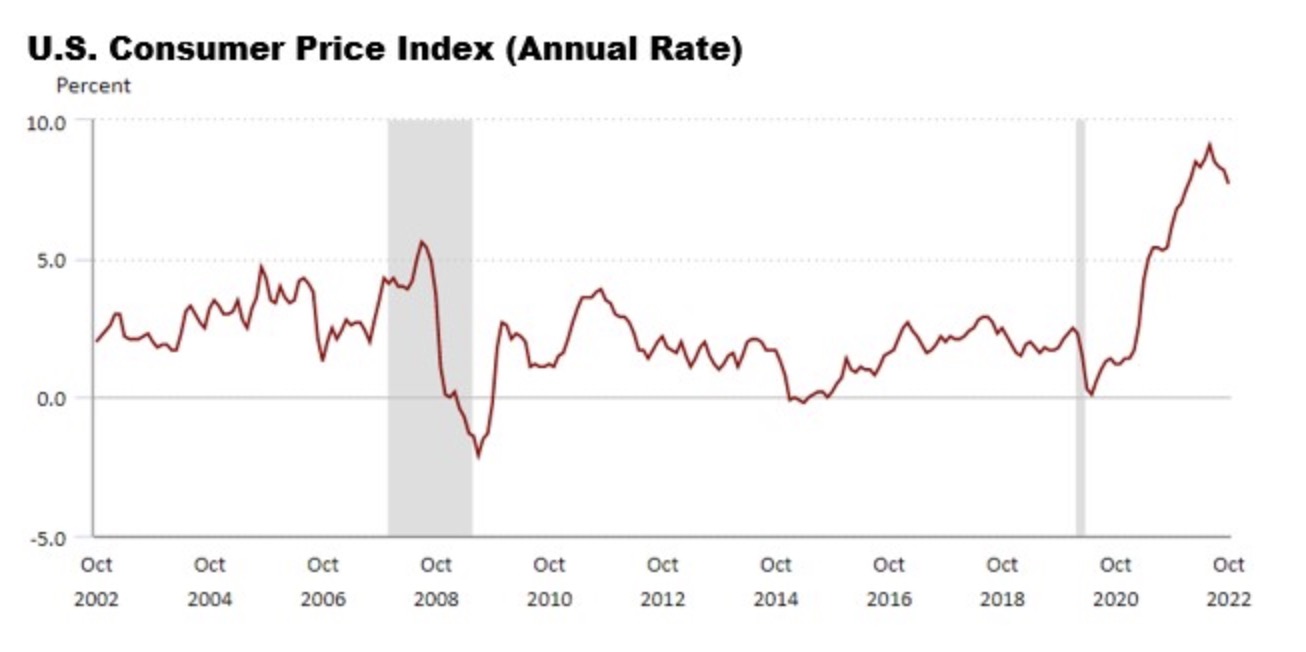
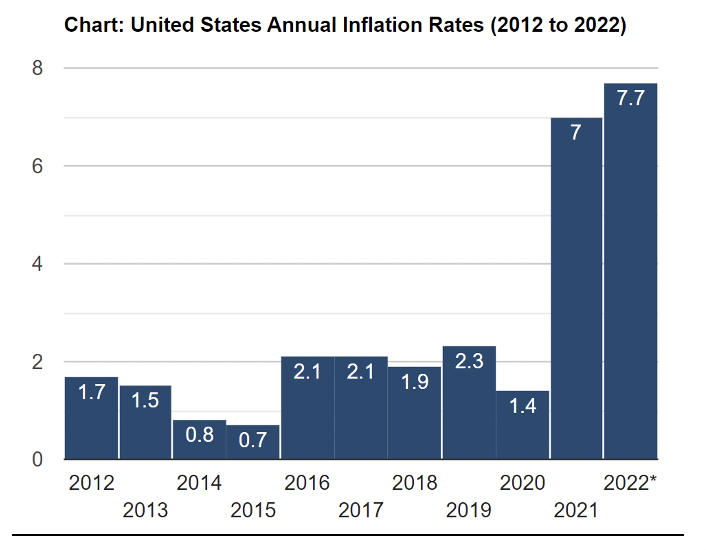
In one of the most challenging years for markets, 2022 brought persistently high inflation, aggressive central bank tightening and heightened geopolitical risks, leaving investors with few places to hide.
The US Securities and Exchange Commission’s draft plans to overhaul rules for the stock market would also expand its oversight of bond and options trading.
The chorus of strategists turning bullish on Chinese stocks is getting louder by the day, with Bank of America Corp.’s Michael Hartnett the latest to recommend the nation’s equities as a top buy for 2023.
The following is a loose collection of random thoughts and observations on the Russian invasion of Ukraine. Rather than a coherent article, I offer some insights that have emerged as the war has dragged on.
Applications for US unemployment benefits rose last week to a three-month high amid a wave of layoffs at technology companies, a sign of cooling in a tight labor market.
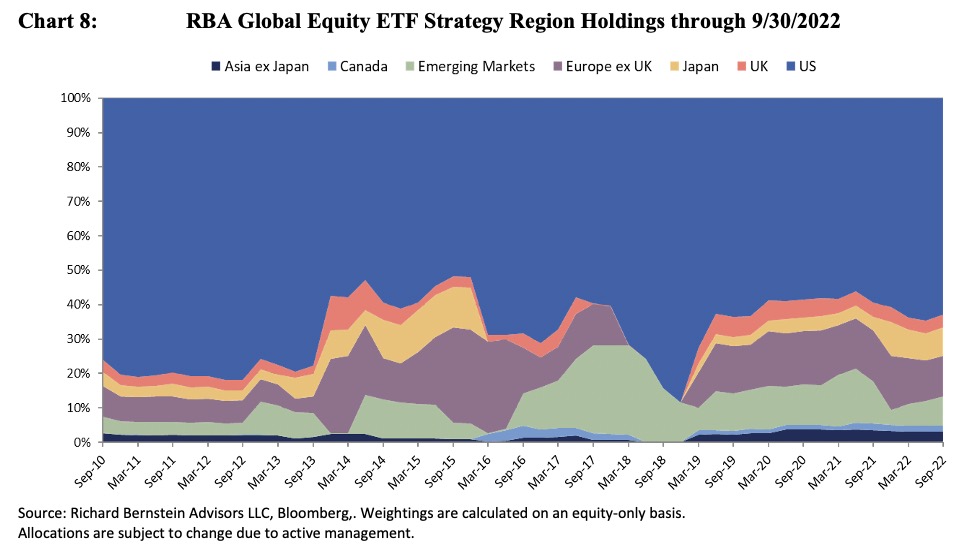
One of the reasons we formed RBA in 2009 was we thought the US was entering perhaps the biggest bull market of our careers.
More Americans are tapping their 401(k)s for financial emergencies, with the percentage of retirement savers pulling money for hardships spiking 24% in the 12 months through Sept. 30, according to new data.
Historically, soaring oil prices have been bad for the US economy because they squeeze US consumers and producers, and often are happening when the Federal Reserve is raising interest rates to rein in inflation.
A lack of reliable ESG data in emerging markets is proving a boon for some of the heavyweights of global finance.
Microsoft Corp. agreed to buy a massive amount of clean energy to power a data center in Ireland, making it the second biggest corporate power-purchase agreement deal so far this year.
Amazon.com Inc. spooked investors last month when it predicted the slowest holiday season growth in its history.
Is a “hard landing” coming, economically speaking, as the Fed continues its most aggressive rate hike campaign in 40 years?
A high level Fed official warned last Thursday that the Fed Funds rate might have to go to 5%-7% to get inflation under control.
Let’s look at four keys to building trust through deeper relationships.
U.S. equities are rising, although no notable directional drivers seem to be in play amid the holiday-shortened week, with the markets closed on Thursday for Thanksgiving and trading in a half day on Friday.
And up and down.
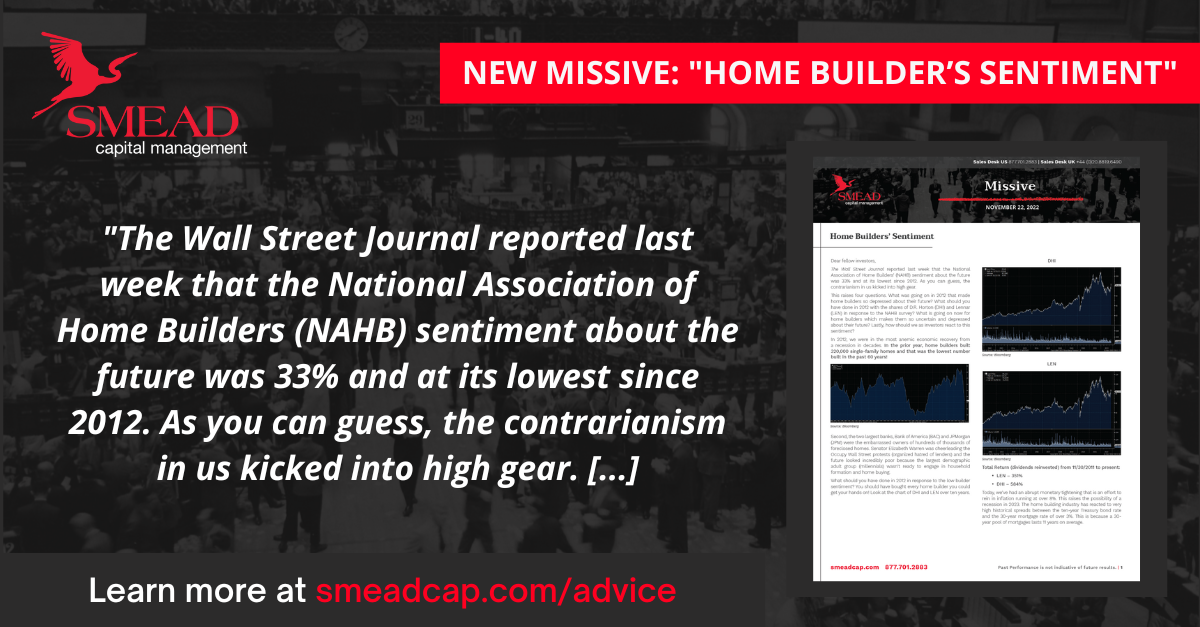
The Wall Street Journal reported last week that the National Association of Home Builders’ (NAHB) sentiment about the future was 33% and at its lowest since 2012.
Wall Street’s waning conviction in Coinbase Global Inc. has done little to deter Cathie Wood. Instead, she’s been scooping up shares of the struggling cryptocurrency exchange in the wake of the collapse of Sam Bankman-Fried’s FTX.
The great quantitative easing experiment was a mistake. It's time central banks acknowledge it for the failure it was and retire it from their policy arsenal as soon as they’re able.
Amundi SA is removing the European Union’s highest ESG designation from virtually all funds that once carried it, as it joins a growing list of investment firms that have been wrong-footed by a change in regulatory guidelines in the bloc.
Recessions are like forest fires – small ones are healthy for the forest. However, the longer you suppress fire, the more dead material the forest accumulates. Eventually, when it does pay a visit, it is more devastating and its effects are more long-lasting. The recession that is coming could be a big fire.
Advisors and their clients need to manage pressures they have not seen for 20 years: market volatility, inflation, rising interest rates and potentially higher taxes. With fixed income not holding up as a low-risk part of the portfolio, it is time to look at other strategies to protect client portfolios.
Right now, investors are getting worried because the yield curve has gotten very inverted — more inverted than it was in the lead-up to either the 2001 or 2008 recessions.
What is the cost, at this month’s market prices, of achieving the standard of living actually attained in the base period?
It’s close. Exchange is only a few months away. With the financial community gearing up to descend on the Fontainebleau in Miami, Florida, February 5th through February 8th for the largest advisor-centric event in the country, advisors have a rare opportunity to mesh minds with the most creative people in financial management, fintech, and investing.
Once again, we are on the cusp of a nuclear renaissance. Actually realizing one requires something nuclear power isn’t known for: Speed.
All financial manias have some features in common.
The dollar climbed against its Group-of-10 counterparts as investors sought shelter in the US currency amid concerns that China may tighten Covid curbs.
Believe it or not, 2022 is almost over. That means it’s time to start thinking about end-of-year tax planning strategies…
With the midterm elections behind us, does the market outlook improve given a now gridlocked Congress? Historically speaking, such is the case.
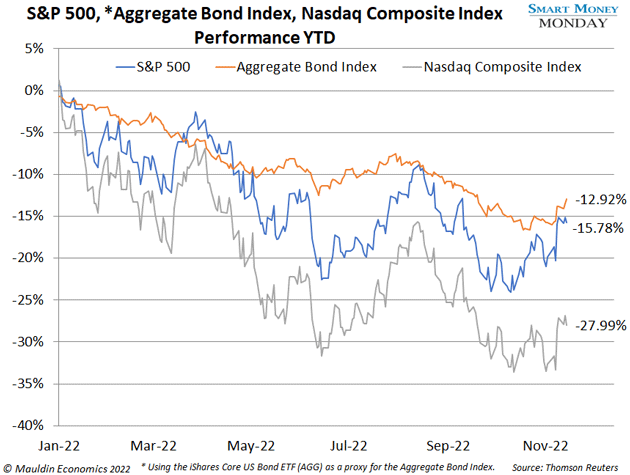
The S&P 500 is down 15% over the past year, so you’d think this would have been a great time to own some protection on your portfolio. Unfortunately, that’s not how things have turned out.
Socially responsible firms pay more for the external audits of their financial statements, thereby lowering risks to investors. But those lower risks also mean lower returns for investors.
In this letter I’d like to explore the impact interest rates will have on the economy and especially the housing market.
Lifetime annuities in concert with allocations to stocks, TIPS, bond ladders and other diversified investments help retirees weather changing conditions regarding inflation and interest rates.
For years leading up to the pandemic, low inflation and stable growth created a favorable environment for investors that supported sustained periods of robust stock and bond returns. With inflation virtually non-existent, economic downturns were met with monetary and fiscal stimulus that provided a backstop for financial markets.
Over more than two decades, Vanguard Advisor's Alpha® has shown how advisors can add value, or alpha, through relationship-based services such as financial planning, discipline, and guidance, rather than by trying to outperform the market. Vanguard’s Investment Advisory Research Center, led by Fran Kinniry, is charged with exploring how advisors provide value to investors.
This year has served as a harsh reminder of why so many investors seek a trusted advisor to navigate their financial journeys. During market declines, investor emotions easily crowd out wisdom and long-term thinking. However, through financial planning and behavioral coaching, advisors can help investors improve their chances of reaching their long-term financial goals.
The German car industry’s bid to wrest the electric-vehicle crown from Tesla Inc. veered off course this week with stumbles for Volkswagen AG and Mercedes-Benz AG.
Elon Musk told a court in Delaware on Wednesday that his reorganization of Twitter Inc. is almost done, and he’ll spend less time on the company by the end of next week.
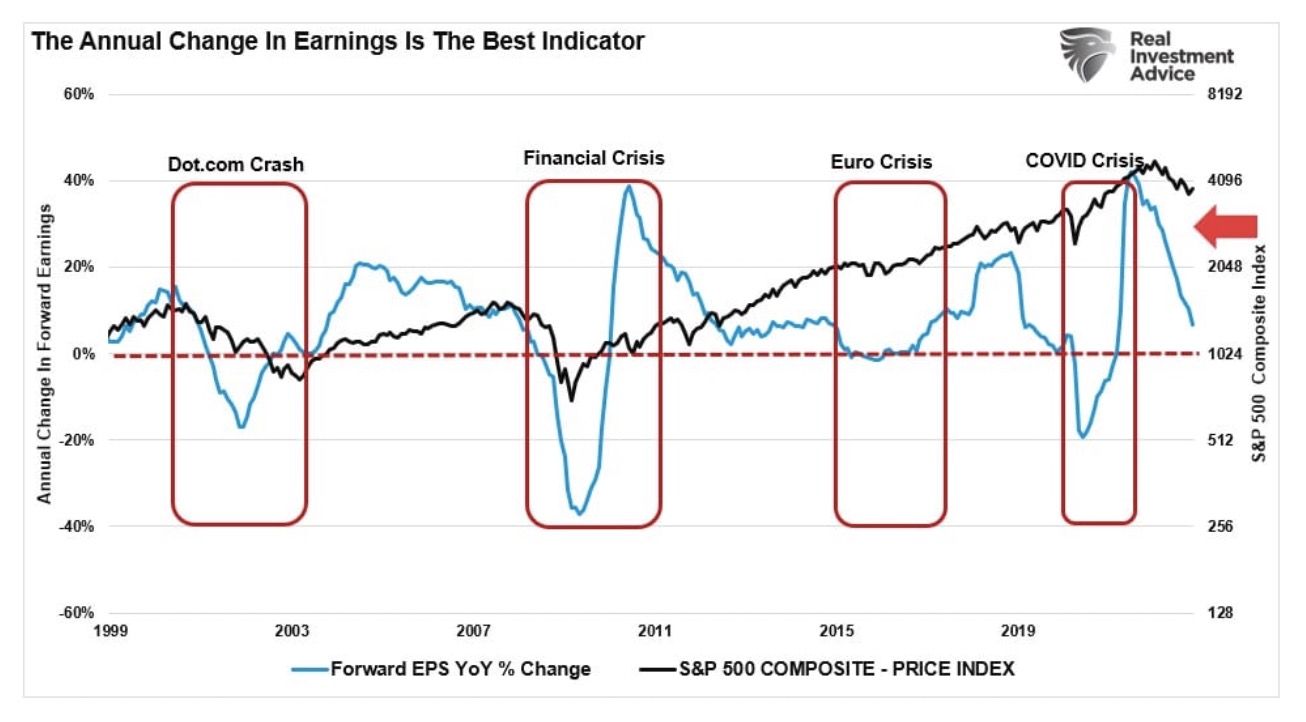
On the most optimistic corners of Wall Street, promising inflation data over the past week or so suggest the Federal Reserve may accomplish a soft landing after all.
Tech companies are trimming staff and slowing hiring as they face higher interest rates and sluggish consumer spending in the US and a strong dollar abroad.
Being glued to crypto news this week meant missing adventures in regular markets that while lacking the same high drama, made up for it in terms of money at stake.
Despite stubbornly high inflation and recessionary fears, spending by consumers may not slow down as we approach the busy holiday shopping season.
Two aspects of the financial markets operate simultaneously. Emphatically, they do not operate alternately, but simultaneously. One aspect is driven entirely by arithmetic. Every security is a claim to some long-term stream of cash flows that will be delivered to the holder, or series of holders, over time.
Wall Street’s biggest banks agree the Federal Reserve will hike US interest rates further into next year, but are at odds over how high it will take them and whether it will be cutting by the end of 2023.