Investors often view commercial real estate (CRE) through the narrow lens of the office sector. We think this office-only focus understates how broad the asset class is and its potential. Offices may face well-documented headwinds, but many other CRE segments appear more resilient.
At this point, investors of all ages are well aware just how much inflation can cut into one’s spending power, whether it be for everyday expenses or big-time purchases.
The sheer complexity of exchange-traded funds (ETFs) using derivative-based strategies could have investors turning the other away. Instead, investors have been running towards them. The capital markets witnessed a surge in demand for these tactical ETF tools during the first quarter of 2026, making it a topical theme at the most recent Nasdaq-sponsored Asset Allocation Summit.
Apple Inc. (AAPL) announced Monday that Tim Cook will transition to executive chairman, while John Ternus will become CEO effective September 1. Ternus has served as senior vice president of hardware engineering since 2021. He will lead the company after 25 years focused on product development across iPhone, Mac, iPad, AirPods and Apple Watch.
Not only has infrastructure been devastated in key energy production zones, but other critical commodities like fertilizer have become much more expensive as well. It’s important for investors to respond, especially those at or near retirement. The right type of income ETFs can be that response.
When advisors and investors hear the terms “high yield” or “junk” as it relates to bonds, they understandably have some apprehension. After all, junk bonds carry elevated credit risk relative to their investment-grade peers. Hence the higher yields, which act as added compensation for the extra risk.
Stacey Morris, head of energy research at VettaFi, joined Nate Geraci on this week’s ETF Prime to discuss energy ETFs amid the Iran conflict. Geopolitics currently dominates oil prices and energy stocks, though the sector posted strong gains before the war began, according to Morris.
While we are currently in a particularly grueling climb (including the war in Iran – a situation in which we will provide an update at the end of this piece), we cannot lose our long-term perspective. We want to take this piece as a summit in the middle of our hike; one where we can see a path through the trees and hills and clearly see four potential paths from here.
For a long time institutions treated tax-aware investing like a retail conversation; helpful for individuals, interesting for private wealth, but not front and center for institutions.
As always, I hope you’re having a good 2026 and that all is well with you, my readers, and your family and friends. Here’s my latest.
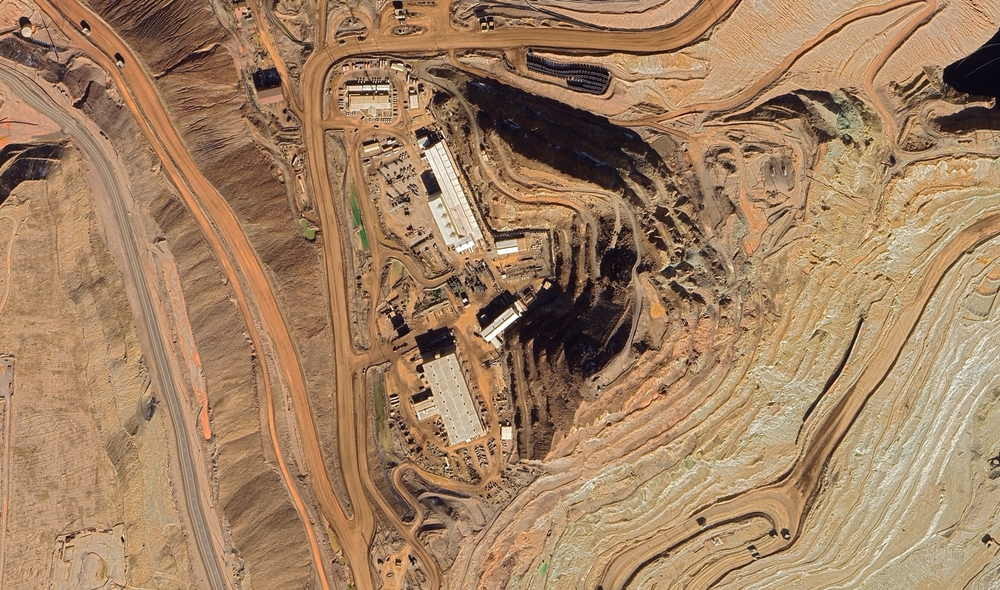
Geopolitical conflict is forcing the markets to think critically about critical minerals. More specifically, the importance of critical materials has shifted from industrial use to a vital component in national defense and energy security.
A recently passed law in Indiana now requires some state retirement plans to allow participants to invest in cryptocurrency, setting the stage for broader crypto adoption by public funds.
JPMorgan Chase & Co. is working toward getting approval from Chinese securities regulators to launch actively managed exchange-traded funds in the country for the first time.
Yes, much of the blame lies with energy prices, which surged due to the war in Iran. Still, the March reading of the Consumer Price Index (CPI) serves as a reminder of the work to be done to damp inflation.
Ternus will have a challenge when he officially takes the job in September. Even as he maintains Apple’s device empire — and its more than $400 billion in annual revenue — the executive will need to take chances, enter new product categories and find the company’s footing in artificial intelligence.
The history of the U.S. airline industry is really a history of consolidation driven by crisis. The pattern has been remarkably consistent. Historically, when an external shock has hit—a recession, a war, an energy spike—the weakest carriers have folded or been acquired, while the strongest have emerged leaner and more profitable.
Exchange-traded fund flows surpassed $500 billion in the first three and a half months of 2026 as the industry continues its rapid expansion with more than 300 new launches and record trading volumes.
Active ETFs are no longer a niche satellite play; they are becoming central pillars of modern portfolio construction.
Amplify’s path is unique in the ETF space and has carved out a small but powerful stronghold for itself. Its focus on thematic and income strategies lends Amplify resilience across different market types, and its commitment to innovation means it doesn’t tend to issue many “me too” products.
The housing industry had good reasons for optimism heading into 2026. Transactions were picking up after three listless years as improved affordability and decent inventory levels brought buyers back into the market.
One of the hottest themes in investing this year has been Space. Partly due to its tie-in with the broader Defense theme, and more recently, thanks to investor excitement over the upcoming SpaceX IPO, space investing as a thematic opportunity has been capturing attention and investor dollars.
As transition activity increases, what was once seen as a step between portfolios is becoming part of the outcome itself. Execution is now more closely tied to how portfolios are reshaped, particularly as restructures grow larger, more frequent, and more complex.
Bitcoin’s recovery above $75,000 has a credibility problem: the traders with the most leverage don’t believe in it.
On Wednesday, April 15, Sprott Asset Management expanded its lineup of exchange-traded funds with the debut of the Sprott Rare Earths Ex-China ETF (REXC). According to Sprott, REXC is the only ETF on the market that is offering a focus on rare earth companies outside China.
While recent market performance reflects optimism over potential geopolitical de-escalation, underlying economic data reveals a complex landscape of intensifying price pressures and cooling growth. This article examines the major economic news from the week of April 6-10th, 2026.
For many, the statistics surrounding autism aren’t just numbers on a page — they are lived experiences. I am one of those people; I have an extended family member on the spectrum, and I’ve seen how people have slowly begun to better understand and support the neurodivergent community.
The artificial intelligence theme is entering a more granular phase, with investors increasingly looking beyond foundational large language models (LLMs) toward the physical infrastructure required for scale.
The Middle East war has replaced tariff-driven inflation concerns with fears of rising energy prices feeding through the economy. On Friday, the Bureau of Labor Statistics (BLS) released its March CPI report, when markets received their first ‘official’ glimpse of how the surge in energy prices has begun to impact the U.S. inflation setting.
“Diversification” has been the driving principle of investing and risk management for generations. But what does it mean to be “diversified?”
In an investment world marked by ongoing macro uncertainty, more investors are seeking alternative strategies to navigate murky markets. One of the funds capturing this shift is the Fidelity Managed Futures ETF (FFUT). That fund secured the award for Best New Alternatives ETF in the 2026 ETF.com Awards.
A dramatic shift is underway in US equity markets. Stocks hit an all-time high Wednesday as Middle East peace hopes tamped down geopolitical anxiety, and derivatives traders who had pulled back from bullish bets are now racing to position for further gains in technology shares.
Hedge funds are increasingly downbeat on the dollar as the prospect of a two-week ceasefire extension between the US and Iran sap the currency’s war-driven strength.
The escalating conflict in the Middle East — especially the closure of the Strait of the Hormuz — had an adverse effect on many investment strategies in March, and gold was no exception. The spot gold price closed out March at $4,668.06.
With Q1 earnings season well underway, it was Johnson & Johnson (JNJ) giving investors a peek at how the broader healthcare sector might perform
Active management is gaining traction as investors navigate a market paradox where high valuations meet geopolitical uncertainty, according to Chris Davis, chairman and portfolio manager at Davis Advisors.
Bitcoin trended toward the high end of its more than two-month trading range as risk assets rallied on optimism that the US can strike a deal with Iran to end their conflict.
Wall Street has gotten repeatedly burned calling a bottom in software stocks, which have been hit hard by fears that artificial intelligence will make the companies obsolete. But this week’s bounce is bringing some bottom-fishing investors back to the group on hopes that the worst may finally be over.
Outside of energy commodities, capital markets posted a downbeat March as cross-asset volatility spiked in response to the outbreak of hostilities in the Mideast, and kicked off April in similar, choppy fashion before posting a swift bounce following last Wednesday’s two-week ceasefire agreement.
While infrastructure companies are not immune to a potential economic slowdown, they may provide a longer-term investment opportunity amid an uncertain macroeconomic backdrop.
Diversification is finally paying off. After more than a decade of U.S. dominance, international equity ETFs are enjoying monster inflows, outpacing their domestic counterparts for the first time since early 2023.
Rapid technological shifts and shifting interest rate expectations continue to define the current market environment. Amid the uncertainty, investors are looking for a reliable North Star to guide their growth allocations. They can start with the Fidelity Blue Chip Growth ETF (FBCG).
Join ProShares Global Investment Strategist Simeon Hyman for a timely discussion on why many covered call ETFs lag in rebounds—and how newer approaches aim to better balance income generation with long-term equity participation.
BlackRock Inc. Chief Executive Officer Larry Fink sees increased demand for private credit from big institutional investors like insurers, even as retail clients grow skittish over the asset class and seek to redeem more of their shares.
Economic conditions are set to be even rockier in 2026, as the US-Israel war with Iran has set inflation on a continued upward trajectory and further rankled markets. Even if there were a de-escalation in the conflict, a domino effect has begun.
The first quarter of 2026 ended with a downpour of volatility as the CBOE Volatility Index (VIX) rose 69%. Nonetheless, Goldman Sachs (GS) reported first-quarter 2026 earnings that outpaced Wall Street expectations though a thick fog of uncertainty still lingers in Q2.
In a rapidly shifting geopolitical environment, gold continues to demonstrate both its resilience and its complexity as a financial asset.
For financial advisors, tax season should not be the only time to talk to clients about municipal bonds. However, with April 15 arriving this week, the timing is ideal to examine how muni bond ETFs are rapidly becoming a cornerstone of fixed-income allocations in 2026.
Over the last few weeks, we have published real-time market commentary as the correction proceeded. The goal was to help investors navigate the more dire outcomes promoted on social media. A largely unexpected outcome was that the S&P 500 outlook changed dramatically in a matter of days.
New ETF launches address concentration and liquidity risks exposed by volatile markets through active and passive strategies.
In this episode of ETF of the Week, Todd Rosenbluth, and Chuck Jaffe discuss why the Goldman Sachs Municipal Income ETF (GMUB) is a timely addition to portfolios. With tax season in full swing, Rosenbluth explains the unique appeal of municipal bonds, highlighting the historical tendency for these assets to perform well following the April 15th deadline