It goes without explaining at this point, that advisors and investors are keeping an extremely close eye on the trajectory of the Federal Reserve’s ongoing fight against inflation. As of now, the battle certainly seems far from over. Fortunately, tools such as bond ladder ETFs can help portfolios maintain their course and mitigate the brunt of inflation.
That article digs into the plumbing behind oil shocks and recession, and exposes why, over the years, I’ve learned to distrust the loudest voices in the room.
Accelerating earnings are protecting the S&P 500 from deeper losses and masking a broader pullback in US equities, according to strategists at Morgan Stanley.
Over the past year, markets have been shaped by rapid advances in AI, elevated geopolitical tensions – especially involving Iran – and persistent uncertainty around global trade. In environments like this, successful investing rarely comes from chasing headlines or reacting emotionally. It’s about discipline, staying anchored to fundamentals and executing a clear long‑term game plan.
During Exchange 2026, experts and thought leaders from firms across the country gathered. They shared different approaches and ideas for tackling the market’s biggest challenges.
A ceasefire in the Middle East is the latest twist for investors who have grown increasingly reactive to each new headline. Volatility has surged: prior to the ceasefire, the VIX had roughly doubled this year and averaged 25 in March—about 67% above year-end levels—underscoring just how uncertain the path forward has been.
While recent market performance reflects optimism over potential geopolitical de-escalation, underlying economic data reveals a complex landscape of intensifying price pressures and cooling growth.
Franklin Templeton Institute examines the evolution of private credit, its risk/return characteristics, and why commercial real estate debt represents a viable alternative to traditional fixed income options.
The traditional 60/40 portfolio is undergoing a structural renovation, but the fixed income sleeve is proving difficult to stabilize.
Bond traders held onto wagers that the Federal Reserve will lower interest rates once this year after data confirmed that US inflation quickened in March as the Iran war led to higher gasoline prices.
By at least one metric in the $9.5 trillion foreign-exchange markets, demand for the dollar is ebbing amid the tenuous ceasefire between the US and Iran.
Private markets benefited enormously from the post-Great Financial Crisis era of ultralow interest rates that stretched through much of the 2010s and into the early 2020s. Amid regulatory change and muted returns in traditional fixed income during this time, investors were increasingly pushed into alternative areas of capital markets in search of yield.
While Wall Street obsesses over the Magnificent Seven, a handful of under-the-radar forces may shape the next leg of this market, for better and for worse.
The idea that this would be enough for “new UMG” to almost double the current one’s valuation doesn’t add up at a time when artificial intelligence is creating doubts about the industry’s future. And it’s unlikely on its own to tempt dominant shareholders such as French tycoon Vincent Bollore. The proverbial fat lady has yet to sing.
VettaFi sat down with Innovator ETFs CIO Graham Day to discuss the move as well as the future of those defined outcome ETFs. Day, who joined the firm in 2017, has been part of many of the shop’s launches in the defined outcome space, one of the more popular options ETF segments.
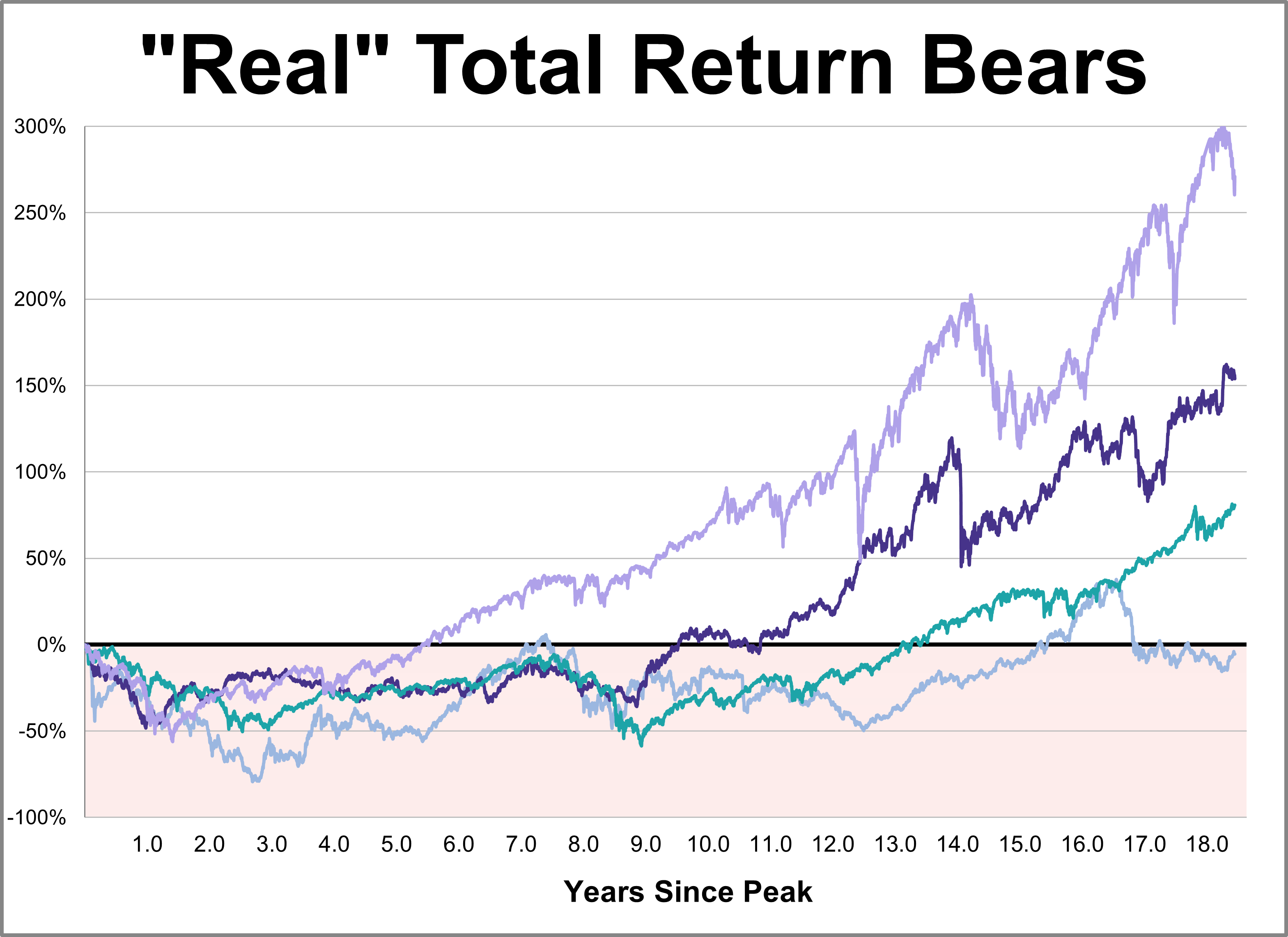
While every market downturn is unique, history offers a crucial lens for understanding recovery. This chart series provides a comprehensive overlay of the Four Bad Bears in U.S. history since the 1929 peak, comparing their recovery paths through the S&P 500's close on March 31, 2026.
Discover how abrdn’s K-1 free ETF outpaced gold and the S&P 500 in March 2026 by providing broad, tax-efficient commodities exposure.
Global equities declined during a volatile first quarter as the war in Iran roiled energy markets and fueled inflation fears that destabilized the economic growth outlook. Mounting geopolitical hazards add to existing worries around concentrated equity markets and the potential for AI to disrupt businesses.
After months of sluggish returns, Nvidia Corp.’s stock is rallying again and close to breaking out of its narrow trading range, which market technicians see as a bullish signal.
Every twist in the Iran conflict — every ceasefire bet, every missile strike, every shift in tanker traffic — shows up almost instantly in a $65 million exchange-traded fund that most investors have never heard of.
The debate over whether artificial intelligence has entered bubble territory has reached a fever pitch. For this edition of Bull vs Bear, writers Nicholas Peters-Golden and DJ Shaw discuss the disconnect between infrastructure spending and software revenue.
Given the combined weight of these markets within EM portfolios, Templeton Global Investments believe incremental improvements in capital discipline could have a meaningful impact on aggregate index-level earnings quality.
On Wednesday, April 8, 2026, Morgan Stanley announced the launch of the Morgan Stanley Bitcoin Trust ETP (MSBT). As Morgan Stanley notes, the launch of MSBT marks the first time a U.S. bank-affiliated asset manager is offering a crypto ETP.
Investors are starting to understand that robotics and AI each represent an industry of industries. Not a sector. Not a theme. The foundational technology stack that every other industry increasingly depends on. In Q1, the market decided to stress-test that thesis, and the results tell a more nuanced story than the headline numbers suggest.
Cinthia Murphy, investment strategist at VettaFi, joined Nate Geraci on this week’s ETF Prime to discuss record ETF flows in the first quarter despite challenging market conditions. The industry exceeded $460 billion in total flows, a 50% year-over-year increase from Q1 2025, according to Murphy.
For centuries the so-called cannon shot rule determined who controlled the seas. The legal concept, codified by Dutch jurist Cornelius van Bynkershoek in 1702, was simple: The distance a cannonball reached from shore set the maritime boundary of a coastal state.
Last month at the Exchange conference in Las Vegas, Anna Paglia, State Street Investment Management’s chief business officer, discussed how the firm’s private credit lineup came to be and how the firm sets about developing some of its products.
At Exchange 2026, key thought leaders from firms across the country gathered in Las Vegas to share their ideas for navigating today’s macroeconomic uncertainty and the future of ETFs.
Across corporate lending markets, some investments are easier to trade and exit than others – differences that deserve particular attention today.
529 Plans are a huge part of many families' investing lives, but up until recently rarely involved advisors. Could that change?
At this point, we think the odds are very high that the Democrats win back the House in the mid-term election in November. Compared to how they did in 2024, the Democrats only have to gain three seats to take back the House.
Cybersecurity stocks have sold off this year alongside the rest of the software sector, but with artificial intelligence increasing the potential threats from bad actors, investors risk missing out on the burgeoning demand for their services.
Wall Street’s biggest ETF issuers are circling Invesco Ltd.’s Nasdaq 100 franchise, threatening to end its near-exclusive hold on the index.
Since the U.S. and Israel launched strikes on Iran on February 28, jet fuel prices in the U.S. have more than doubled. According to data from the Energy Information Administration (EIA), the year-to-date percent change in U.S. jet fuel prices stood above 120% as of the end of March.
With the conclusion of a volatile first quarter in 2026, the Amplify Energy & Natural Resources Covered Call ETF (NDIV) demonstrated the resilience of its underlying index (VettaFi Energy and Natural Resources Covered Call Index).
Gold’s recent drop from $5,600 to $4,400 is a classic liquidity story where investors are selling their most liquid winners to raise cash.
The middle is typically not where you want to be. In American sports, teams in the middle of the standings aren’t contenders for either a championship or a high draft choice. The middle seat on an airplane, subject to incursions from either side, is not very comfortable. The middle manager is accountable in every direction, empowered in none.
An Exchange conference panel explored bitcoin's evolving role, allocation tactics, and ETF structures for advisors building crypto portfolios.
Join the experts at Goldman Sachs Asset Management as they explore the current state of the fixed income market and discuss why a "set-it-and-forget-it" approach to fixed income may no longer be sufficient as investors consider actively managed fixed income ETFs to help navigate today’s environment.
With oil prices spiking and inflation concerns remaining elevated, many investors are looking for ways to diversify beyond the S&P 500. This week, Chuck Jaffe and Todd Rosenbluth, dive into the FlexShares Morningstar Global Upstream Natural Resources Index Fund (GUNR).
The debate over ETFs versus mutual funds has never been particularly useful for advisors who actually build portfolios. In practice, the question was never which vehicle is better — it was always which vehicle is better for this objective, in this sleeve, for this client. In 2026, that discipline matters more than ever.
March 2026 was a rough month for financial markets. Broad indexes experienced large selloffs, led by international stocks, though many of these still remain up in 2026. The dollar rallied strongly, breaking its year-plus downtrend.
BlackRock Inc. is setting its sights on a corner of the $13.7 trillion US exchange-traded fund industry long controlled by Invesco Ltd: tracking the Nasdaq 100 Index.
For much of the past decade, U.S. investors didn’t need much convincing to stay close to home. But according to experts at a recent AllianceBernstein (AB) Product Due Diligence Session, the tide shifted dramatically in 2025, signaling a “new dawn” for non-US stocks.
Amid hopes that the conflict in Iran will soon de-escalate, stocks rallied in recent days. This provided some much needed relief for the growth-heavy Nasdaq-100 Index (NDX). However, advisors and experienced investors know that things can change in a heartbeat.
Markets often react sharply to geopolitical developments, but just as often, they overreact. Investors today are grappling with heightened global tensions, rising oil prices and uncertainty around central bank policy. The key question is whether these risks meaningfully alter the economic outlook or simply create short-term volatility.
Exchange-traded fund issuers are shutting new products at the fastest pace in years as competition for investor money intensifies.
March 2026 ETFs: Investors pivot to safety with $29B in short-term bonds and a record $5B in Energy as Tech faced a Q1 recalibration.
Income ETFs using options have been one of the biggest categories in recent years. As global volatility has risen, advisor clients and investors of all kinds have clamored for some added income.
A look at ETF flows for the month of March suggests caution is back in vogue. Fixed income ETFs showed serious muscle in the asset gathering race last month, capturing nearly 45% of net creations.