It has now been over three years since GMO launched our Small Cap Quality Strategy in September 2022. During that period, the world has shifted, and we have navigated unexpected market conditions.
Every March people around the country start talking about their brackets. Most are referring to their basketball tournament bracket, hoping to predict the winners and maybe earn some office bragging rights.
Unilever Plc’s Fernando Fernandez haslucked out by selling the company’s food businesses, including Hellmann’s mayonnaise and Knorr stock cubes, to McCormick & Co. But Fernandez, who’s been chief executive officer for just over a year, shouldn’t squander his good fortune; he needs a clear vision for what comes next.
Systematic equity investing is a way to invest in the stock market using clear rules and data, rather than guesswork or hunches. Instead of trying to pick stocks based on trends or headlines, this approach uses research, data, and technology to systematically identify opportunities across global markets.
Systematic indexing removes the psychological stress of timing crypto markets by allowing advisors to capture broad asset-class returns through disciplined rebalancing.
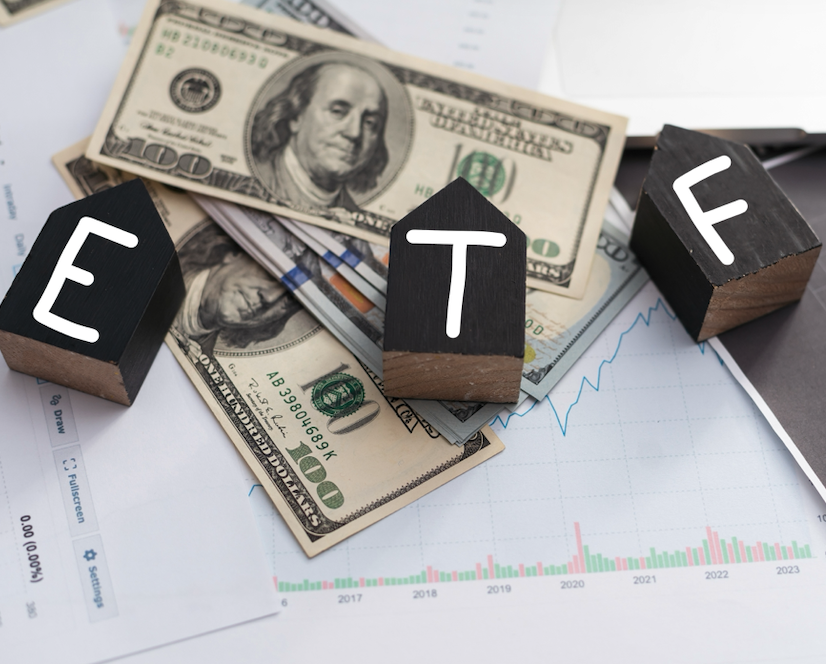
DoubleLine continues to fortify its presence in the ETF market, adding a new active fixed income solution designed for today’s complex interest rate environment. The DoubleLine Ultrashort Income ETF (DLUX) launched on NYSE Arca on April 1, marking the latest expansion of the firm’s rapidly growing ETF lineup.
How should RIAs think about advisor cash compensation? This article focuses on the salary, bonus, and benefits arrangements commonly used in the industry and typically documented in investment advisor representative (IAR) agreements.
The market environment of 2025 provided a compelling example of the benefits of multi-asset investing. Importantly, it is possible that the conditions that supported diversified, multi-asset portfolios last year may persist in 2026 and well beyond.
At ETF Exchange 2026, TMX VettaFi caught up with Dave Mazza, CEO of Roundhill Investments, to discuss the firm’s evolving strategy for ETF innovation in a market that’s continuously seeking specialized exposure.
Now that Nelson Peltz has won a surprise bidding war for Janus Henderson Group Plc, the activist investor can start to revamp the $493 billion asset manager he has circled for years.
Eli Lilly & Co.’s Zepbound is helping to solve one of the most intractable health challenges of our time: Obesity. Now, the drugmaker hopes to crack another significant public health problem: Sleep disorders.
OpenAI has completed a deal to raise $122 billion from investors at an $852 billion valuation, marking the company’s largest funding round to date by far and bolstering its costly push for more chips, data centers and talent.
Department of Homeland Security shutdown continues, and Congress considers addressing growing concern over prediction markets.
The fiat currency collapse narrative is one of the most emotionally satisfying arguments in all of financial punditry. It feels intellectually rigorous, draws on genuine history, and speaks to deep and legitimate anxieties about government overreach, monetary recklessness, and the long-term consequences of unlimited debt creation.
In a recent episode of the Money Metals podcast, host Mike Maharrey sat down with renowned precious metals analyst Jeff Clark to unpack the sharp pullback in gold prices and the dominant narratives driving market sentiment.
The United Nations (UN) warns of a roughly US$4 trillion annual shortfall in financing for its sustainable development goals—a gap too large for the public sector to fill alone.
Hedge fund activist Boaz Weinstein is on the cusp of his most significant campaign victory yet — overhauling an investment trust whose claim to fame is an early bet on Elon Musk’s SpaceX rocket company. But the beleaguered target is doing a good job of trashing the prize pot.
The weight of evidence suggests that the current equity market decline should be viewed as a short-term pullback within an ongoing, longer-term bull market. However, we are watching indicators closely for changes in global economic/market health. Below are five charts we will be paying special attention to in Q2.
The Iran war is challenging Japan’s safe-haven assets, once again forcing domestic investors to seek better returns abroad.
During the pandemic, my wife lived in constant fear that we would run short of paper products, disinfectants and other essentials. I was frequently sent out on reconnaissance missions to replenish supplies.
Stocks started the week on an upbeat note as the administration delayed a deadline to strike Iranian energy plants by five days, also announcing that the U.S. and Iran were in negotiations to end the conflict.
Join the experts at Davis Advisors and discover the methodology and strategy behind this uniquely compelling ETF, and learn how it can help your clients find results and potentially reduce risk in today’s market environment.
Nate Geraci explored defense ETFs and a historic money market launch on this week’s ETF Prime, featuring VettaFi’s Roxana Islam and ProShares’ Simeon Hyman.
I suggest looking both inward and outward to answer two central questions: “Can we afford to help without harming our own financial future?” and “Will this increase or decrease the child’s movement toward financial independence?”
Retirement savers have plenty of questions about a recent executive order that opens a path for alternative investments, such as private equity, real estate and digital assets, in 401(k) plans. One advisor shares why individuals have good reason to take pause.
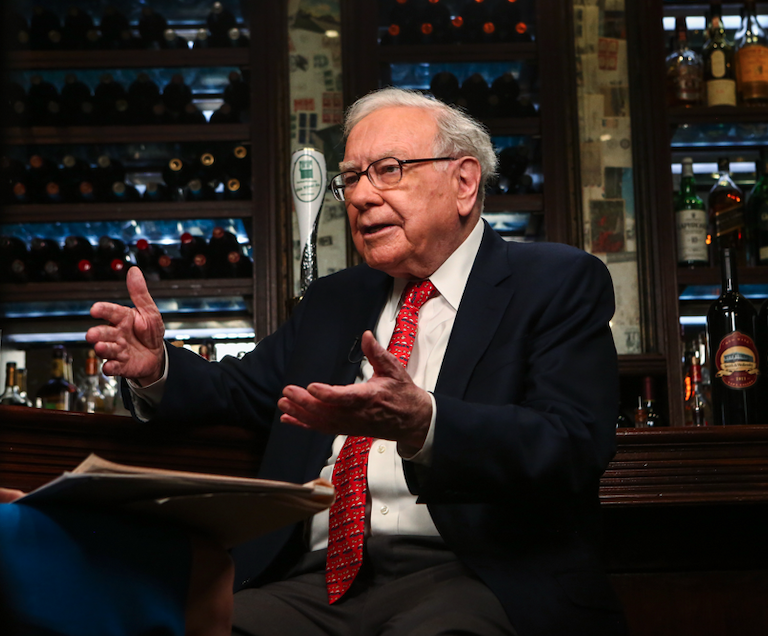
Warren Buffett cautioned that he’s seeing signs of fragility emerging in the banking system as it has become more connected to non-bank players.
On paper, Super Micro Computer Inc. is the type of company that Wall Street can’t get enough of, with soaring sales, an enviable list of partners like Nvidia Corp. and its placement at the center of the artificial intelligence boom.
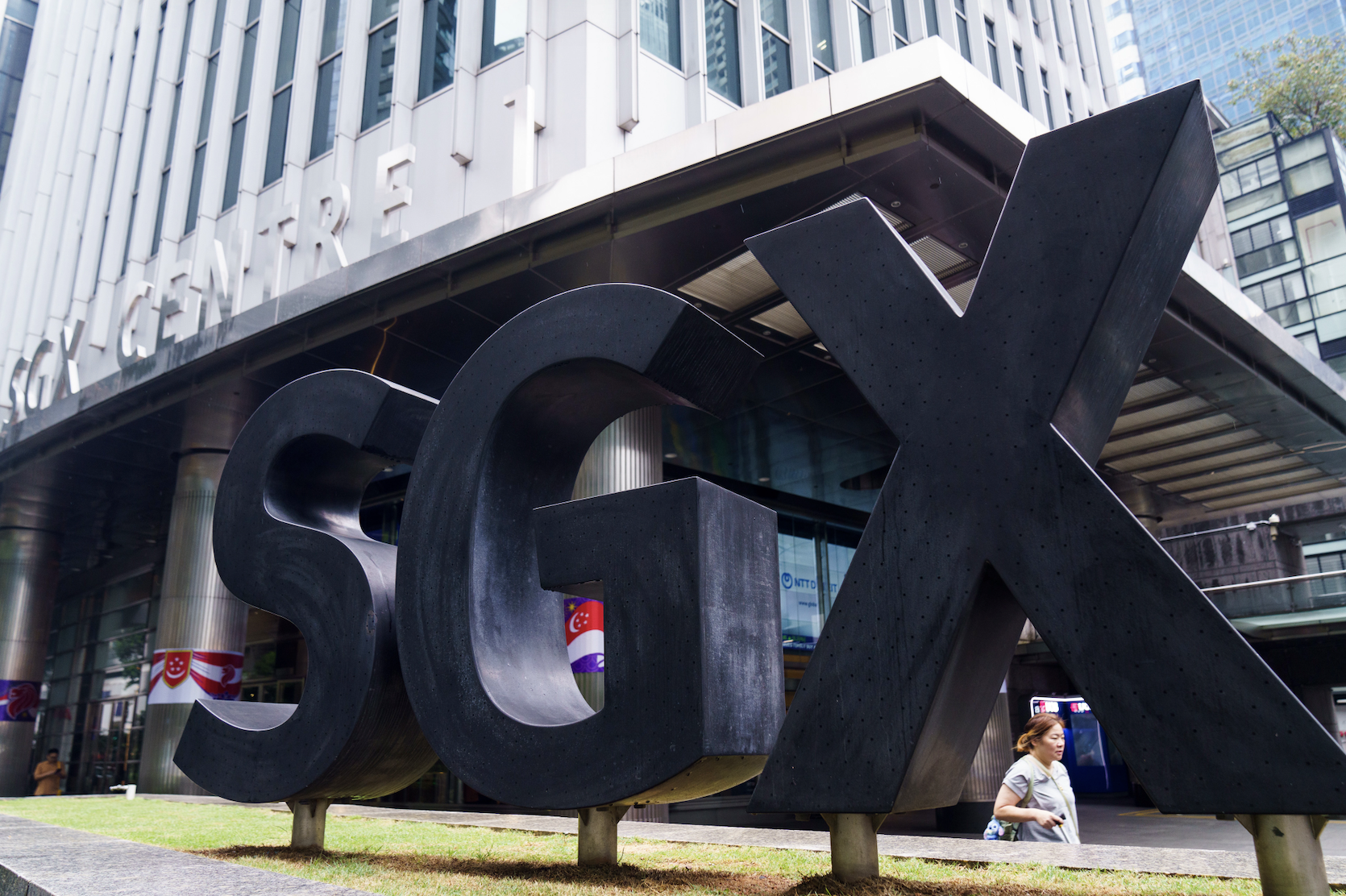
BlackRock Inc. plans to launch a fund next month focused on large Southeast Asian stocks, according to people familiar with the matter, a move supporting Singapore’s drive to boost liquidity in the local market.
Does artificial intelligence herald soaring prosperity or mass unemployment, political breakdown and Orwellian subjection? Nobody, not even AI, can honestly say. Forced to guess, I’d predict some of both.
I just returned from the Investment U conference in Las Vegas, where I presented on gold and the great digital transformation. Sentiment among investors was upbeat, despite great uncertainty in the world right now.
Gold has fallen roughly 21 percent from its all-time high of nearly $5,595 reached in late January to approximately $4,430 as of this writing, and the prevailing narrative in markets is that this correction reflects a genuine shift in the metal’s outlook
Discover why Strait of Hormuz disruptions extend beyond oil, how supply shocks are transmitting into agriculture markets, and what third-order commodity effects may mean for portfolios.
Investors have no shortage of metrics to evaluate equities, but not all measures capture the same economic reality. In an environment defined by elevated capital spending and market concentration, earnings-based measures may not fully reflect how efficiently companies convert investment into cash.
Join the experts at Measured Risk Portfolios for a product due diligence session covering the MRP SynthEquity® ETF (Ticker: SNTH).
To better understand how AI might affect the labor market and, ultimately, the economy, we’ve summarized Citrini’s bleak outlook alongside rebuttals from Citadel Securities and Bianco Research. These summaries provide a useful primer on how labor markets may adjust to the upcoming major technological changes.
The wreckage in large technology stocks that sent the Nasdaq 100 Index into a correction is flashing signs that have marked turning points for the group in the past.
Thanks to strong gains in markets over recent years, with many indices at or near record highs, the 60/40 default portfolio has quietly morphed into a bundle of expensive U.S. growth equities and credit exposures offering narrow spreads over Treasuries. In our view, such a portfolio is likely to disappoint investors by delivering low single-digit real returns.
The conflict in the Middle East has raised concerns about oil prices, global growth and market volatility. Chief Investment Officer Sean Taylor assesses the potential economic impacts of the crisis and its implications for growth and diversification in emerging markets and Asia.
Investors have taken notice of the eye-popping federal commitments to new nuclear capacity in the U.S. in recent months. Headlines have focused on massive reactor-deployment partnerships and loan authority in the hundreds of billions.
Today, Vanguard decided to join the target-maturity party, launching a suite of corporate bond ETFs designed to assist investors with bond laddering. Vanguard’s entry is significant due to its massive distribution scale in tandem with its low-cost reputation.
Heavily influenced by escalating geopolitical conflicts, last week's economic snapshot reveals a sharp erosion of confidence among consumers and investors alike.
Weight loss pills and treatments have exploded in popularity since GLP-1 drugs hit the market. From Ozempic to Wegovy, those pills have changed the lives of countless people around the world. They’ve also paid dividends to the companies that produce them.
For investors who understand this distinction, the current pullback may represent an opportunity rather than a warning. Short-term sentiment may dominate headlines, but long-term fundamentals continue to point in a very different direction.
The actively managed fund charges a 0.65% expense ratio and uses an options overlay designed to generate income while managing volatility. Energy makes up 45.87% of the fund’s sector allocation, followed by information technology at 25.83%, industrials at 16.43% and utilities at 11.87%, according to the factsheet.
As the ETF industry witnessed expansive growth during the past decade, providers have been engaging in a fee war as competition heats up. Industry giants like Vanguard and BlackRock have slashed expense ratios to near-zero, but that era of fee compression could be reaching an inflection point.
Franklin Templeton is partnering with Ondo Finance to offer tokenized versions of its ETFs that trade around the clock through crypto wallets, bypassing the brokerage accounts and limited trading hours that have defined fund investing for decades.
Eve oversees dozens of brainiac office hands; monitors countless earning calls; keeps tabs on CEOs; parses corporate filings; conducts due diligence; brainstorms stock picks.
Energy cycles have a way of rewarding investors who show up early, while punishing those who assume the next upturn will look exactly like the last one. Supply disruptions caused by the war in Iran that began just under a month ago have upended markets globally, with oil markets taking center stage.
Bitcoin is now less volatile than some Magnificent 7 stocks, but it's still capable of steep, prolonged declines.
Many people forget that gold was in a bull market in early 2008 but suffered a significant selloff at the onset of the financial crisis when the yellow metal fell 32 percent, giving up about 40 percent of its previous bull market gain. Gold then took off and soared by over 153 percent over the next few years.