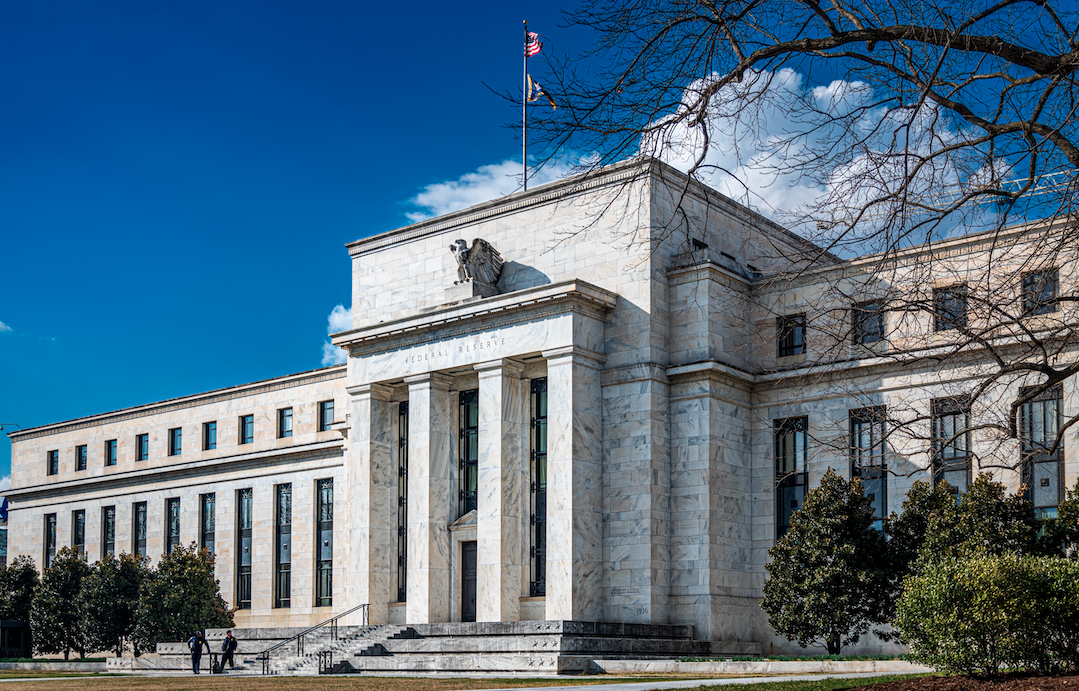
The U.S. Federal Reserve (Fed) cut interest rates by 0.25% today in a decision widely expected by investors. More notably, the central bank’s forecasts reveal a committee starkly divided on the path forward for rates.
For years, private credit firms have focused on financing private equity buyouts or closely held companies that had limited access to capital. Now, they are zeroing in on their next frontier: Large public companies that want to diversify their funding mix.
Vanguard continues to bolster its active ETF lineup with a new, high yield fund — the Vanguard High-Yield Active ETF (VGHY). It’s the first high yield active ETF from Vanguard, bringing their current active ETF roster to nine funds.
Hearts, Minds & Wallets: The Thin Book That Closes Gigantic Deals, a profound new book from Jennifer Morgan, presents itself as a practical guide for professionals to communicate more effectively. As it says on the tin, it is a thin book that provides effective ideas and methodologies for closing deals. However, its true value transcends that because it is about so much more.
The Federal Reserve resumed its rate-cutting cycle at the September meeting, lowering its policy rate by 25 basis points (bps) to a range of 4%–4.25%, after being on hold since its previous cut in December. The Fed also signaled a less restrictive stance to come amid mounting labor m
Labor concerns and persistent inflation have the Fed penciling in up to two additional cuts by the end of 2025.
Something unusual is happening in shareholder activism. The grandmaster of the craft, Elliott Investment Management, has set out a strategy to push shares in US consumer icon PepsiCo Inc. up 50%.
Advisors and investors aren’t the only ones looking to pick up exposure to bitcoin these days. Even the most old-school and traditional firms on the market are starting to consider building exposure to the cryptocurrency.
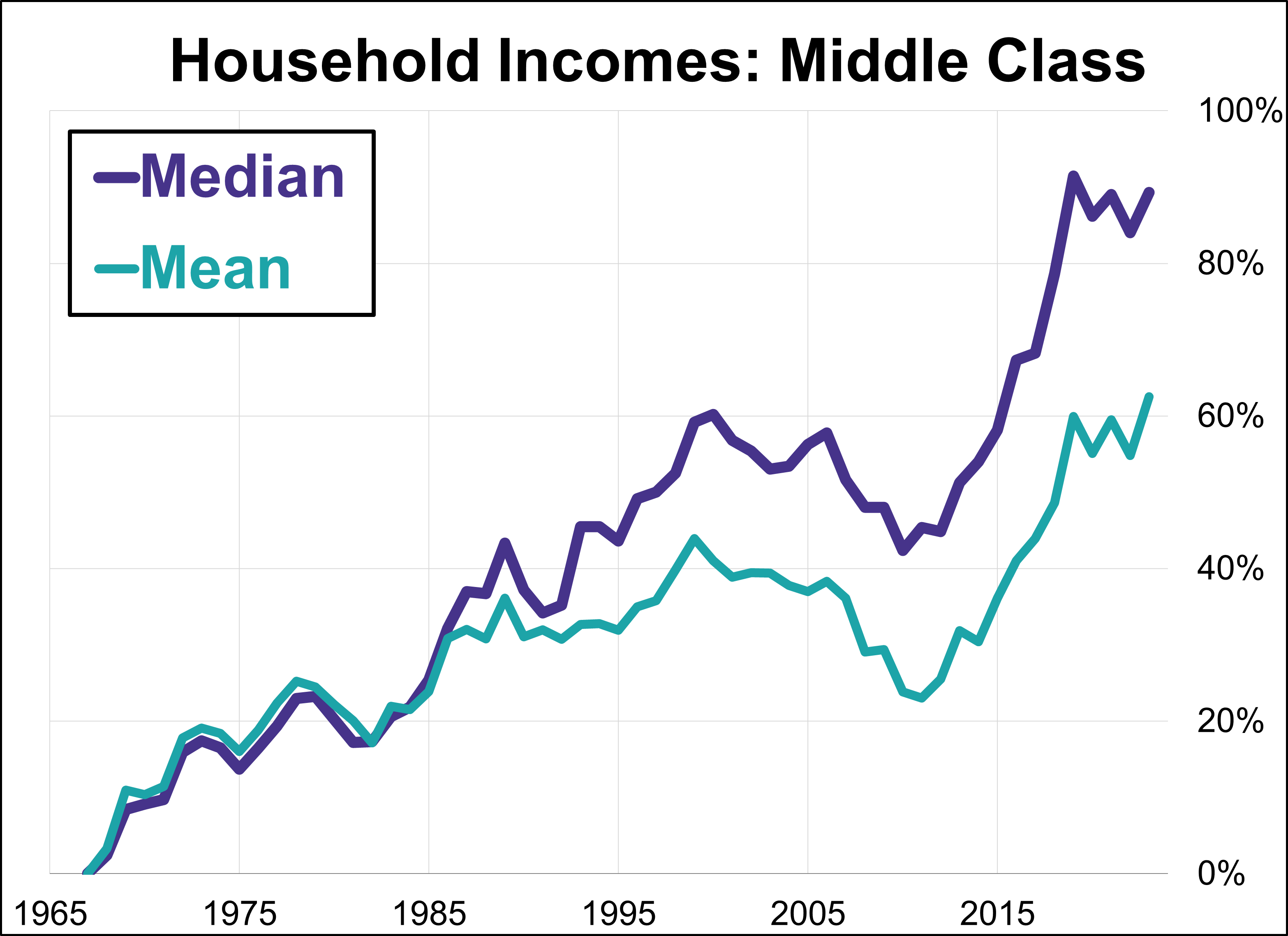
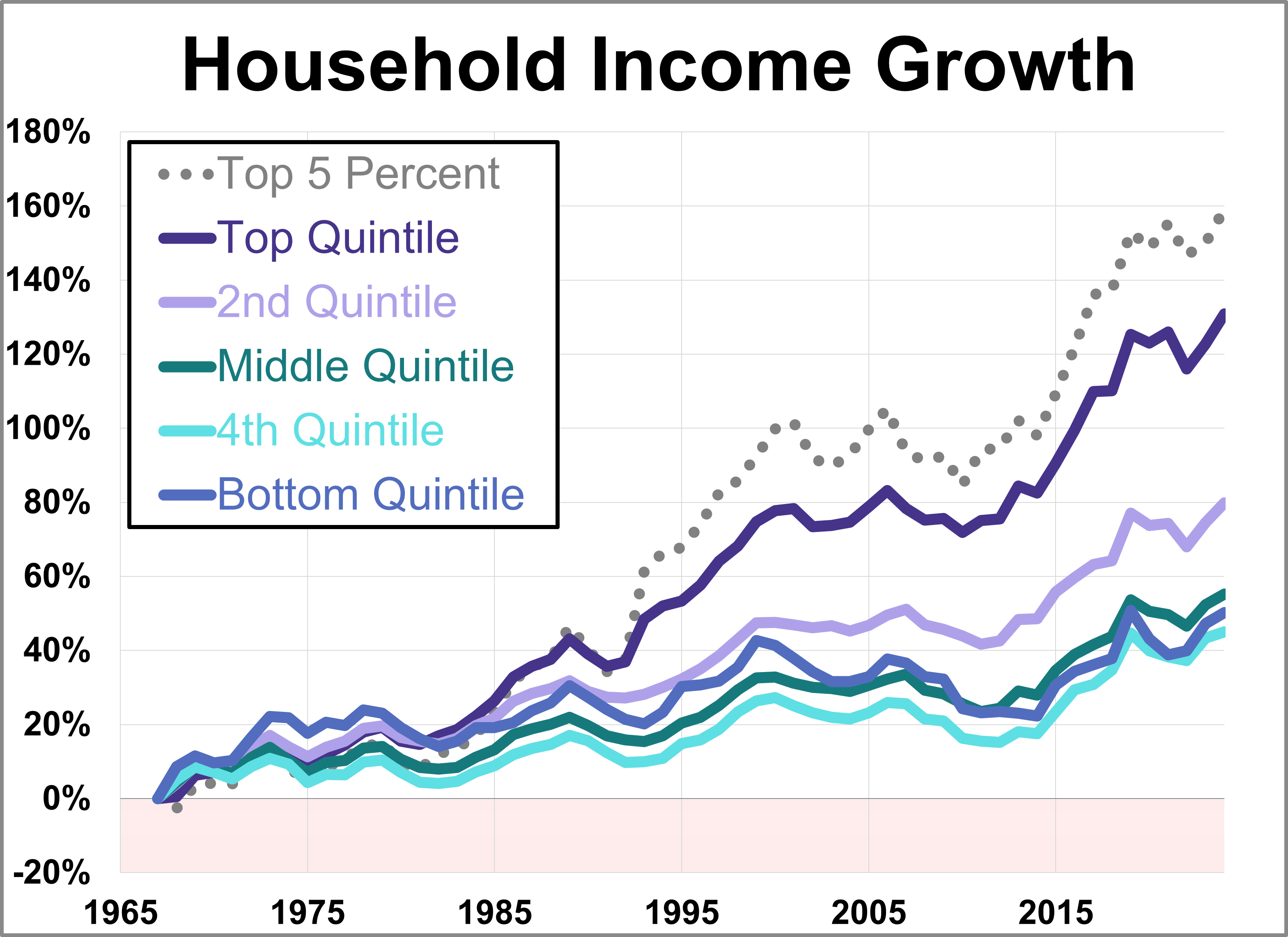
The median household is the statistical center of the Middle Class. Let's take a closer look at the Census Bureau's latest annual household income data with a focus on middle class income. In this update, we'll focus on the growing gap between the median (middle) and mean (average) household incomes across the complete time frame of the Census Bureau's annual reporting from 1867 to 2024.
A call between US President Donald Trump and Chinese President Xi Jinping is underway, in a discussion that promises to determine the fate of TikTok — and potentially ease trade tensions between the world’s two biggest economies.
Talking to the former Fox News host Tucker Carlson recently, Altman, the chief executive officer and co-founder of Open AI, was only half-joking when he said he hadn’t “had a good night’s sleep since ChatGPT launched” in November 2022.
The US Securities and Exchange Commission cleared the way for the first exchange-traded fund bundling a basket of cryptocurrencies, marking a breakthrough for the industry after a swath of approvals largely limited to Bitcoin and Ether.
The Fed lowered rates by a quarter of a percentage point (0.25%) at its September meeting, citing increased risks to employment; Powell emphasized ongoing inflation and a divided Committee, with future moves dependent on incoming data.
Target date funds represent the investment industry's best thinking about how people should invest for retirement.
The Federal Reserve cut interest rates today by 25 basis points (bps), following months of speculation about inflation, politics, and economic data.
Although the Fed does focus on its dual mandate of employment and inflation, there is no question that the primary focus right now is on the employment side of the equation, especially given the recent stalling out in new job creation.
As expected, the Federal Reserve cut its short-term interest rate, citing concerns about slowing job growth. Where Fed policy goes from here is less clear.
This symposium brings the brightest minds in the ETF and mutual fund industry together for panel discussions spanning nine critical fixed income topics.
The first and largest MLP ETF hit a key anniversary. Learn why this ETF stands out in a crowded market.
Nvidia Corp. agreed to invest $5 billion in Intel Corp. and said the two will co-develop chips for PCs and data centers, a surprise move to help prop up an ailing archrival that sent Intel shares soaring.
Artificial intelligence is poised to revolutionize healthcare. Its headline-grabbing potential in drug discovery is still years from materializing. However, its impact is already tangible in diagnostics and treatment selection. Leading this immediate charge is Tempus AI, a company focused on structuring the complex data needed to make personalized patient care a reality.
The U.S. Federal Reserve today implemented an interest rate cut of 25 basis points. The question remains: Just how aggressive will they be the rest of the year and beyond? That may cause anxiety for fixed income investors who have long been accustomed to higher yields in an environment of persistent, sticky inflation.
EQT AB is considering a US initial public offering of waste management firm Reworld that could raise $1 billion or more, according to people familiar with the matter.
Wall Street took profits in high flying technology stocks on Wednesday, rotating into cheaper corners of the market after the Federal Reserve delivered a widely expected interest rate cut under what Chair Jerome Powell described as an “unusual” situation of emerging labor-market weakness while inflation remains elevated.
The world’s largest publicly listed hedge fund is breaking ranks with tradition — and stepping into the ETF arena under its own name.
Over the last decade many of those advantages have been eroded. Pounding the pavement, smiling and dialing were no longer necessary. Because those hard-earned insights were being emailed, tweeted, livestreamed, YouTubed, podcasted and more.
Cinthia Murphy, Investment Strategist at VettaFi, recaps the ETF landscape so far in 2025 and shares her outlook for the rest of the year. Daniel Noonan, Executive V.P. and Head of the Wealth Management Consulting Group at Cohen & Steers, discusses the firm’s entry into the ETF space, the growing momentum behind active management, and ETF strategies focused on real assets and alternative income.
Last week's economic data presented a challenging picture for the U.S. economy with key inflation reports delivering conflicting signals and a timely labor market indicator added to the narrative of a softening labor market. Read through the major economic news from the week of September 8th - 12th.
With a few exceptions, the price of bitcoin has mostly stayed above the $100k marker throughout the summer. Better yet, the cryptocurrency’s price has continued to hit all-time highs as the summer has progressed.
What a year it’s been for gold investing! As we approach the end of the third quarter, gold prices are up nearly 40% year-to-date, triggering upward forecast revisions by big firms, and attracting investor dollars on its way up.
A blistering rally in Chinese technology shares accelerated on Wednesday as renewed bets on artificial intelligence sent a key gauge to the highest in nearly four years.
Gold dipped from Tuesday’s record as most asset classes saw muted moves ahead of the Federal Reserve interest-rate decision later today.
Bloomberg’s gauge of the dollar approached its lowest level since March 2022 ahead of the Federal Reserve decision, where policymakers are expected to resume cutting interest rates to prop up a weakening labor market.
The Census Bureau recently released its annual report on household income data for 2024. The mean (average) household income for the middle quintile rose 4.5% to $84,390. Let's take a closer look at the quintile averages, which date back to 1967, along with the statistics for the top 5%.
According to our IPO data, licensed from IPOScoop, six companies IPO’d last week, kicking off with the long-awaited debut from Swedish payments company Klarna (KLAR) on Wednesday.
Nick Goetze discusses fixed income market conditions and offers insight for bond investors.
Greater mega-cap stock exposure carries significant upside risks, but concentration can also work against investors—helping make the case for diversification in portfolios.
The U.S. economy in late 2025 presents a complex but increasingly coherent picture. Labor market dynamics, trade policy uncertainty, and evolving monetary conditions are each contributing to a recalibration of the economic landscape.
In a year that has seen foreign equities ETFs stand out so strongly, emerging markets may be somewhat underrated. Broad, global equities strategies — especially those that exclude U.S. firms — have done very well as investors have looked abroad to diversify.
Wall Street traders gearing up for the Federal Reserve decision refrained from making big bets as they awaited clues on the path of rates that will shape the outlook for markets over the next few months.
Technology has made customization operationally viable across entire books of business. But the real opportunity lies in how it reshapes the advisor/client relationship. When complexity is handled behind the scenes, advisors can focus on deeper conversations, clearer guidance, and lasting alignment.
In spite of what appeared to be relatively good data, many polls throughout the 2024 election cycle showed more than half of all voters rated the economy as “poor.” That left the Biden/Harris team often wondering why they couldn’t get credit for what official statistics said was a robust economy.
Gold mining equities are having a blockbuster 2025. Prices for the precious metal have hit one all-time high after another, and the miners who pull it from the ground are rewarding investors with some of the best returns in the market today.
VettaFi’s Head of Research Todd Rosenbluth discussed the Thornburg Multi Sector Bond ETF (TMB) on this week’s “ETF of the Week” podcast with Chuck Jaffe of “Money Life.”
For investors who want some chaos protection, something in their portfolio that’s not correlated to U.S. or developed market stocks and bonds, a managed futures strategy could be the ticket.
Until this year, U.S. stocks had consistently been the best-performing asset class over the past 15 years, so diversification did not work. And as a result of that runup, the U.S. stock market became very expensive. However, this year, diversification outside the U.S. into foreign stocks has added value, and gold is shining very brightly.
Clients work a lifetime for financial freedom. Once retirement comes, they often have a large nest egg to spend. However, there can also be a huge fear of spending the portfolio down.
Gold rose near a record high as traders geared up for an anticipated easing of the US Federal Reserve’s monetary policy this week and looked for clues on further rate cuts this year.
A key question for investors this week is whether Federal Reserve officials push back against market bets on a series of interest-rate cuts extending into next year.