Get ready each week with high-conviction insights that go beyond media headlines.
Affordability and the cost of living have become frequent topics of conversation. Costs rose, but incomes did not immediately keep pace. The rate of inflation has moderated, but consumers remain sensitive to high prices, worried they are falling behind.
President Trump has announced his intention to nominate Kevin Warsh to become the next chair of the Federal Reserve Board of Governors. We believe Warsh will be confirmed by the Senate and serve as an effective, thoughtful Fed chair. He brings intriguing ideas on ways to change and ideally improve how the Fed operates.
LPL Research examines how the Fed is entering 2026 amid constrained conditions and as growth and inflation meet an unsustainable fiscal trajectory.
Todd Rosenbluth, Head of Research at VettaFi, and host Nate Geraci walk through five of the most noteworthy ETF flow stories so far this year. Chris Getter, Managing Director and Portfolio Manager at Simplify Asset Management, unpacks private credit and the Simplify VettaFi Private Credit Strategy ETF (PCR).
Prediction markets will not replace traditional financial products. That is not their purpose. They do, however, influence client behavior in ways firms cannot ignore.
Precious metals, cryptocurrency, and currency speculation appeal to fear-driven parts of us that want certainty, protection, or a shortcut to wealth. Unfortunately, for most investors, that promise is never fulfilled.
For years, advisors haven't had the tools to offer comprehensive estate planning. AI changes what's possible. You're not just managing their portfolio; you understand the client’s entire financial life — their business, their family dynamics, and the legacy they want to leave behind.
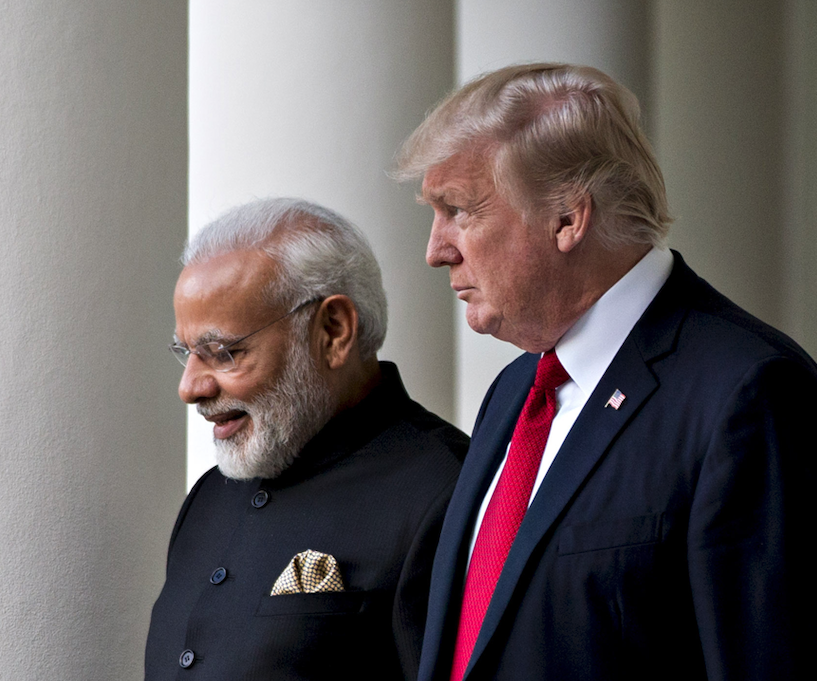
President Donald Trump and Prime Minister Narendra Modi took a major step to reset fractured ties with a surprise deal on Monday to slash tariffs, bringing much-needed relief to India’s economy.
Artificial intelligence tops the investment priority list for family offices globally, a survey from JPMorgan Chase & Co.’s private bank shows, though allocations lag and remain concentrated in public equities.
A common proclamation made by tech leaders is that while artificial intelligence will destroy jobs, it will also create many new ones. But what kinds of new careers will AI spark? And, more importantly, will they last?
President Donald Trump formally announced plans to launch a $12 billion critical minerals stockpile, in his latest effort to aid manufacturers while minimizing reliance on Chinese rare earths.
Since ChatGPT burst onto the scene in 2022, artificial intelligence (AI) has moved from science-fiction to reality. For many, AI has become a necessity. The transformation has been swift. Nearly every company now wants to integrate generative AI into their business model, while governments are scrambling to develop sovereign AI infrastructure.
January reinforced our key theme for 2026 – returns must be earned. Markets moved beyond the mag 7 as solid economic growth, a more patient Federal Reserve, and widening market leadership rewarded disciplined diversification. Gold’s parabolic rally and violent reversal showed what happens when discipline breaks down.
Climatically, Europe has been fortunate: its winter has been moderate so far. But Europe’s need for fuel remains substantial, and the cooling of relations between the U.S. and the European Union (EU) may make it more difficult to keep EU homes and the EU economy warm.
February arrives quickly, and for many high-net-worth individuals and families, tax preparation may still be sitting on the to-do list. If your financial life includes multiple income streams, investment accounts, business interests, trusts, or philanthropic strategies, tax season is not something to rush.
Warren Buffett has a great line on how hard it is to pick winners when major industrial change is afoot. “What you really should have done in 1905 or so, when you saw what was going to happen with the auto, is you should have gone short horses,” the Oracle of Omaha once said.
The dollar finished the month down 1.3% for a litany of reasons, including our progressively nastier spat with Canada and the Trump administration's insistence on liberating Greenland.
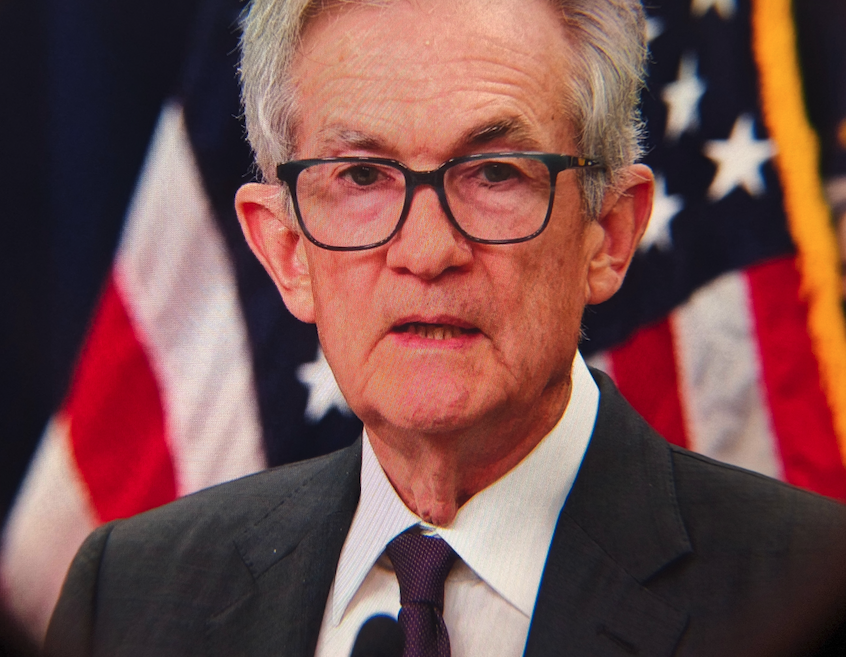
This week’s press conference by Federal Reserve Chair Jerome Powell was one of the most consequential of his tenure at the helm of the Federal Reserve (Fed).
President Trump finally made his pick for Fed Chair and it is Kevin Warsh. A Wall Street Journal editorial said Warsh has been “the leading voice in public life for reforming the Fed.”
Headline whiplash returned to US equity markets last week, but this time the drama wasn't geopolitical. On Thursday, the tech-heavy Nasdaq fell 1.3% as the market digested mixed results from some Magnificent Seven earnings reports.
The ETF industry has carried its record-breaking momentum from 2025, surpassing $100 billion in flows before the end of January.
No one knows what the future holds — especially not with burgeoning technologies such as AI. The best opportunities in AI may not be in today’s high-fliers but in lesser-known companies — some of which may still be private or not yet formed.
Joel Mokyr has made a valiant and mostly convincing effort — deeply researched and extensively documented — at explaining the Great Enrichment. His Nobel Prize is not only richly deserved but long overdue.
The concepts underlying our suggestions are straightforward, grounded in basic portfolio theory, and eminently practical. Most importantly, they align the committee’s focus with the endowment’s true objective: maximizing the sustainable resources available to beneficiaries over the long run.
In this episode of ETF of the Week, Chuck Jaffe sits down with Todd Rosenbluth, Head of Research at VettaFi, to break down why this "computer-enhanced" active fund is outperforming its peers and its benchmark by massive margins
Crypto’s latest downturn looks different on the surface. There are no spectacular scandals, no bankrupt exchange, no regulatory crackdown. Yet for the industry’s biggest trading platforms, the damage is starting to look uncomfortably familiar.
US stocks advanced on Monday after stronger-than-expected manufacturing data outweighed lingering questions about the interest-rate outlook following President Donald Trump’s decision to pick Kevin Warsh as the next Federal Reserve chair.
Money managers at BlackRock Inc., Bridgewater Associates and Pacific Investment Management Co. are shoring up their portfolios against a fresh bout of inflation.
Reality has a way of catching up with theory eventually, and now it has for Japan, whose long-term bond yields are rising as the yen is depreciating. The Japanese experience, it turns out, is not an excuse to run up lots of debt. It is a cautionary tale.
There are calls in Europe to “sell America” and invest that money at home in response to political tensions over Greenland.
Momentum investing often looks Wile E. Coyote chasing the Road Runner off a cliff. Investors rush into hot trades, and instead of stopping at the cliff's edge, enthusiasm and a disregard for fundamentals expose their portfolios to unexpected risk.
Mainstream expectations, those from Wall Street, economists, and corporate strategists, have congealed around a bullish economic outlook for 2026. Most forecasts project stronger economic growth, with contained inflation, and continued investment in technology and capital expenditure.
In a move that underscores the relentless downward pressure on investment costs, Vanguard announced that it has slashed fees for 84 mutual fund and exchange-traded share classes. These reductions, spanning 53 different funds, represent nearly $250 million in estimated savings for investors in 2026 alone.
Today we’re going to explore this “affordability” issue, looking at economic facts, survey data and simple intuition. As you’ll see, it’s not as simple as some people think. I also make a quick comment about the appointment of Kevin Warsh as Fed chair at the end.
Even though it’s still early days in the age of artificial intelligence (AI), it sometimes feels like this innovation has been around forever. In that short time, the pace of change has been staggering.
With rising geopolitical tensions, sharp market swings and Congress at odds over Department of Homeland Security funding – likely to cause a brief government shutdown – there’s no shortage of factors influencing sentiment. Here, we address some of the most prominent headlines shaping sentiment and offer our perspective.
At its January meeting, the U.S. Federal Reserve (Fed) voted to pause its rate-cutting cycle, a move that aligns with recent signs of stabilizing labor markets and easing inflation pressures.
Advisors who understand the latest industry trends can better position their practices for sustainable growth and long-term success. Let’s explore the top trends driving RIA growth in 2026, from consolidation and digital client acquisition to expanded services and the rising influence of private capital.
Investing in common stocks is rarely a smooth experience. Stock prices fluctuate daily, sometimes dramatically, driven by market sentiment, economic data, and short-term news. Even company earnings, while more stable than prices, can experience cycles and periods of volatility.
Municipal credit remains strong in 2026 with high reserves and sector resilience. Still, policy changes and economic pressures ahead warrant attention.
The final week of January saw a stark divergence between official policy and the American consumer's outlook. While the Federal Reserve maintained a "solid" view of economic growth, the public’s mood plummeted to a decade-low as sticky amid sticky wholesale inflation.
Top strategists joined VettaFi on January 29 to provide data-backed forecasts on the trajectory of global interest rates, persistent inflationary pressures, and the resilience of corporate earnings. Advisors came away from the event with the tools needed to mitigate risks stemming from sudden regime shifts while capturing alpha in a fragmented market.
A sharp productivity jump shows firms doing more with fewer workers. But the upside surprise also highlights growing risks about how these gains affect the workforce.
In our view, 2025 reinforced a familiar conclusion that tax management remains as relevant as ever, even though tax policy may no longer be a moving target.
For years now, advisors and investors alike have been pouring significant attention — and inflows — into the broad spectrum of fixed income ETFs.
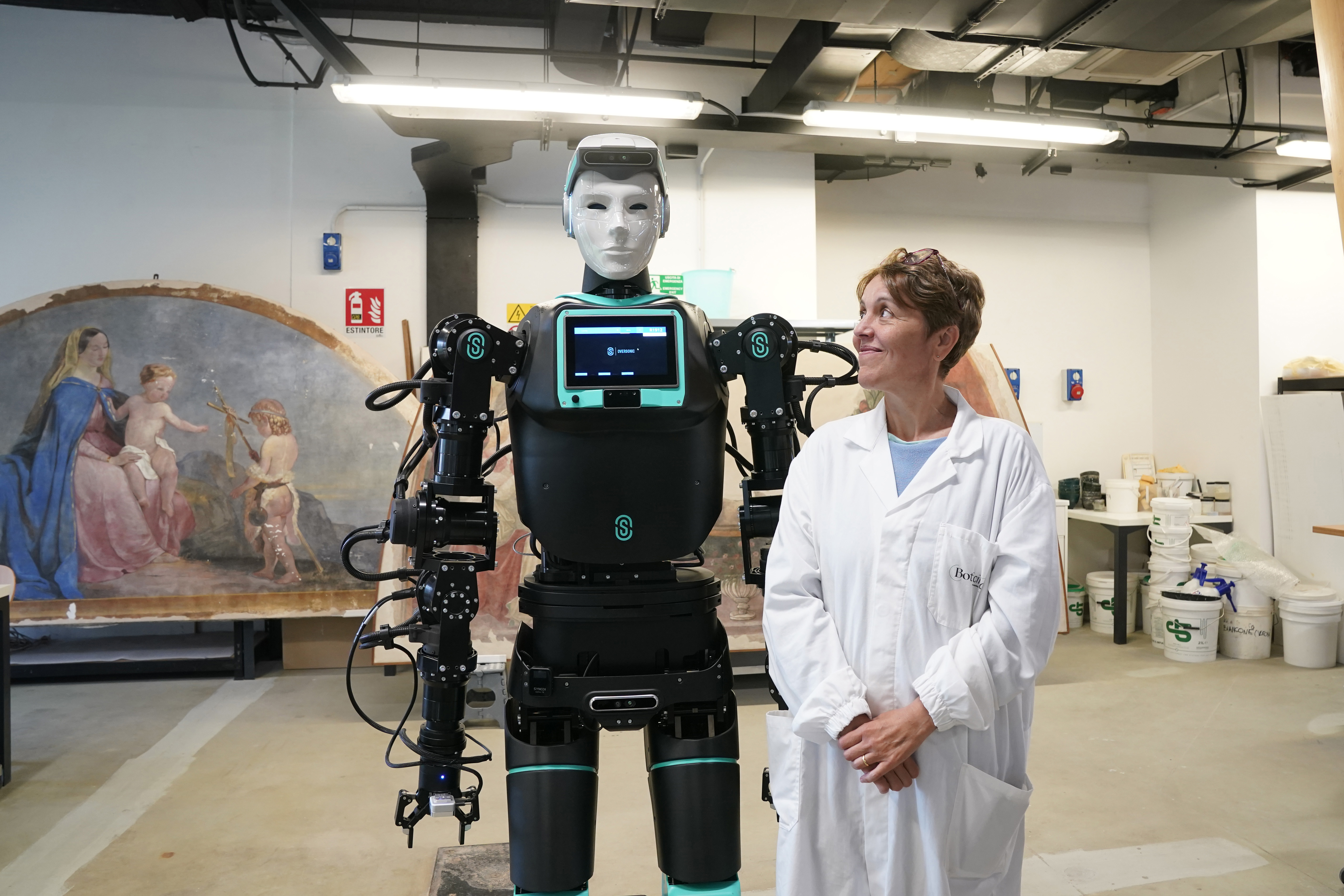
VettaFi recently sat down with Morten Paulsen, head of research for robotics & machinery at CLSA, to discuss the transition of physical AI into a tech-driven industrial up-cycle. Paulsen projects that persistent U.S. labor shortages will drive domestic robot shipments toward a historical high of 40,000 units in 2026.
As political pressure on the Federal Reserve intensifies and markets ponder the nomination of a new Chair, understanding this chain of risk is increasingly important for investors. Equity valuations are heavily affected by expectations for long-term cash flows, along with the interest rates and risk-premiums that drive how much investors are willing to pay for those future dollars.
At GMO, we have always defined a bubble as a two-standard deviation divergence of the price of any asset class above its long-term real price trend. The U.S. stock market has now been in bubble territory for a prolonged period. Sooner or later, the bubble will burst and the price will return to its historic level.
Buying a house is expensive enough these days. But the costs of owning one have been rising, too — not least because of soaring insurance premiums. As policymakers of both parties have made housing affordability a top priority in recent years, they’ve done far too little to address this crisis in the making.