Tariffs, inflation, geopolitical tensions, and other factors continue to feed into market uncertainty for even safe haven assets like Treasuries. As such, investors could be giving riskier emerging market (EM) bonds a second look.
529 plans offer tax-free savings for a variety of education expenses, including K-12 tuition, vocational training and apprenticeships. Our Bill Cass discusses the trends in 529 savings plans.
In a year dominated by multimodal marvels and reasoning breakthroughs, perhaps the most economically significant shift in AI went largely underplayed: cost collapse.
The April Consumer Price Index (‘CPI’) report was released last Wednesday and gave the Federal Reserve another positive data point in its inflation fight, as did Thursday’s negative Producer Price Index (‘PPI’).
This year’s turbulent market environment underscores the value proposition of actively managed strategies. Active ETFs may offer diversification benefits, a responsiveness to changing market environments, and a depth of fundamental research above and beyond that of their passive peers.
The shifting change in market leadership to international outperformance may call for a portfolio review to assess overexposure risks.
Innovative ETFs are making waves as investors look for fresh ways to navigate a market marked by rapid growth and ongoing volatility.
With the latest Target earnings report coming in weaker than expected, advisors might want to reassess how they gain exposure to the company.
Bitcoin options traders are setting their sights on much higher prices while the largest cryptocurrency flirts with its fairly recent all-time high.
Nvidia Corp. chief Jensen Huang blasted the “failure” of US restrictions intended to help contain China’s technological ascent, calling on the White House to lower barriers to AI chip sales before American firms cede that market to up-and-coming rivals such as Huawei Technologies Co.
When CFRA’s Paige Meyer slapped a “sell” rating on UnitedHealth Group Inc. in February, she was the lone analyst out of 30 tracked by Bloomberg with a negative view of the company.
US equities are likely to drive the global rally in the coming months on an improving corporate earnings outlook and a weaker dollar, according to cross-asset strategists at Morgan Stanley.
This isn’t about selling — at all. It’s about problem-solving and helping — it’s about offering an opportunity to change someone’s life. Remember, they can always say “no.”
With mainstream investment products increasingly finding a second home on the blockchain, it’s a good time to ask what role central banks would play if everything they have learned while policing double-entry bookkeeping over the last 350 years becomes irrelevant.
Most investors would jump at the chance to add more money to their portfolio, but they often fail to consider the hidden costs associated with it.
As investors, we need to step back and examine the history of previous debt downgrades and their outcomes for the stock and bond markets. Let’s start with what Moody’s rating agency stated about its rating change.
Moody’s Ratings has followed S&P Global Ratings and Fitch Ratings in stripping the US of its top-notch credit score, lowering it one level to Aa1.
In an investment landscape dominated by market-cap-weighted benchmarks, the Barron’s 400 ETF (BFOR) offers a different path through GARP.
Globalt remains conservatively positioned with an underweight in global equities, and neutral duration in fixed income.
Tidal’s Mike Venuto discusses the latest in ETF innovation, from 351 conversions and the ETF share class structure to options-based strategies and leveraged products. VettaFi’s Kirsten Chang offers a tour around the world of fixed income ETFs, highlighting recent flows, new launches, and under-the-radar success stories.
Alphabet Inc.’s investors are looking to this week’s developer conference to see if the company can reset the narrative amid fears that its long-standing market dominance is on shaky ground.
Goldman Sachs Group Inc. is looking to open more offices and boost headcount in the Middle East, joining Wall Street peers expanding in the region to tap its deep pools of capital.
Traders plowed cash into exchange-traded funds that buy emerging market stocks for a fourth straight week as risk-appetite grew, turning flows this year positive for the first time since early April.
By incorporating growth CDs into a diversified retirement plan, retirees can take advantage of equity market growth, protect their lifestyle, and avoid the fear of market downturns diminishing their savings.
President Donald Trump’s first overseas trip since returning to the White House is turning heads across the aerospace & defense and semiconductor industries.
The signal of announcing trade pacts is an important start.
The geography of employment in the US is being shaped by two distinct trends. The first is low levels of housing churn and, therefore, interstate migration, a normal part of the business cycle that should eventually turn around.
Recent revisions to the IMF’s World Economic Outlook reflect a sobering message: the world economy is entering a more volatile and fragmented era.
Bitcoin was launched in 2008. It was the following year when it was initially used as an actual currency.
On this episode of the “ETF of the Week” podcast, VettaFi’s Head of Research, Todd Rosenbluth, discussed the Thornburg International Equity ETF (TXUE) with Chuck Jaffe of Money Life. The pair discussed several topics related to the fund to give investors a deeper understanding of the ETF overall.
Given the recent market volatility and the possibility of an adverse wealth effect, it's worth quantifying the relationship between stock returns and economic activity.
Don’t allow your middle-aged clients depending on their 401(k) plan to fool themselves. Markets can’t rescue a failure to save until it hurts. And don’t let them kid themselves that a smoother ride with bonds won’t come at the cost of increased shortfall risk.
Fisher Investments recently wrote an interesting article asking whether corporate stock buybacks affect markets.
US stocks delivered their second-best weekly gain of the year on Friday, as Big Tech fueled a rally that brought the S&P 500 Index closer to an all-time high set nearly three months ago.
Nvidia Corp. Chief Executive Officer Jensen Huang outlined plans to let customers deploy rivals’ chips in data centers built around its technology, a move that acknowledges the growth of in-house semiconductor development by major clients from Microsoft Corp. to Amazon.com Inc.
Wall Street’s emerging-market faithful are finally seeing better returns after missing out for years as US stocks soared.
The recent rally began when Treasury Secretary Scott Bessent struck a more conciliatory tone with China, saying he expected a de-escalation shortly.
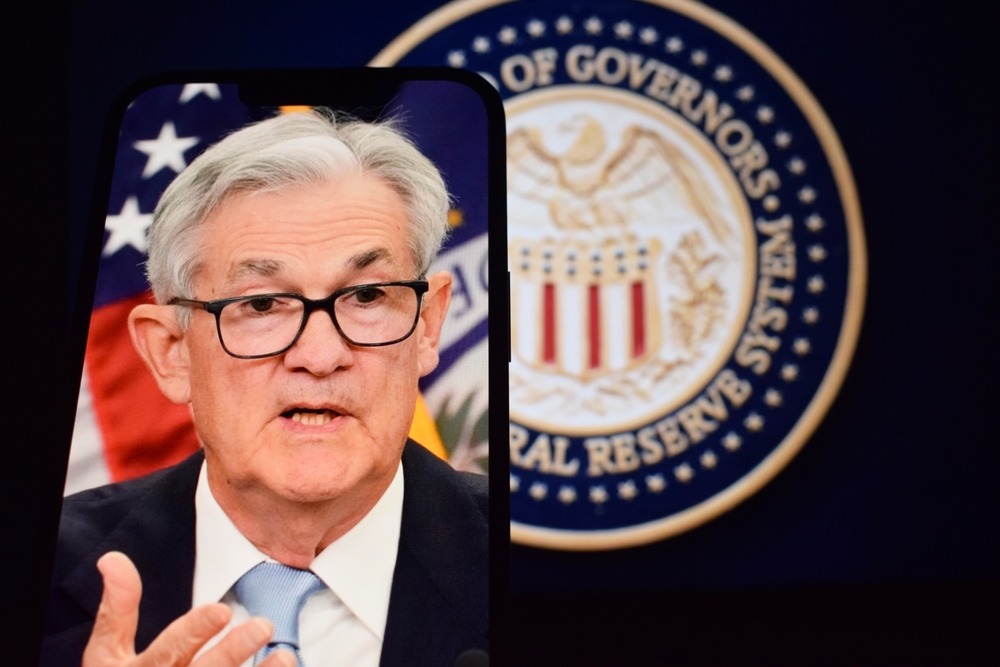
In a speech Thursday, Federal Reserve Chair Jerome Powell hinted that the central bank’s five-year framework review will focus on the particulars of its maximum employment and stable price goals, as well as efforts to communicate clearly with the public.
One of the first and most promising uses scientists envision for the rapidly evolving technology of quantum computing is a new approach to drug development.
While April brought further welcome news on the inflation front, underlying consumer fundamentals painted a more concerning picture.
Major gauges of investment-grade corporate bonds were stung by the April bout of volatility that permeated the bond market.
Technology and trends have made individual investors an important part of the private market.
While equities are on their way to recovering January 1 levels, enhanced volatility lends itself to active ETF strategies this year.
If only Europe could offer property investors the kind of buffet the US provides. For now, its listed real estate sector is fragmented and dysfunctional, the raison d’etre seemingly to create cheap takeover targets for buyout firms.
President Donald Trump said he would set tariff rates for US trading partners “over the next two to three weeks,” saying his administration lacks the capacity to negotiate deals with all of its trading partners.
Technology stocks have been buffeted by market volatility in early 2025, with shares tied to artificial intelligence (AI) hit especially hard.
So far in 2025, markets have had plenty to absorb: the Trump administration’s tariffs, Germany’s latest investment commitments, the implications of the DeepSeek moment, and escalating military conflicts (now including one on the India-Pakistan border).
Despite the announcement of new tariffs, long-term inflation expectations—as measured by the 5y5y inflation rate—have remained stable
On Monday, the U.S. and China announced they will temporarily suspend the high import tariffs they imposed on each other earlier this year.
Alternative ETFs, which package exposures like commodities and digital assets, have experienced record-breaking adoption in the past year.