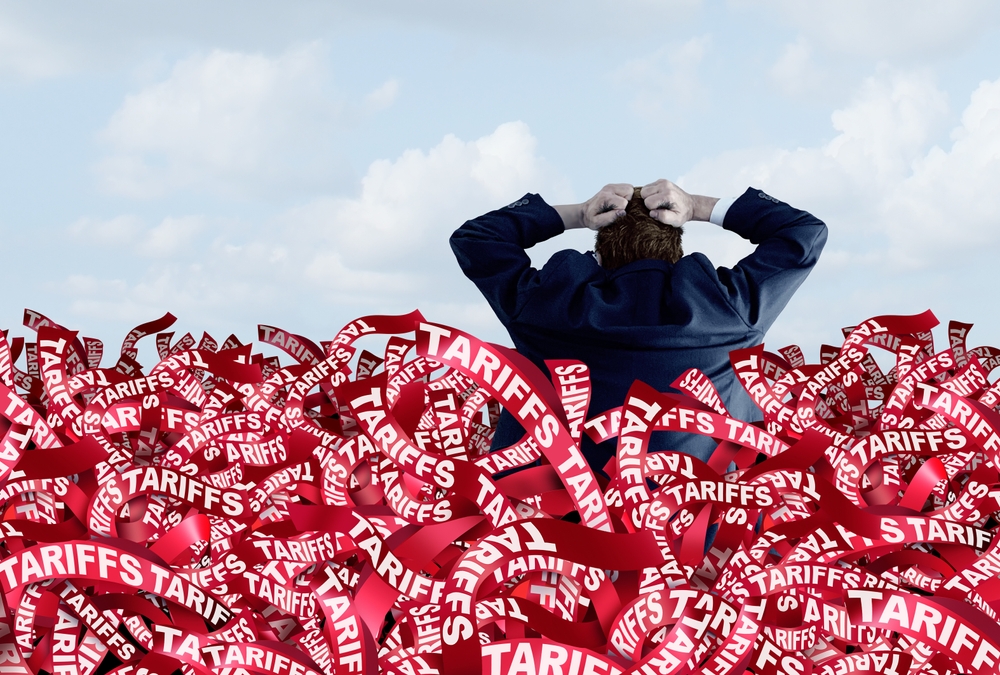
After sparking the steepest plunge in financial markets since the global pandemic five years ago, President Donald Trump’s administration made another dramatic pivot in its trade war strategy on April 9: It paused for 90 days the “reciprocal” tariffs that had been in effect for less than 24 hours.
After starting the year on a high note with the S&P 500 index of U.S. Large Cap stocks posting an all-time high on February 19th, equities retreated during the second half of the quarter, officially falling into correction territory (down 10 percent) on March 13.
Spending cuts, tariffs and recession risk—Jan van Eck’s latest outlook breaks down what to watch and why he’s focused on gold, bitcoin, semiconductors and India.
Vanguard head of U.S. ETF Capital Markets Bill Coleman discussed the growing role that active ETFs are playing in portfolios.
Berkshire Hathaway Inc. sold ¥90 billion ($628 million) of bonds on Friday in its smallest yen deal ever in a market rocked by an escalating trade war.
Getting into Donald Trump’s head is no easy task. And to the extent his economic intentions are decipherable and coherent, can Trump impose his economic will on other countries? As tariffs go into place, albeit with a partial pause, that remains to be seen.
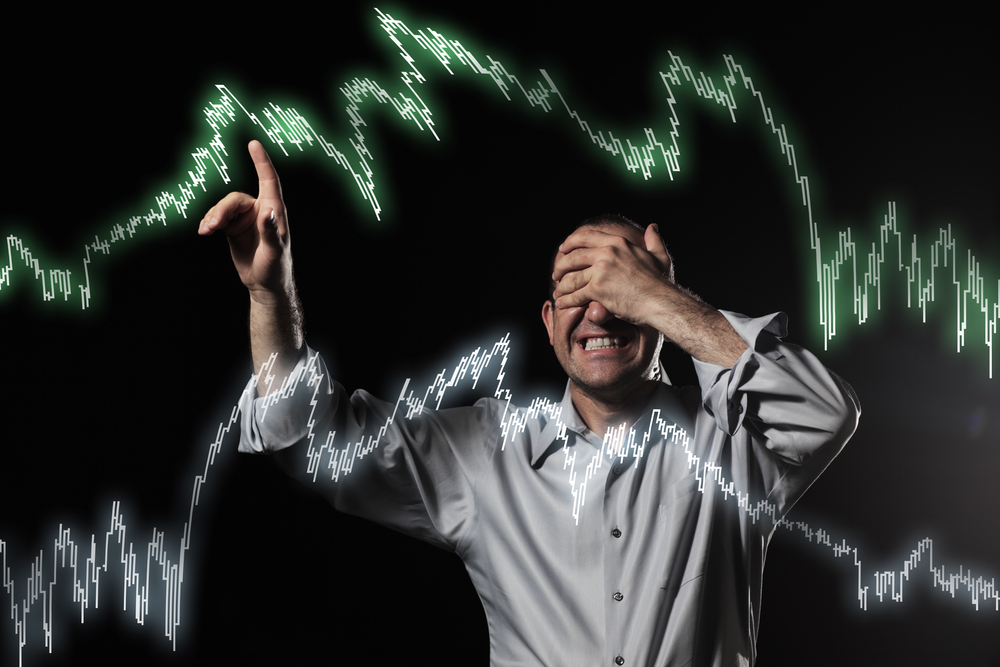
The markets are in the middle of a historic decline. Not so much in the magnitude—while we are approaching a bear market, these happen fairly regularly—but in the speed of the drop.
Concerns about a trade war have rattled markets so far in 2025, but we believe fixed income investors need to be patient, stay defensive, and see how things evolve before making any big decisions.
Global equities faced fresh challenges in the first quarter of 2025 amid growing trade-war concerns and developments in artificial intelligence (AI).
Q1 earnings season is about to kick off amidst what some might consider to be the most uncertain environment for US corporations since the COVID-19 pandemic.
Last week President Trump announced tariffs on nearly all US trading partners, a move that far exceeded the most pessimistic expectations of market participants.
Given the abundance of market uncertainty, it may be best to adhere to Treasuries, or for additional yield, to municipal bonds.
With the financial markets still wrestling with the tariff announcements from last week, one thing is still certain: uncertainty remains an integral part of the investment landscape.
Shorter-term Treasuries gained after an unexpected ebb in US inflation last month calmed bond traders shaken by President Donald Trump’s evolving trade policy.
The month of March featured a varied mix of articles among Advisor Perspectives’ top 10 most-read list, including book reviews, analysis of current events and primers on different subjects among its ranks.
Markets were jolted last week after President Trump announced sweeping tariffs, including steep increases on China, Japan, and the EU, leading to a 10.5% drop in the S&P 500 over two days—an event seen only during major crises in the past 75 years.
A Wall Street axiom states that the stock markets lead the economy by about six months. While not a perfect predictor, the stock market reacts to investor expectations about future corporate earnings, economic activity, interest rates, and inflation.
The April 2 “reciprocal” tariff announcement has introduced a considerable amount of uncertainty and confusion about the path ahead and the end game for President Trump.
VettaFi addresses common questions on midstream/MLPs, oil prices, recessions, and tariffs following last week’s equity sell-off.
With a number of factors at play, the short-term pullback in gold will likely meet resistance to the long-term, unchanged fundamentals,
This article provides information on the history and more recent developments of trust law and the corporate trustee industry. This information will help advisors to make informed decisions on clients’ generational planning choices, and to attract and retain assets.
Many people who are not interested in seeing anything about their own behavior that is causing a problem. They either have over-developed egos, or a lack of confidence so deep it is threatening to find an area of opportunity for change.
Citadel Securities’ proposal to process trades for a swath of banks is taking shape behind the scenes, focusing on products across fixed-income markets.
Last week’s employment report offered what may be the last clear picture of the US job market before President Donald Trump’s tariff shock. Overall, it looked pretty healthy, with a 4.2% unemployment rate, 80.4% of the prime-age population employed and 1.9 million nonfarm payroll jobs added over the past 12 months.
When it’s finally completed seven years from now, Citadel LLC’s New York tower will be the second tallest building in the city, after the World Trade Center. It will also loom over the headquarters of JPMorgan Chase & Co. just a few hundred yards south along Park Avenue.
An enduring image from 2024 will be the capture of the SpaceX booster rocket by the Mechazilla robot arms on its return to Earth.
At the start of last week, the S&P 500 rallied three days in a row, with investors believing that the tariffs announced on Wednesday would be targeted.
The recent market drawdown highlights risks of a concentrated S&P 500—and the case for diversification now.
Many of us came into the year with highly concentrated portfolios, which now were faced with changing market conditions.
The book’s title derives from the author’s criticism of young, self-absorbed Silicon Valley types unconcerned by the public good — the “hollow republic” — as opposed to those focused on the commonwealth, the “technological republic.”
MFS, which pioneered the first mutual fund in 1924, recently entered the ETF arena with the launch of five actively managed products. MFS’s Emily Dupre discusses the firm’s decision-making process around launching ETFs, their investment capabilities, and the role active management plays in a portfolio. Plus, VettaFi’s Roxanna Islam assesses the ETF impact of the recent tariffs announcement.
President Donald Trump’s bombshell Liberation Day tariff announcement was greeted with one of the worst two-day US stock market routs on record. Whatever you think of Trump’s tariff policies, they are a huge gamble, and no one knows how things will play out.
The markets face a challenging path as tariff policies intensify economic uncertainty, yet opportunities persist for discerning investors.
The announcement of global tariffs by President Trump has rocked markets and much is uncertain, but there are key facts for investors to keep in mind.
Last week, we noted that “nothing good happens below the 200-DMA,” and the tariff-induced market crash this past week confirmed that statement. However, we also noted that over the last 30 years, previous failures at the 200-DMA have also often been buying opportunities.
VettaFi head of sector and industry research Roxana Islam talked to T. Rowe Price PM Dom Rizzo on active tech ETF investing.
Moving forward, investors may want to keep investment-grade options close with a few from Vanguard to consider.
VettaFi’s Head of Research Todd Rosenbluth discussed the T. Rowe Price International Equity ETF (TOUS) on this week’s “ETF of the Week” podcast with Chuck Jaffe of “Money Life.”
Like a crossword puzzle, President Trump has been bombarding the media with clues about his economic policy. Given the importance of inflation and interest rates to the economy and the financial markets, it's worth assessing his clues and formulating some answers about what Trump may be up to.
Traders boosted expectations for the Federal Reserve to cut interest rates this year — and raised the specter of a reduction before the central bank’s next meeting — as the US administration’s tariffs ignite fears of a global recession.
President Donald Trump’s trade war has US stocks on track to enter their first bear market since the Covid pandemic.
Good news: Tariffs will not make the world end. American businesses will do what they do best, which is adapt. While the probability of a recession has increased, we always get through it and the best businesses thrive. Unless directly affected by tariffs, don’t change your personal plans that much.
Last week's economic landscape was dramatically reshaped by President Trump's announcement of sweeping tariff policies on what he declared "Liberation Day." His announcement triggered a historic sell-off in the stock market.
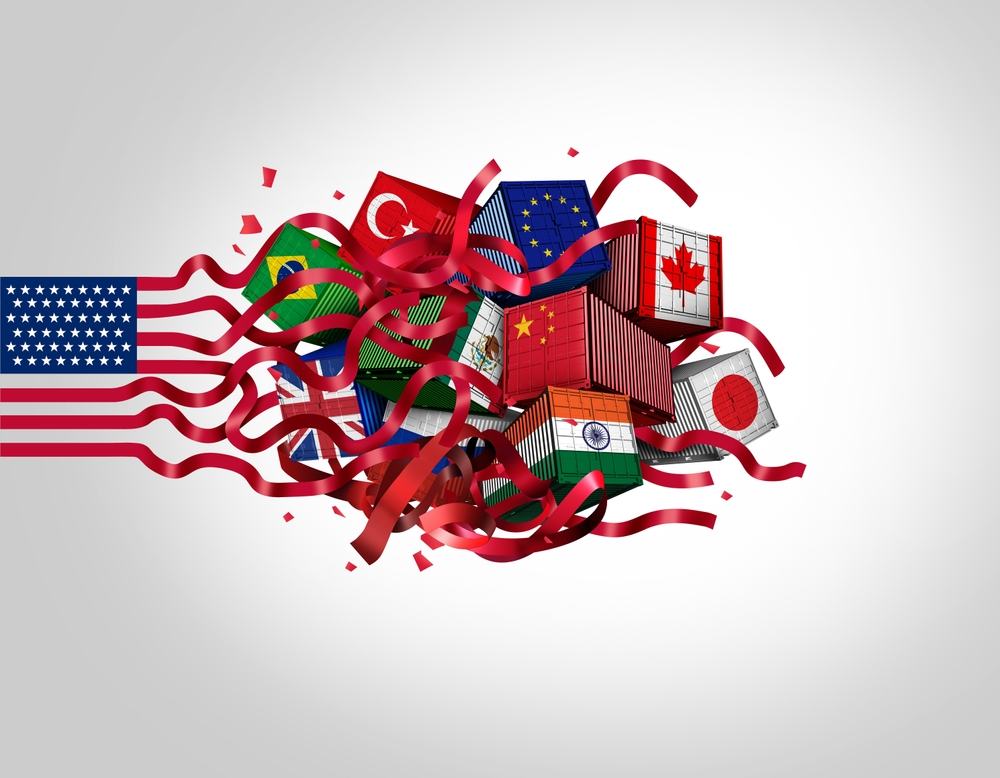
Global markets are in freefall in response to President Donald Trump’s universal 10% tariff on all goods being imported into the U.S., with as many as 60 countries facing “reciprocal” tariffs on top of that.
The 10% across-the-board (ad valorem) tariff and specific reciprocal tariffs on most U.S. trading partners went well beyond what most were expecting.
The incremental tariffs were bolder than market expectations and ushered in new uncertainty.
China’s prolonged reliance on fiscal stimulus has distorted economic incentives, fueling a housing glut, a collapse in prices, and spiraling public debt. With further stimulus off the table, the only sustainable path is for the central government to relinquish more economic power to local governments and the private sector.
The tariff chaos continues … but the economy remains intact. For now.
The early days of the Trump administration have brought sweeping tariff announcements. While the situation is fluid, the direction is clear: trade restrictions are likely to increase, with China as a primary target.
By sparing Mexico and Canada from his reciprocal tariffs on Wednesday, US President Donald Trump has kept the pact known as USMCA on life support. That’s no small feat given the animosity shown by the US government toward its neighbors in the past weeks.