Some hedge fund managers are sounding the alarm on overvalued nuclear power stocks and scaling back exposure after a stunning rally this year.
It’s that time of year when Wall Street polishes up its crystal balls and predicts next year’s market returns. Since Wall Street never predicts a down year, these forecasts are often wrong and sometimes very wrong.
If you happen to be a Bitcoin skeptic, you’re not alone. A recent Pew Research survey found that 63% of Americans are not confident in the reliability or safety of cryptocurrencies in general.
Index funds emerged in the early 1970s and were designed to match rather than beat the market. For decades, they were associated with the capitalization-weighted (CW) market indexes that defined their investment approach.
As we near the end of 2024, researchers, businesses, and investors have begun to question the overheated artificial intelligence sentiment.
J.P. Morgan’s Jon Maier highlights the firm’s suite of ETFs and discusses the industry’s accelerating momentum behind active management. VettaFi’s Roxanna Islam offers insights into the recent Nasdaq-100 index rebalance and its connection to broader ETF trends.
Has the U.S. economy diverged from the global economy, or are a lot of economic canaries in coalmines keeling over and warning the U.S. is soon to catch down?
On this episode of the “ETF of the Week” podcast, VettaFi’s Head of Research Todd Rosenbluth discussed the iShares Nasdaq Top 30 Stocks ETF (QTOP) with Chuck Jaffe of Money Life. The pair discussed several topics related to the fund to give investors a deeper understanding of the ETF overall.
CAPE, or the cyclically adjusted price-to-earnings ratio, introduced in 1988 by economists John Campbell and Robert Shiller, is arguably the best-known indicator of broad market valuation. And CAPE is now at an almost (though not quite) all-time high level, according to data from Robert Shiller's website.
To Michael Saylor’s online fanbase, it’s the next step in the great normalization of crypto: Bitcoin proxy MicroStrategy Inc. enters the S&P 500 next year, forcing the likes of index-tracking funds to buy his controversial company en masse. Whether they like it or not.
Bond traders have rarely suffered so much from a Federal Reserve easing cycle. Now they fear 2025 threatens more of the same.
Forced to seek a government rescue barely a year ago, Siemens Energy AG was an unlikely candidate for Europe’s best performing stock of 2024.
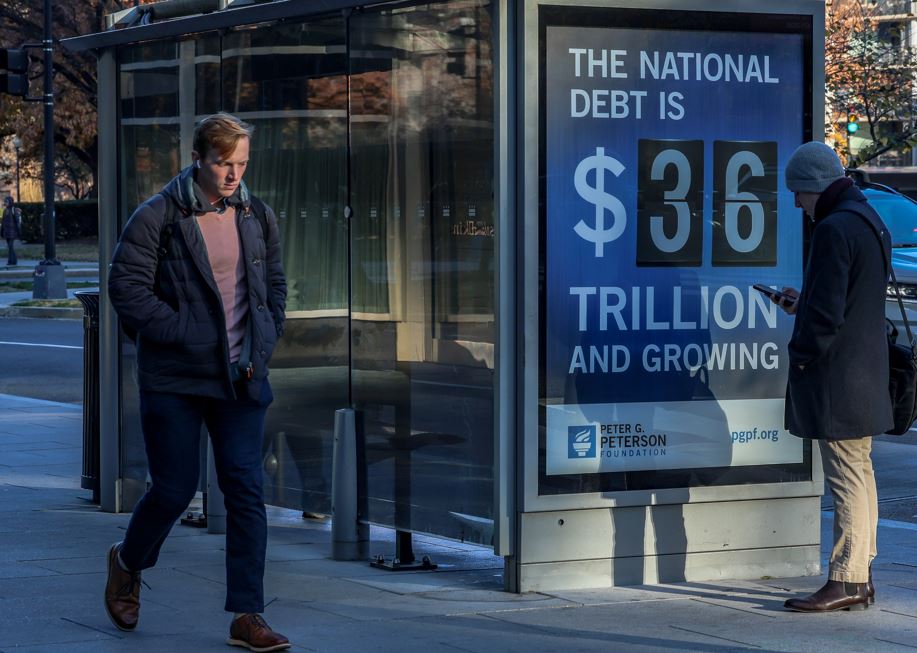
This is the first part of a series of Bloomberg Opinion columns exploring the risks related to the US’s rapidly expanding debt and budget deficit.
OpenAI is preparing to launch a new artificial intelligence model that it said is capable of more advanced human-like reasoning than its current offerings, ratcheting up the competition with rivals such as Alphabet Inc.’s Google.
I must confess, I have been aware of quantum computing for quite some time, but it was one of those things that always seemed far off. It’s now getting much closer.
This brief market commentary will run through some stats and provide context to the market’s recent fluctuations.
From Brazil to South Korea, emerging-market central banks are forming a line of defense as a rising dollar pushes their currencies to multi-year lows.
As the year comes to a close, we revisit some of the key market themes and moves for 2024 and the year ahead.
Private credit firms want more than corporate lending. The largest are laying the groundwork to finance everything from auto loans and residential mortgages to chip manufacturing and data centers in an effort to swell the size of the market by the trillions.
Take it from Niels Bohr: “Those who are not shocked when they first come across quantum theory cannot possibly have understood it.”
Despite the expectation of rate cuts, a push-pull dynamic could exist if high inflation continues, opening the door for short-term bonds.
Bitcoin extended its slide from this week’s record high to almost 15% as hawkish signals from the Federal Reserve prompted traders to sell an asset that has more than doubled this year.
The $10.4 trillion US exchange-traded fund industry’s blockbuster year comes with an asterisk: even amid record inflows and launches, funds are shuttering at a nearly unprecedented clip.
The Exchange Team is full of gratitude for our sponsors and the community coming to the 2025 financial services conference.
Taxes are on my mind. Do I factor in whether a dividend is considered qualified or ordinary when making my recommendations?
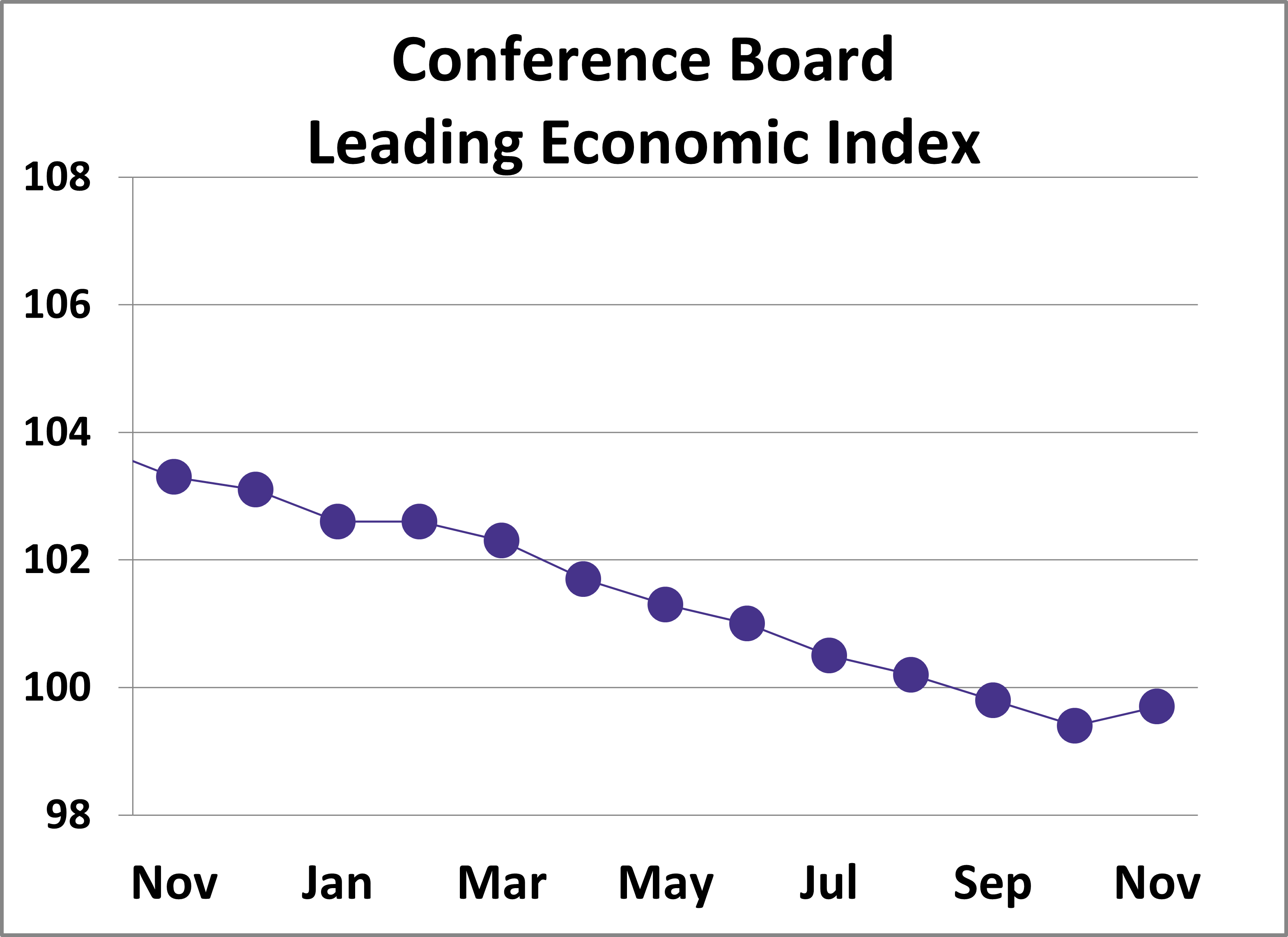
The Conference Board Leading Economic Index (LEI) increased slightly in November. The index rose 0.3% from the previous month to 99.7 after eight consecutive monthly declines.
On Friday December 6th, the U.S. stock market pushed to the most extreme level of valuation in U.S. history
A BlackRock Inc. fund has bought municipal debt issued earlier this year in a first-of-its-kind deal that relies exclusively on blockchain technology.
At a time when the American consumer’s resiliency has been questioned amid signs of a slowing economy, Walmart Inc. has thrived. The world’s largest retailer, famed for its discount prices but increasingly known for its pursuits in advertising and an online marketplace, is headed for its best year since 1998.
Why cyclical leadership in equities could continue into 2025.
At the time of year where everyone is reflecting on the things that matter most to them in their personal lives, it is important to also consider what matters when it comes to investing. In this investment commentary, Johnson Financial Group shares what really matters as you put your money to work.
A conversation with our stock selection team, part two.
The clean-tech venture firm founded by Bill Gates is providing a $40 million grant to carbon-capture startup Deep Sky Corp., which seeks to build large-scale facilities to clean carbon from the air.
While concern has grown in the past week that narrowing market breadth has tapped the brakes on the S&P 500 Index’s blistering rally, it turns out that stock bulls are still stepping in to snap up shares ahead of the Federal Reserve’s interest-rate decision.
Alphabet Inc.’s Google has reanimated excitement over quantum computing with an announcement about how its new chip, Willow, trounced a classical computer to solve a mathematical equation much faster.
Meet the new stock pickers. They will remind you of the old stock pickers.
Surprises most often are hiding in plain sight. Being aware and prepared with a plan for the unexpected are keys to achieving goals.
VettaFi discusses the significant improvement in MLPs over the last decade.
The U.S. economy is experiencing a remarkable period of economic stabilization and growth
Although AI has great potential to bring exciting changes to education, art, medicine, robotics, and other fields, it also poses major risks, most of which are not being addressed. Judging by the response so far from political and other institutions, we can safely expect many years of instability.
Morningstar’s Ben Johnson reflects on a record-breaking year for ETFs and highlights key stories to watch in 2025. VettaFi’s Todd Rosenbluth discusses new polling data on how advisors are viewing financial markets heading into the new year.
New exchange-traded funds riding buzzy investment themes are helping fuel record industry growth this year. Yet, it’s also shaping up to be a banner era for money managers revamping their tried-and-tested mutual funds into the tax-efficient product.
MicroStrategy Inc.’s entry into the Nasdaq 100 opens up the largest corporate holder of Bitcoin to a new — and untapped – investor: the index-tracking juggernauts.
We expect gears to shift as potential policy changes under the Trump administration add to uncertainty about inflation and the global economy.
Every year, most investors face a near-certain reality: taxes on their investment portfolio.
Today’s video on Information Technology companies is another in the continuing series of videos where we are looking for value in each of the 10 major sectors as reported by Standard & Poor’s. This particular video is going to be on the Technology Sector.
Newly released research from State Street Global Advisors breaks down why financial advisors are embracing model portfolios more this year.
Short-term bond exchange-traded funds (ETFs) can provide yield seekers with a viable alternative to money market funds.
Here are three ways to help you find balance in your business – and perhaps find opportunities for growth along the way.
While bitcoin may continue higher, proving MicroStrategy's CEO Michael Saylor a genius, investors should at least appreciate what may happen if things do not go according to plan. We now present the other side of the story.