Municipal bonds broke their winning streak in October, posting negative total returns alongside broader fixed income assets.
Elon Musk is ramping up his feud with Sam Altman, alleging in a court filing that OpenAI is trying to corner the market for generative artificial intelligence and sacrificing safety in a race to get ahead.
The 10 largest stocks in the S&P 500 returned a staggering 104.6% from January 2023 through June 2024—more than double the broader index return
This isn’t the same China that greeted Donald Trump after his first win in 2016. The economy, once widely believed on a course to knock the US off its perch as the preeminent commercial power, has since revealed some acute vulnerabilities that don’t seem to be going away. And the president-elect seems to be gearing up for a trade war he no longer needs to fight.
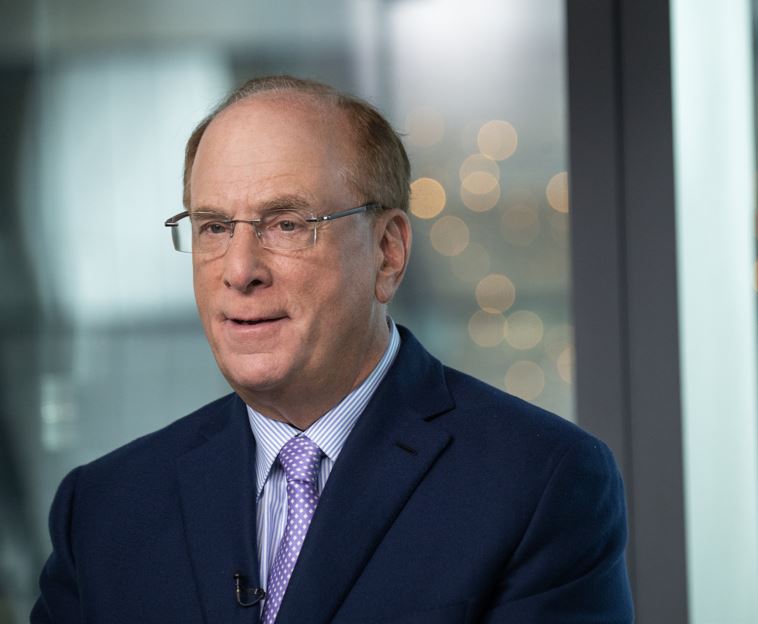
Larry Fink turned to big deals to get BlackRock Inc. out in front of a decade of money gushing into index funds. Now he’s doing the same to make sure his firm isn’t left behind in the stampede into private assets.
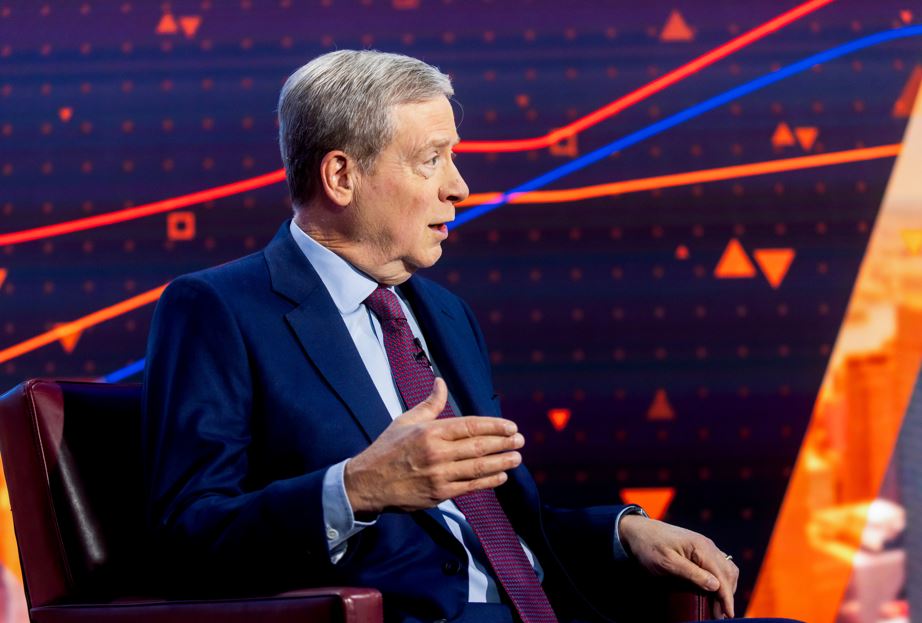
Stanley Druckenmiller’s family office led investment firms for the world’s rich in boosting allocations to US bank shares last quarter, putting them in line to profit from a rally in financial stocks.
This year was already a landmark one for exchange-traded funds, but as of Friday the ETF universe can add another superlative: biggest annual inflows on record.
A year-round focus on taxes can unlock value for investors in higher brackets—and it can help advisors prove their own value.
U.S. rate cuts of up to 200bps are anticipated by the end of 2025 but with significant further downside if recession risks materialize.
Before the year 2024 comes to a close, it's time to optimize your tax strategy. Our Bill Cass shares some tips including timing deductions and harvesting losses.
One of the core principles of a long-term dividend portfolio is to invest in companies that are integral to society and will be for many years to come. Transportation falls into that category.
Following a tense presidential election, equity markets roared to record highs – the S&P 500 put on its best weekly showing in over a year.
As a major corn and soybean consumer, China is keeping prices in limbo. A potential trade war could add additional intrigue.
In addition to the headlines championing new heights, here are five things everyone should know about bitcoin.
Private equity’s recent splurge of piling ever more debt onto already highly leveraged bets has sparked fears about financial-system risks. Banks, however, are positioning themselves to take advantage.
In many ways it didn’t matter what those answers were, just that they were out of the way and investors and US companies could begin to plan accordingly for Q4, 2025 and beyond.
The election results triggered a positive market response. The S&P 500 rose +2.5% on Wednesday following the election.
Recent insights from Natixis Investment Managers breaks down a few fixed income risks that investors may not be aware of.
This election has heavily featured trade and tariffs. The impact on the U.S. economy and markets could be significant. How should investors position their portfolios?
Join the experts at Tema ETFs for an educational webcast that explores the investment implications of trade policy, deglobalization and reshoring.
Treasuries held on to recent losses ahead of the US inflation report, with traders loading up on bets for further declines in anticipation that Donald Trump’s pledged policies will fan price increases and keep interest rates high.
A surge in Bitcoin that paused earlier Wednesday is regaining steam, sending the original cryptocurrency above $90,000 for the first time, as traders assess the remaining market impact of President-elect Donald Trump’s rhetorical support for crypto.
The price of Bitcoin has jumped by more than $20,000 since the Nov. 5 elections in the US, with about one-third of the gains coming with favorable early results for Republicans, and the rest trickling in as Donald Trump’s victory became certain and his party continued to pick up seats in the Senate and House of Representatives.
The US dollar’s rally is gaining momentum alongside Donald Trump’s threat of sweeping tariffs, leaving currency strategists in agreement it has further to rise while war-gaming just how far it will go.
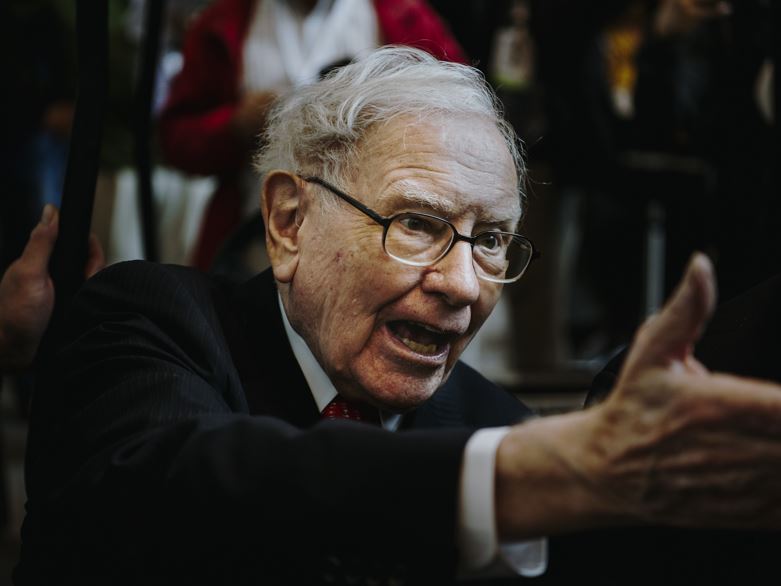
Warren Buffett created Berkshire Hathaway Inc.’s Class B shares almost 30 years ago to stymie money managers who sought to split the high-priced conglomerate’s stock.
From beginning to end, the 2024 election cycle will be looked back on as historic
October’s market activity can be neatly summarized in a single chart: the dollar (BBDXY) was strong and U.S. stocks (the VOO ETF tracks the S&P 500 index) meaningfully outperformed international stocks (VXUS).
Microsoft, Meta, Apple, Alphabet, and Amazon all experienced fluctuations in their shares, leading to a two-week losing streak in October after five months of gains. Despite this, Financials, Communications Services, and Energy sectors remained positive. Looking ahead, we're analyzing President-elect Trump's platform and its potential implications for corporate taxes, regulations, tariffs, inflation, and economic growth.
For investors who have been considering active investing, the post-election market swing could be the trigger to dive in.
With a "Red Sweep" in Washington likely, markets are now pricing in a more aggressive policy agenda.
VettaFi’s Todd Rosenbluth explains how the election could impact specific ETF categories and the industry overall. Baird’s Rich Lee also discusses the election’s implications for ETFs and talks market concentration risk, active ETFs, buffer products, crypto, and what to watch for in 2025.
Investors are piling into US leveraged loan ETFs, betting that President-elect Donald Trump’s policies will potentially boost inflation and push the Federal Reserve to keep interest rates higher for longer.
BlackRock Inc. is throwing its weight behind an early push to bring exchange-traded funds to money-market investors.
All year, a slew of Wall Street pros have questioned the durability of an indiscriminate risk rally that has fattened stock prices by trillions of dollars, sent Bitcoin soaring, fueled a credit bonanza, and more.
Let's keep our client meetings focused and manageable. By doing so, we not only respect their time and attention but also increase the likelihood of them taking the necessary steps to achieve their financial goals.
While baby boomers can be slower to embrace technology, younger investors tend to seek out and prefer tech-focused services and providers. This preference for technology is something advisors should lean into to connect with younger generations of investors.
In this video, Chuck Carnevale, Co-Founder of FAST Graphs, a.k.a. Mr. Valuation will cover the Communication Services Sector.
With the Russell 2000 Index rallying in response to the U.S. election results—the benchmark index of small cap stocks soared by nearly 6% on Nov. 6 alone—small cap managers are re-evaluating their positioning ahead of President-elect Trump taking office in January.
In a week with a U.S. presidential election and market volatility, the Federal Reserve cut its policy rate 25 basis points (bps) as expected. Amid this noise and the generally positive messages from recent macro data, Fed Chair Jerome Powell emphasized that downside economic risks had decreased, but the policy rate remains above neutral, suggesting that gradual cuts are still likely to come over time.
The prospect of a Trump presidency has led to much debate and speculation about how markets might react. Depending on what policies are eventually passed, there are potential risks and opportunities in both the stock and bond markets.
Many tech companies and executives are at political odds with President-elect Trump, but the sector performed well during his first term.
The housing market inderwent huge transformations in recent decades with the aftermath of the Global Financial Crisis & the COVID-19 pandemic.
Bitcoin options traders buoyed by Donald Trump’s election victory are already eyeing a landmark price of $100,000 for the original cryptocurrency, after it surged to a fresh record on hopes for a more crypto-friendly administration.
Since Donald Trump’s election win, the hedge funds clinging on to bets against Tesla Inc. have lost billions of dollars, as they feel the fallout of the special relationship between the president-elect and Elon Musk.
VettaFi’s Head of Research Todd Rosenbluth discussed the Calamos S&P 500® Structured Alt Protection ETF – November (CPSN) on this week’s “ETF of the Week” podcast with Chuck Jaffe of “Money Life.”
In addition to better appreciating why gold is surging, our analysis will help you recognize that market narratives explaining asset price movements can be wrong, no matter how reasonable they may seem at first blush.
Today is Veterans Day. My father served in the army during the Vietnam War. He lives in Long Island, New York, and I am proud of his service.
Accumulating inconsistencies in the prevailing paradigm then trigger a crisis, leading to the emergence of new theories and ideas, resulting in a paradigm shift where the old framework is rapidly replaced by a new one.
I went to bed “early” on election night, around 10:30 pm. We are in the five months of the year where Puerto Rico is one hour ahead of Eastern time, and nothing I was seeing made me think it would be an early night. And by that I meant 3 or 4 am.
We are in a world where multiple, starkly different outcomes are possible. The decisive U.S. election outcome has stoked uncertainty about future U.S. policy.
Maslow’s hierarchy of needs was a groundbreaking concept when it appeared in 1943. American psychologist Abraham Maslow argued that certain basic needs—food, water, shelter, etc.—must be met before a person can move on to higher levels of self-worth and fulfillment.