The Federal Reserve is being challenged with one of our most important tenets: levels versus momentum.
Rotation - The Earth's axis has an inclination of 23.5 degrees relative to its orbital plane around the sun.
Buoyed by the Magnificent Seven, the first half of the year saw strong results for investors. But there are headwinds on the horizon — Fed policy changes, geopolitical tensions, and other factors that could impact market results.
Join the experts at State Street Global Advisors, Astoria Portfolio Advisors, and Clark Capital Management Group as they explore three takeaways from State Street Global Advisor's Midyear ETF Market Outlook: diversifying away from the Magnificent Seven, optimizing income through short-term core and credit, and positioning for macro volatility through real assets.
State Street’s George Milling-Stanley goes in-depth on the current gold market, physical gold ETFs, and crypto. VettaFi’s Roxanna Islam explores the world of defined outcome ETFs.
While strategy provides direction, a strong culture is the foundation that supports and sustains an organization’s success. Culture influences every aspect of an organization and defines the purpose and values that guide the actions of employees.
Join us for an insightful webinar where we delve into the transformative impact of Artificial Intelligence (AI) on society and explore innovative investment strategies that leverage this groundbreaking technology.
Buying US stocks after a slump of the scale witnessed over the past month has usually been profitable, according to a Goldman Sachs Group Inc. analysis of four decades of data.
A major rally in the $27 trillion Treasury market is laying bare anxiety that the US economy is sliding into recession and the Federal Reserve will need to start aggressively cutting interest rates.
On days like Monday’s dramatic selloff, which capped a three-week loss of $6.4 trillion in global wealth, personal finance experts usually have the same advice for wary retail investors:
For a technology that promises to help businesses cut costs, artificial intelligence has had a big problem with being so costly.
Warren Buffett has been selling a lot of stock, and that revelation is inducing his many admirers to follow suit. His Omaha, Nebraska-based conglomerate, Berkshire Hathaway Inc., reported Saturday that it reduced several positions and slashed its stake in top-holding Apple Inc., a sign to some in markets that the “Oracle of Omaha” was bracing for deep stock-market declines.
During each speculative run-up in asset prices – whether the dot-com bubble, the housing bubble, or more recently the rapid rise (and fall) of the stocks of electric vehicle companies – there’s typically a moment when Wall Street strategists, analysts, and investors go all-in on that theme.
Semiconductor stocks remain the leaders of this market, but investors might admit it looks pretty extended at the moment.
Recent macroeconomic and geopolitical developments, along with shifting AI sentiment, have raised concerns over whether strong headline returns, low volatility, and persistent mega cap tech leadership can continue as we look ahead.
Never before in my history studying the Federal Reserve (Fed) has the Fed’s policy come into question immediately following the Fed decision.
A recent mid-year strategist pulse check from Natixis revealed where strategists believe the top opportunities exist across markets.
Is this the beginning of the inevitable bear, where these then-most-valuable stocks could get clobbered? Here’s what history teaches us about the current concentrated market and the current correction.
On this episode of the “ETF of the Week” podcast, VettaFi’s Head of Research Todd Rosenbluth discussed the Goldman Sachs ActiveBeta International Equity ETF (GSIE) with Chuck Jaffe of “Money Life.” The pair talked about several topics regarding the fund to give investors a deeper understanding of the ETF overall.
In my opinion, the primary reason that yields are too high is a pronounced fear from the Fed and bond investors of another round of inflation. The Fed runs an extraordinarily tight monetary policy to ensure it doesn’t reoccur.
De Leus and Gijsels, both originating in the world of institutional brokerage identify the five principal trends affecting investments in the near future. The two take turns writing chapters so that the book is a straight man/funnyman show, with the straight man providing mostly sound, conventional analysis and the funnyman interviewing dead economists and Fed chairmen not yet born.
The Nasdaq 100 is set for its biggest opening drop in more than four years, with investors bracing for days of volatility amid rising concerns over a slowing US economy and overheated gains in the tech sector.
Global bonds rallied as traders bet the Federal Reserve and fellow central banks will turn more aggressive in cutting interest rates amid mounting concern that economic growth is faltering at a faster pace than expected just weeks ago.
With stock markets plunging around the world, traders are talking up the prospect of an emergency interest-rate cut from the Federal Reserve after the US central bank passed up the opportunity to ease policy last week. Not only is this highly unlikely, it would be counterproductive.
Cryptocurrencies reeled from a bout of risk aversion in global markets on Monday, at one point sending Bitcoin down more than 16% and saddling second-ranked Ether with the steepest fall since 2021.
Economic indicators are released every week to provide insight into the overall health and performance of an economy.
In bullish years, markets often have corrections. Yet, after a lengthy bullish run, it always surprises me how quickly investors and the media panic with the slightest hint of a market pullback.
Treasury yields plunged below 4% this week for the first time since January on recession fears as global manufacturing activity contracted and hiring in the U.S. slowed dramatically in July.
When growth slows and rates fall, what will happen to an asset class with long-dated cash flows that are not very economically sensitive? Well, it is likely to strongly outperform. Ergo the short-term outlook for growth relative to value/small caps appear to be rosy.
The members of the Bank of England’s Monetary Policy Committee (MPC) are probably not intimately familiar with Taylor Swift’s back catalogue. If they were, Swift’s hit “Cruel Summer” may have been ringing in their ears when cutting rates today for the first time since March 2020.
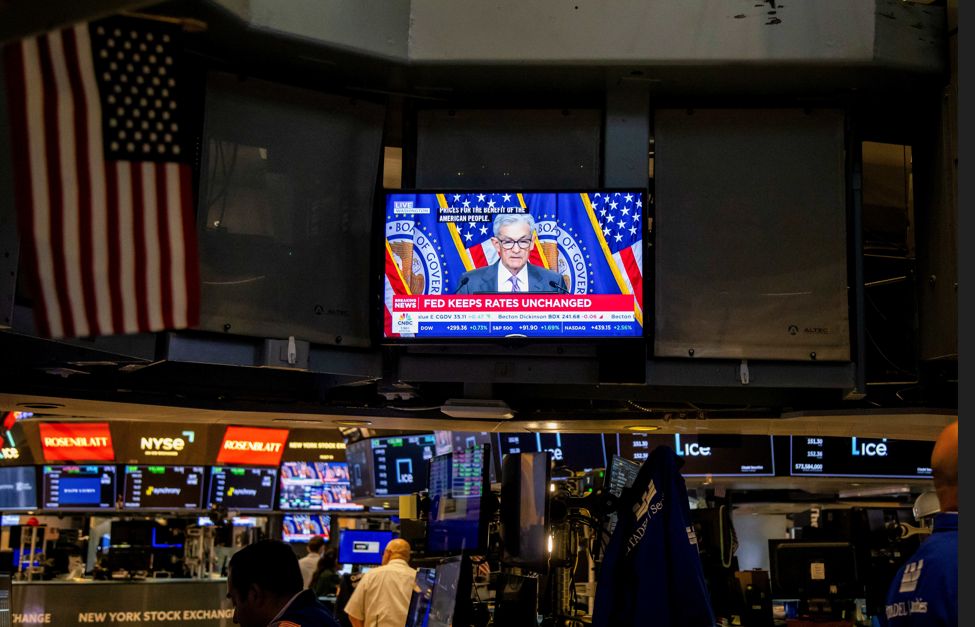
Once again, the Fed kept rates unchanged at the July FOMC meeting. As a result, the Fed Funds trading range remains in the 5.25%–5.50% band that was introduced exactly a year ago and still resides at a more than 20-year high watermark.
Advisors and investors that want to try to outperform can still gain some diversification benefits using concentrated ETFs.
Jeff Bezos’ wealth slumped by more than $21 billion after Amazon.com Inc. said it planned to continue spending big on artificial intelligence even at the expense of short-term profits.
Municipal bonds extended their rally on Friday after a lackluster jobs number cemented expectations that the Federal Reserve will start cutting interest rates by the end of its next meeting in September.
While election news dominated July's headlines, small-cap stocks had their best monthly performance relative to large-cap stocks since December 2000.
We have been talking about resiliency-driven inflation for the past several weeks. As the US and its Western allies realign supply chains to strengthen economic resiliency, the cost of certain goods and commodities will go up.
Amazon.com Inc., Microsoft Corp. and Alphabet Inc. had one job heading into this earnings season: show that the billions of dollars they’ve each sunk into the infrastructure propelling the artificial intelligence boom is translating into real sales.
The violent rotation from Big Tech plunged the Nasdaq 100 Index into correction territory, wiping out more than $2 trillion in value in just over three weeks, as traders unwound bets that had been minting money for over a year.
Some investors who had previously expressed devotion to the largest digital currency propelled it higher last month.
ETFs had a big July, with some leading strategies lifting their YTD inflow totals behind strong July numbers.
The central bank’s latest policy statement and Chair Jerome Powell’s remarks suggest that an initial interest rate cut could come as soon as September.
The Federal Reserve noted that inflation is moving closer to its 2% target after electing to hold rates steady at its July FOMC meeting.
The Northern Trust Economics team shares its outlook for growth, inflation and interest rates in major markets.
Coming into this earnings season, one of the most intriguing questions was how well the consumer-facing companies would be able to maintain their pricing power. The new algorithm for success is a bit more complicated than “raise prices by x.”
Economists Stephen Miran and Nouriel Roubini are making waves by suggesting in a paper published last week that the Treasury Department has actively engineered easier financial conditions by increasing the issuance of short-term bills and, consequently, reducing the share of longer-term notes and bonds, thereby keeping yields lower than they would otherwise be.
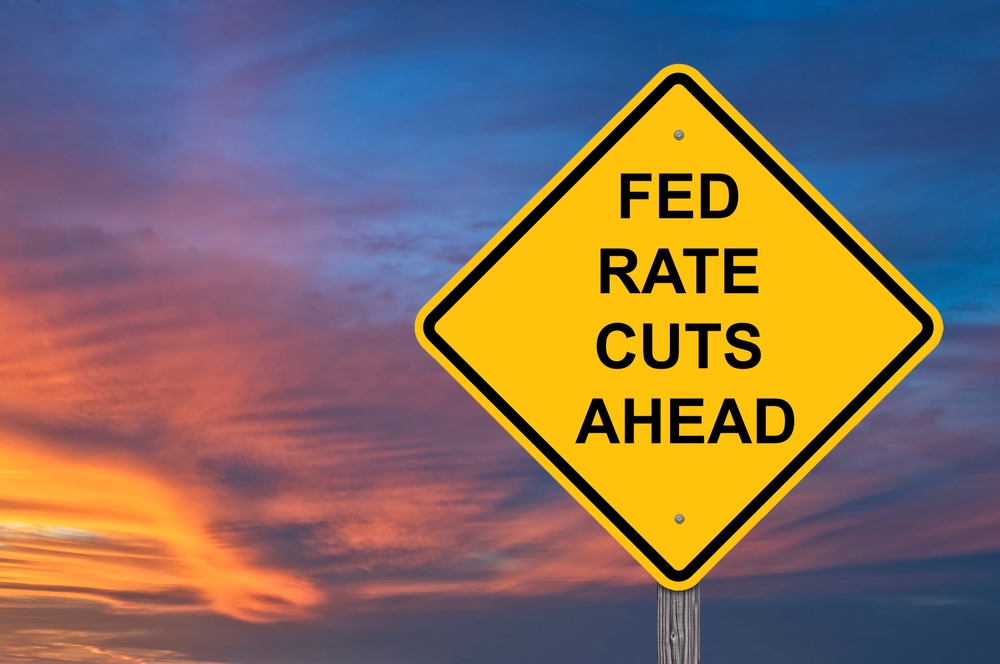
The Federal Reserve kept its policy rate unchanged at the July meeting, but left the door open to rate cuts later this year.
With tech stocks making up a substantial portion of broad market indexes, investors may wonder what will happen when the tech rally ends.
Today’s passive index investing requires active choices, as customization and innovations in index funds have resulted in new considerations for investors and the potential for greater control.
Nvidia Corp.’s wild ride this week is headed for the record books.
In mid-July, VettaFi's webcast asked what advisors were concerned about. “Market valuation” topped the list of choices with 56%.
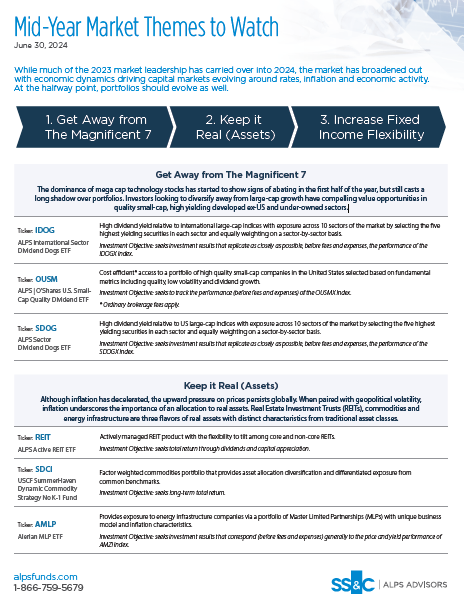
The dominance of mega cap technology stocks has started to show signs of abating in the first half of the year, but still casts a long shadow over portfolios. Investors looking to diversify away from large-cap growth have compelling value opportunities in quality small-cap, high yielding developed ex-US and under-owned sectors.