Jeff and Ron discuss the state of the economy, inflation, the bond and stock markets, and they outline, in broad terms, their current investments.
Third party custodians provide a critical back-office function for RIAs – and beyond the important job of safeguarding client assets, they have more sway over operations than one might initially expect.
When dealing with millennials and often with more seasoned investors, it’s important to understand their barriers to acceptance of a boring approach to investing.
Investors will want to see valuations justified by robust fundamentals during big tech earnings reports this week.
Options strategies remain a popular choice with advisors and investors for the benefits they bring to portfolios.
Which financial assets a central bank should buy and sell is hardly a novel question. Historically, the US Federal Reserve has focused on shorter-term Treasury securities, but quantitative easing had the Fed buying mortgage securities and quality commercial paper in significant quantities. More generally, central banks often hold gold and foreign currencies.
The US Treasury left its quarterly issuance of longer-term debt unchanged for the second straight time, and maintained its guidance that it doesn’t expect to need increasing issuance of notes and bonds for “several quarters.”
The economic data is coming in very good for markets. Starting with GDP, we observed a modest growth rate of around 2% in the first half of the year. While not spectacular, it’s far from recessionary conditions. This level of growth, with slight inventory accumulation, suggests a stable economic backdrop.
I chaired an international economics conference in Canada earlier this month. Delegates from all over the world attended to discuss the issues of the day. Following is an abridged version of the meeting summary that I offered during the closing session.
VettaFi’s Todd Rosenbluth offers key takeaways from State Street’s 2024 ETF Impact survey. Grayscale’s John Hoffman discusses the debut of spot ether ETFs and the firm’s competitive positioning in the crypto ETF market. Macquarie’s Brad Klapmeyer spotlights their Focused Large Growth ETF (LRGG).
This article examines both breaches at AT&T, discusses how the data can be used to perpetrate detailed deep fakes, and shares how you can advise your clients and staff to protect your clients’ investments.
The rise of LLMs and public availability of generative AI tools has driven a wave of excitement over AI’s potential to transform society, economies, and workflows.
Our outlook on the 11 S&P 500 equity sectors.
As gold prices continue to rise, investors may want to consider gold miners, which are offering incredible value.
Macro drivers mixed with market narratives last week to sustain the volatility cocktail being served in July
Canadian entrepreneur Andrew Wilkinson’s early decision to ditch a career as a journalist and teach himself web design has proved lucrative, making him the majority owner of a technology investment firm worth more than $300 million.
You don’t need a fortune to channel your giving through a DAF. These funds are designed for everyday people who want to make charitable donations in a way that offers tax efficiency, flexibility, and choices.
The Federal Reserve (Fed) doesn’t like to spook markets, that is the reason why it has crafted its communication on monetary policy to give indications way in advance and nothing has been pointing to a change of heart that could lead to a surprise move next week.
Improving inflation and growth scenarios should enhance the equities and bond dynamic for multi-asset investors.
On this episode of the “ETF of the Week” podcast, VettaFi’s Head of Research Todd Rosenbluth discussed the Grayscale Ethereum Mini Trust (ETH) with Chuck Jaffe of “Money Life.” The pair talked about several topics regarding the fund to give investors a deeper understanding of the ETF overall.
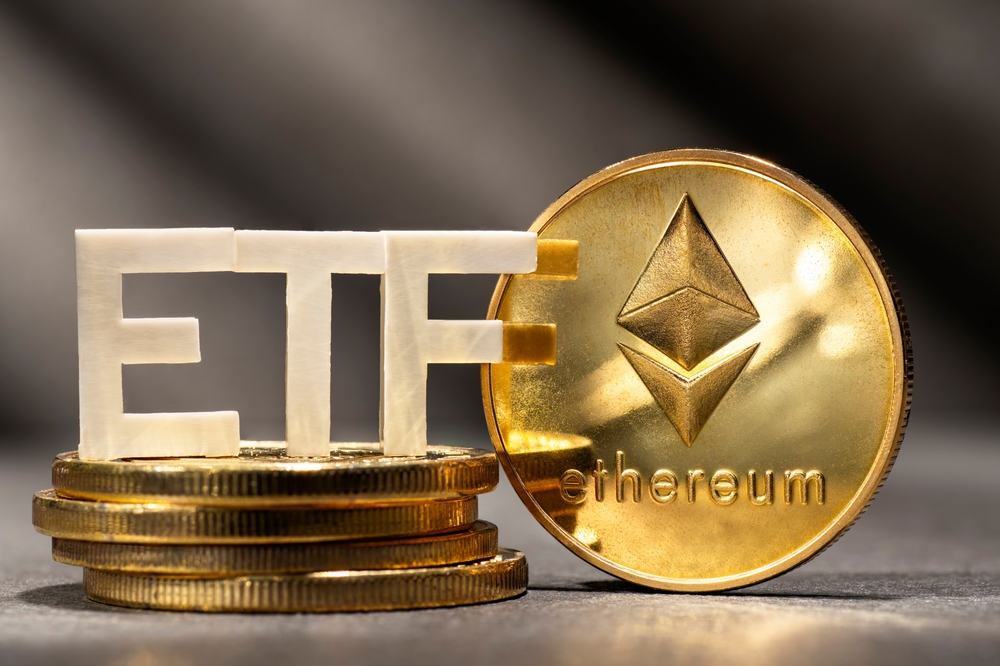
The price of ether fell in the wake of the launch of the spot ether ETFs on Tuesday, July 23. Ether (ETH) declined 7.82% in its first three days of spot ether ETF trading.
Volatility is back — at least a little — heading in to a week filled with central bank interest-rate decisions and quarterly earnings for some of the world’s biggest companies.
Is generative AI worth the money?
For South Korea’s economy, it’s not quite a case of first in, first out. But it could be close: Despite some bullish growth forecasts, interest-rate cuts are coming.
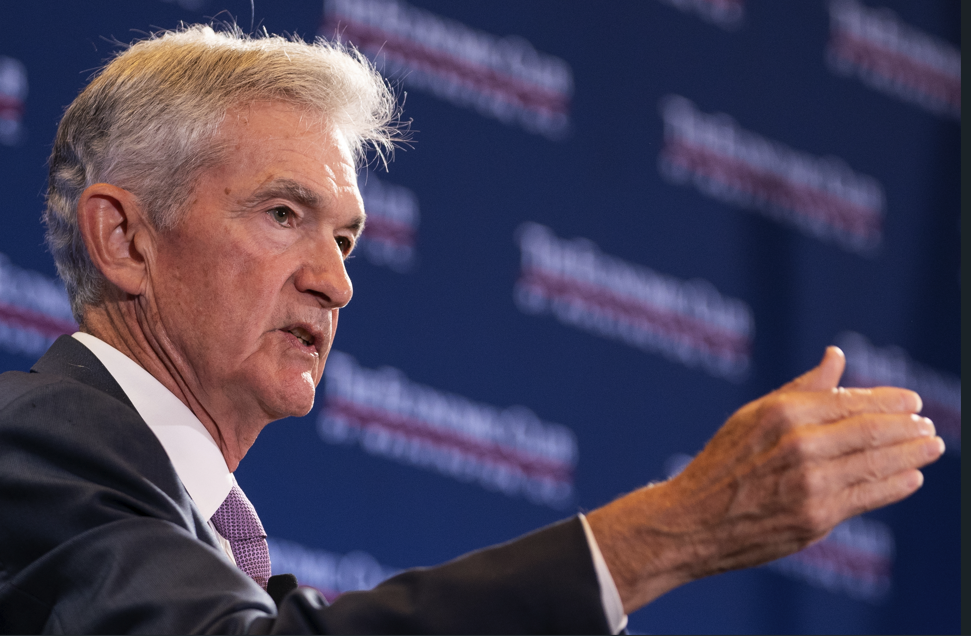
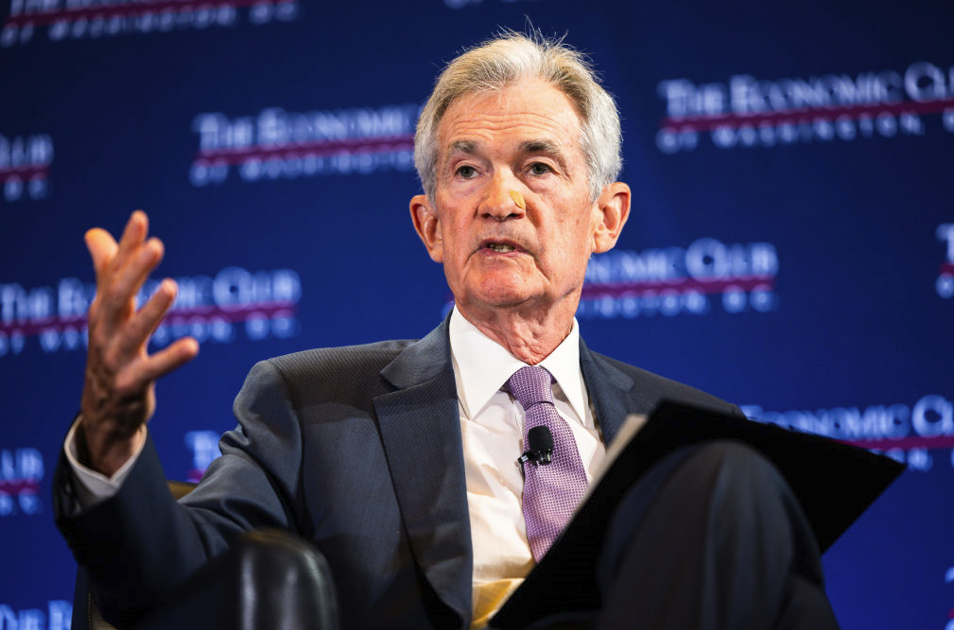
Federal Reserve Chair Jerome Powell recently testified that he’d like to see more good news on inflation before cutting interest rates. He got what he asked for.
When the Federal Reserve signals the likely path of monetary policy to investors this week, including an anticipated start to interest rate cuts in September, it can no longer be complacent about the labor market.
President Joe Biden’s withdrawal and endorsement of Vice President Kamala Harris has sent shockwaves through the political establishment, and while former President Donald Trump remains the frontrunner, the wind has certainly shifted in Harris’s favor.
Yes, the market could continue to rotate massively from large-cap to small and mid-capitalization companies. However, given the current levels of bullish sentiment and allocations against a backdrop of weakening economic data and widening spreads, this suggests the current rotation may be nothing more than a significant short-covering rally.
Economic indicators are released every week to provide insight into the overall health and performance of an economy.
The Momentum factor picked up where it left off at the end of the first quarter, turning in another standout performance in the April-through-June timeframe and ending the second quarter as the factor most relevant to positive performance.
With growth moderating and inflation cooling, the US seems on track for a soft landing—as markets digest a stream of incoming information. Equity performance may be on the verge of broadening beyond a handful of stocks, and still-sizable bond yields bolster return potential.
The small cap rally has primarily been a de-risking event. It's unclear at this point whether it’s just a blip or the beginning of a new trend in market leadership.
The equities market could see small-caps outrunning their large-cap peers as more investors are shifting to small-cap stocks.
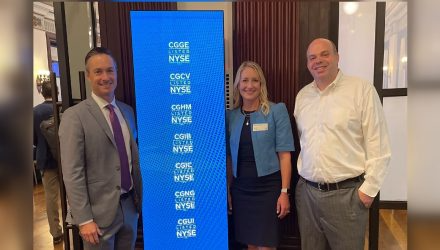
In June, Capital Group added seven new actively managed products. Its executives were in New York last week to ring the NYSE closing bell.
Increasing the tax efficiency of a retiree’s income portfolio with the NEOS ETF suite may offer several benefits.
Despite all the hoopla surrounding technology stocks in the first half of the year, software names struggled.
It's been another strong first half for the U.S. ETF industry, with overall flows set to challenge or surpass historic records.
The second quarter began with inflation concerns causing a negative return in April, but improved inflation led to a more hopeful market in May and June, with AI and semiconductor stocks leading.
Goldman Sachs Asset Management is launching four new municipal-bond exchange-traded funds, adding to the $129 billion corner of the state and local government debt market.
Like it or not, the world is going to fall far short of meeting its current goals for reducing carbon emissions.
San Francisco has been the subject of a lot of negative press over the past several years. It was hit hard by the pandemic exodus from cities, the shift to work from home that emptied offices, the crime and homelessness that marred its national reputation, and pledges by corporate leaders such as Elon Musk to relocate their company headquarters elsewhere.
I almost exclusively talk about stocks here in Dividend Digest because dividends are at the root of my strategy. But most income investing includes some level of exposure to debt.
The big story making the rounds this summer is the spike in the small-cap Russell 2000 since the release of the latest Consumer Price Index (CPI) report, which shocked the market by printing 0.0% month-over-month in June.
US stock markets have remained bullish in the face of deepening domestic and international risks, owing to three key factors. But with two of these coming under pressure, the durability of the current cycle will depend on the third: the US Federal Reserve.
The ongoing global electrification is spurring a demand for copper, but supply shortages could portend higher prices in the future.
Calamos understands time in the market vs. timing the market, but they also understand uncertainty surrounding election.
This symposium brings the brightest minds in the ETF and mutual fund industry together for panel discussions spanning nine critical fixed income topics.
US bonds rallied sharply as signs of a slowing economy and a recent stock-market rout fueled calls for quicker interest-rate cuts from the Federal Reserve, further juicing bets on a steeper yield curve.
The assumptions that have driven this year’s global financial markets are being rapidly rethought.
Ether, the second-largest token, paced a drop in digital assets following a slump in equities that spread unease in global markets.