When CFRA’s Paige Meyer slapped a “sell” rating on UnitedHealth Group Inc. in February, she was the lone analyst out of 30 tracked by Bloomberg with a negative view of the company.
With the CHOICE Act poised to strengthen non-competes in Florida, advisors may face a shrinking window of opportunity.
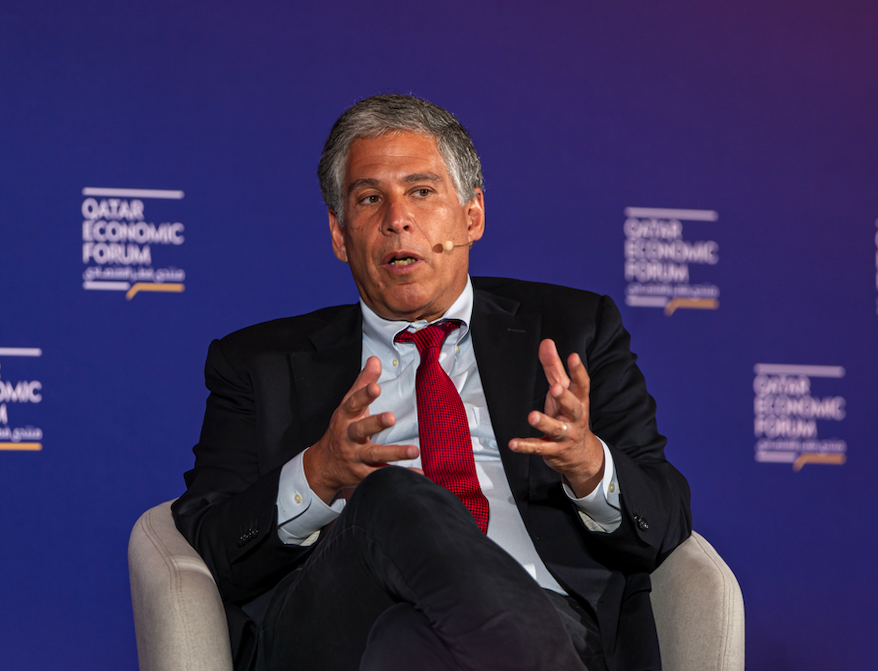
US equities are likely to drive the global rally in the coming months on an improving corporate earnings outlook and a weaker dollar, according to cross-asset strategists at Morgan Stanley.
Loyalty isn’t something you can demand, nor is it something that happens overnight. It’s something you earn, step by step, through trust, consistency, and a genuine commitment to your client’s well-being.
This isn’t about selling — at all. It’s about problem-solving and helping — it’s about offering an opportunity to change someone’s life. Remember, they can always say “no.”
With mainstream investment products increasingly finding a second home on the blockchain, it’s a good time to ask what role central banks would play if everything they have learned while policing double-entry bookkeeping over the last 350 years becomes irrelevant.
Debt collectors have been unpopular since ancient times, but they play a necessary role in the lending lifecycle. Their jobs are not easy: I recall one collector noting that there are few ways to communicate with defaulted borrowers.
Most investors would jump at the chance to add more money to their portfolio, but they often fail to consider the hidden costs associated with it.
The retailers are closing out the season in their usual fashion, but the early results have been mixed as they deal with headwinds ranging from a softening US consumer to impending tariffs.
Emerging-market (EM) stocks might not seem an obvious choice for anxious investors during a trade war. But history suggests that past volatility peaks have created favorable moments to invest in EM stocks.
Last week I talked about the upward sloping Treasury yield curve, a welcome change from the inverted yield curve that lingered for years. The upward sloping curve means that investors are rewarded more for taking on duration.
GMO has posted a new 7-Year asset class forecast as of April 30, 2025.
As investors, we need to step back and examine the history of previous debt downgrades and their outcomes for the stock and bond markets. Let’s start with what Moody’s rating agency stated about its rating change.
Moody’s Ratings has followed S&P Global Ratings and Fitch Ratings in stripping the US of its top-notch credit score, lowering it one level to Aa1.
In an investment landscape dominated by market-cap-weighted benchmarks, the Barron’s 400 ETF (BFOR) offers a different path through GARP.
Globalt remains conservatively positioned with an underweight in global equities, and neutral duration in fixed income.
This free webcast will equip you with the expertise to guide clients through complex real estate transactions and provide them with a solution that allows them to exchange up into institutional real estate and exchange out of active management.
Tidal’s Mike Venuto discusses the latest in ETF innovation, from 351 conversions and the ETF share class structure to options-based strategies and leveraged products. VettaFi’s Kirsten Chang offers a tour around the world of fixed income ETFs, highlighting recent flows, new launches, and under-the-radar success stories.
Join the experts at SS&C ALPS Advisors and VettaFi for a 30-minute LiveCast on May 20th at 12:30 pm ET as they discuss midstream/MLP fundamentals amid market volatility.
Alphabet Inc.’s investors are looking to this week’s developer conference to see if the company can reset the narrative amid fears that its long-standing market dominance is on shaky ground.
Stephen Hemsley never fully dropped the reins when he stepped down as UnitedHealth Group Inc.’s chief executive officer eight years ago. With the health giant in crisis, he’s taking back his old job – and confronting one of the toughest turnaround tasks any executive has ever faced.
Goldman Sachs Group Inc. is looking to open more offices and boost headcount in the Middle East, joining Wall Street peers expanding in the region to tap its deep pools of capital.
If there were ever a time for more funnel cake — oops, I mean municipal bonds—that time may be now.
Traders plowed cash into exchange-traded funds that buy emerging market stocks for a fourth straight week as risk-appetite grew, turning flows this year positive for the first time since early April.
The 60/40 approach has not been what it was just a few years ago. Fortunately, there are alternatives.
By incorporating growth CDs into a diversified retirement plan, retirees can take advantage of equity market growth, protect their lifestyle, and avoid the fear of market downturns diminishing their savings.
Moody’s Friday downgrade of the U.S. credit rating may not seem particularly earthshaking, given that Fitch and Standard & Poor’s had gotten there quite a while ago.
President Donald Trump’s first overseas trip since returning to the White House is turning heads across the aerospace & defense and semiconductor industries.
With financial markets whipsawing on every tweet and press release, Maharrey urged listeners to step back, take a breath, and consider the big picture — particularly on the issues of debt, inflation, and de-dollarization.
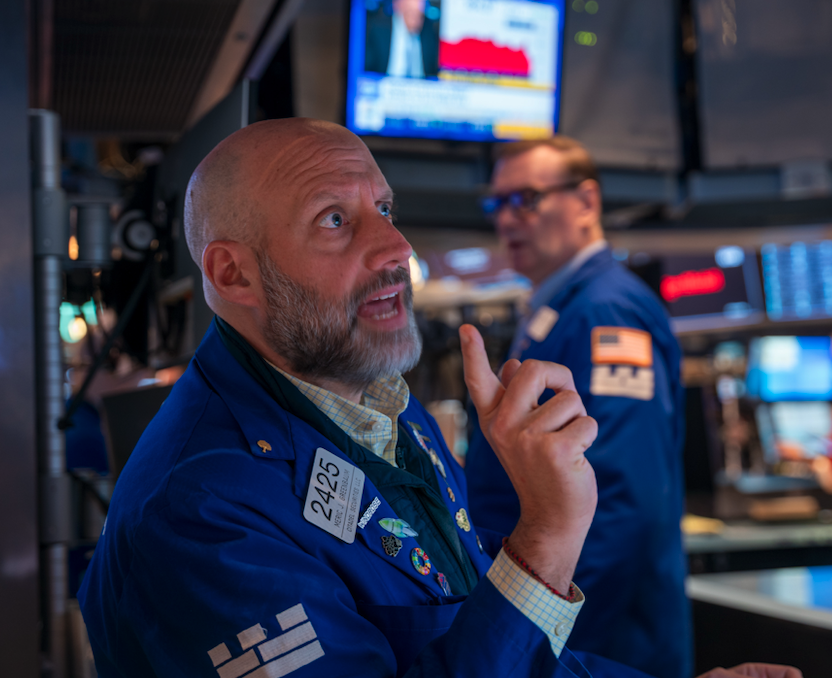
President Trump’s tariff maneuvers sent financial markets on a rollercoaster. The shock from his aggressive trade policies triggered a surge in volatility, briefly pushing the VIX above 50 – an extremely rare event.
Imagine an institutional investor that allocates a big chunk of its portfolio to illiquid private assets but then needs to sell some of those investments to raise cash. Or a fund company that makes a fortune on actively managed mutual funds for decades, but its investors move their money to low-cost index trackers.
Macroeconomic and structural trends are finally moving in favor of emerging local currency bonds, after recent setbacks.
Head of U.S. Fixed Income Greg Wilensky and John Lloyd, Lead, Multi-Sector Credit Strategies, discuss Moody’s rating downgrade of the U.S. and what the implications may be for the Treasury market, the Federal Reserve (Fed), and fixed income investors.
The signal of announcing trade pacts is an important start.
The geography of employment in the US is being shaped by two distinct trends. The first is low levels of housing churn and, therefore, interstate migration, a normal part of the business cycle that should eventually turn around.
A new report demonstrating that central banks can port their monetary policy tools into a tokenized financial system is an important step in transforming how we trade securities including stocks and bonds.
QTR Family Wealth, a full-service wealth management firm owned and led by brothers Wes and Chad Hunter, proudly announces the official launch of its independent Registered Investment Advisory (RIA) firm.
Milton Friedman, Art Laffer and other market-believing economists had their long day in the sun during the 1980s and 1990s. Tax rates fell and government spending declined relative to GDP. But – ironically, in the long run, and long after he passed away – John Maynard Keynes got his revenge.
Recent revisions to the IMF’s World Economic Outlook reflect a sobering message: the world economy is entering a more volatile and fragmented era.
Bitcoin was launched in 2008. It was the following year when it was initially used as an actual currency.
Over the past ten years, we’ve discussed this question with about 50 of our friends and clients, resulting in many animated and productive conversations.
After Friday’s close, Moody’s downgraded U.S. treasuries, as S&P had 14 years ago, in 2011. I criticized the downgrade then…and I do now. The government cannot technically default, as the Fed can always buy the bonds for any auction.
On this episode of the “ETF of the Week” podcast, VettaFi’s Head of Research, Todd Rosenbluth, discussed the Thornburg International Equity ETF (TXUE) with Chuck Jaffe of Money Life. The pair discussed several topics related to the fund to give investors a deeper understanding of the ETF overall.
The shareholder meeting began to be streamed about ten years ago, but that has had no impact on attendance. This is one reason why I think Buffett is at peace with the idea of no longer presiding at the meeting – people will still come to Omaha the weekend before Mother’s Day.
Given the recent market volatility and the possibility of an adverse wealth effect, it's worth quantifying the relationship between stock returns and economic activity.
Don’t allow your middle-aged clients depending on their 401(k) plan to fool themselves. Markets can’t rescue a failure to save until it hurts. And don’t let them kid themselves that a smoother ride with bonds won’t come at the cost of increased shortfall risk.
As markets rebound from a brief but sharp correction, Journey’s investment team reflects on the impact of tariffs, global diversification, and the evolving role of alternatives in investor portfolios. With caution as the theme, this month’s commentary urges investors to revisit risk tolerance and stay grounded in disciplined, long-term strategies amidst ongoing economic uncertainty.
This is the story of how we got to a moment in history defined by global and national crises. It is the story about how a radical geopolitical transition is taking place as old socio-economic and institutional cycles in the US end and new ones begin.
Fisher Investments recently wrote an interesting article asking whether corporate stock buybacks affect markets.
US stocks delivered their second-best weekly gain of the year on Friday, as Big Tech fueled a rally that brought the S&P 500 Index closer to an all-time high set nearly three months ago.