I worked with a large mutual fund company years ago to develop a program on succession planning for advisors. I’ll share insights and considerations if you are thinking about making a transition, or are working with an advisor who is doing so.
Join the experts at State Street Global Advisors, Confluence Investment Management, and Astor Investment Management as they provide a midyear market update and explore opportunities and challenges facing investors
Margin debt is the amount of money an investor borrows from their broker via a margin account. This video provides an update on FINRA's margin debt with data through April 2025.
Clients aren’t asking their financial advisor to be everything. They’re asking for clarity and confidence in what matters most to them. Simplifying the client experience may be the most strategic move advisors can make.
The wealth management industry is prepared to court its newest potential clients: Gen Z. Instead of trotting out older professionals with decades of experience, companies are utilizing generative AI to develop digital assistants.
In this article, I focus on five essential age-based milestones and life events that collectively present more than 40 million advice opportunities, enabling financial advisors to showcase their care and expertise beyond traditional investment strategies.
Nvidia Corp. faces the final test of an earnings season-driven rally that has sent its shares up more than 40% from an April low.
Exchange-traded funds have amassed trillions of dollars by offering investors greater tax efficiency, liquidity and lower costs than mutual funds.
Residential mortgage-backed securities, or MBS, are a big part of the securitized investment market. Here's what to know about MBS investing.
Cantor Fitzgerald LP agreed to buy UBS Group AG’s O’Connor unit, ending more than three decades of ownership by the Swiss bank and placing the hedge fund back in control of one of its early founders.
Mounting concerns regarding growing U.S. government deficits and a volatile tariff policy create a challenging backdrop for U.S. bonds.
Actively managed ETFs pulled in approximately 40% of the industry flows through the first four months of 2025. These ETFs tap into professional expertise, which has been helpful in the volatile market environment. The latest model allocation changes made by BlackRock’s team will help more ETF-minded advisors have greater access to active strategies.
While official estimates remain fluid and subject to change, our preliminary analysis at the time of this writing suggests that the House Reconciliation Proposal could significantly increase the national debt over the next decade.
Gold remains firmly in correction mode — even I will readily agree with that.
Over many years of educating investors about direct indexing, we have noticed a common misunderstanding—conflating the economic value of harvested losses with the investment return on the performance statement.
Proposed tax-cut extensions and higher debt costs could amplify fiscal concern.
Rising imports of glass containers are just one sign of how the US lost its manufacturing culture.
Few leading men of the 1960s and 1970s were more dashing than Clint Eastwood. He played a series of gritty heroes, trying to do right in a world gone wrong.
With US economic policies driving financial and economic volatility and rousing the bond vigilantes, it is an open question whether we are witnessing the fragmenting of the international order, or just a bumpy ride toward a beneficial overhaul. Five factors could clarify the answer.
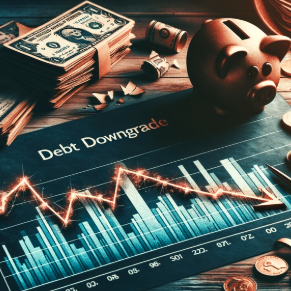
Moody’s finally downgraded US government debt on May 16th to Aa1, its second highest rating. With the US $36 trillion (and rising) in debt, it’s not hard to see why. But Moody’s was late to the party with S&P and Fitch (the other two major ratings agencies) having done so long ago.
Friday’s market tremor was ignited not by economic data, which brought limited new releases, but by revived political uncertainty—specifically, President Trump’s abrupt reinvigorated tariff threats.
In this webcast, we will briefly reflect on the firm's historical role in shaping a disciplined, long-term investment approach before turning to our latest research, The Insider Investment Factor. We will explore how insider stock purchases and share repurchases, when combined with valuation analysis, can serve as important signals—and how these insights may help investors navigate today's markets
SS&C ALPS Advisors’ Paul Baiocchi dives into key ETF trends, from active and alternatively-weighted strategies to international and thematic ETFs. VettaFi’s Cinthia Murphy goes inside the world of S&P 500 ETFs, exploring several unique angles to the industry’s flagship products.
VettaFi’s Head of Research Todd Rosenbluth discussed the abrdn Bloomberg All Commodity Strategy K-1 Free ETF (BCI) on this week’s “ETF of the Week” podcast with Chuck Jaffe of “Money Life.”
Many buffer ETF providers advertise these products as substitutes for bank products such as CDs. However, for residents of high-tax states, T-bills are more attractive than CDs, so for us that’s the more relevant comparison.
Let’s unpack the state of the markets today, explore where opportunities lie and review several strategies to navigate the months ahead.
How do you make sure your nest egg lasts as long as you do? Figuring out a safe withdrawal rate is tricky, because life is unpredictable. Markets and inflation rise and fall, tax laws change, and political philosophies come and go.
US consumer confidence rebounded sharply in May from a near five-year low as the outlook for the economy and labor market improved amid a truce on tariffs.
The Republican tax bill contains flashy goodies for families with kids. The flashiest: savings accounts for children — branded Trump Accounts — created and initially funded by the Treasury Department. These will consist of $1,000 in invested assets for each American citizen born through 2028, plus whatever funds parents later add.
There are plenty of reasons to be concerned about the direction of the US economy right now.
India is the stuff of dreams for OPEC and Big Oil: a rapidly developing nation of nearly 1.5 billion people where petroleum consumption is still in its infancy.
Without proper financial guidance and planning, the end of their career could be followed by serious financial difficulties. While every athlete’s legal, tax, and financial picture is different, here are some of the topics that should be reviewed with athletes.
Banks are contemplating a role for themselves in stablecoins if pending US legislation helps take cryptocurrencies and their gateway products mainstream.
There’s a lot to like about the travel industry right now from an investment standpoint. You just have to know where to look.
My next few letters will share some initial thoughts from SIC organized around the major topics. Today we’ll start with inflation, and specifically the sharply different views of David Rosenberg and Jim Bianco, then balance them with some thoughts from other speakers.
Keep your market perspective in check, avoid anchoring, and focus on your investment goals rather than market volatility.
Private credit firms are seeing an opportunity to finance everything from public transit systems to local utilities as the federal government and banks pull back on funding.
A KEY PLANK of the new administration’s economic policy has been to embrace tariffs, a sharp reversal of decades of free market trade.
In this video – Part 3 – Valuation Drives Future Returns – Chuck Carnevale, Co-Founder of FAST Graphs, aka Mr. Valuation discusses the volatility of the stock market, using the S&P 500 (SPY) as a proxy.
Looking to reduce volatility without sacrificing income potential? Consider short-maturity high yield.
A host of data influences the market, including jobs and GDP. Learn how savvy investors decipher their meaning and what they watch for beneath the surface.
529 plans and Roth IRAs are two tax-advantaged accounts designed to help you save for future expenses.
Over the past four months, the price of gold in yuan terms has climbed by 24 percent, the strongest January to April performance on record. The Shanghai Benchmark Gold Price rose 6.9 percent in April alone. It was the fifth consecutive monthly gain.
From an energy perspective, while the trade dispute with China initially impacted oil prices and raised concerns about oil demand (mirrored across tariff discussions), the direct effect on midstream has been limited.
Selling your real estate portfolio, especially investment properties you and your family have held for years or decades, can be a complex process.
In 2025, AI crossed a subtle but monumental threshold: it stopped just answering questions and started executing goals.
Markets rallied after a surprise tariff rollback, but with valuations stretched and policy signals still mixed, investors appear to be leaning toward flexibility, fundamentals, and selective exposure.
Given the headwinds Target has faced this year, many advisors were not expecting to hear good news at the retailer’s latest earnings call.
Though silver has been quiet lately, it’s important to be aware of the many bullish factors that are setting the stage for a strong move higher.
The Endowment Tax was introduced during the first Trump administration as part of the 2017 Tax Cuts and Jobs Act (TCJA).