The emergence of leveraged ETFs tied to Space Exploration Technologies (more familiarly known as SpaceX) points to strong investor demand for concentrated exposure.
Investors have plenty of reasons to celebrate the covered call ETF boom. Covered call strategies have offered new ways to add income to portfolios. Challenges in fixed income were a catalyst for assets to flow into traditional covered call ETFs.
At graduation ceremonies, audiences are often reminded to limit their audible reactions and hold applause, so that all graduates’ names can be heard. But a few viral videos this year showed a new disturbance to be managed: graduating students booing speakers if they extolled the virtues of artificial intelligence (AI).
We all know that Congress is never going to allow Social Security not to be paid. This begs a number of questions. Will the shortfall be addressed by tax increases, benefit reductions, increasing the retirement age, changing the inflation measures, means testing or some combination of these and other solutions?
As the summer economic landscape takes shape, investors are navigating shifting monetary policy, stubborn inflation pressures, and unexpected market momentum. This week’s snapshot breaks down the most critical updates and data releases from the past week to give you a clear view of where the economy is heading.
Kevin Warsh came out as a hawk during his first press conference as Federal Reserve (Fed) chair. Franklin Templeton Fixed Income CIO Sonal Desai believes that he may be the most hawkish chair since Paul Volcker. Warsh stressed that the Fed can and will bring inflation back to 2%, and signaled his preference for a smaller balance sheet and no forward guidance—a welcome return to more orthodox monetary policy.
Exposure to critical minerals, specifically rare earths, provides an opportunity for investors to capitalize on growth and diversify their portfolios simultaneously. However, there are also geopolitical implications that investors should know about as well. In particular, more nations are reducing their reliance on China.
In Kevin Warsh’s first meeting as Fed Chair, the FOMC held on rates but made significant changes to both their economic projections and the nature of today’s Fed statement. And today’s press conference shows there is a lot more change to come.
Higher-for-longer interest rates and ongoing geopolitical friction make navigating emerging markets (EM) and capturing their growth potential a trying task. This is where investors can shift the onus of EM investing to experienced portfolio managers, with an active fund such as the Fidelity Fundamental Emerging Markets ETF (FFEM).
It’s a busy finish to the first half on the corporate event calendar. The bulls have the lead, but the bears have had their moments of glory so far this year. A handful of key AGMs, conferences, and earnings events will keep investors on their toes amid a colorful macro backdrop.
Participate in artificial intelligence (AI) investing long enough and you’re apt to hear plenty about this disruptive technology’s substantial power demands. Market participants know the anecdotes. For instance, some data centers consume more power than states. Another one: Data centers in aggregate consume more power than nearly all of the world’s countries.
Green life, sustainable mutual funds, buying local, the “buy nothing” movement, plastic-free living, eco-fashion, electric vehicles. You’ve seen all the headlines about reducing your impact on the planet, but you may be wondering how you can best implement a greener workplace in a way that considers the needs of your business, employees and clients or customers.
The questions in our inbox have gotten louder lately. Are we reliving 1999? Has the tech rally reached the dangerous ‘Euphoria’ bubble stage we first discussed in our 2026 Outlook? And is the recent surge in initial public offerings (IPOs)— led by SpaceX on Friday— diluting existing holders just as valuations were already drawing scrutiny?
In my 45 years in the investment business, we’ve observed numerous peaks of excitement. In 1987, a bull market that started at a 1982 bottom below 800 on the Dow Jones Industrial Average (DJIA) peaked at 2,722. It then crashed 43% in 78 days.
Once again, the Federal Open Market Committee (FOMC) decided to remain ‘on hold’, keeping the fed funds trading range at 3.50%-3.75%. This result was largely expected by the markets. Of course, one of the more notable aspects to this gathering was that it represented Kevin Warsh’s first official policy meeting as Fed Chairman.
Compliance risks happen when AI-enabled workflows expand faster than their governance model. It becomes a blind spot when AI solutions are built faster than the organization’s ability to map them against the right regulatory, operational, and data-governance controls.
The instinct when deploying any new technology is to start small. Run a pilot. Test with a subset of data, a single team, or a simplified version of the real workflow. That instinct is sensible — but with AI agents, it carries different risks than those that exist with traditional software.
This week J.P. Morgan Asset Management launched two actively managed municipal bond ETFs focused on California and New York debt, offering investors a way to earn tax-free income inside a more flexible and transparent fund structure.
The catalyst that turns a healthy pullback into something deeper won’t be a single oil-soaked CPI print. It’ll be the moment forward earnings expectations start to roll over while valuations sit at the high end of history. We aren’t there yet.
On Monday, June 15, Guggenheim Investments debuted a pair of new fixed income ETFs. Each of these new funds offers an active take on the fixed income space. This may help investors looking to amplify portfolio yield.
Markets returned to positive territory for the week, with the turning point occurring Thursday after the announcement of a potential deal with Iran that would extend the ceasefire while reopening the Strait of Hormuz for the first time since February 27.
J.P. Morgan converted two mutual funds into active muni ETFs for California and New York investors seeking tax-free income.
Gold has always had a way of testing investors’ expectations. Just when the headlines appear most supportive—inflation is rising, geopolitical risk is escalating and confidence in fiat currency is being questioned—gold can suddenly move in the opposite direction.
Advisors searching for diversification from a concentrated S&P 500 Index often reach for equal-weight strategies. However, a new report argues that all equal-weight approaches are not interchangeable.
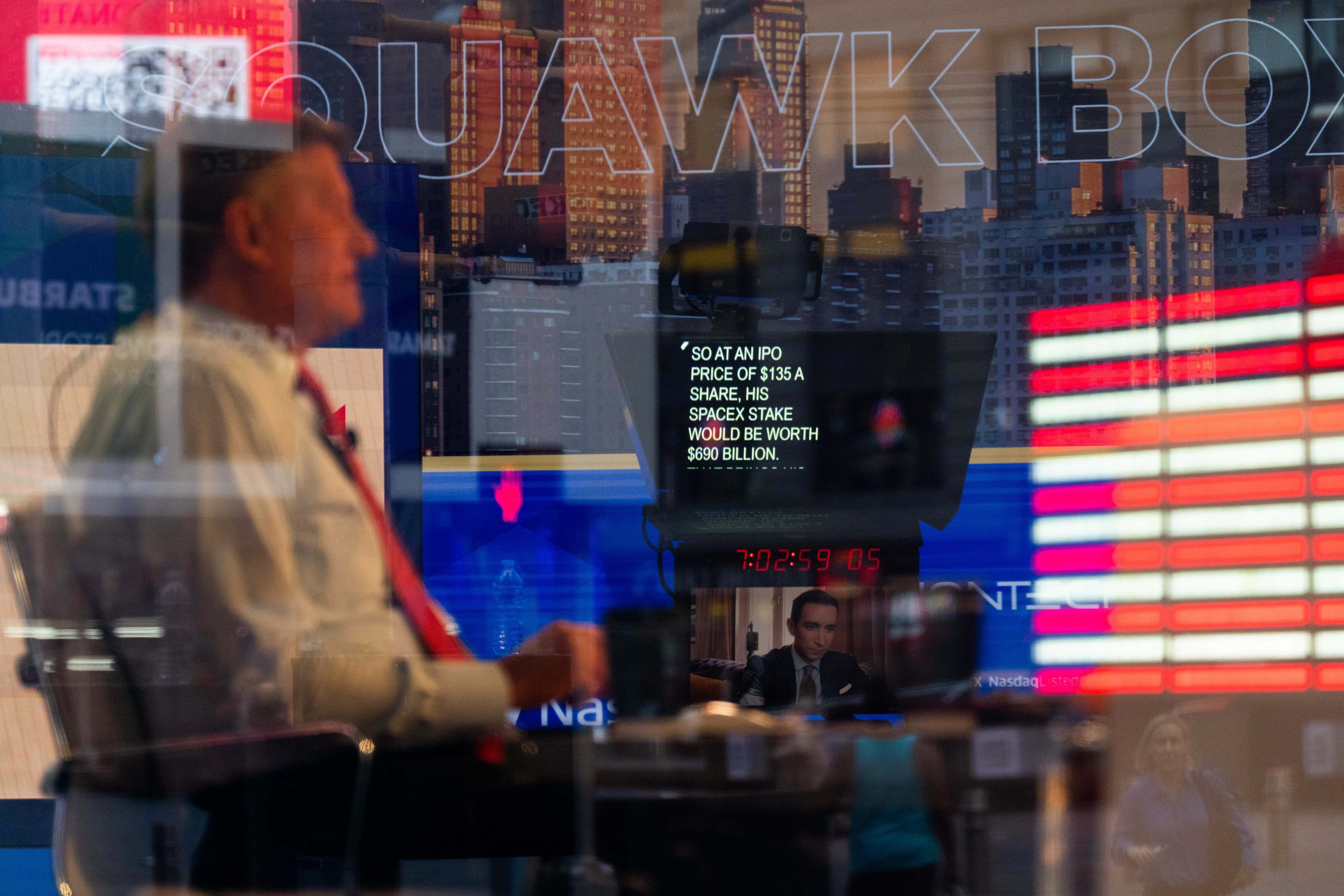
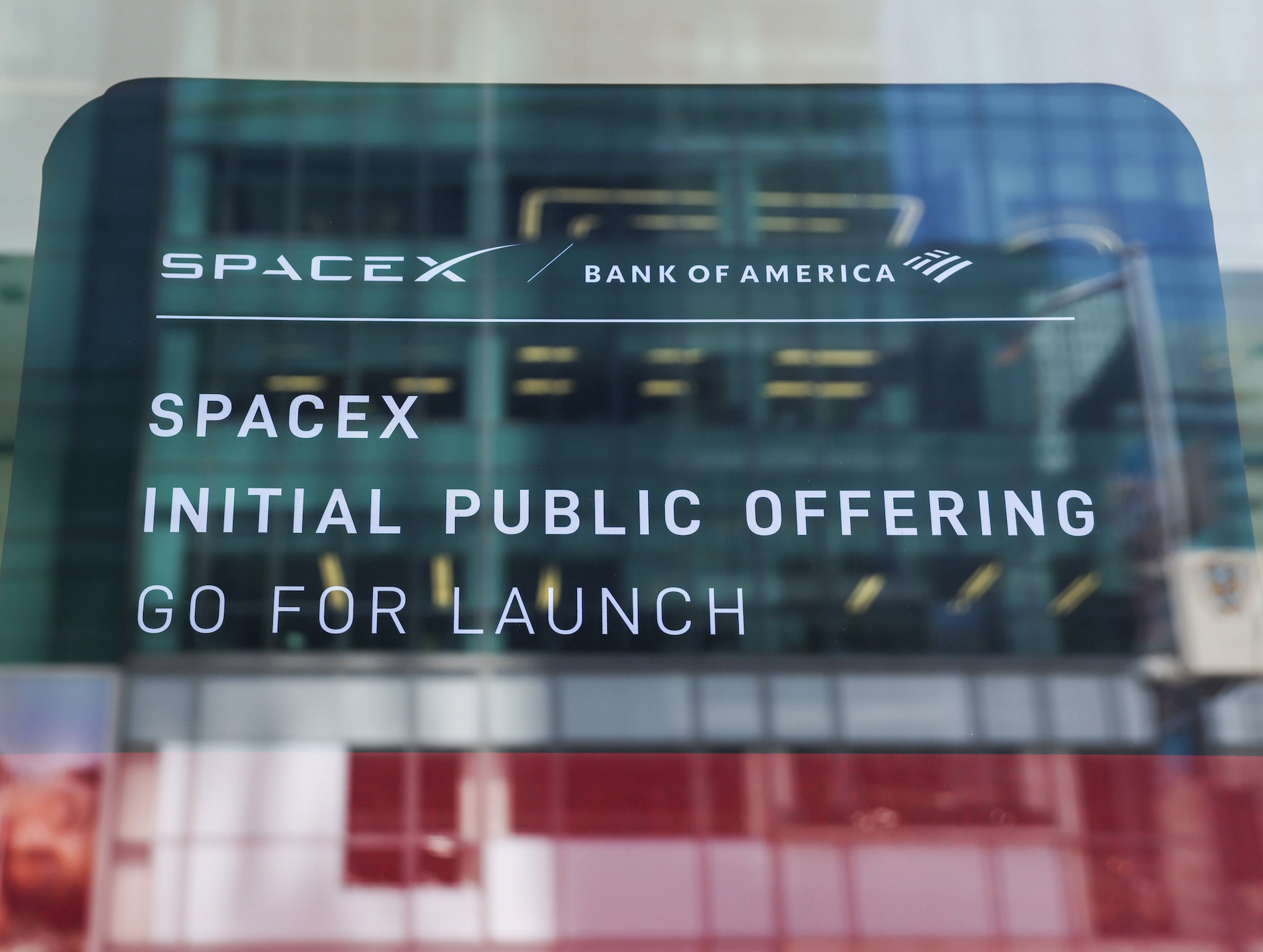
Several ETFs have added exposure to Space Exploration Technologies (SPCX) after the aerospace giant completed the largest initial public offering in market history. Trading on the Nasdaq, SpaceX surged 19% from its initial $135 offering price to close at $160.95 per share, notching a historic $2.1 trillion valuation. Actively managed ETF vehicles were able to use their operational flexibility to add positions in SpaceX at its debut.
Join Baron Capital for a product due diligence session covering Baron SMID Cap ETFTM (BCSM).
Treasuries advanced as investors dialed back expectations for Federal Reserve interest-rate hikes following news of a deal to halt the Iran war.
VettaFi’s core mission is to provide the index and distribution solutions that help asset managers build, grow, and navigate the markets with precision. Last week we took a massive, transformational step forward. TMX VettaFi signed a definitive agreement to acquire RAFI Indices from Research Affiliates, the undisputed pioneer of fundamental indexing and smart beta strategies.
This week’s inflation data highlights a growing disconnect between how markets interpret inflation and how consumers experience it. The May Consumer Price Index (CPI) report delivered a nuanced message: While headline inflation accelerated, core inflation remained relatively contained, an outcome that provides some comfort to policymakers.
Given all the interest and hype over the SpaceX IPO, many advisors and investors have been increasingly gravitating towards thematic ETFs that focus on the space industry. Given that the SpaceX IPO is the largest IPO in history, this should not come as a surprise to anyone.
Recent economic data continues to point to a resilient U.S. economy. The unemployment rate held steady at 4.3% in May, while payrolls increased by 172,000 jobs. Hiring remained strongest in leisure and hospitality, though there were also encouraging signs from more cyclical areas of the economy.
During this time of year, we like to take stock of what happened in the first half of the year and compare it with the expectations we had at the beginning of the year when we published our full-year outlooks.
The U.S. economy faced intensifying headwinds in May as both consumer and wholesale inflation metrics surged to multi-year highs.
Discover how Capital Group’s active CGGR ETF navigates this mega-cap divergence to uncover secular growth beyond tech.
High-speed railway Brightline West has signed new contracts to lay tracks and systems for its high-speed railway, according to an email seen by Bloomberg, signaling progress for a project whose municipal bonds have traded at steep discounts since last year.
The current economic downturn is best described as hybrid and structurally driven. It leans heavily on demand constraints, though it is triggered and complicated by ongoing supply shocks.
What do you do if you have a standard that’s not being met? Move the goalposts! Of course, you could work harder to meet the goal. But that’s hard. So, why not just change the standard and make it easier to meet?
Goldman Sachs and Innovator panelists say buffer ETFs can help advisors move cash-shy clients into stocks with built-in downside limits.
In this video, Chuck Carnevale responds to a viewer's question about building a retirement income portfolio for a 63-year-old investor. Rather than recommending specific stocks, Chuck focuses on the process he uses to identify high-quality income investments using the principles of value investing and the FAST Graphs platform.
VettaFi today announced it has signed a definitive agreement to acquire RAFI Indices, the renowned pioneer in fundamental indexing, from Research Affiliates.
US stocks opened with a small gain on Friday, supported by optimism about pending trading in SpaceX, which made history with the biggest-ever IPO, and the potential for an interim peace deal in the Iran conflict.
That’s SpaceX out of the way. Next, investors will have to absorb the artificial-intelligence titans behind the Claude and ChatGPT chatbots, Anthropic PBC and OpenAI.
The ETF industry has reached a historic turning point. Vanguard has officially surpassed BlackRock’s iShares to become the largest ETF provider. The milestone underscores a broader structural shift among investors prioritizing low-cost investments in portfolio allocations.
At a time when the cost of living is rising and market volatility appears to be rising, too, investors may be looking for current income to bolster their portfolios. Current income can especially help investors at or near retirement to adapt to retired life.
JPMorgan Chase & Co.’s public finance department hired a Goldman Sachs Group Inc. banker to specialize in prepay energy deals, marking a major hire for the team as the firm ramps up its work in the sector.
The word seems to be spreading that small- and micro-cap stocks have so far been enjoying a stellar 2026. What seems less well known is that the current cycle of market leadership for the two asset classes stretches back to 2025 and has been in place for 14 months.
In addition to a greater range of chips supporting AI development, several factors could cause the current cycle to last longer than expected.
Inflation and geopolitical uncertainty are pushing advisors and investors to rethink how they build diversified portfolios.
This past week, the market hit an all-time high. At the same time, Alphabet (GOOG) told investors it would raise $80 billion by selling stock to fund its AI buildout, and the shares fell about 4% on the news.
The jury is still out on whether SpaceX is primarily a rocket company, as its name suggests, or actually more of a telecom provider or artificial intelligence play. Its expected valuation doesn’t help resolve the confusion.