When JPMorgan Chase & Co. took the lead last year in financing the $55 billion takeover of Electronic Arts Inc., a record-setting leveraged buyout, Wall Street saw it as a sign that a lucrative period of bankrolling super-sized private equity deals might come roaring back.
Amazon.com Inc. may be a leader in the artificial intelligence race, but investors are increasingly unwilling to pay up for the cost of maintaining that position.
BlackRock Inc.’s Global Infrastructure Partners LP and EQT AB agreed to buy AES Corp. for about $10.7 billion in cash as the market heats up for power plant developers that can provide electricity for energy-hungry AI data centers.
I am indeed working on my book about what I believe is a coming crisis by reviewing five different cycle theories. They all suggest a crisis occurring sometime around the end of this decade or perhaps shortly thereafter. And all for different reasons. One background element ties them together, which is the subject of today’s letter.
Artificial intelligence-themed companies certainly propelled the stock market to greater heights in 2025. Near the tail of end of the year, however, market experts questioned whether certain companies benefiting from the AI theme had the underlying fundamentals to support their lofty valuations.
Small-caps and the related equities have found their respective grooves. The fact that the Russell 2000 Index is higher by more than 7% year-to-date confirms this. On the surface, the small-cap resurgence is good news.
In investing and life, spending your time on critical variables and what is really important directionally pays dividends. AI can legitimately reduce “task time” in the investment business, but it does not replace experience and judgement. Not having double-digit bodies running around also helps one focus.
The U.S. is on the back end of fourth-quarter earnings season, and the overall tone from corporate management teams has been constructive. For the S&P 500 Index, earnings growth tracked close to 15% year-over-year, marking a fifth consecutive quarter of double-digit growth.
US stocks opened lower as risk-off sentiment swept through markets and fintech Block Inc.’s massive layoffs fanned angst that artificial-intelligence is poised to upend broad sections of the economy.
Last year’s market surge wasn’t built on hype. New research from Alger shows that AI spending and the accompanying infrastructure buildout drove corporate earnings higher, with fundamentals doing the heavy lifting rather than investor sentiment alone.
The Trump administration on Wednesday closed a $26.5 billion loan package for Southern Co. power projects in Georgia and Alabama amid rising concern about electricity price affordability and electricity-thirsty data centers.
OpenAI has raised $110 billion in a deal that values the startup at $730 billion, representing the ChatGPT maker’s largest funding round to date and bolstering its costly push to secure more computing power and talent for AI development.
After underperforming for much of the last decade, emerging-market (EM) equities rebounded nicely in 2025. Is it too late to invest? We don’t think so. With valuations still attractive and earnings growth forecasts looking up, this could be the right time to give the developing world a closer look.
Q4 wrapped a solid year of U.S. company earnings. But as the numbers rolled in strong, stock markets oscillated widely. Fundamental Equities Global CIO Carrie King is optimistic as she looks ahead to 2026 and offers three observations on the prevailing dissonance.
Nvidia Corp.’s latest sales forecast drew a lukewarm response from investors, signaling that concerns over a potential bubble continue to weigh on the dominant maker of artificial intelligence processors.
2026 offers plenty of opportunity in tech investing once again following a breakout year for tech AI tech in 2025. Inventors want that tech upside, but this year could behoove investors to diversify outside of AI hyperscalers.
The S&P 500 has been stuck in a range for the better part of four months, and investors are paying up to protect against the possibility that the next big move is down. To a growing number of strategists, that pessimism is cause to expect the opposite.
Almost 1,000 active ETFs launched in 2025, but did their performance substantiate the demand? Across the universe of funds, active managers for ETFs and mutual funds found that outperformance was elusive compared to their passive peers based on the latest Morningstar US Active/Passive Barometer report.
Despite early volatility driven by global bond market stress, tariff-related tensions, renewed inflation concerns, and uncertainty surrounding Federal Reserve leadership, equities finished January higher, with the S&P 500 reaching new all-time highs.
Matt Markiewicz, Head of Product and Capital Markets at Tradr ETFs, highlights the company’s leveraged single-stock ETF lineup and innovative monthly and quarterly reset products, while offering insight into the growing sophistication of retail investors navigating leveraged and inverse ETFs. Christian Magoon, Founder and CEO of Amplify ETFs, discusses Amplify’s rapid ascent past $20 billion in assets, driven by strong demand for its YieldSmart ETFs and thematic offerings.
2026 may already be more than a month in, but advisors and investors are still quite keen to navigate the complex geopolitical market in order to find the most opportune investment opportunities.
In a notable shift for the start of 2026, the S&P 500 is experiencing a divergence in factor performance. Typically, high beta (aggressive, high-risk) and low volatility (defensive, safe-haven) factors sit on opposite sides of the seesaw. When one goes up, the other usually comes down.
The threat to software-backed businesses from artificial intelligence should prompt investors to shift focus from technology to companies that toil in the physical world, like miners, power producers and industrial firms, according to Ulrike Hoffmann-Burchardi, global head of equities and chief investment officer for the Americas at UBS Wealth Management.
Gold’s sharp swings and a new Federal Reserve chair are not separate stories. In a recent episode of the Money Metals podcast, Mike Maharrey sat down with Axel Merk, President and Chief Investment Officer of Merk Investments, to connect the dots between market turbulence and what may be a structural shift at the Fed.
As the hunt for yield and stability remains a cornerstone of portfolios in 2026, a group of iShares short-term bond ETFs have made a strategic move to the Big Board today.
Corporate bonds are exposed to abrupt downside as liquidity providers are increasingly replaced by liquidity takers.
According to the UN World Tourism Organization, an estimated 1.52 billion international tourists traveled the world in 2025. That’s nearly 60 million more than the year before, representing 4% growth, and it marks a return to the steady, pre-pandemic growth trend of 5% annually that the industry enjoyed between 2009 and 2019.
In this episode of "ETF of the Week," host Chuck Jaffe and Todd Rosenbluth, Head of Research at VettaFi, dive deep into the Invesco S&P 500 Equal Weight ETF (RSP). While the traditional S&P 500 is market-cap weighted—meaning the biggest companies have the most influence—the RSP gives all 500 companies an equal 0.20% stake. We discuss why this "mid-cap value" tilt is currently outperforming the broader market, how it provides better exposure to sectors like industrials and utilities, and how you can pair it with your existing core holdings to reduce risk.
One underused alternative sits quietly in the options market: the short box spread. When used correctly, it allows advisors to treat borrowing as a fixed, collateralized financing decision, rather than an improvised margin advance.
Income rather than price is the primary driver of FRN returns. As policy rates and SOFR move, FRN coupons adjust accordingly, allowing income to rise in higher-rate environments and decline when rates fall.
The central theme of 2025 was the disconnect between market sentiment and economic reality. The year began with widespread apprehension regarding aggressive tariffs and forecasts of a recession.
The U.S. economy sent conflicting signals last week as a sharp deceleration in growth collided with unexpectedly stubborn inflation.
Many software stocks have been under pressure in recent months, as investors have started to perceive them as vulnerable to emerging artificial intelligence technology. As highlighted in the “6-Month Price History of the S&P Software and Service Index” chart, software stocks have declined roughly 27% from their September 2025 high.
Roundhill Financial, GraniteShares, and Bitwise have filed with the Securities and Exchange Commission for prediction market ETFs. These funds would let investors bet directly on election outcomes. That would be a departure from traditional political theme funds that hold baskets of stocks expected to benefit from certain party victories.
Income ETFs have become a key part of the ETF landscape in recent years. With their ability to use tools like call options and FLEX options, as well as dividend-focused stocks, income ETFs can help investors meet their goals.
It’s a short week for traders and portfolio managers, but a long one for those dissecting macro data points. FOMC Minutes hits before a slew of mid-tier economic updates on Thursday. Friday morning could be the big reveal, with growth and inflation numbers followed by bellwether business and consumer surveys.
The rising dispersion in returns and relatively low correlation among S&P 500 stocks has become increasingly apparent on the CBOE S&P 500 Dispersion Index and the CBOE Three-Month Implied Correlation Index.
Not long ago, CLO ETFs were niche vehicles only talked about at credit conferences and in sophisticated bond manager circles. But fast forward to 2026, and they’ve entered the mainstream – drawing meaningful interest from both institutions and retail investors.
Craig Ebeling, Head of ETF Strategists at Fidelity Investments, delivers an ETF “State of the Union,” outlining the key trends and themes shaping the industry today. Roxanna Islam, Head of Sector & Industry Research at VettaFi, examines the record surge in international equity ETF inflows, analyzes the drivers behind the category’s performance, and highlights standout funds beyond the ETF leaderboard’s biggest names.
A new class of digital money is reshaping how Americans move and store dollars — and Wall Street is racing to get a piece of it.
US equities rose Wednesday as a batch of reports confirming the strength of the American economy and a number of developments at the Big Tech giants reignited Wall Street’s excitement for the group.
All three major stock indices finished in the red last week as AI disruption fears continued to grow. The S&P 500, an index of large US companies, returned -1.3 percent for the week, making the index flat year to date.
Thematic ETFs have maintained their impressive momentum in early 2026, building on a resurgent 2025. After gathering $23 billion last year, the category added another $4 billion in January alone.
Emerging market ETFs are back in focus. Two of the ten largest U.S.-listed ETF inflow winners year-to-date are broad EM funds. As expected, low-cost passive strategies continue to dominate flows, although they don’t always lead on returns.
Join JoAnne Bianco, CFA® of BondBloxx as she explores how targeting credit rating strategies may enhance portfolio income. From BBB rated investment grade to CCC rated high yield, now investors can optimize fixed income allocations in today's market environment with the diversification, transparency, and cost efficiency of ETFs.
AI is evolving too quickly for static governance. Most firms today are still in a reactive posture. The goal is to move toward proactive management and ultimately predictive governance. The firms that learn to govern shadow AI will be the ones who turn today’s risk into tomorrow’s advantage.
The article from the Wall Street Journal titled “Why My Generation Is Turning to Financial Nihilism” by Kyla Scanlon argues that Gen Z is embracing high-risk financial behavior out of despair and detachment, but the data shows something very different.
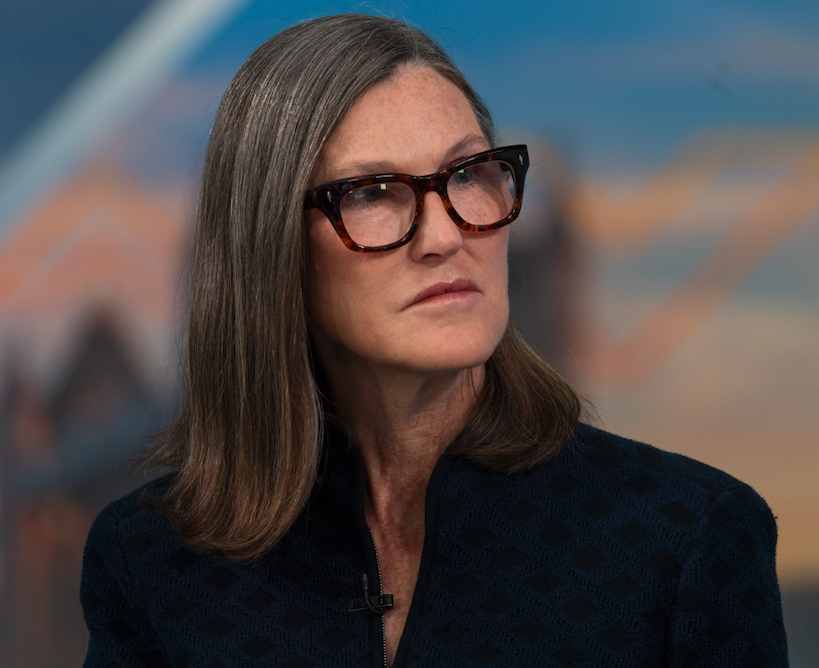
Years after Cathie Wood became the face of pandemic-era investing euphoria, her flagship fund is marking a difficult milestone.
Four months ago, digital assets underwent what I believe was the most consequential liquidation event in their history. On October 10, 2025, over $19 billion in leveraged positions were wiped out within hours. Bitcoin plummeted from roughly $122,000 to $105,000. More than 1.6 million trader accounts were liquidated.
Gold has always been one of the go-to assets when stomach-churning volatility forces queasy investors into safe havens. However, recent volatility has been challenging that safe haven narrative, and one of the drivers has been speculative trading activity in China ETFs.